
Panama has quietly become one of the most exciting destinations in Latin America. Every year, more visitors arrive to experience the famous Panama Canal, relax on tropical beaches, hike through cloud forests, snorkel over coral reefs, and discover one of the most biodiverse countries on Earth. Backpackers, birdwatchers, surfers, digital nomads, retirees, and adventure travelers are all beginning to recognize that this small nation offers an astonishing variety of experiences packed into a country no larger than South Carolina.
Yet despite this growing popularity, one remarkable fact remains true. Most international visitors see only a tiny fraction of Panama.
If you look at the typical backpacking itinerary, it is almost always the same. Travelers land in Panama City, spend a few days exploring Casco Viejo and the Panama Canal, perhaps visit the San Blas Islands, continue to El Valle de Antón, head west to Santa Catalina for surfing or diving, travel into the mountains around Boquete, and then finish in Bocas del Toro before crossing into Costa Rica. It is an incredible journey, and every one of those destinations deserves its reputation.
But it also means that thousands of travelers are following almost exactly the same route.
Step away from that well worn path, and you discover something extraordinary. Vast areas of Panama receive only a tiny number of international visitors each year. Entire valleys, mountain ranges, beaches, forests, rivers, Indigenous territories, and historic towns remain almost untouched by international tourism. In many places, you may spend an entire day exploring without seeing another foreign visitor.
For adventurous travelers, this is becoming one of Panama's greatest attractions.
Unlike destinations where tourism has spread into every corner, Panama still feels wonderfully incomplete. It still has blank spaces waiting to be explored. It still offers that increasingly rare feeling that you have found somewhere before the crowds arrived.
One of the reasons is geography. Although Panama appears small on a map, its landscape is remarkably diverse. Thick rainforests, isolated mountain ranges, rugged Caribbean coastlines, Pacific peninsulas, offshore islands, agricultural valleys, and Indigenous territories create countless regions that require time and curiosity to explore. Building tourism infrastructure across such varied terrain takes years, and many communities have simply remained off the radar of mainstream tourism.
Another reason is the country's reputation. For decades, Panama was known almost exclusively for one thing: the Panama Canal. While the canal remains one of humanity's greatest engineering achievements, it has often overshadowed everything else the country has to offer. Many visitors arrive expecting to spend only a few days before moving on, never realizing that Panama contains hundreds of waterfalls, thousands of kilometres of hiking trails, remote beaches, spectacular wildlife, and cultural experiences found nowhere else in Central America.
The irony is that some of Panama's most memorable experiences take place far from its most famous attractions.
Drive into the mountains beyond the established tourist towns and you begin encountering villages where life continues much as it has for generations. Farmers wave as you pass. Horses graze beside quiet roads. Small family restaurants serve traditional meals at prices that feel almost unbelievable compared with busy tourist centres. Local festivals are celebrated for local people rather than staged for visitors. Children play football in village squares where foreign tourists remain a novelty rather than an everyday sight.
These are the places where travel begins to feel genuine again.
Many travelers spend months searching for "hidden gems," yet often continue following exactly the same guidebook recommendations as everyone else. Panama offers something increasingly difficult to find in modern travel: places that truly remain undiscovered by mass tourism.
This is especially true for backpackers.
Hostel culture naturally creates popular routes. Travelers exchange recommendations over breakfast, write hostel names into one another's notebooks, and board the same shuttle buses together. Soon certain destinations become almost mandatory stops. They deserve their popularity, but they also create an illusion that they represent the entire country.
In reality, they represent only a small slice of what Panama offers.
Leave the established route and something fascinating happens. Accommodation often becomes less expensive. Restaurants cater to local people rather than international visitors. Transportation may require a little more planning, but every journey begins to feel like part of the adventure rather than simply moving between tourist attractions.
Instead of joining twenty people photographing the same viewpoint, you may have an entire waterfall to yourself.
Instead of waiting in line for a boat tour, you might find a fisherman willing to show you his favourite beach.
Instead of hearing English, French, or German in every café, you begin speaking with Panamanians whose stories and hospitality become the highlight of your journey.
There is also a financial advantage to exploring beyond the well beaten path.
Tourism naturally increases prices wherever it becomes concentrated. Popular beach towns, backpacker hubs, and famous mountain destinations often charge more because demand is high. Venture into lesser known regions, and daily travel costs frequently become lower. Family run guesthouses, local fondas, public transportation, and community tourism projects often offer remarkable value while providing experiences that feel far more authentic.
Wildlife encounters can become even more rewarding.
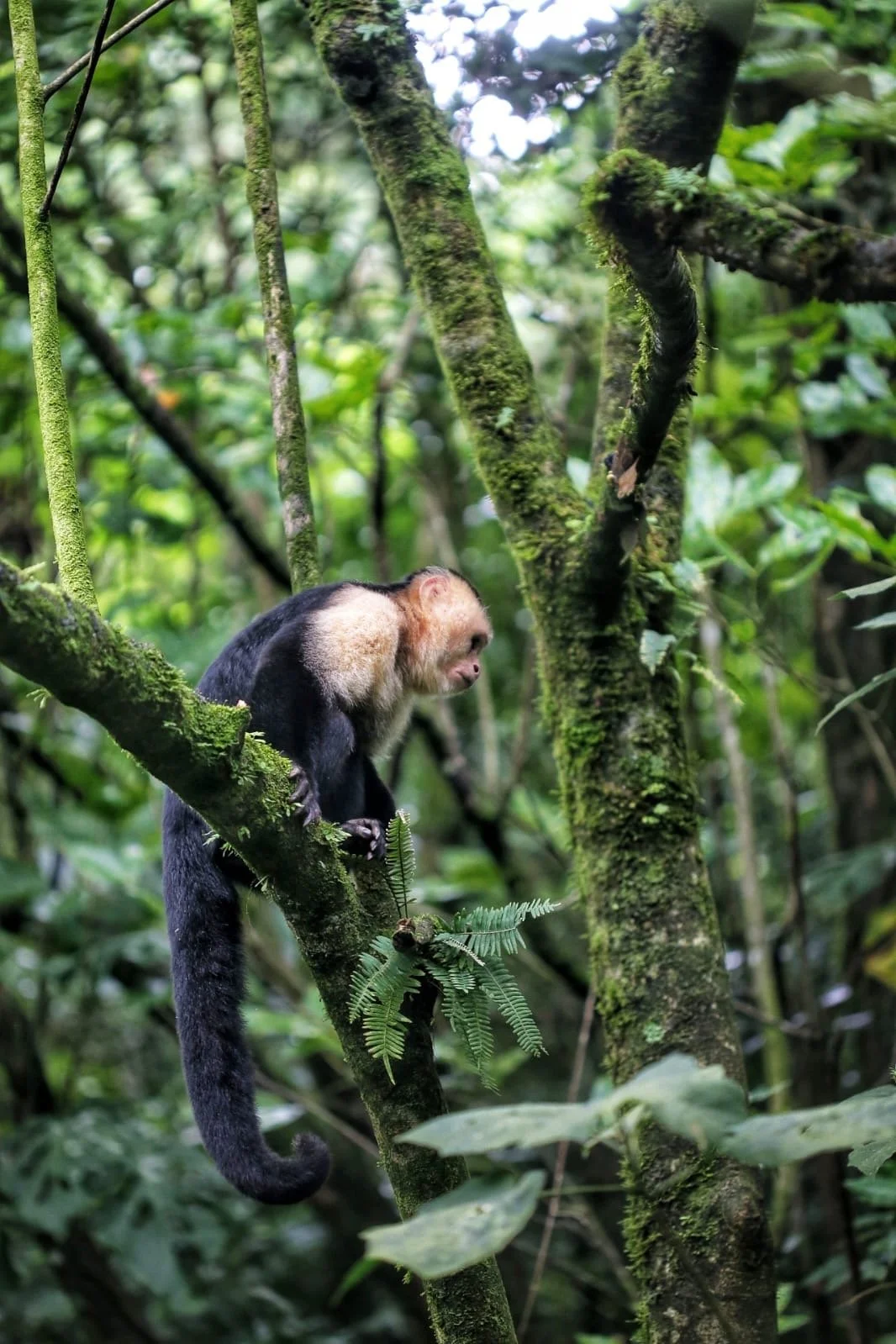
Panama is one of the most biodiverse countries on Earth, yet visitors often search for animals in the same well known parks. Countless forests outside the major tourist circuit are equally rich in birds, monkeys, frogs, butterflies, orchids, and mammals. Birdwatchers know this well. Some of the country's greatest birding locations remain almost unknown outside specialist circles, despite hosting extraordinary numbers of species.
The same is true for hiking.
Everyone knows about Volcán Barú, and rightly so. Watching the sunrise from Panama's highest mountain is unforgettable. Yet beyond Barú lies an enormous network of mountain trails, cloud forests, hidden valleys, and remote peaks where you can hike for hours without meeting another group.
The Pacific coast tells a similar story.
Santa Catalina has become famous among surfers and divers, but the coastline stretches for hundreds of kilometres. Small fishing villages, empty beaches, mangrove estuaries, and quiet coves continue almost unnoticed, offering opportunities for kayaking, whale watching, fishing, and simple relaxation far from the crowds.
The Caribbean is equally surprising.
While Bocas del Toro attracts backpackers from around the world, much of Panama's Caribbean coastline remains accessible only by boat or rough roads. Here, coral reefs, palm lined beaches, sea turtles, dolphins, and traditional coastal communities continue largely untouched by international tourism.
Perhaps the greatest reward of exploring these lesser visited places is psychological rather than physical.
Modern travel sometimes feels predictable. Social media has photographed almost every famous viewpoint. Guidebooks list the same attractions year after year. Visitors often arrive already knowing exactly what they will see.
Exploring the quieter regions of Panama brings back the excitement that inspired many people to travel in the first place.
You may discover a waterfall that never appears on Instagram.
You may stumble upon a local festival that no travel guide mentions.
You may find a roadside café serving the best meal of your trip simply because you decided to stop.
You may spend an evening talking with local families instead of scrolling through reviews online.
These moments cannot easily be planned, and that is exactly what makes them memorable.
Of course, travelling beyond the established tourist circuit also requires flexibility. English is spoken less frequently. Public transportation may be less regular. Accommodation choices can be more limited. Mobile phone reception may disappear in remote valleys. Yet for many travelers, these are not disadvantages but reminders that genuine adventure still exists.
Panama is entering an exciting period in its tourism history. Visitor numbers continue to grow, but the country remains far less developed than many neighbouring destinations. There is still time to experience regions before they become widely known. There are still communities welcoming visitors with genuine curiosity rather than tourism fatigue. There are still roads that lead not to famous attractions but simply to beautiful places where everyday Panamanian life unfolds.
Perhaps that is Panama's greatest strength.
It offers both worlds.
If you want lively hostels, organised tours, beach bars, scuba diving schools, and backpacker communities, they are waiting for you in the country's best known destinations.
But if you crave quiet mountain villages, forgotten beaches, untouched forests, hidden waterfalls, authentic cultural encounters, and the thrilling feeling of discovering somewhere for yourself, Panama has those too.
In many countries, tourism has spread into almost every corner. In Panama, it has only begun to scratch the surface.
That means roughly three quarters of the country remains a place of possibility. A place where maps still have blank spaces in the minds of most travelers. A place where curiosity is rewarded, where detours often become the highlight of a journey, and where the spirit of exploration that once defined travel is still very much alive.
For those willing to venture beyond the familiar route, Panama is not simply another destination. It is one of the last places in the Americas where you can still feel like an explorer.