
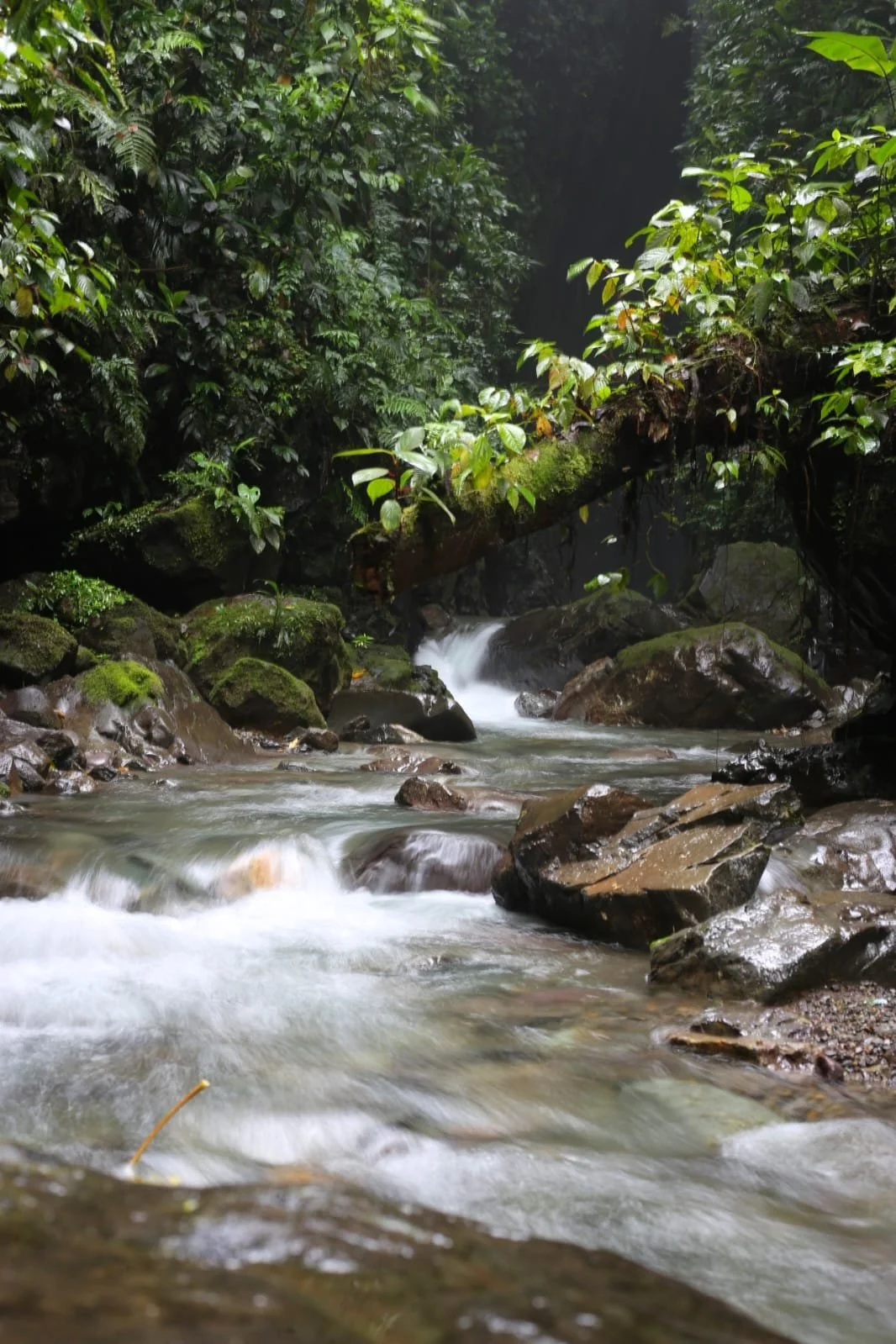
Central America is one of the most extraordinary biological regions on the planet. This narrow bridge of land connecting North and South America may appear small on a world map, but it contains an almost unbelievable concentration of life. In a region stretching only about 2,000 kilometres from Guatemala in the north to Panama in the south, travelers can move through ecosystems that resemble completely different continents. Within a few hours, it is possible to leave a tropical beach, climb into a mist covered cloud forest, cross volcanic highlands, enter ancient rainforests, explore mangrove swamps, and dive among coral reefs. Few places on Earth offer such a dramatic transition of landscapes in such a small area.
The reason Central America is so biologically rich goes back millions of years. When the land bridge between North and South America finally formed, it created one of the greatest natural migration events in Earth's history. Animals and plants from both continents began moving through the region. Species from the ancient forests of South America expanded northward, while species from North America moved south. Central America became a living crossroads where two continents collided biologically. Today, the region contains an incredible mixture of wildlife, including jaguars from South America, migratory birds from North America, ancient reptiles, colorful amphibians, unique insects, and thousands of plant species that evolved in isolation in mountains and forests.
But when travelers ask the question, "Which country in Central America has the best biodiversity?" the answer is surprisingly complicated. Biodiversity can be measured in many different ways. One country may have the greatest number of total species. Another may have the most species packed into a small area. Another may have the largest remaining wilderness areas. Another may have the healthiest coral reefs. Depending on the measurement, different countries can claim the title.
However, when scientists, conservationists, and nature travelers discuss the biodiversity champions of Central America, several countries consistently rise to the top: Costa Rica, Panama, Guatemala, Belize, Honduras, and Nicaragua. Each one protects a different piece of this incredible biological puzzle.
Costa Rica: The Country That Made Biodiversity Famous
When most people around the world think about wildlife tourism in Central America, they think of Costa Rica. No other country in the region has successfully connected its natural environment with international tourism quite like Costa Rica. Over the past several decades, Costa Rica has transformed itself into one of the world's leading ecotourism destinations by protecting huge areas of rainforest, creating national parks, and building an infrastructure that allows visitors to experience nature without destroying it.
Despite covering only around 51,000 square kilometres, Costa Rica contains an astonishing variety of ecosystems. Scientists estimate that the country contains approximately 5 percent of the world's biodiversity, an extraordinary figure considering its tiny size compared with continents and even larger countries. The reason is geography. Costa Rica has two coastlines, the Pacific Ocean and the Caribbean Sea, a chain of volcanic mountains running through the center, tropical lowlands, dry forests, cloud forests, mangroves, wetlands, and high elevation habitats.
The country's most famous wilderness area is Corcovado National Park on the Osa Peninsula. Many biologists consider Corcovado one of the most biologically intense places on Earth. The park protects one of the last major areas of lowland tropical rainforest remaining on the Pacific coast of Central America. Walking through Corcovado feels like entering a living museum of evolution. Giant trees rise hundreds of feet above the forest floor, scarlet macaws fly overhead, monkeys move through the canopy, and trails reveal signs of tapirs, peccaries, and possibly even jaguars. Unlike many tropical forests that have been heavily altered by human activity, Corcovado still maintains the feeling of true wilderness.
Costa Rica's cloud forests are equally famous. Places such as Monteverde have become internationally recognized because of their mysterious forests covered in mist, moss, orchids, bromeliads, and countless species that thrive in the unique conditions created by constant clouds. The famous resplendent quetzal, one of the most beautiful birds in the Americas, attracts birdwatchers from around the world.
Costa Rica's greatest achievement has been showing the world that protecting nature can also create economic opportunities. Tourism revenue has helped justify conservation, and millions of visitors now travel specifically to experience wildlife. In many ways, Costa Rica became the teacher that showed other countries how valuable biodiversity could be.
However, there is another country that many scientists believe deserves even more attention.
Panama: The Hidden Biodiversity Giant
While Costa Rica became famous for biodiversity tourism, Panama quietly became one of the most biologically important countries in the Americas. Many travelers are surprised to learn that Panama may actually have greater biological importance than its famous neighbor because of its unique geographic position.
Panama is where the continents truly connect. It is the final bridge between North and South America, creating a biological meeting point unlike almost anywhere else on Earth. South American species reach their northern limits here, while northern species reach their southern limits. The result is an extraordinary mixture of life.
Panama contains rainforests, cloud forests, coral reefs, mangroves, wetlands, dry tropical forests, volcanic highlands, Caribbean islands, and Pacific coast ecosystems. The country has more bird species than all of North America north of Mexico combined. It contains some of the richest tropical forests remaining in the hemisphere. It is also one of the best places in the world to observe wildlife because many ecosystems are still relatively intact.
One of Panama's greatest natural treasures is the Darién region. The Darién is one of the last great wilderness areas in the Americas. Located near the Colombian border, it contains enormous areas of rainforest that remain difficult to access. This isolation has helped preserve incredible biodiversity. Jaguars still roam these forests. Harpy eagles, one of the world's largest and most powerful eagles, fly above the canopy. Tapirs, monkeys, giant anteaters, and countless other species survive in an environment that has changed very little compared with many other tropical regions.
The Darién is not simply a forest. It is a biological time capsule.
Panama also has another advantage that few countries can match: spectacular biodiversity close to urban areas. Just outside Panama City is Soberanía National Park, one of the greatest birdwatching locations in the world. The famous Pipeline Road has recorded hundreds of bird species, attracting researchers and birders from every continent. It is extraordinary to think that someone can wake up in a modern capital city, drink coffee surrounded by skyscrapers, and within an hour be walking through rainforest filled with monkeys, toucans, sloths, and tropical birds.
The mountains of western Panama are equally impressive. The cloud forests around Boquete, Volcán, and the Fortuna Forest Reserve create cool, misty ecosystems filled with rare plants, frogs, hummingbirds, snakes, and mammals. Because Panama has received less international tourism attention than Costa Rica, many of these places still feel like genuine discoveries.
Panama may not advertise itself as aggressively as Costa Rica, but biologically it is a giant.
Guatemala: Ancient Forests and Hidden Wilderness
Guatemala's biodiversity story is closely connected with its ancient forests and dramatic landscapes. While many travelers visit Guatemala for Mayan ruins, colonial cities, and volcanoes, the country also contains some of the most important ecosystems in Central America.
The Maya Biosphere Reserve in northern Guatemala's Petén region is one of the largest protected areas in the region. This enormous tropical forest contains ancient trees, rivers, wetlands, and archaeological sites hidden beneath the jungle canopy. The area supports jaguars, pumas, monkeys, toucans, crocodiles, and countless other species.
Guatemala's geography creates incredible variety. The highlands around Lake Atitlán contain completely different ecosystems from the tropical lowlands of Petén. Volcanoes create unique habitats, while forests provide refuge for species adapted to cooler mountain environments.
Guatemala is also one of the best countries in Central America for seeing the famous resplendent quetzal. This bird became sacred to ancient Maya civilizations and remains one of the most admired species in the region.
Belize: The Marine Biodiversity Champion
When discussing biodiversity, many people focus only on forests. But some of Central America's greatest natural treasures are underwater.
Belize is the undisputed marine biodiversity superstar of the region. Its Caribbean coastline protects the Belize Barrier Reef, the second largest coral reef system in the world after Australia's Great Barrier Reef.
The reef supports an incredible underwater ecosystem filled with colorful fish, sea turtles, rays, sharks, dolphins, and countless coral species. Places like the Great Blue Hole have become famous worldwide among divers and adventure travelers.
On land, Belize also protects important rainforest habitats, including areas where jaguars still survive. The country's relatively small population and extensive protected areas have helped preserve large sections of natural habitat.
For travelers interested in combining rainforest and ocean adventures, Belize offers an incredible combination.
Honduras: The Forgotten Wilderness
Honduras is often overlooked by international tourists, but environmentally it is one of Central America's great hidden treasures.
The country's Caribbean coast contains some of the largest remaining rainforest areas in the region. The Río Plátano Biosphere Reserve is a UNESCO World Heritage Site and one of the most important wilderness areas in Central America.
The reserve protects forests, rivers, mountains, and Indigenous territories. It is home to jaguars, tapirs, monkeys, tropical birds, and countless other species.
Honduras also has remarkable marine biodiversity around the Bay Islands. Places like Roatán have become famous among divers because of their clear waters and incredible coral ecosystems.
Nicaragua: The Land of Vast Natural Landscapes
Nicaragua has some of the largest remaining natural areas in Central America. Because it is larger than several neighboring countries and historically received less tourism pressure, it still contains enormous wilderness regions.
The Caribbean side of Nicaragua is particularly important. Areas such as the Indio Maíz Biological Reserve protect vast rainforests filled with wildlife.
Nicaragua also contains incredible volcanic landscapes, freshwater lakes, dry forests, and coastal ecosystems.
For adventurous travelers willing to go beyond the famous backpacker route, Nicaragua offers some of the most rewarding wildlife experiences in the region.
So Which Country Is Truly Number One?
The honest answer is that there is no single winner.
If you measure tourism infrastructure and conservation success, Costa Rica is the clear champion.
If you measure the meeting point of continents and biological importance, Panama may be the strongest contender.
If you measure ancient rainforest wilderness, Guatemala and Honduras are incredible.
If you measure marine biodiversity, Belize dominates.
If you measure untouched landscapes, Nicaragua and Panama have enormous advantages.
The true answer is that Central America itself is the biodiversity champion.
The region represents one of the most important biological corridors on Earth. Every country contributes something unique. Together, they create a landscape where a traveler can experience an unbelievable variety of life within a relatively short journey.
A person can dive among coral reefs in Belize, search for quetzals in Guatemala, hike volcanoes in Nicaragua, watch monkeys in Costa Rica, explore cloud forests in Panama, and discover untouched Caribbean wilderness in Honduras.
Few regions anywhere on the planet offer that kind of diversity.
And perhaps the most exciting part is that Central America's greatest discoveries may still be ahead. Scientists continue finding new species in remote forests. New trails are being explored. Hidden ecosystems remain poorly studied. The rainforests, mountains, and oceans of this region still contain secrets waiting to be uncovered.
For travelers who want more than beaches and famous attractions, Central America remains one of Earth's greatest natural adventures: a place where every trail can lead to something unexpected, every forest can reveal something new, and every country tells a different chapter in the incredible story of life on our planet.