
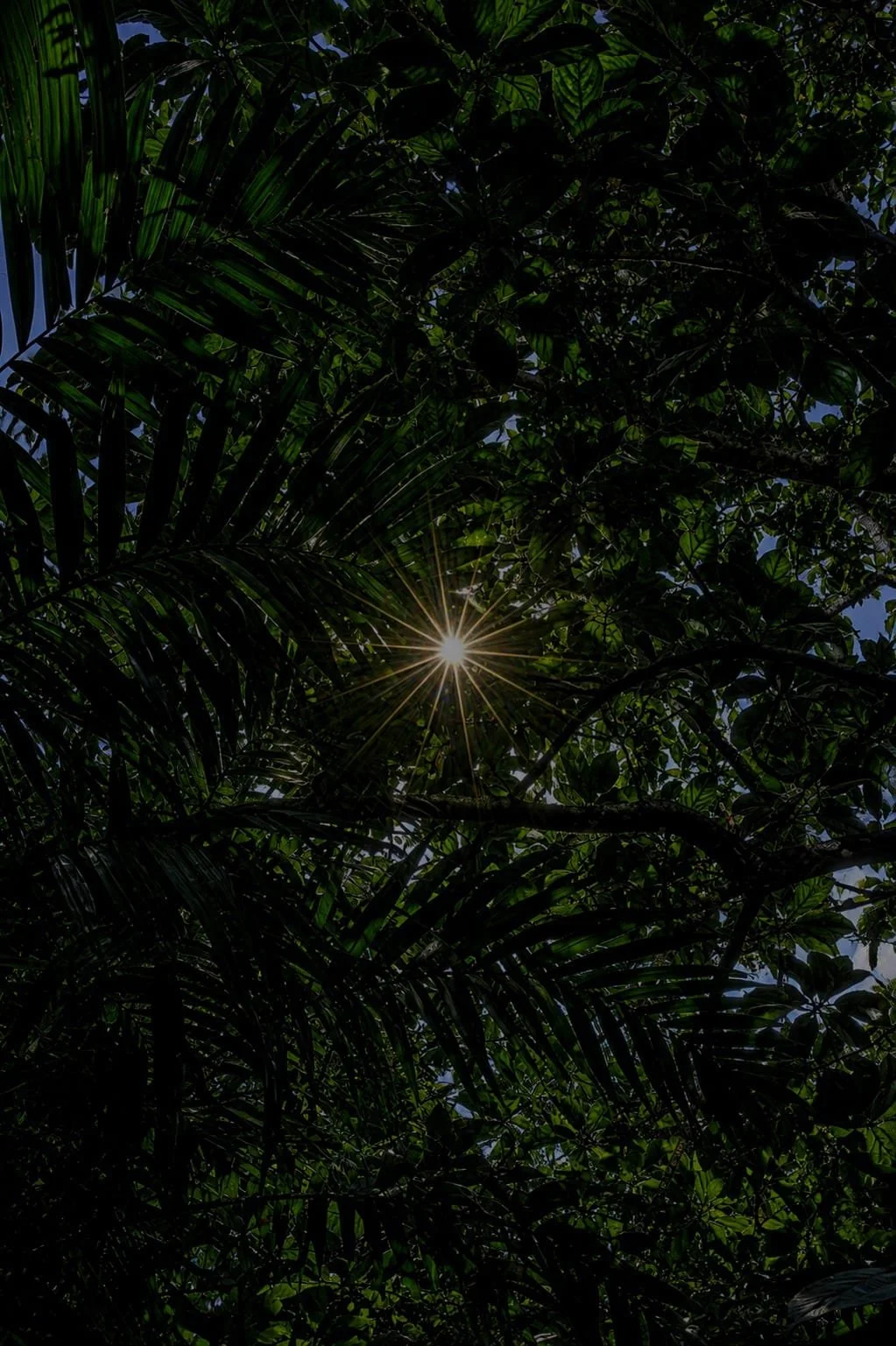
Panama is one of the most biodiverse countries on Earth. Although it is smaller than South Carolina, it is home to more than 250 species of mammals, nearly 1,000 species of birds, over 230 species of reptiles, around 180 species of amphibians, and thousands upon thousands of insects. Because Panama forms the land bridge between North and South America, species from both continents meet here, creating one of the richest wildlife destinations in the world. Whether you're hiking through cloud forests, exploring mangroves, diving coral reefs, or relaxing on a tropical beach, there is always the possibility of encountering remarkable wildlife. Here are the animals that most visitors dream of seeing.
Sloths
Without question, sloths are among Panama's biggest wildlife stars. Both the brown-throated three-toed sloth and the Hoffmann's two-toed sloth live throughout much of the country. They spend nearly their entire lives hanging upside down in trees, moving so slowly that algae often grows on their fur, helping camouflage them among the leaves. Visitors often spot sloths in Panama City's Metropolitan Natural Park, Soberanía National Park, Bocas del Toro, Boquete, and many rainforest lodges. Seeing a sloth lazily climbing through the canopy is a highlight for countless travelers.
White-faced Capuchin Monkeys
These intelligent monkeys are energetic, curious, and highly social. They often travel in noisy groups, jumping effortlessly through the treetops while searching for fruit, insects, eggs, and small animals. Their expressive white faces make them easy to recognize. Visitors frequently encounter them in Manuel Antonio-style forests of Central America, but Panama also offers excellent viewing opportunities in Soberanía National Park, Coiba National Park, Isla Bastimentos, and many parts of Chiriquí.
Howler Monkeys
Known for producing one of the loudest calls of any land animal, howler monkeys can often be heard long before they are seen. Their deep roaring calls echo across the rainforest at dawn and dusk and can travel several kilometres through the forest. Watching an entire troop feeding quietly in the canopy after hearing their dramatic calls is an unforgettable experience.
Spider Monkeys
Spider monkeys are among the most agile primates in the Americas. Their extremely long arms and prehensile tails allow them to swing gracefully between branches high above the forest floor. They are less commonly seen than capuchins but are highly prized by wildlife enthusiasts because of their elegance and intelligence.
Geoffroy's Tamarin
One of Panama's smallest monkeys, Geoffroy's tamarin is found only in Panama and neighboring Colombia. These tiny monkeys weigh less than a kilogram and move rapidly through the lower canopy searching for insects, fruit, and tree sap. Their striking black-and-white faces and lively personalities make them favorites among photographers.
Resplendent Quetzal
For birdwatchers, nothing compares to spotting a resplendent quetzal. Considered one of the world's most beautiful birds, the male has shimmering emerald-green feathers and an impossibly long flowing tail. Quetzals live in the cool cloud forests around Volcán Barú, Cerro Punta, and other high-elevation forests in western Panama. Thousands of birdwatchers travel from around the world hoping to glimpse this legendary species.
Toucans
Panama is home to several species of toucans, including the spectacular keel-billed toucan, whose oversized bill displays brilliant shades of green, yellow, orange, and red. Their loud croaking calls often reveal their presence before they appear among fruiting trees.
Scarlet Macaws
These brilliant red parrots are among the most colorful birds in the tropics. Although once much more widespread, they are now best seen in protected areas such as Coiba National Park and parts of Darién. Seeing a pair flying overhead against a blue tropical sky is unforgettable.
Hummingbirds
Panama has more than 50 species of hummingbirds. Around feeders in mountain lodges, especially in Chiriquí's cloud forests, visitors may see a dozen different species within minutes. Their dazzling iridescent colors and incredible hovering abilities make them some of the country's most beloved birds.
Harpy Eagle
Panama's national bird is also one of the world's largest and most powerful eagles. Harpy eagles are capable of hunting monkeys and sloths high in the rainforest canopy. They are extremely rare to encounter in the wild, mainly surviving in remote forests such as Darién National Park, making any sighting an extraordinary event.
Keel-billed Motmots and Trogons
Many visitors become fascinated by Panama's colorful forest birds beyond the famous quetzal. Motmots with their racket-shaped tails and brilliantly colored trogons add flashes of green, blue, and red to the rainforest.
Poison Dart Frogs
Tiny but spectacularly colorful, Panama's poison dart frogs are among the country's most photographed amphibians. The famous strawberry poison dart frog of Bocas del Toro comes in several different color forms depending on which island it inhabits, ranging from bright red to blue, orange, or green.
Green Iguanas
Large green iguanas are common throughout much of Panama. They are often seen basking in trees above rivers or slowly climbing branches in parks and gardens.
Basilisk Lizards
Nicknamed the "Jesus Christ lizard," basilisk lizards are famous for their ability to run across the surface of water using their powerful hind legs. Spotting one sprint across a jungle stream is one of nature's most remarkable spectacles.
Sea Turtles
Panama is one of the world's great sea turtle destinations. Visitors may encounter leatherback turtles, the largest turtles on Earth, nesting along Caribbean beaches. Hawksbill, green, loggerhead, and olive ridley turtles also nest on various Panamanian beaches depending on the season. Watching a giant turtle crawl ashore under the stars to lay eggs is an unforgettable wildlife experience.
Humpback Whales
Every year, humpback whales migrate to Panama's warm Pacific waters to breed and give birth. Between roughly July and October, visitors can often see adults breaching and mothers swimming alongside newborn calves around the Gulf of Chiriquí, Coiba National Park, and the Pearl Islands.
Dolphins
Spinner dolphins, bottlenose dolphins, and spotted dolphins are commonly seen during boat trips around Panama's Pacific and Caribbean coasts. They frequently ride the bow waves of boats and delight passengers with their acrobatics.
Whale Sharks
Although sightings are uncommon, the world's largest fish occasionally visits Panamanian waters. Divers visiting Coiba National Park sometimes experience the incredible privilege of swimming near these enormous but harmless filter feeders.
Whale Watching Giants
Besides humpback whales, Panama's waters occasionally host Bryde's whales, sperm whales, pilot whales, and several species of beaked whales, making the country surprisingly rich for marine mammal enthusiasts.
Crocodiles and Caimans
American crocodiles inhabit rivers, mangroves, lakes, and parts of the Panama Canal watershed. Smaller spectacled caimans are also widespread and are commonly seen during nighttime wildlife tours.
Jaguars
The jaguar is Panama's largest wild cat and one of the country's most mysterious animals. Although they inhabit remote forests such as Darién National Park and parts of western Panama, they are incredibly elusive. Very few visitors ever see one in the wild, but knowing these magnificent predators still roam Panama's forests adds to the country's sense of wilderness.
Ocelots, Margays, and Jaguars' Smaller Cousins
Panama is home to several smaller wild cats, including ocelots, margays, jaguarundis, and pumas. They are seldom seen because they are primarily nocturnal and extremely secretive.
Tapirs
Baird's tapir, Central America's largest land mammal, resembles a prehistoric creature with its short trunk-like snout. Although endangered and rarely encountered, they survive in Panama's largest protected forests.
Anteaters
Both the giant anteater and the northern tamandua occur in Panama. Tamanduas are sometimes spotted climbing trees during the day, while giant anteaters remain much rarer.
Kinkajous and Olingos
These nocturnal rainforest mammals are close relatives of raccoons. Active after dark, they climb effortlessly through the canopy searching for fruit and nectar. Guided night walks occasionally reveal these fascinating animals.
Coatis
Coatis resemble long-nosed raccoons and often travel in family groups. Curious and energetic, they are regularly seen in national parks searching for insects and fruit.
Colorful Butterflies
Panama's rainforests support hundreds of butterfly species, including the spectacular blue morpho. Its brilliant metallic-blue wings flash through the forest like floating jewels.
Leaf-cutter Ants
Although tiny compared with Panama's larger wildlife, leaf-cutter ants are among the rainforest's greatest engineers. Their endless columns carrying leaf fragments back to underground fungus gardens fascinate visitors and demonstrate the complexity of tropical ecosystems.
A Wildlife Paradise
What makes Panama so special is not just the number of species but how accessible they are. It is entirely possible to watch sloths in the morning, monkeys before lunch, hummingbirds during the afternoon, poison dart frogs on a rainforest trail, dolphins during a sunset boat trip, and sea turtles nesting that same evening. Few countries of Panama's size offer such an extraordinary diversity of wildlife within such short travel distances.
For nature lovers, birdwatchers, photographers, backpackers, and adventure travelers, Panama is truly one of the world's great wildlife destinations. Every rainforest trail, cloud forest, mangrove, coral reef, and mountain valley holds the promise of another unforgettable encounter with one of the incredible animals that call this remarkable country home.