
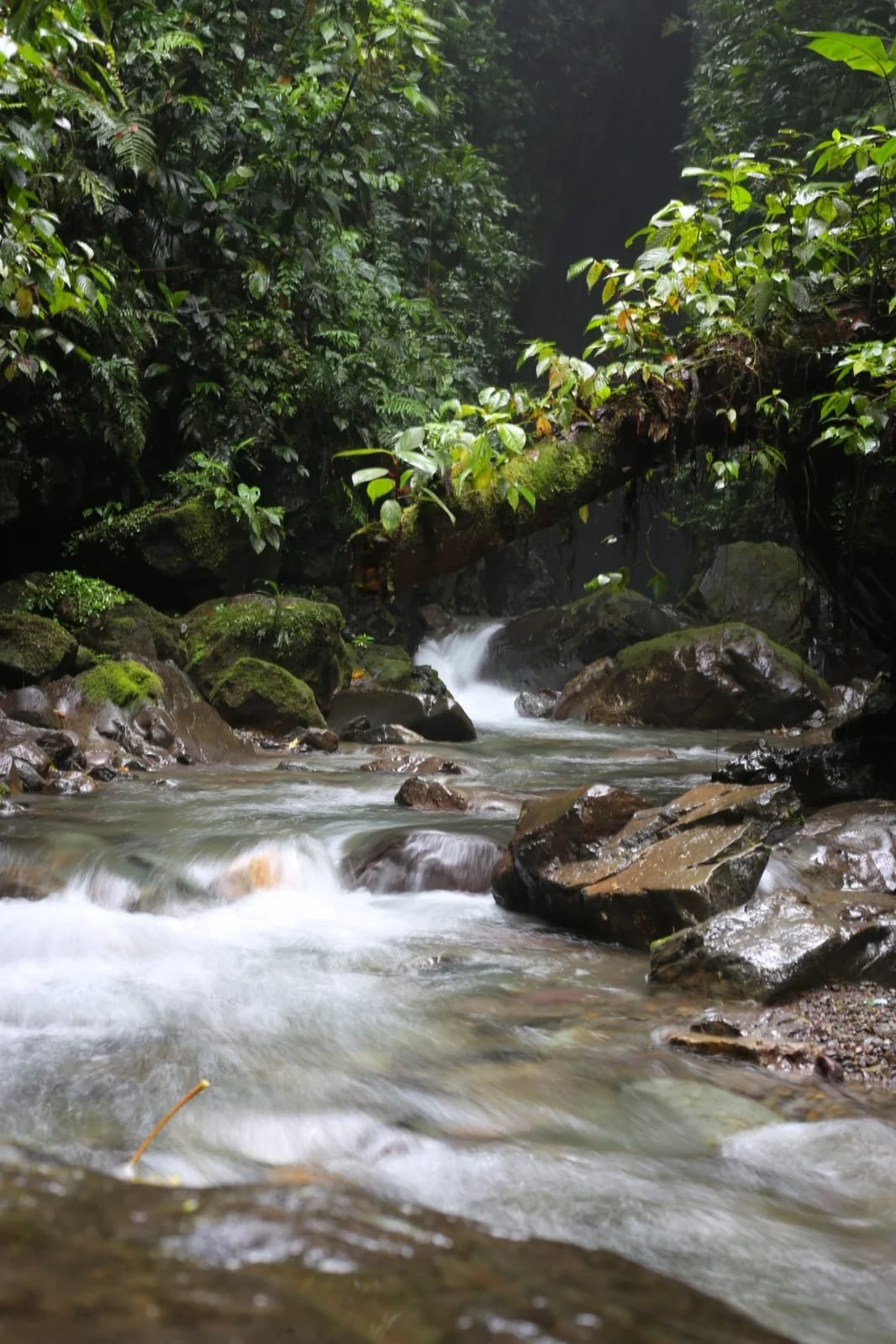
As the tropical sun disappears behind Panama's mountains and rainforests, another world begins to awaken. While most visitors are returning to their hotels after a day of exploring beaches, waterfalls, or the Panama Canal, thousands upon thousands of silent wings suddenly fill the evening sky. Tiny shadows dart between giant rainforest trees, sweep across rivers, skim over jungle streams, and disappear into the darkness. These are Panama's bats, some of the most fascinating, misunderstood, and ecologically important animals in the Americas.
For many people, bats inspire mystery. Legends, myths, and movies have often portrayed them as frightening creatures, yet the reality could not be more different. In Panama, bats are among nature's greatest allies. They pollinate flowers, spread the seeds that regenerate forests, consume enormous numbers of insects, help farmers protect crops, and play a vital role in maintaining the health of tropical ecosystems. Without bats, Panama's rainforests would look very different, and many of the fruits enjoyed throughout the country might become far less abundant.
Panama is one of the greatest places on Earth to study bats. Although the country occupies only a tiny fraction of the world's land area, it is home to well over 110 species of bats, representing one of the highest concentrations of bat diversity anywhere in the Americas. Scientists continue discovering new information about these remarkable mammals, and the Smithsonian Tropical Research Institute has made Panama one of the world's leading centers for bat research. Few countries allow visitors to encounter such an astonishing variety of bats within such a small area.
Panama's unique geography explains much of this incredible diversity. The narrow isthmus connects North and South America while separating the Pacific Ocean from the Caribbean Sea. Over millions of years, animals from both continents migrated across this natural bridge, creating one of the richest collections of wildlife on Earth. Tropical rainforests, cloud forests, mangrove swamps, dry forests, caves, rivers, islands, and mountain valleys all provide different habitats where bats have evolved to occupy almost every ecological niche imaginable.
Contrary to popular belief, bats are not birds. They are mammals, making them much more closely related to humans than to any feathered creature. Like all mammals, they have fur rather than feathers, give birth to live young, and nurse their babies with milk. They are also the only mammals capable of true powered flight. Flying squirrels merely glide from tree to tree, but bats actively flap their wings, allowing them to perform astonishing aerial maneuvers that no bird can match.
A bat's wing is one of nature's engineering masterpieces. Instead of feathers, the wing consists of an extremely thin membrane of skin stretched across elongated fingers. If you could look closely at a bat's skeleton, you would immediately recognize bones remarkably similar to those in a human hand. Evolution simply transformed those fingers into the framework supporting an incredibly flexible wing capable of rapid turns, hovering, sudden dives, and precise landings.
Perhaps the most famous feature of bats is echolocation, one of the most sophisticated navigation systems in the animal kingdom. As bats fly through complete darkness, they constantly emit bursts of high frequency sound that humans cannot hear. These sound waves bounce off leaves, insects, tree trunks, cave walls, and even tiny branches before returning as echoes. By analyzing these echoes, the bat creates an extraordinarily detailed three dimensional picture of its surroundings. It can detect insects no larger than a mosquito, avoid obstacles while flying at high speed, and navigate dense rainforest without ever relying on sight alone. Modern sonar systems were inspired in part by studying this remarkable natural technology.
Panama's bats have evolved into an astonishing variety of lifestyles. The majority feed on insects, making them invaluable natural pest controllers. Every night, millions of insects disappear into hungry bat mouths. A single small insect eating bat may consume hundreds or even thousands of mosquitoes, moths, beetles, flies, and other insects during one night's hunting. Collectively, Panama's bats remove enormous numbers of agricultural pests, reducing damage to crops while helping control mosquito populations naturally.
Fruit eating bats are among the rainforest's greatest gardeners. Every evening they travel long distances searching for ripe figs, guavas, bananas, wild cherries, and dozens of other tropical fruits. After eating, they carry seeds away from the parent tree before depositing them throughout the forest in their droppings. These seeds often germinate successfully, allowing new trees to colonize forest clearings created by storms or fallen giants. Scientists estimate that fruit bats disperse millions of seeds every year, making them essential for rainforest regeneration. In areas damaged by logging or agriculture, bats often become the first animals helping forests recover naturally.
Flower feeding bats perform another remarkable service by acting as nighttime pollinators. While hummingbirds dominate daytime pollination, bats take over after sunset. Their long tongues and specially adapted snouts allow them to reach deep inside tropical flowers rich in nectar. As they feed, pollen sticks to their fur before being transferred to the next flower they visit. Many tropical plants depend almost entirely upon bats for successful reproduction. Some species of cactus, agave, balsa trees, and countless rainforest plants would struggle to survive without these nocturnal pollinators.
One of the world's most famous commercial crops also owes much to bats. Wild bananas, mangoes, and several tropical fruits benefit directly or indirectly from bat pollination or seed dispersal. Healthy bat populations therefore contribute not only to biodiversity but also to agriculture and local economies.
Panama is also home to several remarkable fishing bats. These species skim low over rivers, lakes, and mangrove lagoons using enormous feet equipped with sharp claws. By detecting ripples on the water's surface, they snatch small fish directly from the water while remaining airborne. Watching one of these bats hunt under moonlight is one of the rainforest's most spectacular nighttime displays.
Among Panama's most unusual bats are the white tent making bats. Barely larger than a golf ball, these beautiful animals possess snowy white fur, bright yellow ears, and orange noses. Rather than living inside caves, they construct daytime shelters by chewing along the veins of large tropical leaves. As the leaf folds downward, it forms a natural tent beneath which several bats roost together. These delicate shelters protect them from rain and predators while allowing excellent ventilation in the tropical heat. Visitors fortunate enough to discover one of these leafy tents often consider it among the highlights of their rainforest adventures.
The famous Jamaican fruit bat is another common resident of Panama's forests. These medium sized bats are among the country's most important seed dispersers and play a crucial role in maintaining healthy tropical ecosystems. Their nightly movements spread seeds across enormous areas, ensuring continual forest renewal.
No discussion of bats would be complete without mentioning the vampire bats, perhaps the most misunderstood mammals on Earth. Panama is home to three species of vampire bats, but together they represent only a tiny fraction of the country's bat diversity. Unlike the terrifying creatures portrayed in horror films, vampire bats are relatively small animals that usually feed on livestock or wild mammals by making tiny, shallow cuts in the skin and licking a very small amount of blood. Attacks on humans are extremely rare, and the overwhelming majority of Panama's bat species never consume blood at all. Allowing vampire bats to define public opinion of all bats would be like judging all birds by vultures alone.
Panama's caves provide some of the country's most impressive wildlife spectacles. Deep inside limestone caverns, abandoned tunnels, and rocky crevices, thousands or even hundreds of thousands of bats gather in vast colonies. At sunset these colonies erupt into the evening sky like living rivers of wings. The sound of thousands of bats leaving a cave simultaneously is unforgettable, creating one of the most dramatic wildlife experiences in Central America.
Some of the country's finest bat watching opportunities occur in places such as Soberanía National Park, Barro Colorado Island, Metropolitan Natural Park, Pipeline Road, Coiba National Park, the cloud forests around Boquete, and the forests surrounding Lost and Found Hostel in Chiriquí. Evening walks through these forests often reveal bats feeding on flowering trees, darting over rivers, or hunting insects attracted by lights. Many guided night tours include ultrasonic bat detectors that convert echolocation calls into audible sounds, allowing visitors to hear species that would otherwise remain completely silent.
The Smithsonian Tropical Research Institute has transformed Panama into one of the world's leading centers for bat science. For decades researchers have investigated bat communication, navigation, social behaviour, disease ecology, genetics, pollination, migration, and forest restoration. Their discoveries have fundamentally changed scientific understanding of tropical ecosystems and highlighted just how essential bats are for maintaining healthy forests.
One fascinating discovery involves the social intelligence of bats. Far from being solitary creatures, many species live in complex family groups. Mothers recognize the calls of their own babies among thousands of individuals crowded inside dark caves. Some species groom one another, share food, cooperate in raising young, and maintain long term social relationships lasting many years. Vampire bats have even been observed sharing meals with unrelated individuals that failed to feed, demonstrating surprising levels of cooperation.
Bats also possess remarkably long lifespans compared with other mammals of similar size. While a mouse may survive only a year or two in the wild, some bats have been documented living for more than thirty years. Scientists continue studying how bats achieve such exceptional longevity despite their extremely active lifestyles.
Conservation has become increasingly important for Panama's bats. Although many populations remain healthy, habitat loss, cave disturbance, pesticide use, and deforestation threaten certain species. Fortunately, Panama's extensive network of national parks and protected forests provides critical refuge for bat populations. Preserving old growth forests, protecting caves, and maintaining healthy mangrove ecosystems all contribute to safeguarding these remarkable mammals for future generations.
Perhaps the greatest challenge bats face is not habitat destruction but misunderstanding. For centuries myths have portrayed them as dangerous, dirty, or aggressive. In reality, bats are shy animals that prefer avoiding humans whenever possible. They provide billions of dollars worth of ecological services worldwide through pollination, seed dispersal, and insect control. Entire tropical forests depend upon their nightly work, yet most people never even notice them flying silently overhead.
For visitors exploring Panama, learning about bats offers a completely new perspective on the rainforest. As darkness falls and the daytime chorus of birds gives way to the sounds of frogs, insects, and nocturnal wildlife, the forest begins another shift of activity. Bats emerge from hollow trees, caves, abandoned buildings, and leafy shelters to begin one of nature's greatest night shifts. Every hour they pollinate flowers, plant future forests, control insect populations, and keep tropical ecosystems functioning exactly as they have for millions of years.
Panama's incredible biodiversity is often celebrated through its monkeys, sloths, whales, sea turtles, colourful birds, and magnificent rainforests. Yet hidden within the darkness is another world every bit as extraordinary. With more than 110 species filling nearly every ecological role imaginable, bats are among the country's greatest wildlife treasures. They are master navigators, tireless pollinators, forest gardeners, natural pest controllers, devoted mothers, remarkable fliers, and some of the most successful mammals ever to evolve.
The next time you stand beneath Panama's rainforest canopy at sunset and see tiny silhouettes dancing across the evening sky, remember that you are witnessing one of nature's greatest spectacles. Every silent wingbeat helps sustain one of the richest ecosystems on Earth. Far from being creatures to fear, Panama's bats are among the nation's most valuable and fascinating inhabitants, quietly working every night to keep the forests alive for generations to come.