
As the blazing tropical sun sinks beneath the horizon and the final rays of orange light disappear beyond Panama's mountains and coastlines, something extraordinary begins to happen. The forests do not become quiet. They awaken. An entirely different world emerges, one that many visitors never experience. The daytime belongs to colourful toucans, lazy sloths basking in the warmth, butterflies drifting between flowers and troops of howler monkeys announcing the sunrise. Night belongs to a completely different cast of characters. Thousands upon thousands of animals begin their day just as humans begin preparing for sleep. Hidden beneath leaves, inside hollow trees, under fallen logs and high in the rainforest canopy, Panama's nocturnal wildlife comes alive in one of the most spectacular natural performances in the Americas.
Panama is one of the most biodiverse countries on Earth. Despite covering less than 0.05 percent of the planet's land surface, it contains an astonishing variety of ecosystems. Tropical rainforests, cloud forests, mangrove swamps, mountain forests, lowland jungle, river valleys and coastlines all provide homes for creatures that have evolved to thrive under the cover of darkness. Scientists estimate that Panama is home to well over 1,000 bird species, more than 250 species of mammals, hundreds of reptiles and amphibians and countless insects, many of which become active only after sunset. To truly understand Panama's wildlife, you cannot simply visit during the day. You must experience the rainforest after dark.
Walking into a Panamanian rainforest at night is unlike anything else. During the day your eyes dominate your senses. At night your ears become your guide. Every direction seems alive with sound. Tree frogs whistle from hidden pools. Crickets produce an endless orchestra that never seems to stop. Cicadas create powerful buzzing calls that echo across valleys. Somewhere high above, unseen branches shake as mammals move silently through the canopy. Leaves rustle for reasons that remain a mystery until a flashlight reveals a tiny frog, a wandering tarantula or perhaps an opossum quietly searching for fruit. Every step feels like entering a secret world that exists all around us but remains invisible to most people.
One of the greatest advantages of Panama's tropical climate is that these forests remain active throughout the entire year. There is no long winter that forces animals into hibernation. Every evening, whether in the dry season or during the lush green rainy season, the forest comes alive with incredible energy. The rains themselves often make the experience even more magical. Fresh moisture fills the air, frogs begin calling more intensely and waterfalls roar through the darkness while mist hangs between ancient trees.
Many visitors are surprised to discover that some of Panama's most iconic mammals are far easier to encounter at night than during daylight hours. Kinkajous, sometimes nicknamed honey bears despite not actually being bears, spend their days hidden inside tree cavities before emerging after sunset. Their enormous eyes collect every available ray of moonlight while their long prehensile tails allow them to climb effortlessly through the canopy in search of fruit and nectar. Watching one move gracefully between branches is like witnessing an acrobat perform high above the forest floor.
Closely related are the mysterious olingos, elegant mammals that remain largely unknown outside Central America. They glide silently through the treetops feeding on fruit, insects and small animals. Their movements are so smooth and quiet that many people walk directly beneath them without ever realizing they are there. Only a careful guide scanning the canopy with a flashlight may suddenly reveal two glowing eyes staring curiously down through the leaves.
Panama's forests are also home to several species of opossums, remarkable survivors that have adapted to almost every type of habitat. They are nature's opportunists, feeding on insects, fruit, eggs, frogs and even venomous snakes. Their famous ability to play dead has fascinated scientists for generations. Rather than consciously pretending, they enter an involuntary state that can convince predators they are no longer worth eating. At night these adaptable mammals become energetic explorers, constantly searching for their next meal.
Perhaps no animal captures the imagination quite like the jaguar. Although incredibly elusive, Panama remains one of the last countries in Central America where healthy jaguar populations still survive in protected forests. These magnificent cats are masters of darkness. Their powerful bodies move almost silently through dense vegetation while extraordinary night vision allows them to hunt in near total darkness. Even experienced researchers may spend years studying jaguars without seeing one in the wild. Yet simply knowing that somewhere within Panama's vast rainforests these apex predators continue their ancient nightly patrol adds an unforgettable sense of wonder to every nighttime walk.
Smaller wild cats are more numerous but equally mysterious. Ocelots, margays and jaguarundis each occupy their own ecological niche within Panama's forests. The margay, in particular, is one of the world's finest climbers, capable of descending trees headfirst and leaping confidently between branches in pursuit of birds, rodents and reptiles. Their spotted coats blend perfectly into the dappled moonlight filtering through the canopy.
Panama's cloud forests create an even more magical nighttime atmosphere. Found in higher elevations such as the mountains of Chiriquí, these forests are often wrapped in cool mist that drifts silently between moss covered trees. Every branch seems covered in orchids, bromeliads, lichens and ferns. Moisture hangs in the air while strange calls echo through the fog. Walking through a cloud forest at night often feels less like exploring Earth and more like stepping into a forgotten fantasy world.
One of the very best places to experience this remarkable environment is the cloud forest surrounding Lost and Found Hostel in the Fortuna Forest Reserve of western Panama. Hidden deep within the mountains between Boquete and Bocas del Toro, the hostel sits within protected forest where nature dominates every moment after sunset. As darkness settles over the reserve, guests quickly realize they are surrounded by life. Night safaris around the trails reveal frogs clinging to leaves, insects of astonishing size and colour, spiders weaving intricate webs between branches and the occasional glimpse of nocturnal mammals moving through the trees. The cool mountain climate makes nighttime exploration especially comfortable compared with the hotter lowland rainforests, while the dense cloud forest creates an unforgettable atmosphere of mystery. For many backpackers travelling through Panama, spending an evening listening to the sounds of this ancient forest becomes one of the highlights of their entire journey. Rather than simply reading about nocturnal wildlife, visitors become immersed in it, falling asleep to a chorus of frogs, insects and distant animal calls that continue until dawn.
One of the true stars of Panama's nighttime rainforest is the incredible diversity of frogs. During daylight many remain hidden beneath leaves or inside bromeliads, conserving moisture and avoiding predators. Once darkness arrives, however, the forest erupts into an astonishing concert. Every species has developed its own distinctive call so that males can attract females without confusing themselves with neighbouring species. Tiny glass frogs, whose translucent skin reveals many of their internal organs, perch delicately on leaves above streams. Brilliant red eyed tree frogs emerge with glowing crimson eyes and vivid green bodies. Poison dart frogs, despite their tiny size, display dazzling colours that warn predators to stay away. During the rainy season the chorus becomes almost deafening as hundreds of individuals call simultaneously from every direction.
Snakes also become far more active after sunset. Although many visitors initially fear them, the vast majority prefer avoiding people altogether. Tree boas drape themselves over branches waiting patiently for passing prey. Cat eyed snakes hunt sleeping lizards while vine snakes remain almost impossible to distinguish from surrounding vegetation. These reptiles play an essential role in maintaining the balance of rainforest ecosystems by controlling populations of rodents, frogs and other small animals.
The insect world of Panama becomes almost unimaginably busy after dark. Giant rhinoceros beetles emerge from decaying wood. Colourful katydids disappear against leaves through extraordinary camouflage. Walking sticks resemble tiny branches so perfectly that they seem to vanish even when directly illuminated by a flashlight. Massive moths, some with wings larger than a human hand, flutter silently through the forest carrying pollen between flowers that bloom only at night. Fireflies drift through clearings like tiny floating lanterns, communicating through intricate flashing patterns that scientists are still working to fully understand.
Leaf cutter ants continue one of nature's most impressive engineering projects every single night. Long columns stretch across the forest floor carrying neatly cut fragments of leaves many times larger than the ants themselves. Contrary to popular belief, they do not eat these leaves directly. Instead they use them to cultivate underground fungus gardens that feed the colony. Some colonies contain millions of individuals working together with astonishing efficiency beneath the rainforest floor.
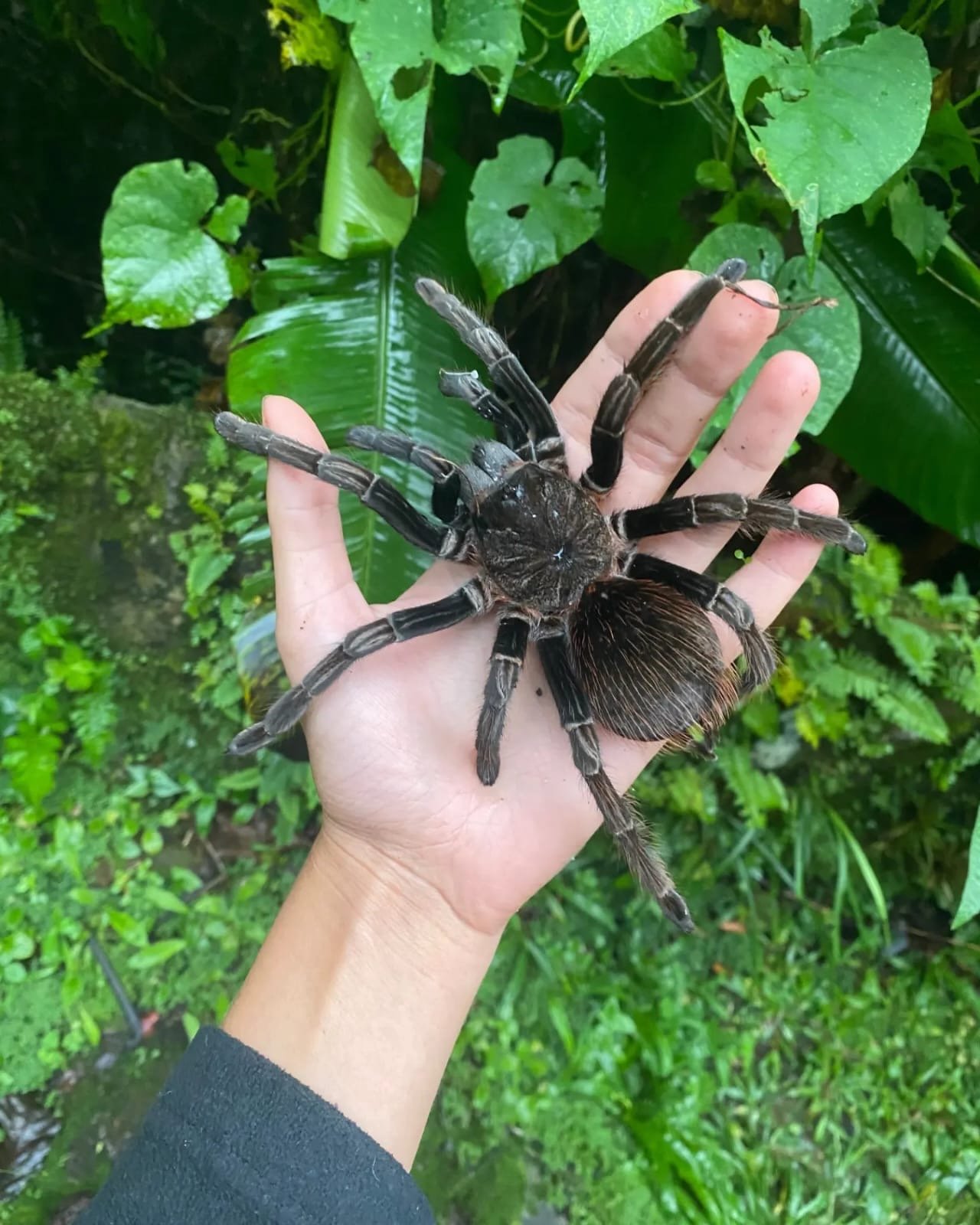
Spiders inspire fear in many people, yet they are among Panama's most important nighttime predators. Orb weaving spiders construct beautiful circular webs that seem almost invisible until illuminated by a flashlight. Wolf spiders patrol the ground without webs, relying on speed and excellent vision. Tarantulas, surprisingly gentle despite their intimidating appearance, emerge cautiously from underground burrows searching for insects and other small prey. Far from being dangerous monsters, they are essential for keeping insect populations under control.
One of the rainforest's greatest unsung heroes is the bat. Panama hosts well over one hundred bat species, making it one of the richest bat habitats anywhere in the Americas. Contrary to popular myths, only a tiny handful feed on blood. Most consume insects, fruit or nectar. Fruit bats disperse seeds across enormous distances, helping regenerate forests after storms or landslides. Nectar feeding bats pollinate night blooming flowers that depend entirely upon them for survival. Insect eating bats remove staggering numbers of mosquitoes and agricultural pests every evening, providing enormous ecological and economic benefits.
Even the plants of Panama participate in the nighttime drama. Many rainforest flowers release their strongest fragrance only after sunset. Their pale petals reflect moonlight while sweet scents drift through the humid air, attracting bats and giant moths that perform the vital work of pollination. Some flowers bloom for only a single night before withering by sunrise, making every evening in the rainforest unique.
Perhaps the greatest wonder of Panama's nocturnal rainforest is that everything is connected. Frogs feed snakes. Snakes feed wild cats. Fruit bats disperse seeds that become giant rainforest trees. Flowering plants depend on insects and bats. Fallen trees become homes for fungi, beetles and countless microorganisms that recycle nutrients back into the soil. Every sound heard during a nighttime walk represents another piece of an incredibly complex ecological puzzle that has evolved over millions of years.
For travellers, experiencing Panama's rainforest after dark changes the way they see nature forever. The daytime rainforest is colourful, beautiful and energetic, but the nighttime rainforest is mysterious, immersive and unforgettable. It reminds us that much of the natural world lives according to a rhythm completely different from our own. While cities fall silent and lights begin switching off, Panama's forests enter their busiest hours.
To stand quietly beneath towering rainforest trees, surrounded by cool mist, glowing insects, distant frog choruses and the possibility that an unseen mammal is watching from the darkness above, is to experience one of the last great wilderness spectacles on Earth. It is a reminder that Panama is far more than beaches, canals and tropical islands. It is a living sanctuary where, every single night, one of the richest displays of biodiversity on the planet awakens beneath the cover of darkness. For anyone who wishes to understand the true soul of Panama, there are few experiences more unforgettable than venturing into its rainforest after sunset, especially in the enchanting cloud forests surrounding Lost and Found Hostel, where the forest never truly sleeps.