
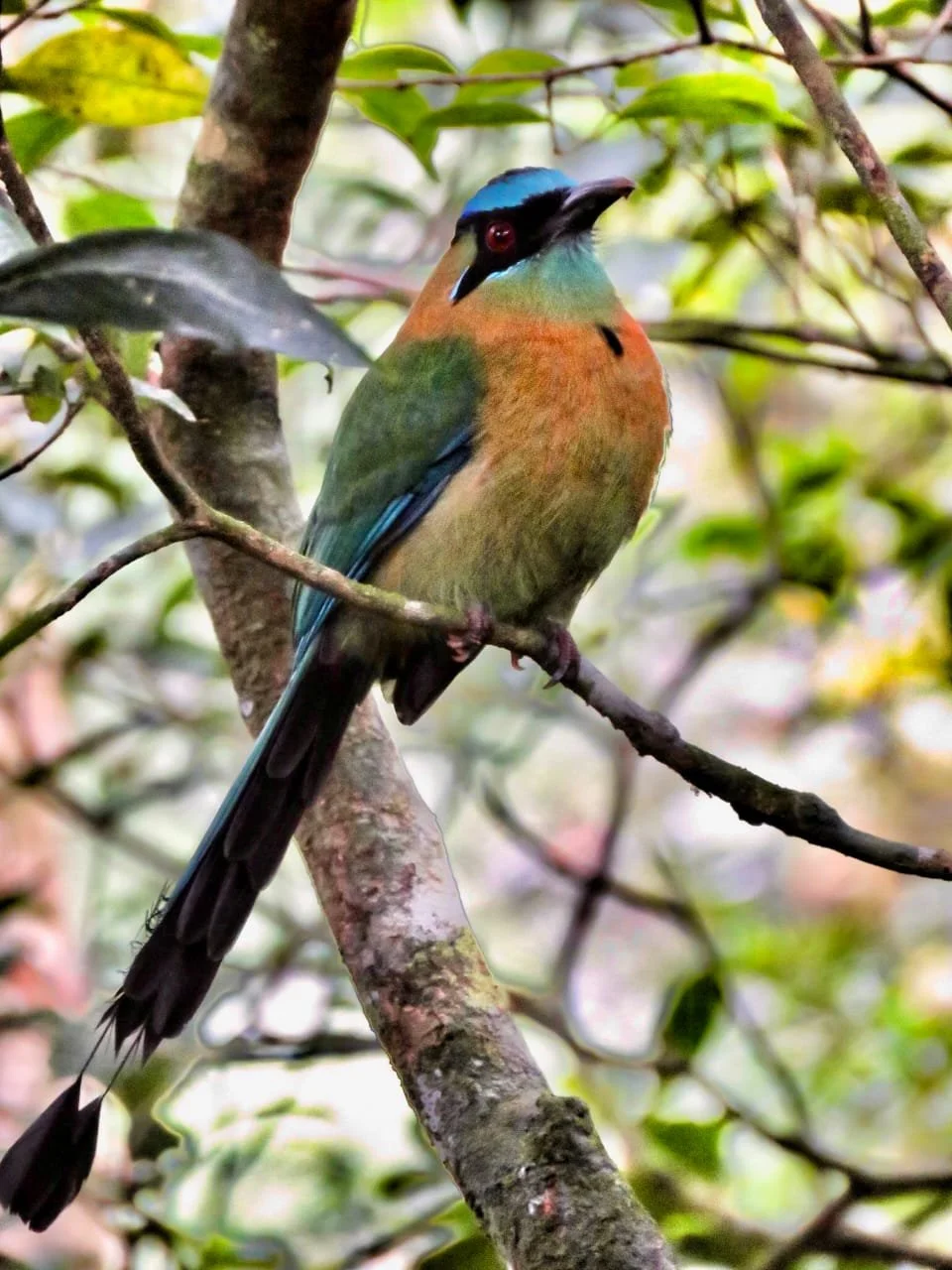
Among the thousands of bird species that call Panama home, few capture the imagination quite like the Blue Crowned Motmot. With its brilliant turquoise crown, emerald green body, warm chestnut belly, striking black face mask, and incredibly long tail ending in distinctive racket shaped feathers, this remarkable bird looks almost too colorful to be real. It is one of those birds that causes hikers to stop in their tracks, raise their binoculars, and simply admire nature's artistry.
Unlike many tropical birds that dart quickly through the canopy, the Blue Crowned Motmot has a calm and almost mysterious personality. It often sits perfectly still on a branch for several minutes, patiently watching the forest floor before suddenly swooping down to catch an insect or small lizard. Because of this relaxed behavior, lucky visitors can sometimes enjoy long, uninterrupted views of one of Panama's most spectacular birds. Motmots inhabit a variety of forested habitats, including tropical rainforest, cloud forest, forest edges, secondary growth, shaded gardens, and even coffee plantations. They are most active around dawn and dusk, when their soft hooting calls echo through the forest.
The bird's most recognizable feature is its extraordinary tail. The two central feathers extend well beyond the rest of the tail and end in paddle shaped tips. As the bird perches, it slowly swings its tail from side to side like a pendulum. Scientists believe this behavior may help communicate with other motmots or warn predators that they have been spotted. Whatever the reason, it gives the bird an elegant appearance unlike almost any other species in the Americas.
Despite their vivid colors, Blue Crowned Motmots can be surprisingly difficult to notice at first. Their green plumage blends beautifully into the rainforest vegetation, allowing them to disappear among moss covered branches and leafy understory. Many people walk straight past a motmot without realizing it is quietly watching them only a few meters away. Once you train your eyes to look for their long racket tipped tails and upright posture, however, you begin noticing them much more often.
Their diet is wonderfully varied. Motmots feed on beetles, grasshoppers, spiders, caterpillars, worms, small frogs, lizards, and occasionally small snakes. They also enjoy berries and other forest fruits, making them important contributors to the rainforest ecosystem. Before swallowing larger prey, they often beat it against a branch to make it easier to eat.
One of the most fascinating aspects of their life is how they raise their young. Rather than building nests in trees like many birds, motmots excavate long tunnels in dirt banks or earthen slopes. At the end of these tunnels they create a nesting chamber where they lay several white eggs. These underground nests provide excellent protection from many predators and harsh weather.
For birdwatchers visiting Panama, one of the easiest places to spot Blue Crowned Motmots is around Lost and Found Hostel, nestled in the lush cloud forests of the Fortuna Forest Reserve. The peaceful network of hiking trails, dense vegetation, and quiet forest edges create ideal habitat for these beautiful birds. Guests often encounter motmots perched silently along the trails in the early morning or late afternoon, and because the forest around the hostel receives relatively few visitors compared to larger national parks, the birds often remain calm enough for excellent photographs. Even travelers with little previous interest in birdwatching frequently list their first motmot sighting as one of the highlights of their stay.
Beyond Lost and Found Hostel, Blue Crowned Motmots can also be found in many of Panama's finest protected forests. Soberanía National Park near the Panama Canal is famous among birdwatchers and regularly produces motmot sightings alongside toucans, trogons, woodcreepers, and hundreds of other species. The forests surrounding Boquete, Santa Fe National Park, and parts of central and western Panama also provide excellent opportunities to encounter these colorful birds while hiking.
Seeing a Blue Crowned Motmot in the wild is about much more than adding another species to a bird list. It is one of those special moments that reminds travelers just how extraordinary Panama's biodiversity truly is. Standing quietly beneath towering rainforest trees while this magnificent bird watches from a nearby branch creates a memory that stays with visitors long after their trip has ended.
For anyone visiting Panama, keeping an eye out for the unmistakable silhouette of a Blue Crowned Motmot may reward you with one of the country's most unforgettable wildlife encounters. Whether you spot one deep in a national park or perched quietly beside a forest trail at Lost and Found Hostel, this remarkable bird is a perfect symbol of the incredible natural beauty that makes Panama one of the world's greatest destinations for wildlife lovers.