
Hidden on Panama's wild Caribbean coast, where dense rainforest tumbles down to towering cliffs above the mouth of the Chagres River, Fort San Lorenzo is one of the country's most extraordinary destinations. It is a place where nature, history, engineering, and breathtaking scenery combine to create an experience unlike anywhere else in Panama. While many visitors travel to Panama for beaches, tropical islands, cloud forests, or the famous Panama Canal, relatively few realize that one of the most important fortresses in the entire Spanish Empire still stands overlooking the Caribbean Sea. Visiting Fort San Lorenzo is much more than exploring ancient stone ruins. It is an opportunity to stand in the footsteps of Spanish soldiers, pirates, merchants, explorers, and sailors whose lives helped shape the history of the Americas. The moment you arrive, the atmosphere is unforgettable. Massive stone walls rise from the cliff edge, warm Caribbean winds blow across the battlements, seabirds circle overhead, and the sound of waves crashing against the rocks hundreds of feet below echoes constantly through the ruins. Beyond the fortress stretches an endless expanse of rainforest filled with monkeys, toucans, sloths, butterflies, and countless other tropical species. Few historical sites in the Americas offer such a spectacular combination of natural beauty and historical significance.
The drive to Fort San Lorenzo is part of the adventure itself. Leaving the urban areas behind, the road gradually enters protected rainforest where traffic becomes light and the surroundings grow increasingly wild. Towering tropical trees form a green tunnel above sections of the road, vines drape from enormous branches, and the forest feels wonderfully untouched. It is not unusual to see white faced capuchin monkeys crossing the road, coatimundis searching for food, colorful butterflies fluttering across the pavement, or tropical birds flying overhead. Birdwatchers often keep binoculars within easy reach because toucans, parrots, trogons, motmots, hawks, kingfishers, and hummingbirds all inhabit the surrounding forests. Even before reaching the fortress, many visitors find themselves stopping frequently to admire the scenery or photograph wildlife. Unlike many famous tourist attractions where the journey simply connects one destination to another, the road to Fort San Lorenzo becomes part of the overall experience, allowing visitors to appreciate the remarkable biodiversity that makes Panama one of the richest countries on Earth for wildlife.
The reason this fortress exists goes back more than four hundred years, when Panama served as one of the most strategically important locations in the Spanish Empire. During the sixteenth and seventeenth centuries, unimaginable quantities of gold, silver, emeralds, pearls, and other treasures from South America passed through Panama on their journey to Spain. Rather than sailing all the way around Cape Horn at the southern tip of South America, Spanish ships unloaded their valuable cargo on Panama's Pacific coast. From there, treasure crossed the narrow isthmus using mule trains and river transportation before reaching the Caribbean coast, where heavily armed treasure fleets waited to carry these riches across the Atlantic. The Chagres River became one of the empire's most valuable transportation routes because it provided a relatively efficient path inland. Whoever controlled the river controlled access to one of the richest trade corridors in the world. Spain therefore invested enormous resources in constructing Fort San Lorenzo at the mouth of the river, creating a powerful defensive fortress capable of protecting both the river entrance and the valuable cargo constantly passing through the region.
The location selected by Spanish military engineers could hardly have been more impressive. Rather than building directly beside the water, they chose a high rocky cliff overlooking the Caribbean Sea. This elevated position allowed soldiers to spot approaching ships from many kilometers away while giving their cannons a commanding advantage over enemy vessels attempting to enter the river. Standing on these same walls today, visitors immediately understand why the site was considered nearly impossible to attack. Steep cliffs plunge dramatically into the sea below, waves crash endlessly against the rocks, and the panoramic views extend across the Caribbean toward the distant horizon. Looking inland, the winding Chagres River disappears into one of Central America's most beautiful rainforests. The combination of ocean, river, cliffs, and jungle created a naturally defensive position long before the first stone was ever laid. The Spanish simply strengthened what nature had already provided, transforming the location into one of the strongest fortifications in the New World.
Walking through the fortress today reveals just how advanced Spanish military engineering had become during the colonial period. Massive stone walls several meters thick still stand after surviving centuries of tropical rain, earthquakes, humidity, hurricanes, warfare, and neglect. Wide defensive platforms allowed cannons to cover multiple approaches while carefully designed bastions eliminated blind spots where attackers might otherwise hide. Underground chambers protected gunpowder from moisture, storage rooms held food supplies capable of sustaining lengthy sieges, barracks housed soldiers stationed permanently at the fort, and sophisticated drainage systems helped channel heavy tropical rainfall away from important structures. Even visitors with little interest in military history are often amazed by the scale of construction. Every stone had to be quarried, transported, shaped, and assembled in an environment where heat, insects, disease, and dense rainforest made construction extraordinarily difficult. The fact that so much of the fortress survives today speaks to the remarkable skill of the engineers and laborers who built it.
One of the most fascinating aspects of Fort San Lorenzo is its connection to the golden age of pirates. During the seventeenth century, the Caribbean became one of the most dangerous regions on Earth. Pirates, privateers, and rival European powers constantly searched for opportunities to intercept Spanish treasure. Among the most famous figures associated with the fortress was Henry Morgan, whose name still appears in countless books, films, and legends about Caribbean piracy. In 1671 Morgan launched one of the most famous campaigns in pirate history by attacking Fort San Lorenzo before advancing toward Panama City. The Spanish defenders fought courageously despite being heavily outnumbered. Cannons thundered across the cliffs, musket fire echoed through the rainforest, smoke filled the air, and fierce fighting continued until Morgan's forces finally captured the fortress. With control of the river secured, Morgan continued inland before sacking Panama City itself. Standing within the ruined walls today, it requires very little imagination to picture those dramatic events unfolding around you. Every corner of the fortress seems to whisper stories of soldiers preparing for battle, lookout guards scanning the sea, officers shouting commands, and pirate ships appearing on the horizon beneath billowing sails.
For tourists, one of the greatest pleasures of visiting Fort San Lorenzo is simply taking time to wander. Unlike many historical sites where visitors are rushed along crowded pathways, the fortress often feels peaceful and uncrowded. You can walk slowly through the old gateways, climb onto defensive walls, peer into underground chambers, stand beside ancient cannon positions, and enjoy uninterrupted views across the Caribbean. The atmosphere encourages exploration. Every angle reveals another fascinating detail, whether it is centuries old stonework covered with moss, flowering plants growing from cracks in the walls, graceful arches framing the blue sea, or seabirds gliding effortlessly above the cliffs. The combination of history and nature creates an experience that feels authentic rather than commercialized. There are no towering hotels surrounding the site, no noisy amusement attractions, and very little to distract from the incredible setting.
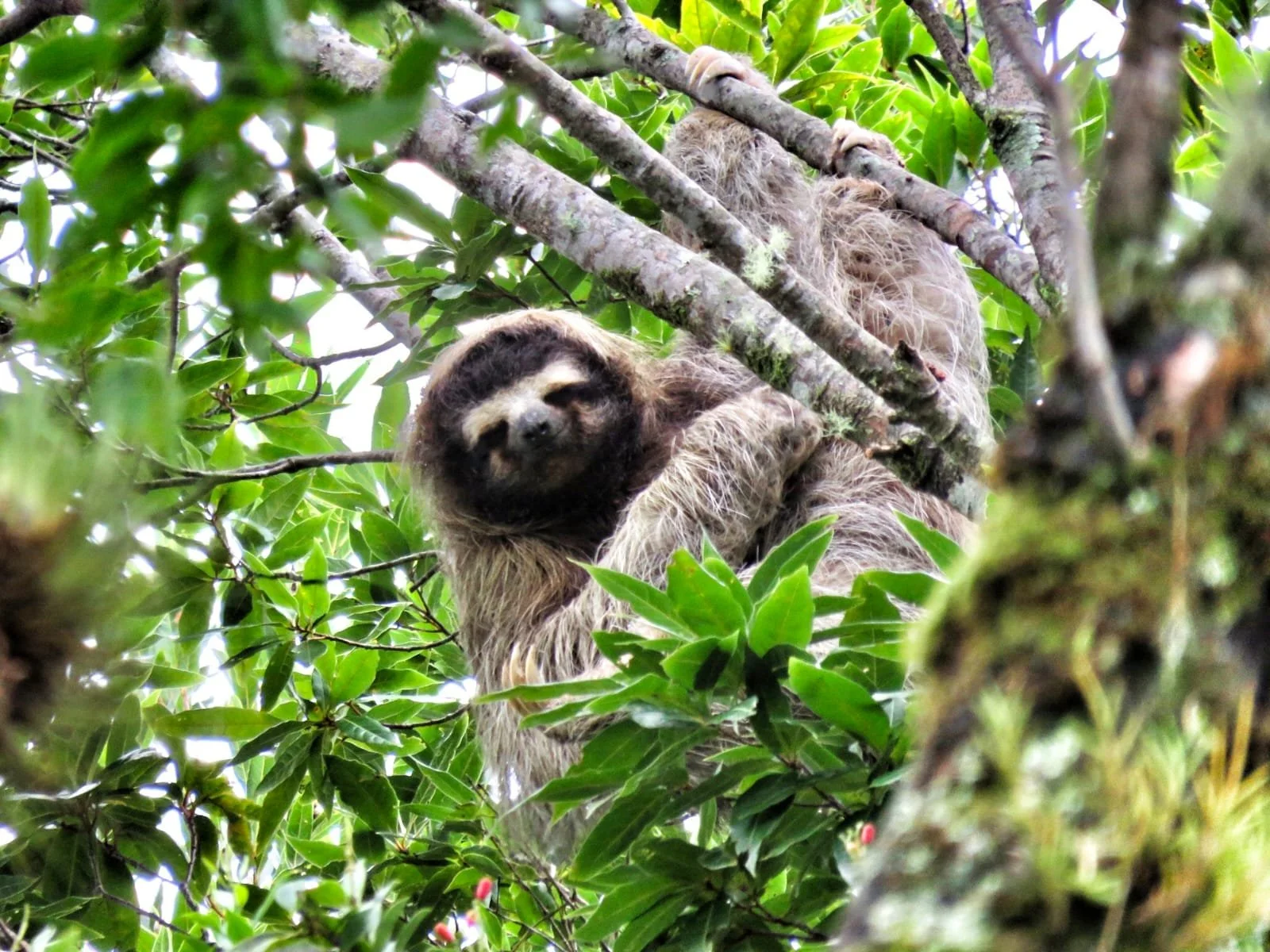
Wildlife is another major reason why Fort San Lorenzo deserves a place on every Panama itinerary. Because the fortress lies within a protected natural area, the surrounding rainforest supports an astonishing variety of animals. White faced capuchin monkeys are among the most commonly spotted mammals, often entertaining visitors with their playful behavior. The booming calls of howler monkeys frequently echo through the forest, especially during the early morning. Sloths hide high in the canopy, iguanas bask in sunny clearings, and countless species of butterflies drift between tropical flowers. Birdwatchers consider this area particularly rewarding because the mixture of coastal habitats and rainforest supports exceptional biodiversity. Toucans, parrots, trogons, hummingbirds, tanagers, woodpeckers, hawks, kingfishers, and dozens of other species may all be seen during a single visit. Even if wildlife photography is not your primary interest, simply hearing the sounds of the rainforest while standing inside a centuries old fortress creates an unforgettable atmosphere.
Photographers will find Fort San Lorenzo almost impossible to resist. Every hour of the day offers different lighting conditions and dramatically different moods. Early morning often brings soft golden sunlight illuminating the stone walls while mist rises gently from the surrounding rainforest. Midday produces brilliant blue Caribbean waters contrasting beautifully with the gray stone architecture. Late afternoon creates warm golden light that emphasizes every texture within the ancient masonry. During the rainy season, towering tropical clouds gather above the sea, producing spectacular skies that seem perfectly suited to a fortress once defended against pirate fleets. Even brief rain showers add character as wet stone walls deepen in color and lush vegetation glows with renewed vibrancy. Whether using a professional camera or simply taking photographs with a smartphone, visitors quickly discover that nearly every viewpoint offers another memorable image.
Many travelers combine Fort San Lorenzo with other nearby attractions to create a full day of exploration. The historic town of Portobelo, famous for its colonial forts and rich Afro Caribbean culture, lies within the same general region and pairs perfectly with a visit to San Lorenzo. Nature lovers may also explore nearby sections of Chagres National Park, while those interested in engineering can combine the trip with a visit to the Agua Clara Locks to watch enormous ships transit the Panama Canal from the Caribbean side. Together, these destinations showcase several completely different aspects of Panama, including colonial history, modern engineering, tropical wildlife, Caribbean culture, and spectacular coastal scenery, all within a relatively short distance of one another.
Fort San Lorenzo is not simply another stop on a sightseeing itinerary. It is one of those rare places where nearly every type of traveler leaves impressed. History enthusiasts discover one of the finest surviving Spanish fortifications in the Americas. Nature lovers experience rainforest filled with remarkable wildlife. Birdwatchers enjoy exceptional opportunities to observe tropical species. Photographers find endless compositions combining dramatic landscapes with ancient architecture. Families introduce children to centuries of fascinating history in a setting far more exciting than any classroom. Couples enjoy peaceful walks through the ruins while overlooking the endless Caribbean Sea. Backpackers searching for destinations beyond the usual tourist trail often find Fort San Lorenzo to be one of the highlights of their journey through Panama.
Long after leaving, many visitors remember not only the fortress itself but the extraordinary feeling of standing on those ancient walls with the Caribbean stretching endlessly before them, the rainforest alive behind them, and the realization that they are standing in one of the very places where the history of the Americas changed forever. Fort San Lorenzo is a destination where every stone tells a story, every viewpoint inspires awe, and every visit reveals why this magnificent fortress remains one of Panama's greatest historical and natural treasures.