
Panama is one of the most biologically diverse countries on Earth, and while its monkeys, sloths, jaguars, and colorful birds often steal the spotlight, another extraordinary world exists much closer to the forest floor. Hidden among giant leaves, beneath fallen logs, inside tree trunks, and high in the rainforest canopy lives an astonishing variety of insects, many of which rank among the largest in the Americas. Panama's tropical climate, abundant rainfall, and year-round warmth provide ideal conditions for insects to thrive, and the result is a country where visitors may encounter beetles as large as a person's hand, stick insects longer than a ruler, enormous moths with wings wider than a dinner plate, and ants capable of delivering some of the most painful stings known to science. Although these creatures often inspire surprise or even fear, they are essential members of Panama's ecosystems, pollinating flowers, recycling dead wood, controlling pests, and feeding countless other animals. Exploring Panama's forests is like entering another world where insects are not merely background creatures but some of the most remarkable wildlife on the entire continent.
The Mighty Hercules Beetle
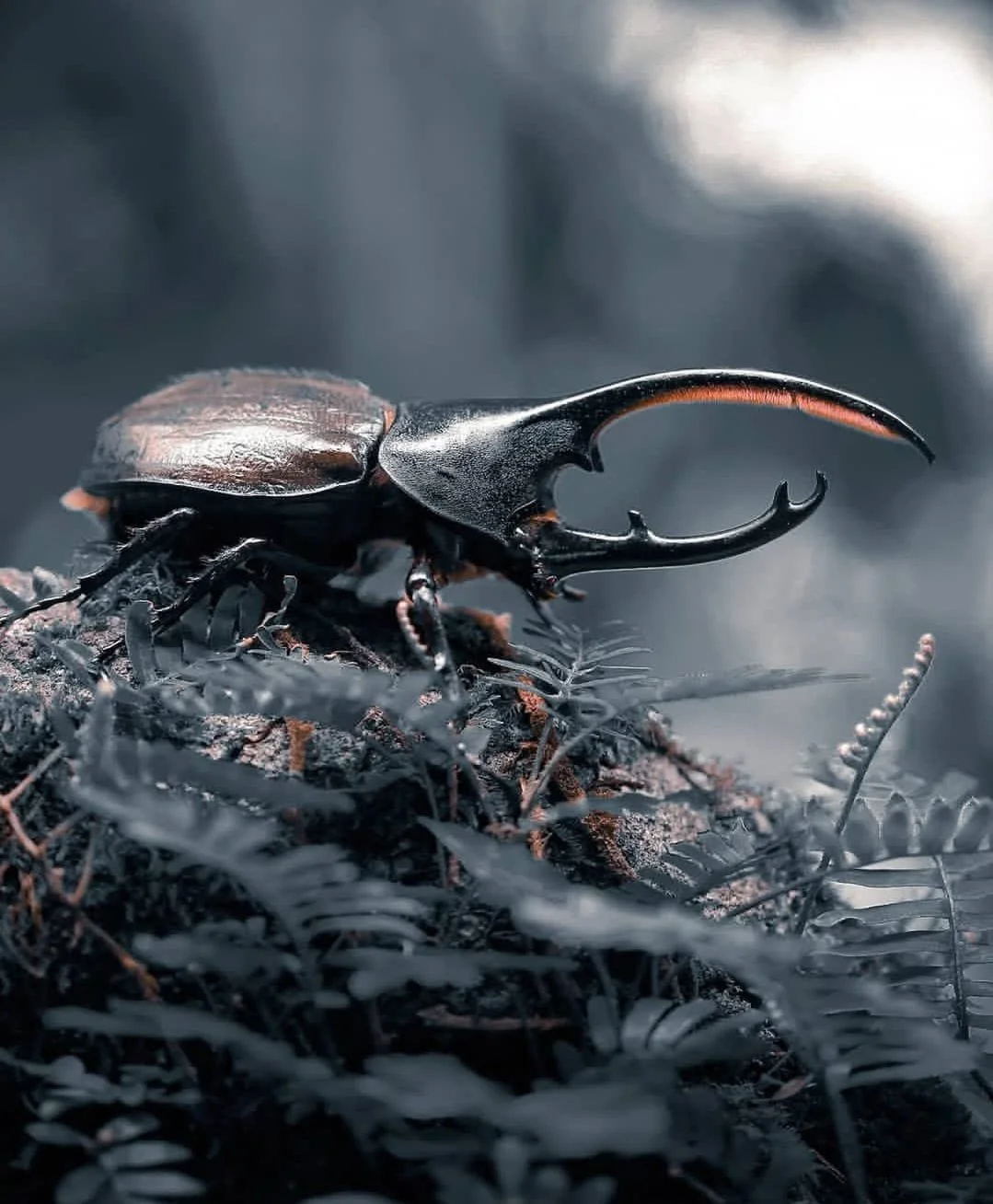
One of the largest insects found in Panama is the magnificent Hercules Beetle. Males can reach an incredible length of nearly 18 centimeters when their enormous horn is included, making them among the longest beetles in the world. Despite their intimidating appearance, Hercules beetles are completely harmless to humans. The long horn is used almost exclusively for wrestling rival males during the breeding season. Two males will grapple with one another, attempting to lift and throw their opponent from a tree branch, much like tiny armored sumo wrestlers. Their immense strength is legendary, with some individuals capable of lifting many times their own body weight. Beneath the glossy black and olive-green wing covers lies a surprisingly gentle insect that spends much of its life feeding on rotting fruit and tree sap within Panama's rainforests.
Rhinoceros Beetles
Closely related to the Hercules beetle are Panama's impressive Rhinoceros Beetles. These heavy-bodied insects carry one or more powerful horns on their heads and thoraxes, giving them an appearance worthy of prehistoric times. Although shorter than Hercules beetles, rhinoceros beetles are among the strongest insects on Earth relative to their size. They are powerful fliers despite their bulky bodies and often come to lights at night during the rainy season. Their larvae spend months developing inside rotting logs, helping decompose dead wood and return nutrients to the forest.
Titan Longhorn Beetles
Although uncommon in Panama compared to parts of South America, the spectacular Titan Longhorn Beetle occasionally reaches the southern regions of the isthmus. It is famous for possessing one of the largest bodies of any beetle on Earth, sometimes measuring more than 16 centimeters in length. Its jaws are so powerful that they can snap small sticks and easily cut through thin wood. Fortunately, Titan beetles are not aggressive and spend only a brief period as adults after emerging from enormous larvae that lived deep within decaying trees.
Giant Longhorn Beetles
Panama is home to numerous species of Longhorn Beetles, many of which possess antennae longer than their entire bodies. Some species measure more than 10 centimeters in total length when their antennae are included. Their incredible sensory organs help them locate mates and suitable trees where females can lay eggs. Many display striking colors ranging from brilliant metallic green to bold black-and-white patterns that help camouflage them against bark and lichens.
Giant Stick Insects
Among the easiest insects to overlook are Panama's Stick Insects, despite the fact that some species exceed 30 centimeters in length. These remarkable masters of camouflage resemble twigs so perfectly that even experienced naturalists may walk directly past them. During the day they remain motionless among branches, relying entirely on their disguise. At night they become active, feeding quietly on leaves while avoiding hungry birds and monkeys. Some species even sway gently from side to side, perfectly imitating branches moving in the wind.
Leaf Insects
Although less common than stick insects, Panama also hosts extraordinary Leaf Insects, whose flattened bodies resemble living green leaves complete with veins, insect damage, and irregular edges. Their camouflage is among the most convincing found anywhere in nature. Remaining perfectly still allows them to disappear into the rainforest vegetation almost completely.
The Giant Owl Butterfly
One of Panama's largest butterflies is the spectacular Owl Butterfly. With wingspans reaching nearly 20 centimeters, these giants fly mainly at dawn and dusk through the rainforest understory. Their enormous eyespots resemble the staring face of an owl, startling birds and other predators long enough for the butterfly to escape. Rather than feeding on flower nectar, many owl butterflies prefer fermenting fruit scattered across the forest floor.
Blue Morpho Butterflies
The famous Blue Morpho is another giant among Panama's butterflies. Its dazzling electric-blue wings can span 15 centimeters or more, flashing brilliantly through shafts of sunlight as it glides along forest trails and rivers. Interestingly, the vivid blue color comes not from pigments but from microscopic structures on the wing scales that reflect light. When the butterfly closes its wings, the brilliant blue disappears, revealing a brown underside covered in camouflage eyespots.
Giant Silk Moths
Panama's rainforests produce several enormous Silk Moths, including species related to the famous Atlas Moth. Some possess wingspans exceeding 20 centimeters, making them among the largest flying insects in the Americas. Adults live only a few days because they lack functional mouthparts and cannot feed. Their sole purpose is reproduction before their short lives come to an end.
Giant Sphinx Moths
Another spectacular group includes the Sphinx Moths, sometimes called hawk moths. Several Panamanian species have wingspans exceeding 15 centimeters and are among the fastest flying insects in the world. They hover like hummingbirds while feeding from flowers using extraordinarily long tongues capable of reaching nectar hidden deep inside blossoms.
Tarantula Hawk Wasps
Despite the intimidating name, Tarantula Hawk Wasps are among Panama's most fascinating insects. Measuring up to seven centimeters long with metallic blue-black bodies and brilliant orange wings, they are impossible to overlook. Females hunt tarantulas by delivering one precisely placed sting that temporarily paralyzes the spider. They then drag the much larger tarantula into a burrow where a single egg is laid. Although their sting is considered one of the most painful known to humans, these wasps are remarkably non-aggressive and rarely sting unless directly handled.
Giant Water Bugs
Panama's rivers and ponds contain fearsome Giant Water Bugs, sometimes called toe-biters. Reaching lengths of more than 10 centimeters, these aquatic predators feed on fish, frogs, tadpoles, insects, and even small turtles. Equipped with powerful grasping legs and a sharp piercing mouthpart, they are among the dominant predators in many freshwater habitats.
Bullet Ants
While not the longest insect, the Bullet Ant is certainly among Panama's most famous. Workers measure up to three centimeters long and inhabit rainforest trees throughout much of the country. Their sting has earned legendary status because many people describe it as among the most painful insect stings in the world. Fortunately, bullet ants are not naturally aggressive and usually sting only when their nest is disturbed.
Giant Walking Sticks and Katydids
Panama's forests are also home to enormous Katydids and Walking Sticks, some with wingspans approaching 20 centimeters. Many produce loud nighttime calls that become part of the soundtrack of the rainforest after sunset. Others possess astonishing camouflage, resembling moss, bark, dead leaves, or even lichen-covered branches.
Giant Praying Mantises
Several species of Praying Mantis found in Panama exceed 12 centimeters in length. Armed with lightning-fast grasping forelegs, they patiently wait for insects, frogs, lizards, and even hummingbirds to come within striking distance. Their ability to rotate their heads nearly 180 degrees gives them an unusually intelligent appearance.
Giant Cicadas
During the rainy season, enormous Cicadas emerge from underground after spending years feeding on tree roots. Some species measure nearly eight centimeters long and produce astonishingly loud songs that echo through Panama's forests. Their synchronized emergence fills the rainforest with one of its most recognizable sounds.
Why Panama Produces Giant Insects
Panama's warm temperatures, high humidity, abundant rainfall, and year-round growing season create ideal conditions for insects. Unlike colder climates where winter limits growth and reproduction, tropical insects can remain active for much of the year. Dense forests also provide countless ecological niches, allowing hundreds of large insect species to coexist within relatively small areas.
Where to Find Them
Many of Panama's largest insects are easiest to observe in protected rainforests such as Soberanía National Park, Darién National Park, La Amistad International Park, Volcán Barú National Park, the Fortuna Forest Reserve, and the cloud forests surrounding Lost and Found Hostel. Night walks are especially rewarding, as countless beetles, moths, katydids, stick insects, and mantises become active after dark. Simply shining a flashlight along tree trunks or leaves often reveals creatures that remain completely hidden during daylight hours.
The Unsung Giants of Panama
Although they rarely receive the attention given to monkeys, sloths, or tropical birds, Panama's largest insects are among the country's most extraordinary wildlife. They pollinate flowers, recycle dead wood, control pest populations, aerate soils, disperse seeds, and provide food for hundreds of other animals. Their incredible diversity reflects the health of Panama's forests and the richness of its tropical ecosystems.
For anyone willing to slow down and look closely, Panama's rainforests reveal an astonishing miniature world filled with armored beetles, shimmering butterflies, giant moths, stealthy mantises, towering stick insects, and powerful wasps. These remarkable creatures may be small compared to mammals, but together they form one of the greatest hidden spectacles of Panama's natural world, proving that sometimes the biggest adventures come from the smallest inhabitants of the forest.