
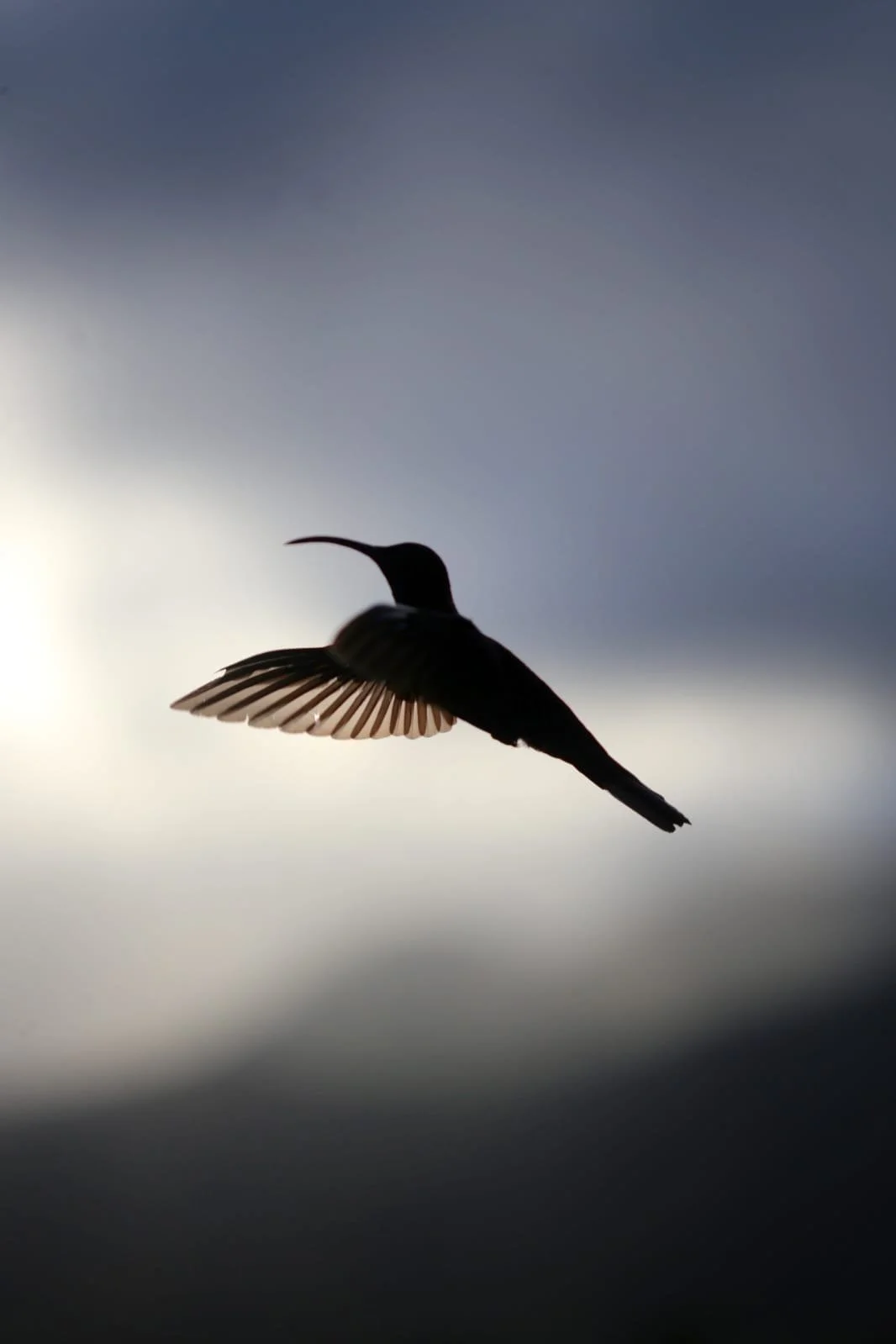
Among the more than fifty species of hummingbirds found in Panama, one stands apart not because it is the smallest or the fastest, but because it is one of the largest and most breathtaking. The Violet Sabrewing is often described as the giant of Central America's hummingbirds, and anyone fortunate enough to see one quickly understands why it has earned such admiration. With shimmering violet plumage that seems to glow in the sunlight and a confident, powerful flight unlike any other hummingbird, the Violet Sabrewing is one of the true stars of Panama's cloud forests.
Unlike many hummingbirds that flash past in little more than a blur, the Violet Sabrewing often flies with a slower, steadier wingbeat that allows observers to truly appreciate its beauty. It appears almost too large to be a hummingbird. While most species are tiny enough to fit comfortably in the palm of your hand, the Violet Sabrewing measures around fifteen centimeters in length, making it one of the largest hummingbirds in the Americas. Its long, gently curved black bill is perfectly adapted for feeding from the deep tubular flowers that grow throughout Panama's mountain forests.
The bird's magnificent coloration is what first captures people's attention. The male is covered in brilliant violet and deep purple feathers that shimmer with metallic blues depending on how the light strikes them. In bright sunshine the bird can appear almost electric, glowing with rich jewel like colors that seem impossible in nature. A single movement can transform its plumage from dark velvet purple into dazzling sapphire and iridescent violet. Photographs rarely do it justice because much of its beauty comes from the constantly changing reflections of light across its feathers.
The female is more modestly dressed, with green upperparts and pale underparts that provide excellent camouflage while nesting. Although she lacks the spectacular purple brilliance of the male, she possesses an elegant beauty of her own and demonstrates the remarkable diversity found within a single species.
The Violet Sabrewing is found primarily in the cool mountain forests of western Panama, especially in cloud forests where frequent mist, abundant flowers, and clean mountain streams create ideal conditions. Elevations between about one thousand and two thousand meters provide some of the best habitat. These forests remain cool throughout much of the year, and the constant moisture supports an incredible variety of flowering plants that provide nectar for hummingbirds.
Like all hummingbirds, the Violet Sabrewing survives on an energy rich diet of flower nectar. Using its exceptionally long tongue, it drinks nectar from hundreds of flowers every day. As it feeds, pollen sticks to its head and bill before being carried to the next flower, making the bird an important pollinator. Many cloud forest plants depend on hummingbirds like the Violet Sabrewing to reproduce successfully. Without them, entire plant communities would struggle to survive.
Although nectar provides most of its energy, the Violet Sabrewing also catches tiny insects and spiders. These provide essential protein needed for muscle growth, feather development, and raising young. The bird often darts into the air to snatch flying insects before returning to a favorite perch.
One fascinating aspect of the Violet Sabrewing is its personality. Males are surprisingly territorial and will aggressively defend rich flowering shrubs or feeders from other hummingbirds. Despite their tiny size compared with most birds, they fearlessly chase rivals many times their own size. Watching two Violet Sabrewings engage in an aerial chase is astonishing. They zoom through the forest with incredible speed before one finally retreats, leaving the victor to guard its precious food source.
During the breeding season, the female builds an incredibly delicate nest using soft plant fibers, moss, lichens, and spider silk. The spider silk acts like natural elastic, allowing the tiny nest to stretch as the chicks grow. She lays only two eggs, each no larger than a small jellybean. After hatching, the chicks depend entirely on their mother, who tirelessly feeds them nectar and insects until they are ready to fly.
One reason birdwatchers travel from around the world to Panama is the opportunity to observe species like the Violet Sabrewing in their natural environment. Unlike many tropical birds that remain hidden high in the canopy, hummingbirds often visit flowering gardens and specially maintained feeders, allowing remarkably close views. For photographers, this creates opportunities to capture every shimmering feather, every rapid wingbeat, and every dramatic interaction between competing birds.
One of the best places to enjoy these incredible hummingbirds is at the feeders at Lost and Found Hostel, located within the cool cloud forests of the Fortuna Forest Reserve. The carefully maintained hummingbird feeders regularly attract Violet Sabrewings along with several other hummingbird species, giving travelers, birdwatchers, and photographers an outstanding opportunity to observe these magnificent birds at close range. Instead of catching only a brief glimpse as one disappears through the forest, visitors can often watch the birds hovering, feeding, defending their favorite flowers, and displaying their spectacular iridescent plumage for extended periods. For many guests, sitting quietly beside the feeders with a cup of coffee while Violet Sabrewings dart back and forth becomes one of the most memorable wildlife experiences of their entire trip to Panama.
The surrounding cloud forest provides the perfect backdrop for these encounters. Mist drifts through towering trees covered in moss, orchids bloom among the branches, butterflies flutter between flowers, and the constant buzz of hummingbird wings fills the cool mountain air. Every visit to the feeders is slightly different because new birds arrive throughout the day, and patient observers are often rewarded with remarkable close up views that would be difficult to achieve elsewhere.
Photographers especially appreciate the opportunity because hummingbirds are among the most challenging birds to photograph in the wild. Their wings beat more than fifty times every second, making them appear as little more than colorful blurs. At well positioned feeders, however, photographers can prepare their equipment, wait for the perfect lighting, and capture stunning images that reveal every iridescent feather. Many of the finest photographs of Violet Sabrewings in Panama have been taken at cloud forest feeders where the birds return repeatedly throughout the day.
The Violet Sabrewing also serves as an important symbol of healthy mountain forests. Because it depends on abundant flowering plants and intact cloud forest ecosystems, its presence indicates a thriving environment. Protecting these forests ensures not only the survival of this magnificent hummingbird but also countless orchids, bromeliads, frogs, butterflies, mammals, and other birds that share the same habitat.
Despite its dazzling appearance, the Violet Sabrewing reminds us that some of nature's greatest treasures are surprisingly easy to overlook. A visitor walking through the forest without paying attention may hear only the faint buzz of wings before the bird disappears into the trees. Yet for those who stop, watch quietly, and spend time among the flowers and feeders, one of the most beautiful birds in Central America reveals itself in all its shimmering glory.
Few wildlife experiences in Panama equal the excitement of watching a male Violet Sabrewing catch the morning sunlight as it hovers effortlessly before a flower, its brilliant purple feathers glowing like polished gemstones against the emerald green cloud forest. It is a reminder that Panama is home to some of the world's most extraordinary birds, and that sometimes the smallest creatures leave the biggest impression. Whether you are a lifelong birdwatcher, an enthusiastic photographer, or simply someone who appreciates the beauty of nature, the Violet Sabrewing is certain to become one of the unforgettable highlights of any journey through Panama's magical cloud forests.