
Hiking in Panama can be one of the most rewarding ways to experience the country. You can walk through cloud forests dripping with moss, follow jungle trails beneath enormous trees, climb volcanic mountains, discover waterfalls hidden deep in the forest and find yourself surrounded by wildlife that you would never see from a road. But Panama's wilderness has a character that deserves respect. The same heat, rain, steep terrain and dense vegetation that make the country's landscapes so spectacular can also turn an ordinary hike into a difficult situation surprisingly quickly.
The important thing isn't to be frightened of hiking in Panama. It is to understand the environment. Most hikes are perfectly manageable when you prepare properly. The biggest problems tend to happen when people underestimate the tropical climate, assume a trail will be easier than it looks, start too late in the day, don't carry enough water, or venture somewhere without understanding the terrain.
The Heat and Humidity Can Sneak Up on You
One of the first things travelers notice when hiking in Panama is how different tropical hiking feels compared with walking in a dry or temperate climate.
You can be sweating heavily even when you don't feel as though you're doing anything particularly strenuous. Humidity makes it harder for sweat to evaporate, which is one of the body's main ways of cooling itself. A trail that looks easy on a map can therefore become exhausting after several hours.
Don't wait until you're desperately thirsty before drinking. Carry enough water for the hike and consider bringing more than you think you'll need when you're heading into a remote area. Electrolytes can also be useful on long, hot hikes.
And remember that cloud forest isn't necessarily cool everywhere. Conditions can change considerably with elevation and weather.
Rain Changes Everything
Panama's tropical rain can arrive with remarkable speed.
A trail that was dry when you started can become slippery later in the day. Mud develops quickly, streams can rise, and rocks and roots become much harder to negotiate. In mountainous areas, heavy rainfall can also make river crossings considerably more dangerous.
This is one reason experienced hikers pay attention to the weather rather than treating a forecast as an afterthought.
If heavy rain is moving into the area and your route involves river crossings, steep slopes or exposed terrain, reconsider whether continuing makes sense. A beautiful waterfall or viewpoint isn't worth taking unnecessary risks to reach.
Don't Underestimate Slippery Terrain
Panamanian jungle trails are often full of roots, mud, rocks and uneven ground. Moss and moisture can make seemingly solid surfaces surprisingly slippery.
This is especially important on descents. People often concentrate heavily on climbing and then become less cautious once they're heading downhill. Fatigue makes it easier to misplace a foot.
Good footwear with appropriate grip can make an enormous difference. On muddy or steep trails, slow down rather than trying to maintain the pace you had on easier terrain.
There is no advantage to rushing through a jungle trail.
Rivers and Water Crossings Deserve Respect
Some of Panama's most beautiful hikes involve rivers and streams. They can be wonderfully refreshing, but moving water deserves serious respect.
A crossing that looks manageable can become much more difficult after rainfall upstream. The water doesn't have to be deep to be dangerous if it is moving quickly.
Before crossing, consider whether the water level and current are genuinely safe. If the river has risen significantly or the crossing looks questionable, turn back or wait for conditions to improve rather than gambling on it.
And never assume that because someone else crossed successfully a few minutes earlier, conditions cannot change.
Snakes Exist — But Don't Become Obsessed With Them
Panama has an impressive variety of snakes, including venomous species. This is one of the things that understandably catches the attention of visitors heading into the jungle.
But there is an important distinction between being aware of snakes and being terrified of every leaf.
Most snakes would rather avoid you. They aren't sitting beside trails waiting for hikers. Problems are more likely when a person accidentally gets too close, attempts to handle an animal, or doesn't notice one because they're walking carelessly through vegetation.
Stay on established trails when appropriate, watch where you're placing your hands and feet, and don't touch wildlife.
If you encounter a snake, give it plenty of space and allow it to move away.
The same principle applies to almost every wild animal in Panama: observe, don't interfere.
Don't Reach Into Holes or Under Logs
This sounds obvious until you're actually wandering through a jungle.
Logs, holes, rock crevices and dense vegetation can provide shelter for all sorts of animals. You don't know what's inside simply because you can't see it.
Avoid putting your hands somewhere you cannot see.
It's one of the simplest rules in tropical hiking, and it costs you absolutely nothing to follow.
Insects Are Part of the Experience
Mosquitoes, biting flies, ants, ticks and other insects are part of hiking in Panama.
Some are simply annoying, while others can transmit diseases. The appropriate response isn't to avoid the jungle entirely but to take sensible precautions.
Use insect repellent, especially around dawn and dusk, consider lightweight long clothing in areas with lots of insects, and check yourself after spending time in dense vegetation.
A tiny insect can be far more irritating than the enormous spider you spent five minutes photographing.
Don't Touch the Plants
Panama's forests contain an enormous variety of plants, and some can cause irritation if handled.
The safest rule for visitors is wonderfully simple:
Look at plants. Don't eat them. Don't rub them on your skin. Don't pick them unless you know exactly what they are.
The tropical forest isn't a supermarket.
Some plants have traditional uses, some are harmless, and others can cause unpleasant reactions. You don't need to identify every species to enjoy the forest. Just leave the vegetation where it is.
Start Earlier Than You Think
Time is an important safety consideration in Panama.
If your hike is several hours long, beginning late in the day can leave you racing against darkness. In the tropics, daylight doesn't linger particularly long into the evening, and dense forest can become dark surprisingly quickly.
A hike that takes three hours in perfect conditions may take considerably longer if you stop for photographs, encounter mud, take a wrong turn or slow down because of rain.
Give yourself a generous time buffer.
Getting back before dark is particularly important when you don't know the trail well.
Don't Trust Every Trail You Find Online
Modern hikers have an incredible amount of information available through phones and mapping applications, but digital maps aren't infallible.
A line on a map doesn't necessarily mean there's a well-maintained trail.
You may encounter abandoned paths, confusing junctions, private property, washed-out sections or routes that are significantly more difficult than their digital description suggests.
If you're heading somewhere remote, research the route beforehand and, when possible, ask local people or knowledgeable guides about current conditions.
Panama's landscape changes quickly, particularly after heavy rain.
Getting Lost Is More Serious Than It Sounds
Dense tropical vegetation can make navigation surprisingly difficult.
Two trails can look identical. A small unofficial path can appear more obvious than the actual route. Once you leave an established trail, it can become difficult to determine exactly where you are.
Don't rely exclusively on your phone's signal. Download maps before leaving areas with connectivity, and make sure someone knows where you're going if you're heading somewhere remote.
If you realize you've taken a wrong turn, stop rather than continuing deeper into unfamiliar terrain hoping you'll eventually reconnect with the trail.
Retracing your steps is often much easier than trying to improvise a new route.
Mountains Bring Their Own Problems
Panama isn't just rainforest.
Places such as Volcán Barú introduce altitude, colder temperatures, steep terrain and potentially difficult weather.
At higher elevations, conditions can be completely different from those at the coast. You can leave a warm tropical environment and eventually find yourself in cold, windy and wet conditions.
Don't let Panama's reputation as a tropical country convince you that every hike requires only shorts and a T-shirt.
For high-elevation hikes, prepare for the conditions you might encounter at the top rather than the conditions you experienced when you left your accommodation.
Watch the Weather in the Mountains
Mountain weather deserves special attention.
Clouds can move rapidly through highland areas, visibility can deteriorate and rain can make trails considerably more difficult. If you're hiking somewhere exposed, thunderstorms are another reason to pay attention to changing conditions.
If the weather is deteriorating significantly, reassess your plans.
A summit is optional.
Getting home safely isn't.
Wildlife Should Make You Curious, Not Reckless
One of the magical things about hiking in Panama is that you genuinely can encounter extraordinary wildlife.
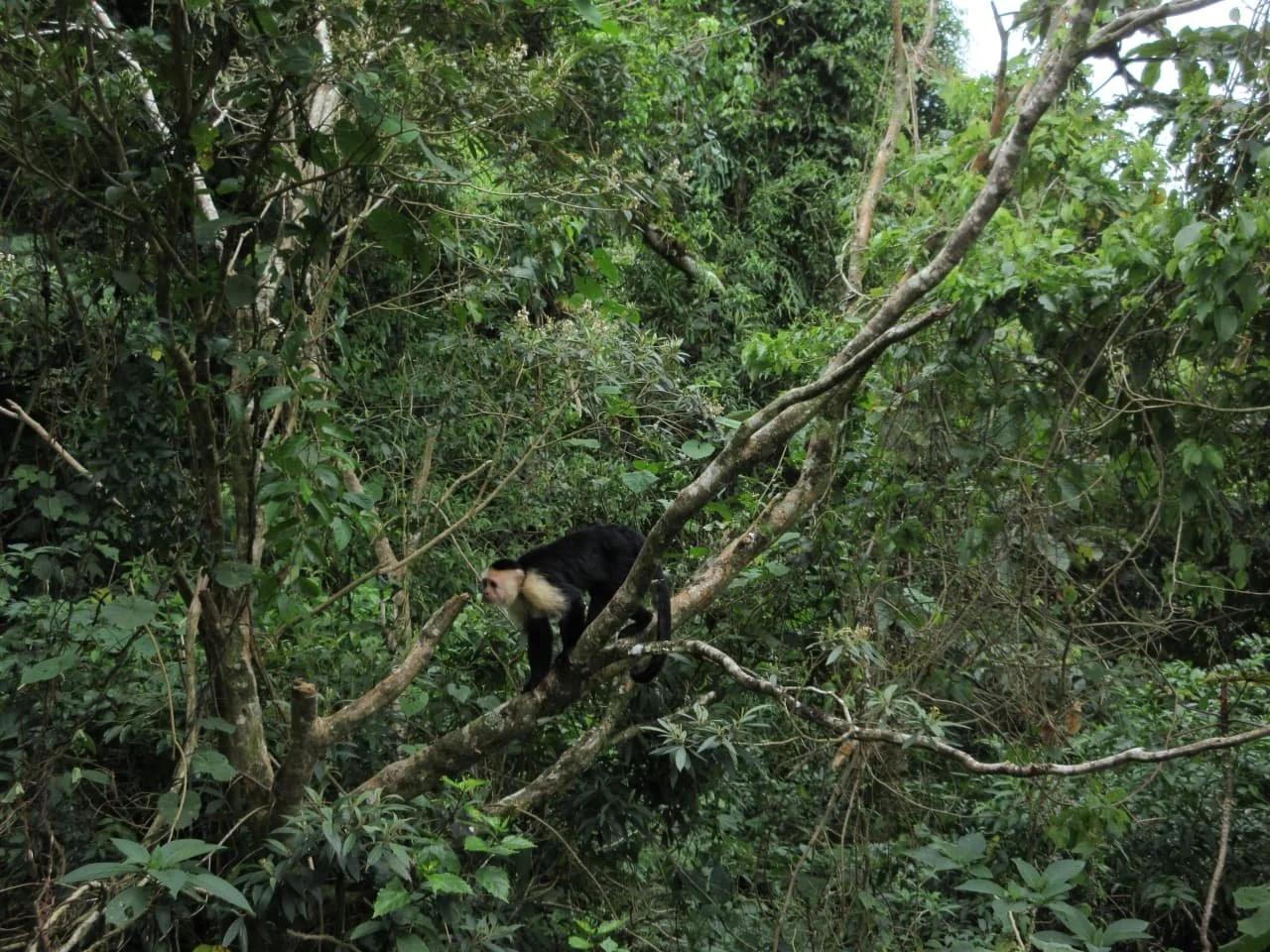
You might see monkeys moving through the canopy, sloths resting in trees, toucans flying between branches, agoutis crossing the trail or a spectacular frog sitting beside a stream.
But wildlife encounters should always happen on the animal's terms.
Don't feed animals. Don't chase them for photographs. Don't attempt to touch them. And don't surround an animal because everyone wants the perfect picture.
A respectful hiker can experience incredible wildlife without disturbing it.
Be Especially Careful Around Cliffs and Waterfalls
Panama has some spectacular viewpoints, waterfalls and canyon environments. They also produce some of the most common opportunities for unnecessary accidents.
Wet rock can be extremely slippery. A viewpoint doesn't need a railing to look spectacular, and a waterfall doesn't need to be approached from its edge to be enjoyed.
Stay away from unstable edges and be particularly conservative when rocks are wet.
The photograph isn't worth taking a dangerous position.
Tell Someone Where You're Going
This is one of the easiest precautions and one of the most valuable.
If you're heading into a remote area, tell someone your route and approximately when you expect to return.
If you're staying at a hostel, hotel or lodge, let the staff know where you're going. Local knowledge can be surprisingly useful. People who live around a trail often know things that aren't obvious from online maps, including recent flooding, damaged bridges, difficult sections or changes in access.
The Most Dangerous Thing Might Be Overconfidence
Perhaps the biggest danger on Panamanian trails isn't a snake, spider, jaguar or poisonous plant.
It's thinking:
"It's only Panama. How difficult could it be?"
The country can look incredibly accessible. You can leave a town, walk into the forest and suddenly find yourself in an environment that is vastly more remote than you expected.
Respect the distance. Respect the weather. Respect the terrain. Respect the wildlife.
But don't let that make you afraid to explore.
Panama's wilderness is one of its greatest treasures, and hiking gives you access to parts of the country that most visitors never experience. The trick is to approach it with curiosity and common sense.
The best Panamanian hikers aren't the people who take the biggest risks. They're the people who know when to slow down, when to turn around, when to ask for advice and when to simply say, "We'll come back another day."
That attitude will take you a very long way in Panama's mountains and jungles.