
There are places in Panama where you arrive as a tourist and places where you arrive because the sea brought you there. Linton Bay Marina belongs firmly in the second category. Tucked into Puerto Lindo on Panama’s Caribbean coast, near Portobelo, Linton Bay feels like one of those places that exists slightly outside the normal backpacker map. There are no giant skyscrapers, no crowds rushing between attractions and no frantic city energy. Instead, there are boats, tropical forest, calm Caribbean water and an international community of people who have made the ocean part of their lives.
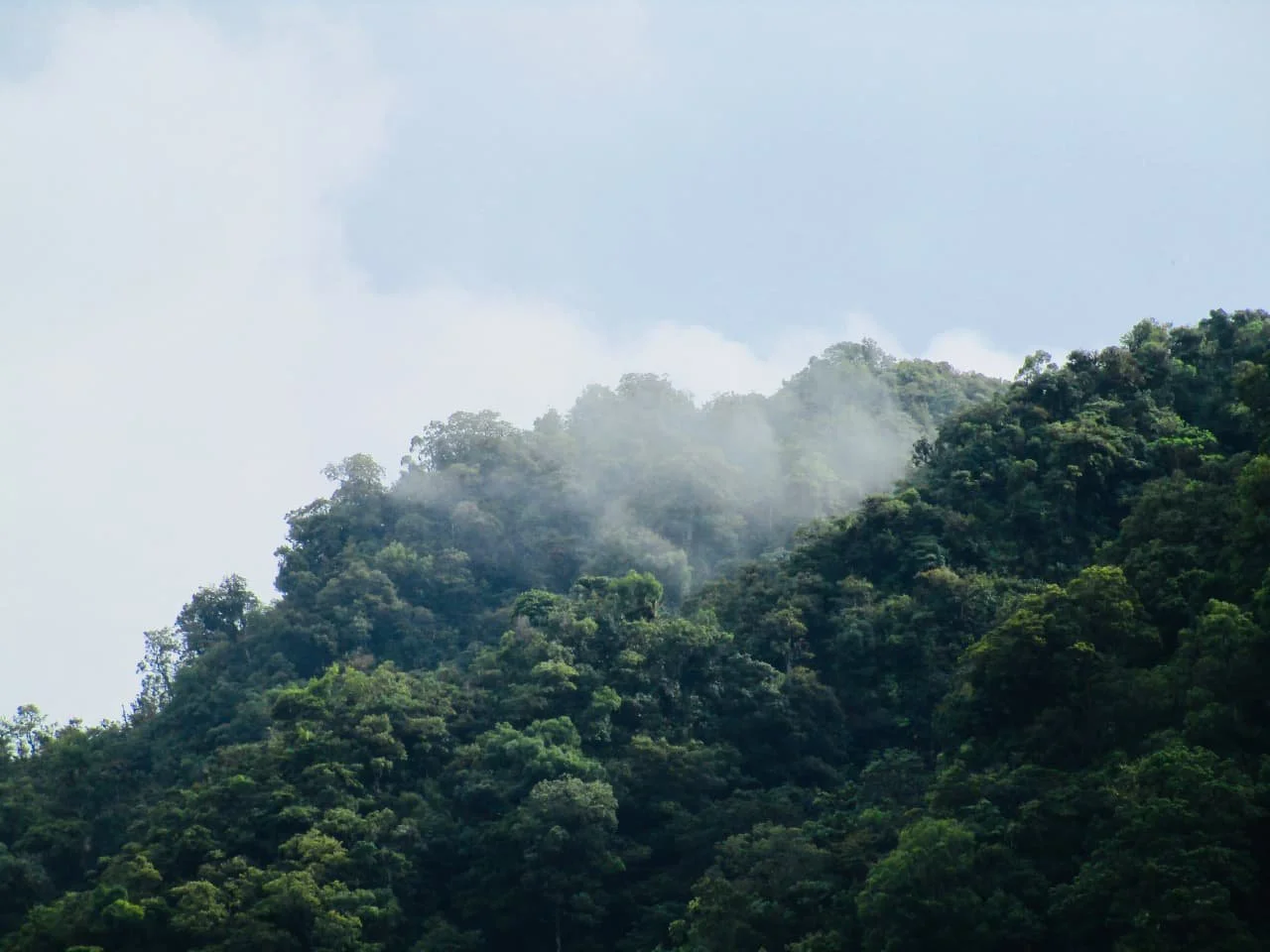
The marina sits inside the beautiful surroundings of Portobelo National Park, which immediately gives it a different atmosphere from many conventional marinas. The official marina describes the location as being surrounded by tropical rainforest, beaches and coral reefs, while its position on the Caribbean coast places it close to some of Panama’s most spectacular sailing territory.
And then you look at the boats.
Linton Bay is not simply a place where someone parks a yacht for the weekend. It is designed as a full service base for boats of all kinds, with 81 slips, 16 mooring balls and nine superyacht berths capable of accommodating vessels up to 140 feet. There is also a 160 tonne travel lift, which the marina describes as Panama’s widest and highest capacity travel lift, along with dry storage, repairs, fuel, water, electricity and WiFi.
That makes the marina particularly interesting because it is almost like a small town built around boats. People aren't simply arriving, taking a photograph and leaving. Boats need maintenance. Crews need supplies. Captains need information. Sailors meet other sailors. Projects that were supposed to take a few days inevitably seem to take longer.
And that is where the stories begin.
Ask someone where they came from and you might get a completely ordinary answer.
Or you might get a story involving another country, an ocean crossing and several thousand nautical miles.
Linton Bay is positioned as a convenient stop for vessels preparing to transit the Panama Canal or heading toward the San Blas Islands. The marina says the Caribbean entrance to the canal is approximately 49 kilometres away by road, while its location makes it a natural base for sailors preparing for the next stage of their journey.
Think about that for a second.
You can wake up surrounded by rainforest on the Caribbean coast, have breakfast beside boats that have traveled across oceans, spend the day getting a vessel ready for the Panama Canal and then look toward the horizon knowing that the San Blas Islands are waiting in the other direction.
That is a pretty extraordinary neighborhood.
Linton Bay also has something that many backpackers might not immediately appreciate: infrastructure. The marina has a repair workshop, a large travel lift, dry storage and a nautical supply shop called Suminapa. The shop carries items ranging from hardware and rigging to navigation electronics and maritime safety equipment, meaning sailors can handle a surprising amount of boat related business without having to leave the marina.
But perhaps the most interesting thing about Linton Bay isn't what has been built there.
It is what surrounds it.
Step away from the docks and the landscape quickly reminds you that you are in the Caribbean tropics. The marina is surrounded by the natural environment of Portobelo National Park, with rainforest, beaches and reefs forming the backdrop.
This creates a strange and wonderful contrast.
You can be standing beside a modern yacht with polished stainless steel, sophisticated equipment and enough technology to make your phone feel primitive, then look beyond it and see dense green forest stretching toward the mountains.
Modern sailing meets tropical wilderness.
And that is Panama in a nutshell.
The country has always been about connections. The Panama Canal connects oceans. The roads connect communities. The mountains connect ecosystems. And places like Linton Bay connect sailors traveling between entirely different parts of the world.
For travelers, that makes the marina fascinating even if you have absolutely no intention of owning a boat.
You can learn a lot about a country by looking at the people who travel through it by sea.
A backpacker might spend a few weeks moving between hostels and buses. A sailor might spend months moving between islands and coastlines. Both are looking for adventure, but they experience Panama from completely different perspectives.
The backpacker sees the road.
The sailor sees the horizon.
Linton Bay is where those worlds can overlap.
The marina also has an international social atmosphere. Linton Bay describes itself as home to a vibrant international community of sailors, with social gatherings and recreational activities taking place around the marina.
And that is another reason places like this are so interesting.
A marina is never just boats.
It is people.
It is conversations over coffee.
It is somebody explaining where they have been.
It is somebody else discussing where they are going.
It is a mechanic solving a problem that nobody else understands.
It is a captain checking the weather.
It is a traveler hearing about an island they had never even heard of.
It is a temporary community made up of people who might otherwise never have met.
Linton Bay has been operating since 2015 and has continued developing its facilities. Its current plans include further expansion of dry storage, workshop services, electrical infrastructure and a clubhouse, with additional amenities envisioned for later phases.
That makes it interesting to watch as part of Panama's growing maritime scene.
But there is something particularly appealing about the location itself.
Puerto Lindo doesn't feel like the sort of place where you would expect to find a major international marina. You have the Caribbean, rainforest and historic Portobelo region around you, while the huge commercial world of the Panama Canal is relatively close by.
It is a reminder that Panama's geography is doing a lot of the work.
The country doesn't need to manufacture interesting contrasts.
They already exist.
A few hours can separate jungle from city.
A short journey can take you from historic Caribbean communities to enormous ships.
And in Linton Bay, you can stand beside a yacht preparing for an ocean journey while tropical forest rises behind it.
That is the kind of scenery that makes you stop and look twice.
For backpackers, Linton Bay is also a reminder that there are still corners of Panama that feel very different from the standard tourist circuit. It isn't necessarily about checking another famous attraction off your list. It is about seeing another side of the country.
The Panama that lives around the docks.
The Panama of sailors, fishermen, boat builders, mechanics, captains and travelers.
The Panama where the next destination might not be another town.
It might be another island.
Another coastline.
Another country.
Or an ocean away.
And perhaps that is what makes Linton Bay Marina so fascinating.
You are not simply looking at boats sitting in the water.
You are looking at journeys waiting to happen.
Some boats are waiting for repairs.
Some are waiting for weather.
Some are waiting for their next adventure.
And somewhere among them is probably a sailor who came to Panama intending to stay for a short while and discovered the oldest travel problem of all:
They found somewhere they didn't want to leave.