
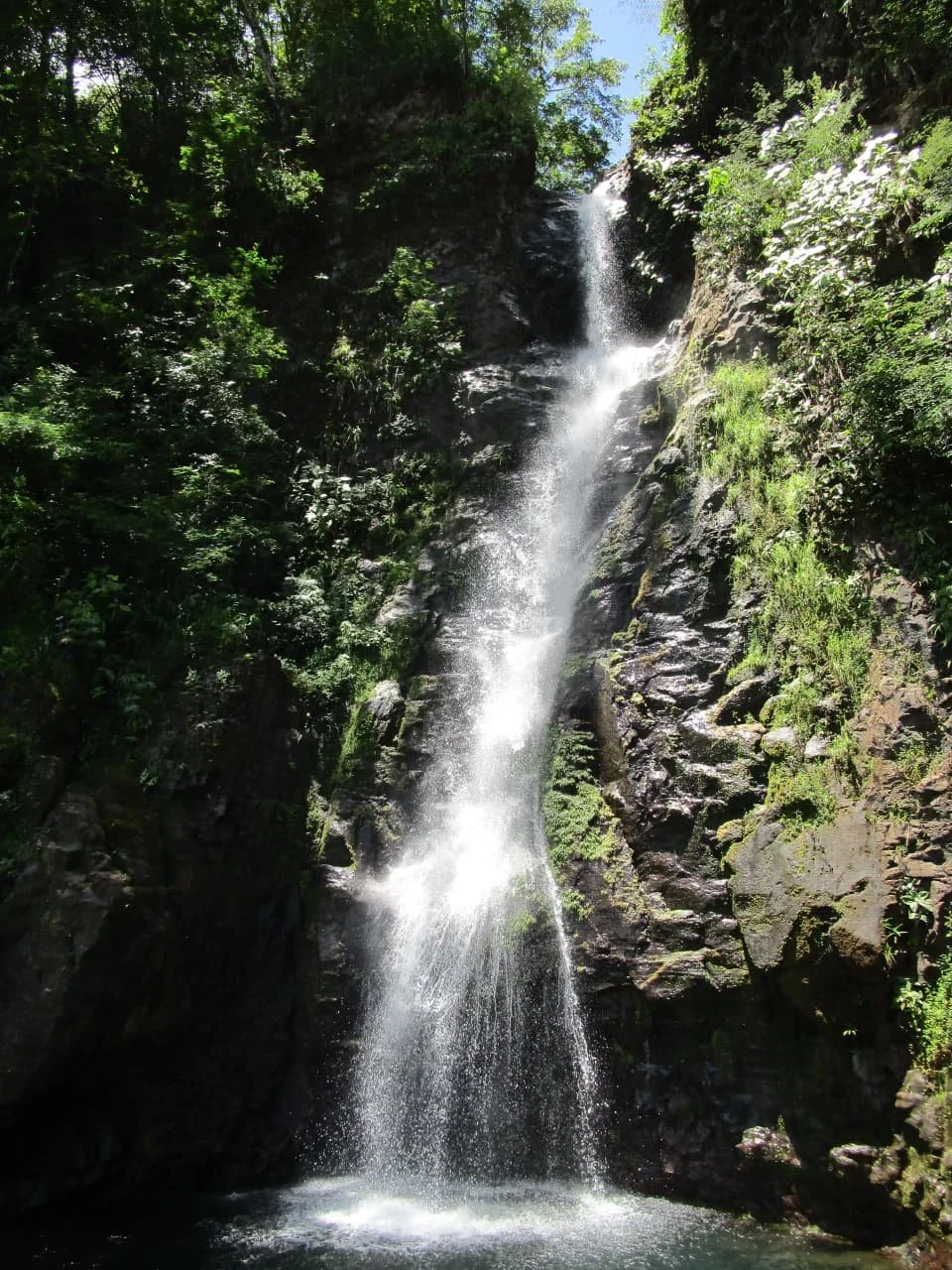
There is a moment that happens to a surprising number of backpackers in Panama. You arrive thinking you’re going to have a nice little tropical adventure, see some beaches, visit the Panama Canal, take a few photos, eat some good food and then continue on to the next country. You have a plan. You have a return ticket. You have probably even told someone back home exactly how long you’re staying. Then Panama quietly ruins your plans. Not dramatically. It just starts throwing things at you that make leaving increasingly inconvenient. You meet someone at a hostel who tells you about an incredible island. Someone else tells you about a waterfall hidden in the mountains. Someone mentions a jungle trail. Somebody else says, “You absolutely have to go to this beach.” Suddenly your three-week itinerary has become a six-week negotiation with yourself.
Panama is dangerously good at making backpackers stay longer than they planned.
Part of the problem is that Panama looks deceptively small on a map. You see the country stretching between Costa Rica and Colombia and think, “How hard can it be?” Then you start moving around. The roads wind through mountains. The buses take their own sweet time. Boats become part of the transportation system. Some places require connections. Some journeys that look laughably short on a map can consume a good chunk of your day. And just when you think you've mastered the transportation system, someone tells you there is a completely different way to get there that you didn't know existed. This is why experienced backpackers eventually develop a very useful Panama skill: asking a local before trusting the map.
And then there is the weather, which seems to have absolutely no respect for your itinerary. Panama can give you blazing sunshine, tropical humidity, clouds, wind and a spectacular downpour seemingly whenever it feels like it. You can start the morning thinking, “Perfect day for hiking,” only to find yourself standing underneath a tropical rainstorm three hours later. But then the rain disappears, the sun comes back out and everyone carries on as if nothing happened. The first time it happens, you may be annoyed. By the fifth time, you just shrug, put your wet shirt back on and continue walking. Congratulations. You have become a Panama backpacker.
One of the biggest mistakes visitors make is assuming that Panama is basically a beach destination with a canal in the middle. Yes, the beaches are spectacular. But Panama has an almost ridiculous variety of landscapes packed into one country. There are Caribbean islands where the water looks fake, Pacific beaches where you can watch enormous sunsets, cool mountain towns, misty cloud forests, jungle rivers, waterfalls and dense tropical forests where the soundtrack is provided by birds, insects and animals you probably cannot see. You can spend one day swimming in warm tropical water and the next day wearing a hoodie in the mountains. Panama essentially refuses to pick a climate and sticks with all of them.
And if you’re planning to hike, here's something you should know: the jungle is not a theme park.
This sounds obvious, but it changes the experience completely. Panama's forests are alive. You might hear monkeys before you see them. Birds can disappear into the canopy in a fraction of a second. Lizards sprint across trails. Insects make noises that sound like they were designed by a science-fiction sound department. At night, the whole forest changes personality. Creatures that spent the day hiding become active, and suddenly every rustle in the leaves seems extremely important.
The best part is that you don't necessarily need to spend a fortune to experience it. Sometimes you just need decent shoes, water, some basic preparation and enough curiosity to walk down a trail. That's one of Panama's great advantages for backpackers: adventure doesn't always require an expensive tour. There are countless opportunities to explore independently, particularly if you're comfortable getting a little muddy.
And yes, you will get muddy.
This is another thing nobody puts on the postcard.
Panama can turn a perfectly clean backpacker into someone who looks like they have just escaped from an archaeological dig. Your shoes will get dirty. Your clothes will get sweaty. Your backpack will acquire mysterious stains. You will eventually stop caring. In fact, there is a point during a long backpacking trip where cleanliness becomes a negotiable concept. If your shirt doesn't smell too terrible and your shoes still function, you're doing fine.
Then there are the buses.
Oh, the buses.
Panamanian buses can become one of the most memorable parts of your trip, particularly when you're traveling beyond the major tourist routes. You may find yourself sitting beside locals, backpackers, families, workers and someone carrying something you are absolutely certain shouldn't be allowed on public transportation but apparently nobody else is concerned about.
You may get off the bus having no idea what just happened.
And somehow, you had fun.
The secret is not to expect every journey to operate like a Swiss railway. Panama rewards patience. Ask questions. Confirm where you're going. Check the last departure. Give yourself time for connections. And most importantly, don't schedule something incredibly important immediately after a complicated journey.
Because that's how you end up sprinting through a bus terminal carrying a backpack that weighs approximately the same as a small refrigerator.
Another Panama surprise is how quickly you can go from civilization to feeling completely disconnected from it. You can leave a busy city, travel for a few hours and suddenly find yourself surrounded by jungle. Your phone signal disappears. The road gets quieter. Buildings become fewer and farther between. Eventually, you realize that nobody knows where you are except you and the person who sold you the bus ticket.
At first, this can feel slightly uncomfortable.
Then it becomes fantastic.
You stop checking your phone every five minutes because there isn't much point. You start noticing the landscape. You talk to people. You sit outside at night. You listen to the forest. You realize that you haven't looked at social media for several hours and, remarkably, civilization has survived without your supervision.
This is where Panama can become genuinely addictive.
It gives you enough infrastructure to make traveling relatively accessible while still allowing you to escape into places that feel properly wild.
And then there is the food.
Panama doesn't always get the same international culinary attention as some of its neighbors, which is a shame because backpackers who pay attention can find plenty of great local food. Small restaurants, roadside spots, markets and neighborhood eateries can be far more interesting than eating exclusively at places designed for tourists. Sometimes the best meal of your trip will cost surprisingly little and come from a place you would have walked straight past if you weren't hungry.
And that's the general philosophy that works in Panama:
Look beyond the obvious.
Don't just eat where every tourist is eating.
Don't just visit the beach everyone has photographed 900,000 times.
Don't just follow the itinerary you copied from somebody else's trip.
Ask questions.
Talk to locals.
Talk to hostel staff.
Talk to other backpackers.
And when somebody says, “There's this place you should really see,” don't immediately ask whether it's on Instagram.
Sometimes the fact that it isn't is precisely why you should go.
Perhaps the strangest thing about Panama is that the more you explore it, the less you feel like you're following a traditional tourist itinerary. You start collecting random experiences instead of attractions. A particular bus ride. A weird roadside restaurant. A waterfall nobody back home has heard of. A sunset from a mountain. A conversation with another traveler that changes your plans. A night in a jungle hostel where you hear something moving outside your room and decide that tomorrow you'll investigate it in daylight.
Those are the things that stick.
Nobody remembers every museum they walked through.
People remember the ridiculous stories.
And Panama is extremely good at producing ridiculous stories.
Eventually, you may realize that you’ve stopped asking, “What should I do in Panama?”
Instead, you're asking, “How much longer can I stay?”
That's when Panama has you.
You came for the beaches.
You stayed for the mountains.
You stayed longer because of the jungle.
You stayed even longer because you met some people.
Then you discovered a waterfall.
Then someone told you about an island.
Then you missed your bus.
Then you decided that missing the bus was probably a sign from the universe.
And suddenly your carefully planned Panama trip has completely fallen apart.
Which is probably exactly how it was supposed to happen.
Because Panama isn't necessarily the country you visit when you want everything to go according to plan.
It's the country you visit when you want to see what happens when the plan gets interrupted.
And for a backpacker, that's where the good stuff usually begins.