
Panama is one of those countries that looks deceptively small on a map. You can look at it and think, How hard can it be? A little country connecting two continents, with a famous canal running through the middle. Easy. A few buses, a couple of beaches, maybe a mountain, and you're done.
Then you arrive.
Suddenly you're standing in tropical heat, there are mountains disappearing into clouds, Caribbean islands in one direction, Pacific beaches in another, jungle trails leading into places you've never heard of, buses leaving at times that seem to have been invented specifically to confuse tourists, and somebody at your hostel is telling you that you absolutely have to go somewhere that wasn't even on your itinerary.
Welcome to Panama.
Planning a trip here isn't about creating the most complicated itinerary possible. In fact, the best Panama trips usually have some breathing room. The trick is understanding the country well enough to connect the major destinations without spending your entire vacation sitting on buses. Panama rewards travellers who slow down, choose their destinations carefully and allow a little room for the unexpected.
And that is exactly what this guide is for.
First, understand what makes Panama different
Panama is unusually diverse for its size. Within a relatively short distance you can go from a modern tropical metropolis to rainforest, from cloud forest to Caribbean islands, from Pacific surf beaches to remote indigenous communities and from volcanic highlands to some of the wildest protected marine environments in Central America.
That means there isn't really one "Panama experience."
There are several.
You can build a Panama trip around beaches and islands. You can build one around hiking and mountains. You can build one around wildlife. You can build one around surfing and diving. You can build one around backpacker nightlife. Or you can combine all of them and create the sort of trip where every few days feels like you've entered a completely different country.
The mistake is trying to do everything.
Panama looks small.
Panama's transportation system will remind you that it isn't.
How long should you spend in Panama?
If you only have a week, don't try to conquer the entire country.
Seven days is enough to experience a particular region properly, but it isn't enough to comfortably combine Panama City, Bocas del Toro, Boquete, Santa Catalina, the San Blas Islands and several mountain destinations.
With around 10 to 14 days, you can start building a fantastic first trip.
With two to three weeks, Panama becomes much more interesting because you can combine completely different environments without constantly feeling rushed.
And if you have a month?
Now you're talking.
A month allows you to travel more slowly, add smaller destinations, spend longer in the mountains and islands, and actually have those wonderful backpacker moments when you decide to stay somewhere another two days because you're enjoying yourself.
The most important thing isn't the number of days.
It's how many of those days you're willing to spend travelling between destinations.
Start with Panama City
For many international travellers, Panama City is the obvious entry point.
And it deserves more than a rushed airport transfer.
Panama City is fascinating because it combines an enormous modern skyline with tropical rainforest and a historic district that feels like another world.
You can walk around Casco Viejo, explore historic streets, eat in restaurants, visit museums, see the skyline and experience the city's nightlife.
Then you can turn around and discover that jungle is surprisingly close.
Give yourself at least a couple of nights if your schedule allows.
Panama City is also a useful transportation hub, meaning that it can make sense to begin or end your trip here even if you're primarily interested in the rest of the country.
And don't make the mistake of thinking that the Panama Canal is the only thing worth seeing.
The canal is extraordinary, but Panama City has considerably more personality than a single engineering project.
The Panama Canal
Of course, you can't discuss planning a Panama trip without mentioning the canal.
The Panama Canal is one of the world's great engineering achievements and remains one of the country's defining attractions.
You don't necessarily need to spend an entire day on it, but it is worth understanding how the canal works and seeing the enormous ships passing through.
If you're interested in history, engineering or geography, give yourself enough time to appreciate what you're looking at rather than treating it as a quick photo stop.
And if you're looking for alternatives to the most obvious tourist viewpoint, Panama offers several different ways to experience the canal and surrounding watershed.
Then decide what kind of Panama you want
This is the moment when your itinerary should become personal.
Ask yourself what you actually want from the trip.
Do you want Caribbean beaches?
Mountains?
Hiking?
Wildlife?
Surfing?
Diving?
Nightlife?
Jungle?
Backpacker hostels?
Or perhaps all of the above?
Your answer determines the route.
Because Bocas del Toro and Boquete are not interchangeable.
Santa Catalina and San Blas are not interchangeable.
El Valle and Lost and Found are not interchangeable.
They're completely different experiences.
Bocas del Toro: the Caribbean backpacker adventure
Bocas del Toro is one of the easiest destinations in Panama to fall in love with.
It has Caribbean islands, beaches, surfing, snorkeling, diving, boat trips and a famously social backpacker atmosphere.
This is where many backpackers discover a dangerous phenomenon known as "I'll stay one more night."
You arrive for three nights.
Then you meet people.
Then someone suggests a beach.
Then someone suggests another island.
Then there is a boat trip.
Then someone tells you about something happening that evening.
Suddenly your three night stay has become six nights and you're checking your bank account with the expression of someone who has just remembered that international travel costs money.
Bocas is particularly good for solo travellers because the social environment makes it relatively easy to meet people.
If you're looking for the classic backpacker combination of Caribbean scenery and social nightlife, this is one of Panama's strongest choices.
Boquete: the mountain escape
Then you have Boquete, and the atmosphere changes completely.
The Caribbean humidity gives way to cooler mountain air.
The landscape becomes green and mountainous.
Coffee plantations appear.
Hiking becomes a major part of the experience.
Boquete is excellent for travellers who want nature without completely disconnecting from civilization.
There are restaurants, cafés, accommodation options and plenty of tourism infrastructure, but you're surrounded by mountains.
It's also a useful destination if you're interested in hiking and exploring the highlands.
And after spending time in Panama's hot lowlands, the cooler temperatures can feel almost ridiculous.
You may actually find yourself reaching for a sweater.
In Panama.
The country has tricks.
El Valle de Antón: mountains inside a volcanic crater
El Valle is another mountain destination, but it has a different personality from Boquete.
Located inside a volcanic crater, El Valle is known for its cooler climate, surrounding mountains, hiking and natural attractions.
It's a great option if you want to escape Panama City without committing to a much longer journey west.
You can hike, explore waterfalls, visit local attractions and enjoy the cooler mountain environment.
It's also a useful destination for travellers who want a taste of Panama's highlands without travelling all the way to Chiriquí.
Lost and Found: when the hostel becomes the destination
Then there is a completely different category of Panama experience.
Imagine hiking into the cloud forest, leaving the normal world behind and arriving at a hostel surrounded by jungle.
This is where Lost and Found Hostel becomes particularly interesting for backpackers.
It's not simply accommodation that happens to be near a hiking trail.
The hiking, wildlife, jungle environment and remote setting are part of the experience.
For travellers moving between Boquete and Bocas del Toro, it can create a completely different type of stop.
Instead of going from one town to another, you're stepping into the forest.
There are trails, viewpoints, waterfalls, wildlife and the unmistakable feeling that you've left normal civilization behind.
This is the kind of destination where you should consider staying more than one night.
The point isn't simply to sleep there.
The point is to experience the environment.
Santa Catalina: the Pacific adventure
If Bocas represents the Caribbean side of Panama, Santa Catalina represents another personality entirely.
Santa Catalina is associated with surfing, beaches, diving and access to Coiba National Park.
It is more remote than many travellers expect.
That remoteness is part of its charm.
You're not coming here because you want a giant shopping mall.
You're coming because you want ocean, adventure and a slower pace.
If you're a surfer, diver or marine wildlife enthusiast, Santa Catalina deserves serious consideration.
Coiba: Panama's wild side
Coiba National Park is one of the country's great natural treasures.
The protected waters around Coiba are famous for marine biodiversity, and the region offers opportunities for diving, snorkeling and wildlife encounters.
This is where Panama becomes much more than beaches and backpacker bars.
It becomes a serious nature destination.
If you're interested in marine ecosystems, Coiba can be one of the highlights of the entire trip.
And this is another reason not to pack your itinerary too tightly.
Some experiences deserve time.
San Blas: the postcard version of the Caribbean
Then there's San Blas, officially part of the Guna Yala region.
This is the Panama people imagine when they see photographs of tiny tropical islands surrounded by turquoise water.
Small islands.
Palm trees.
Clear Caribbean water.
Traditional Guna communities.
Boat travel.
It is spectacular.
But San Blas is not simply another beach destination.
The logistics and style of travel are different from staying in Bocas.
You should research transportation, accommodation and what is included in your particular trip carefully.
San Blas is better approached as an experience rather than simply a cheap place to sleep.
Panama's beaches: Caribbean versus Pacific
One of the most interesting decisions when planning Panama is deciding which coastline you want to experience.
The Caribbean side tends to feel more tropical and island oriented.
The Pacific side offers a different landscape, with surf destinations, larger stretches of coastline and places such as Santa Catalina.
Neither is "better."
They're different.
And if you have enough time, experiencing both is one of the best ways to understand Panama.
The Panama backpacking triangle
For a first time backpacker, one of the most useful ways to think about Panama is as a series of connected regions rather than a list of random destinations.
A classic route might involve Panama City → Caribbean → mountains → Pacific coast → Panama City.
Another might go Panama City → El Valle → Santa Catalina → Boquete → Bocas del Toro.
Another might focus almost entirely on the west:
Boquete → Lost and Found → Bocas → Santa Catalina.
There is no single perfect route.
Your available time should determine how ambitious you become.
Don't underestimate transportation
This is perhaps the most important practical advice in this entire guide.
Look at transportation before booking your accommodation.
Panama is not difficult to travel around, but journeys can take longer than they appear on a map.
A destination that looks close geographically may require several buses.
A mountain road can turn a short distance into a long journey.
A remote beach destination can require connections.
And the final bus of the day matters.
Very much.
You don't want to arrive at a bus terminal at 5:15 p.m. and discover that the final connection left at 4:30.
This is one of the easiest ways to turn a relaxed travel day into an adventure you didn't request.
The bus system is part of the adventure
Panama's buses are one of the reasons backpacking here can be relatively affordable.
You don't necessarily need to rent a car.
Public transportation can get you surprisingly far.
But you need patience.
Routes may involve transfers.
Schedules can change.
Some buses don't run as frequently as you expect.
And in rural areas, the schedule is often more important than the distance.
Before leaving a destination, ask your hostel about the next leg.
Hostel staff and local travellers often know practical details that generic online information doesn't communicate very well.
Shuttle versus bus
Shuttles can be particularly useful when you're travelling between popular backpacker destinations.
They're often more expensive than public buses, but they can save time and simplify connections.
A bus might require several changes.
A shuttle might pick you up at one hostel and take you much closer to your destination.
For some travellers, the extra cost is worth it.
For others, taking the bus is part of the adventure.
Your budget and patience decide.
How much money do you need?
Panama can be surprisingly affordable for backpackers, but it can also become expensive very quickly if you're constantly booking tours, taxis, private rooms and organized transportation.
Your biggest variables are usually accommodation, transportation, food and activities.
Dorms can keep costs down significantly.
Local restaurants can be inexpensive.
Public transportation is generally much cheaper than private transfers.
But island trips, diving, surfing lessons, guided excursions and special activities can add up.
The key is to decide where you want to spend money.
Maybe you save on accommodation so you can dive.
Maybe you eat cheaply so you can take a boat trip.
Maybe you stay in dorms but splurge on an incredible experience.
That's often a better backpacking strategy than trying to make every single day equally cheap.
Food in Panama
Panama's food deserves more attention than it sometimes receives from backpackers.
You can find everything from inexpensive local meals to international cuisine in tourist destinations.
Rice, beans, plantains, chicken, seafood and soups are common components of local food.
In coastal areas, seafood becomes increasingly important.
In the mountains, you will find plenty of cafés, restaurants and coffee culture.
And Panama is surprisingly accommodating for travellers with different dietary preferences, especially in larger tourist destinations.
One piece of advice is simple:
Don't spend your entire trip eating only food you could have eaten at home.
Try local dishes.
Go to small restaurants.
Eat where locals eat.
Ask your hostel staff where they go.
The best meal of your trip might cost less than the fancy restaurant you had researched for three hours.
Weather: Panama is tropical, but not uniformly hot
Another major mistake is assuming that the entire country has the same climate.
It doesn't.
Panama City can feel extremely hot and humid.
The Caribbean coast can be wet and tropical.
The Pacific coast can be hot.
The highlands around Boquete and other mountain areas can be dramatically cooler.
Cloud forest environments can be damp, misty and chilly by comparison.
This matters when packing.
You can be sweating in Panama City and wearing a jacket in the mountains a few days later.
That is not a contradiction.
That's Panama.
The rainy season isn't necessarily a reason not to visit
Some travellers see "rainy season" and immediately cross Panama off their list.
That's often a mistake.
Tropical rain can be intense, but it doesn't necessarily mean that it rains continuously all day every day.
And rain can actually make the rainforest spectacular.
Waterfalls become more impressive.
Rivers swell.
The jungle becomes intensely green.
Cloud forests become misty and atmospheric.
Of course, weather can affect transportation and outdoor activities, so flexibility becomes even more valuable.
But don't automatically assume that rain equals a ruined vacation.
In Panama, rain is part of the landscape.
What should you pack?
The best Panama backpack is not the one containing everything you own.
It's the one containing the things you'll actually use.
Lightweight clothing.
Quick drying socks.
Comfortable walking shoes.
Sandals or water friendly footwear.
A rain jacket.
A small daypack.
Swimwear.
Sun protection.
Insect protection.
A reusable water bottle.
A waterproof bag or dry bag for important items.
A small first aid kit.
Power bank.
And a few warmer layers if you're visiting the mountains.
Don't bring an enormous wardrobe.
You're going to sweat.
Things will get dirty.
You'll wash them.
Repeat.
That's backpacking.
Your shoes deserve special attention
Panama can be extremely hard on footwear.
Rain.
Mud.
Wet jungle.
Streams.
Sand.
Rocky trails.
Waterfalls.
You will encounter all of them.
One of the best strategies is having footwear that can handle getting wet and another option for situations where you want dry feet.
The important thing isn't necessarily keeping your shoes dry forever.
It's being able to dry them properly when they inevitably get wet.
Protect your electronics
Rain and backpacks aren't friends.
Put your phone, passport, camera and other important electronics inside waterproof protection.
A backpack rain cover is useful, but don't treat it as a force field.
Water can still enter through openings.
A simple waterproof pouch inside the backpack provides another layer of protection.
Especially when you're hiking through tropical weather.
Booking hostels
Panama offers several different ways to book accommodation.
Hostelworld is useful for comparing backpacker properties and reading reviews.
Direct booking through a hostel's website can sometimes provide different rates or conditions.
WhatsApp can be useful for asking questions.
Google Maps can help discover smaller properties.
And walking in can work when you're flexible and the destination isn't busy.
The best approach is to use all of these tools rather than assuming one method is always superior.
Don't book every night
This deserves repeating.
Don't turn your backpacking trip into a prison sentence.
You don't need to know exactly where you're sleeping 47 nights from now.
Book the places that are particularly popular or important to you.
Leave room elsewhere.
You may discover a destination you want to stay longer in.
You may meet travellers who change your route.
You may simply decide that you like one place more than you expected.
Flexibility is one of the greatest luxuries of backpacking.
How many destinations should you visit?
Less than you think.
If you have seven days, choose two or three major bases.
If you have two weeks, perhaps four or five.
If you have three or four weeks, you can start connecting more regions.
But remember that every destination has a transportation cost.
Not necessarily a financial cost.
A time cost.
Checking out.
Getting to the bus station.
Waiting.
Taking the bus.
Changing buses.
Finding your hostel.
Checking in.
Getting settled.
That's half a day disappearing.
Sometimes the best decision is staying another night.
A sample one week Panama trip
For one week, keep it simple.
Spend a couple of nights in Panama City.
Then choose one major region.
You could go toward El Valle and the Pacific.
Or you could head toward the Caribbean.
Trying to squeeze Panama City, Bocas, Boquete, Santa Catalina and San Blas into seven days is not a holiday.
It's an endurance competition.
A sample two week itinerary
With two weeks, you have more options.
One possibility is:
Panama City to El Valle to Santa Catalina to Boquete to Bocas del Toro.
This gives you city, mountains, Pacific coast and Caribbean islands.
Another possibility is to spend more time in fewer places:
Panama City to Boquete to Lost and Found to Bocas del Toro to Panama City.
That gives you mountains, jungle, backpacker culture and Caribbean islands without constantly racing from one destination to another.
A sample three week adventure
Three weeks gives you much more freedom.
You could start in Panama City, explore the mountains around El Valle, continue toward Santa Catalina and Coiba, travel through the highlands, spend time in the jungle and finish in Bocas del Toro.
Or reverse the route.
The advantage of three weeks is that you can build in buffer days.
And buffer days are underrated.
They save trips.
The solo backpacker strategy
Panama can be particularly enjoyable for solo travellers because hostels make meeting people relatively easy.
Choose social accommodation if you want company.
Join group activities.
Take shared shuttles.
Eat in hostel common areas.
Ask other travellers where they're going next.
You don't have to force friendships.
Just be around people.
Some of your best travel companions may be people you only spend three days with.
That's normal.
The couple's strategy
Travelling as a couple gives you a different advantage.
You can balance social hostels with private rooms.
You can spend a few days in a busy destination and then escape somewhere quieter.
You can split transportation costs.
But don't fall into the trap of staying isolated from everyone else.
Some of the most memorable backpacking experiences happen because you meet other travellers.
Hostel common areas can be just as important for couples as solo travellers.
The backpacker party route
If your priority is meeting people and nightlife, your route will look different.
Bocas del Toro should be high on your list.
Panama City offers a much larger urban nightlife scene.
Other destinations are more focused on adventure, nature and relaxing.
The important thing is understanding that Panama isn't one giant party destination.
That's actually a good thing.
You can party in Bocas.
Then go to the mountains and recover.
Then hike through the jungle.
Then hit the Pacific.
Then finish on a Caribbean island.
That's a much better trip than trying to party everywhere.
The adventure route
If you're more interested in adventure, build your itinerary around nature.
Boquete for mountains.
Lost and Found for cloud forest hiking.
Santa Catalina for surfing and marine adventures.
Coiba for diving and wildlife.
Bocas for islands and water activities.
San Blas for Caribbean island exploration.
Suddenly Panama becomes an enormous outdoor playground.
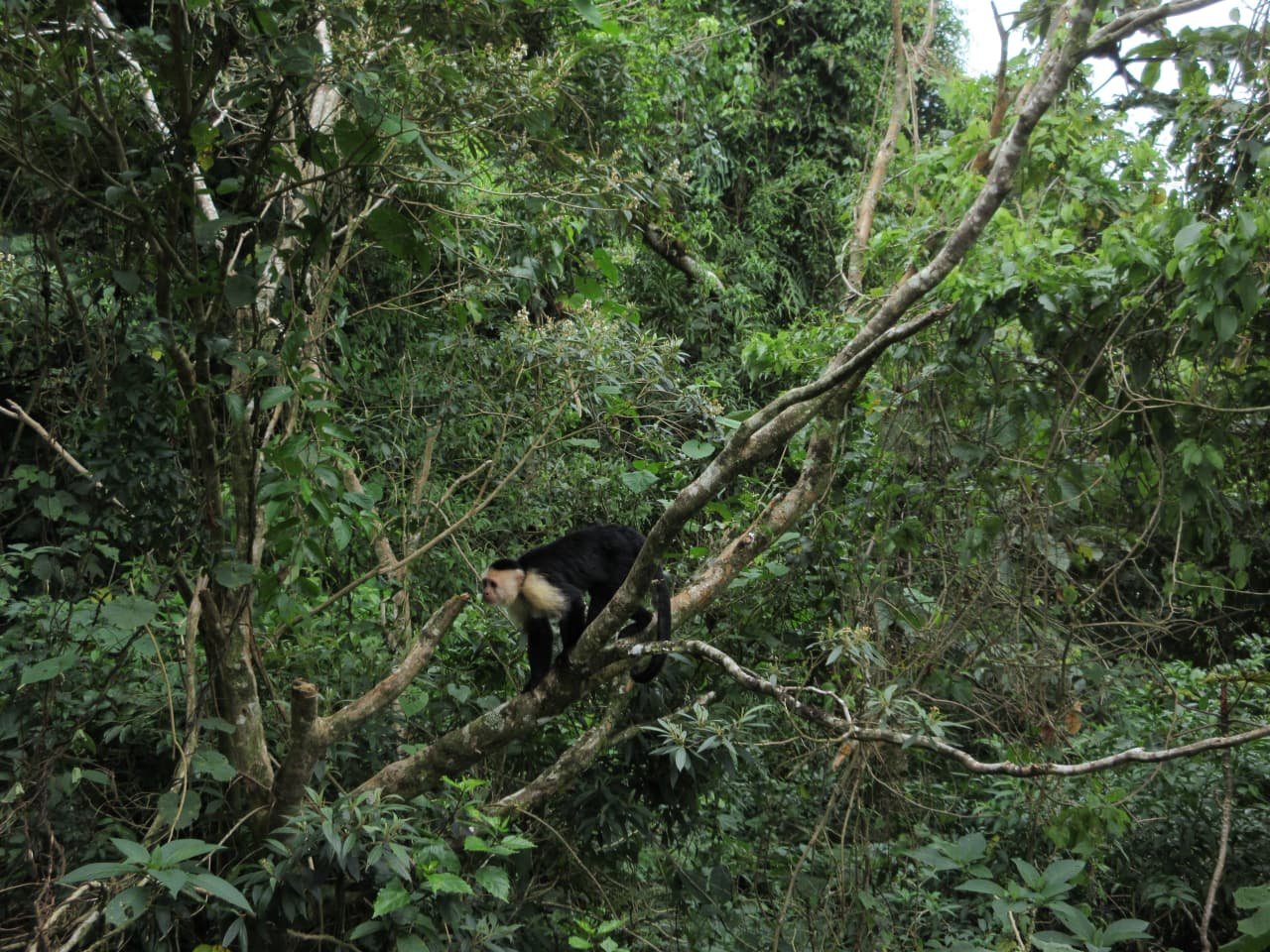
The wildlife route
Panama is an extraordinary destination for wildlife.
You can encounter monkeys, sloths, tropical birds, reptiles, amphibians and countless insects.
The cloud forests are particularly rich in biodiversity.
The Caribbean islands offer marine life.
Coiba offers exceptional opportunities to explore protected marine ecosystems.
And jungle night walks can reveal an entirely different world from what you see during the day.
The important rule is simple:
Wildlife isn't a zoo.
Observe from a respectful distance.
Don't feed animals.
Don't chase them for photographs.
And remember that some of the most interesting creatures are the ones you don't immediately notice.
Panama at night
Don't assume that the jungle goes to sleep when the sun disappears.
It gets interesting.
Frogs become louder.
Insects become more active.
Nocturnal mammals emerge.
Bats move through the darkness.
Owls begin hunting.
And the forest takes on a completely different personality.
A guided night walk can be one of the most memorable experiences of a Panama trip.
Just don't wander blindly into the jungle alone.
The jungle is beautiful.
It is also very good at hiding things.
Safety and common sense
Panama is a popular destination for international travellers, but basic precautions still matter.
Keep an eye on your belongings.
Don't flash expensive electronics unnecessarily.
Use reputable transportation.
Be careful around unfamiliar areas at night.
Listen to hostel staff and local advice.
Don't underestimate the ocean.
Don't underestimate mountain weather.
Don't underestimate jungle terrain.
And don't assume that because something looks like a harmless little tropical creature, it necessarily wants to be your friend.
Respect the environment.
The biggest itinerary mistake
The biggest mistake isn't choosing the wrong destination.
It's trying to experience Panama too quickly.
Panama rewards slow travel.
If you spend one day in a place, you'll probably see the obvious attraction.
If you spend three days, you'll start discovering the interesting stuff.
If you spend five days, you'll know where the locals eat, which trail you prefer, which beach has the best sunset and which person at the hostel somehow knows everybody.
That's when a destination becomes memorable.
Your perfect Panama trip doesn't need to be perfect
This might be the most important piece of advice in the entire guide.
Don't obsess over creating the perfect itinerary.
You won't.
The bus will be late.
It will rain when you planned to go hiking.
The hostel you loved online might not be your favourite.
The restaurant with 4.9 stars might disappoint you.
The random little restaurant you almost ignored might serve the best meal of your life.
Your planned destination might be okay.
The unplanned one might be incredible.
That's travel.
And Panama is particularly good at reminding you of it.
The ultimate Panama philosophy
Plan the important things.
Leave the unimportant things flexible.
Book accommodation when availability matters.
Research transportation before leaving.
Give yourself enough time between destinations.
Don't try to see the entire country in one trip.
Spend money on experiences that matter to you.
Save money where you don't care.
Talk to other travellers.
Talk to locals.
Take the bus sometimes.
Take a shuttle when it makes sense.
Get lost occasionally, preferably in a safe and slightly interesting way.
And most importantly, leave room for Panama to surprise you.
Because that's ultimately what makes this country such an extraordinary backpacking destination.
You can begin your journey walking through the skyscrapers of Panama City, watching enormous ships pass through one of the world's most famous canals. A few days later you can be drinking coffee in the mountains around Boquete. Then you're hiking through cloud forest, surrounded by birds and mist. Then you're standing on a Pacific beach watching surfers. Then you're on a boat heading toward a tiny Caribbean island. Then you're sitting in a hostel surrounded by people you met approximately 48 hours earlier, trying to explain how your original itinerary disappeared.
And somehow, that's the trip.
Panama isn't simply somewhere you go to tick attractions off a list.
It's a country where the landscapes change dramatically, where the journey between destinations can become part of the adventure and where the best experiences are often the ones you didn't plan.
So build your route.
Book your first bed.
Check the buses.
Pack for rain.
Bring shoes that can survive a little mud.
Keep some money aside for the experiences you didn't expect.
And leave a few empty spaces in your itinerary.
Because somewhere between the Caribbean, the Pacific, the mountains, the jungle and the cities, Panama is probably going to give you a story you never planned on bringing home.
And that's the ultimate way to travel Panama.