
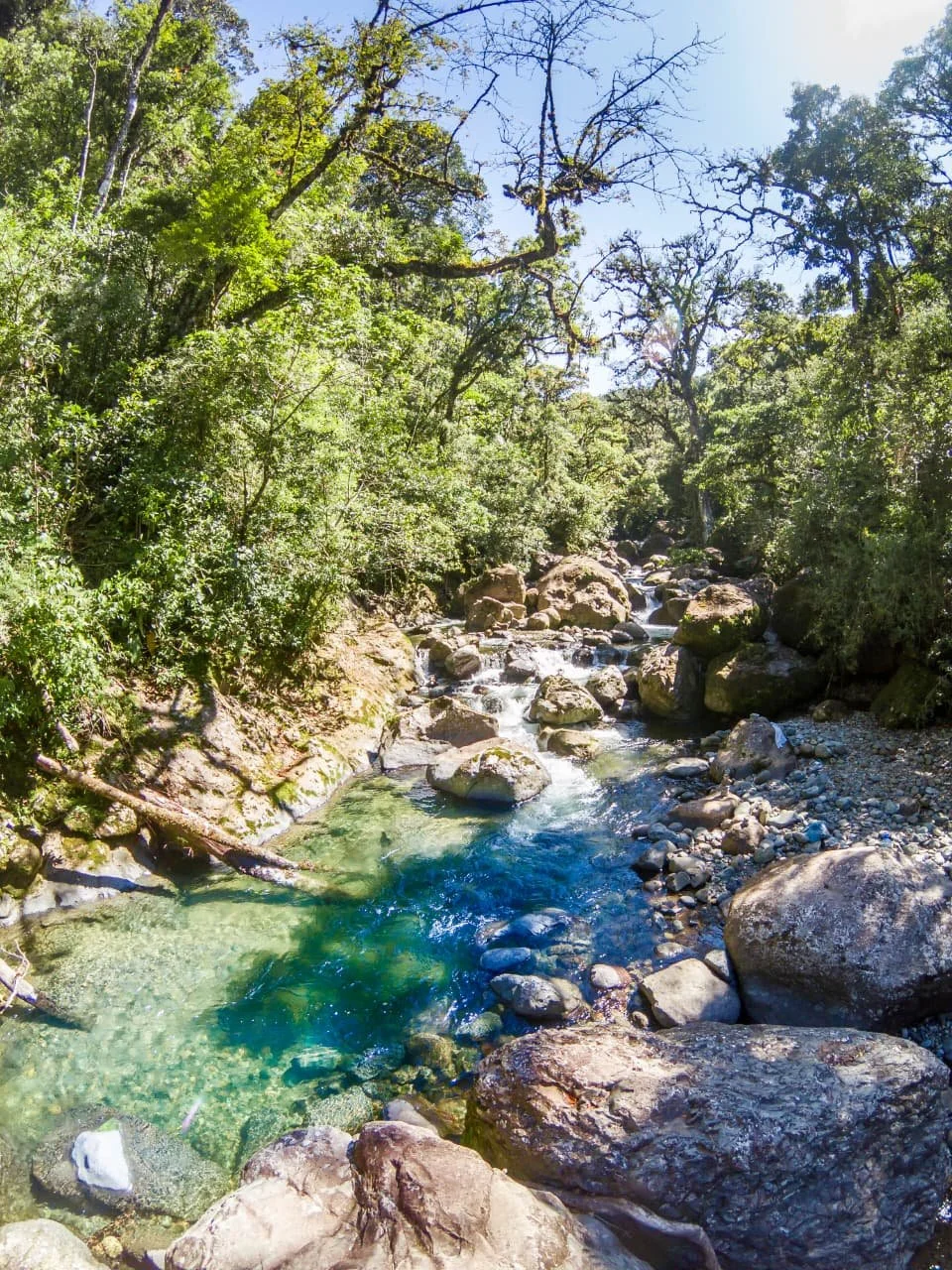
Panama is paradise, but paradise isn't always harmless.
Behind the postcard beaches, misty mountains and endless jungle is a country where nature is still very much in charge. The rainforest isn't a theme park. The rivers aren't swimming pools. The ocean isn't always calm. And some of the animals you might encounter are better admired from a respectful distance.
That doesn't make Panama a dangerous place to visit. In fact, most travelers have completely uneventful trips. But Panama becomes much more fascinating when you understand the wild side of the country and the creatures that share it with you.
And nothing illustrates that better than one particular animal.
The Fer de Lance
Few creatures have achieved the same reputation in Panama as the fer de lance, a highly venomous pit viper found in parts of Central America.
Its reputation isn't based simply on its appearance.
The fer de lance is an important predator in the ecosystem, and its camouflage can make it remarkably difficult to notice when it is resting among vegetation or leaf litter.
That creates one of the biggest rules of exploring tropical forests:
Don't put your hands or feet somewhere you can't see.
A fallen log may look harmless.
A pile of leaves may look harmless.
A dark hole beside a trail may look harmless.
The jungle has a different opinion.
This is one reason experienced hikers pay attention to where they step and avoid grabbing vegetation blindly.
The Jungle Doesn't Need to Chase You
One of the funniest misconceptions about dangerous wildlife is that people imagine animals actively hunting humans.
Usually, that's not what happens.
A snake doesn't need to chase a backpacker through the forest.
A traveler simply gets too close without realizing it.
That's why awareness is more useful than fear.
If you're walking through rainforest, stay on established trails where appropriate, watch where you step, use a flashlight at night and don't handle wildlife.
The goal isn't to walk around terrified.
The goal is to avoid surprising an animal.
Then There Are the Scorpions
Panama also has numerous species of scorpions.
Finding one can be an exciting experience for a traveler who has never encountered one before.
You might discover one underneath something that has been sitting undisturbed, around rocks, or occasionally inside buildings.
Again, the important distinction is between seeing wildlife and handling wildlife.
A scorpion is fascinating.
A scorpion in your hand is a completely unnecessary experiment.
The best wildlife encounters are usually the ones where everyone keeps their appropriate distance.
Tarantulas Look Worse Than They Are
Then there are the tarantulas.
For many travelers, the first encounter can produce an immediate reaction somewhere between fascination and:
"WHY IS THAT THING SO LARGE?"
Tarantulas are one of those animals that look considerably more terrifying than they actually behave.
They're part of the rainforest ecosystem and are generally far more interested in being left alone than confronting a giant human.
Seeing one on a night walk can be an unforgettable Panama experience.
Trying to pick one up for a photograph is a considerably worse idea.
And Then There Is the Ocean
Panama's danger isn't limited to the jungle.
The Pacific and Caribbean coasts can both produce powerful conditions.
Currents, waves, tides, storms and changing weather can transform a beautiful beach surprisingly quickly.
The most dangerous thing about the ocean is often not some mysterious creature lurking beneath the surface.
It's underestimating the water.
A beach can look calm while conditions farther offshore are completely different.
If locals are telling you that conditions aren't suitable for swimming, they're giving you information worth taking seriously.
Rivers Can Be Deceptively Powerful
Panama's rivers are another beautiful but potentially dangerous part of the landscape.
A river can look peaceful on a sunny afternoon and still have strong currents.
Heavy rain farther upstream can also change conditions quickly.
That means a river that looks perfect for swimming isn't automatically safe.
This is especially important in mountainous areas, where rainfall can affect waterways even when the weather immediately around you looks fine.
The rainforest doesn't always send you a notification before changing the river.
The Most Dangerous Thing Might Be the Hike
This is the part backpackers sometimes don't want to hear.
The greatest danger in Panama may not be a snake.
It may be doing something stupid because you're excited.
Hiking alone without telling anyone.
Starting a difficult trail too late.
Underestimating heat and humidity.
Running out of water.
Wearing inappropriate footwear.
Ignoring weather changes.
Leaving an established trail without understanding the terrain.
The jungle doesn't have to be dramatic to become dangerous.
Sometimes it simply needs you to make several small mistakes in a row.
Respect Is Better Than Fear
This is the fascinating thing about Panama's dangerous wildlife.
Once you understand it, the jungle becomes less frightening and more interesting.
The snake isn't a villain.
The scorpion isn't evil.
The tarantula isn't waiting for revenge.
The river isn't trying to get you.
They're all simply part of an ecosystem that existed long before your backpack arrived.
The smartest traveler isn't the one who walks through Panama terrified of everything.
It's the traveler who pays attention.
Look where you're stepping.
Don't touch animals.
Respect warning signs.
Listen to locals.
Take weather seriously.
Use proper equipment on difficult trails.
And remember that being adventurous doesn't mean being careless.
Because that's the real secret of wild Panama:
You don't have to be afraid of the jungle. You just have to remember that you're a guest in it.