
Panama is a fascinating country for tourism because the visitors are not distributed evenly at all. Millions of international travelers arrive every year, but the majority concentrate in a handful of provinces and destinations. In 2025, Panama received 3,004,266 international visitors, an increase of 8.2% over 2024, and tourism generated approximately B/.6.583 billion in foreign-exchange earnings, excluding international transportation. But if you look beyond the impressive national numbers, an even more interesting story appears: Panama City dominates tourism, while a relatively small group of provinces captures most of the country's leisure travelers. Recent tourism data for January through August 2025 showed that 54% of tourists stayed in the province of Panama, followed by Chiriquí with 16.6%, Colón with 8.6%, Panamá Oeste with 7.9%, Coclé with 4.8%, and Bocas del Toro with 3.9%. The remaining provinces together accounted for about 4%.
1. Panama Province: The Undisputed Tourism Giant
If you want to know where most tourists in Panama actually spend their time, the answer is overwhelmingly Panama Province, largely because of Panama City. In the January to August 2025 figures, approximately 54% of tourists stayed in the province of Panama, putting it dramatically ahead of every other province.
The reason is obvious once you arrive. Panama City is the country's economic, transportation and tourism hub all at once. International travelers arrive through Tocumen International Airport, and in 2025 the airport received more than 2.24 million international visitors, representing about a 10% increase over the previous year.
But Panama City isn't simply an airport stop. It contains an extraordinary collection of attractions within a relatively small area. Travelers can visit the Panama Canal, walk through historic Casco Antiguo, explore the modern skyline, visit museums, eat at an increasingly sophisticated collection of restaurants, explore the rainforest at Metropolitan Natural Park and take trips into the surrounding islands and nature reserves. The city also has the country's largest concentration of hotels, restaurants, tour operators and international transportation.
There is another huge advantage: connectivity. Panama City is effectively the gateway through which much of the country's international tourism passes. The country's geographic position and Tocumen's extensive regional connections make it relatively easy for someone from South America, North America, Europe or the Caribbean to reach Panama. That means Panama Province benefits from both travelers who stay in the capital and travelers who use it as their starting point before continuing elsewhere.
In other words, Panama City doesn't necessarily win because it has Panama's best beaches or best jungle. It wins because it has everything.
2. Chiriquí: The Interior's Tourism Powerhouse
After Panama Province, Chiriquí stands out as one of the country's most important tourism provinces. The 2025 accommodation data put Chiriquí at approximately 16.6% of tourist stays, an enormous share considering the province is thousands of kilometers from the capital in terms of travel experience and has a completely different tourism identity.
Chiriquí's greatest advantage is variety.
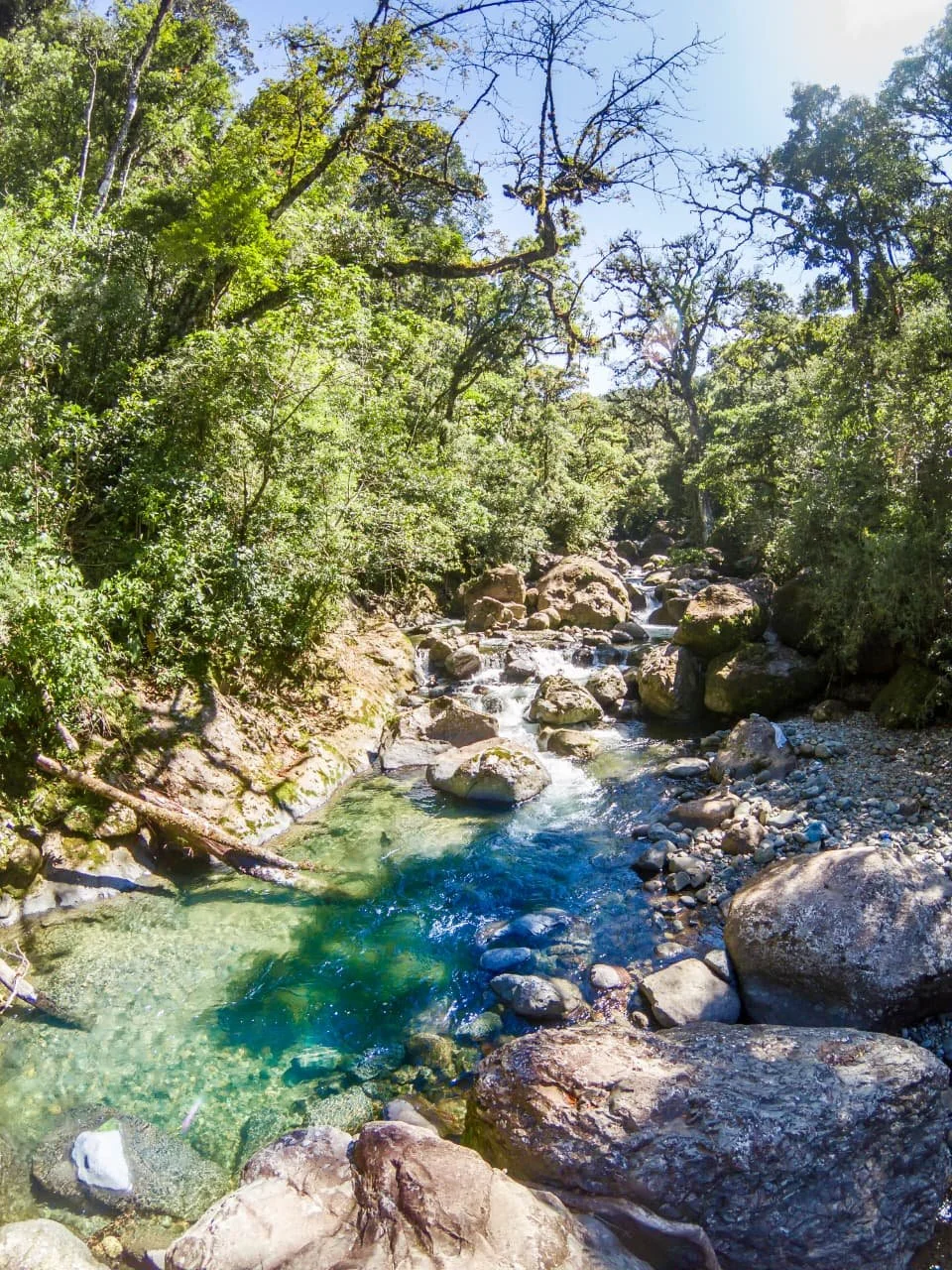
You can visit the cool mountain town of Boquete, explore coffee plantations, hike through cloud forest, climb or explore the slopes of Volcán Barú, visit highland farms, explore rivers and waterfalls, or travel toward the Pacific coast and the islands of the Gulf of Chiriquí.
And Chiriquí has something particularly valuable for international backpackers: it feels like an adventure destination rather than simply a resort destination.
The province also benefits enormously from its position as a gateway to western Panama. Travelers heading toward Bocas del Toro often pass through Chiriquí, while people entering Panama overland from Costa Rica frequently arrive through the western part of the country.
Boquete is probably the province's most internationally recognizable tourism destination. Its cool climate, mountains, coffee, hiking trails, restaurants and established tourism infrastructure make it especially attractive to travelers who want something completely different from the tropical heat of Panama City.
Chiriquí was also highlighted by Lonely Planet among its recommended regions for 2025, emphasizing its biodiversity, trails, marine parks and coffee plantations.
And this is where the tourism story becomes particularly interesting. Chiriquí has enormous potential beyond Boquete. Places such as the Gulf of Chiriquí, Volcán, Cerro Punta, the highlands and the Pacific coastline offer very different experiences. The province is effectively several tourism destinations contained inside one province.
3. Colón: History, Caribbean Culture and the Canal
Colón Province ranked third in the 2025 provincial accommodation figures, with approximately 8.6% of tourist stays.
Colón has a completely different tourism personality from Chiriquí.
Its biggest attraction is history.
This is the Caribbean side of the Panama Canal region, and the province is deeply connected to the construction and operation of the Canal. Travelers can explore the canal's Atlantic entrance, historic fortifications, Caribbean communities and the remarkable cultural mixture created by centuries of international trade and migration.
Portobelo is particularly important. The historic town and its fortifications tell the story of Spain's enormous colonial trading system, when treasure and goods from South America passed through the region before being shipped across the Atlantic.
Colón also provides access to Caribbean beaches, islands and marine environments. The province's combination of colonial history, Caribbean culture and Canal infrastructure makes it one of the most interesting places in Panama for travelers who want something beyond the standard beach experience.
And geographically, it is extremely convenient. Colón is close enough to Panama City to be visited as a day trip, while still feeling like a different world.
4. Panamá Oeste: Beaches on the Capital's Doorstep
Panamá Oeste accounted for approximately 7.9% of tourist stays in the January-August 2025 data.
Its biggest advantage is simple: proximity.
Panamá Oeste is immediately west of the capital and contains coastal destinations that are relatively easy to reach from Panama City. For visitors who want a beach without committing to a flight or a long journey across the country, the province is extremely convenient.
The province includes popular destinations such as Coronado and the Pacific beach corridor, where resorts, vacation homes, restaurants and weekend tourism have developed rapidly.
This creates a very different tourism market from Bocas del Toro or Chiriquí. Panamá Oeste benefits heavily from both international visitors and Panamanians leaving the capital for weekends and holidays.
The province is essentially Panama City's escape valve.
When people living in the capital want ocean, golf, restaurants, resorts and a slower pace without traveling too far, Panamá Oeste is one of the first places they consider.
5. Coclé: Resorts, Beaches and El Valle
Coclé accounted for approximately 4.8% of tourist stays in the same January-August 2025 figures.
Coclé is particularly interesting because it combines several completely different tourism products.
Along the Pacific coast, the province has developed major beach resorts and residential tourism. But move inland toward El Valle de Antón, and the landscape changes dramatically.
El Valle sits inside the crater of an ancient volcano and is surrounded by mountains, waterfalls, forests and hiking opportunities. Its cooler climate and proximity to Panama City make it one of the country's most popular weekend destinations.
That combination gives Coclé a powerful advantage: it can sell both beach tourism and mountain tourism.
A traveler can spend the morning on the Pacific coast and later be surrounded by green mountains.
6. Bocas del Toro: The Backpacker and Island Favorite
Here's where the statistics become particularly interesting.
Bocas del Toro accounted for about 3.9% of tourist stays in the January-August 2025 provincial accommodation figures.
At first glance, that might seem surprisingly low.
Ask international backpackers where they want to go in Panama, however, and Bocas del Toro is almost always near the top of the conversation.
The explanation is that provincial accommodation statistics measure something different from a simple ranking of "best-known destinations." Bocas is a major international leisure destination, but Panama Province receives enormous numbers of business travelers, stopover travelers and visitors staying in the capital, while Chiriquí, Colón and Panamá Oeste benefit from broader tourism and transportation patterns.
Bocas has an incredibly distinctive product.
It has Caribbean islands, turquoise water, surfing, snorkeling, diving, jungle, wildlife, nightlife, hostels, restaurants and a famously relaxed backpacker atmosphere. It is also one of the easiest places in Panama to meet other international travelers.
Bocas is therefore disproportionately important to the backpacking scene, even though its total share of national hotel stays is much smaller than Panama City's.
The destination has also been attracting increasing investment and development. International travel media have noted the growth of boutique hotels, eco-resorts and higher-end tourism alongside the traditional backpacker scene.
7. Veraguas: The Province With Enormous Untapped Potential
Veraguas doesn't appear near the top of the accommodation statistics, but from an adventurous travel perspective it deserves much more attention.
The province has Santa Catalina, one of Panama's most famous surfing destinations, as well as access to Coiba National Park, one of the country's greatest marine and wildlife treasures.
The combination of surfing, diving, fishing, islands, rainforest and relatively remote beaches gives Veraguas a tourism product that could become substantially larger.
The challenge is accessibility.
Travelers have to make more effort to get there compared with Panama City, Bocas or the main resort corridor.
But that can also be its greatest advantage.
For travelers who don't want everything to be developed, Veraguas can feel like the Panama they imagined before arriving.
8. Los Santos and Herrera: The Cultural Heartland
The provinces of Los Santos and Herrera don't compete with Panama City or Bocas del Toro in raw international tourist numbers, but they offer something those destinations cannot easily reproduce: traditional Panamanian culture.
The Azuero Peninsula is famous for folklore, traditional music, festivals, polleras, horses, cattle, crafts and regional food. Events such as the Festival de la Mejorana and the many local celebrations attract visitors interested in experiencing Panama's cultural traditions.
Pedasí and Playa Venao, particularly, have also developed international reputations. Playa Venao has become one of Panama's best-known surfing destinations and attracts a younger international crowd.
This is one of the country's most interesting tourism transformations: traditional rural Panama and international surf culture have ended up occupying the same region.
9. Darién: Huge Wilderness, Tiny Tourism Numbers
Then there is Darién, which is almost the opposite of Panama City.
It contains enormous areas of rainforest, Indigenous communities and some of the country's wildest landscapes, yet it receives only a tiny fraction of the international tourism that flows through Panama City.
And that's not necessarily a bad thing.
Darién is not designed for mass tourism. Its remoteness, difficult transportation and environmental sensitivity make it much more suitable for specialized travelers, researchers, wildlife enthusiasts and experienced adventurers.
The province is a reminder that the number of tourists does not necessarily indicate how extraordinary a place is.
In fact, some of Panama's most spectacular landscapes receive relatively few visitors precisely because they are difficult to reach.
So Which Provinces Get the Most Tourists?
Based on the January-August 2025 accommodation distribution, the rough ranking is:
1. Panama Province — 54%
2. Chiriquí — 16.6%
3. Colón — 8.6%
4. Panamá Oeste — 7.9%
5. Coclé — 4.8%
6. Bocas del Toro — 3.9%
7. All remaining provinces combined — about 4%.
These numbers are useful, but they should not be interpreted as a simple ranking of Panama's "best" destinations. They primarily reflect where tourists stay and the enormous concentration of accommodation demand around the capital and several major tourism corridors.
Why Panama City Dominates
The answer ultimately comes down to connectivity.
Panama City has the country's biggest airport, largest concentration of hotels, greatest number of restaurants, strongest business sector, biggest collection of attractions and easiest connections to the rest of the country.
The city also benefits from Panama's increasingly important stopover tourism market. Travelers flying between North and South America can add a few days in Panama rather than simply passing through the airport. The country's tourism authority reported that Tocumen handled more than 2.24 million international visitors in 2025.
That means Panama City is benefiting from several types of tourists simultaneously: vacationers, business travelers, cruise passengers, stopover travelers, Canal visitors, conference attendees and people using the capital as a gateway to the rest of the country.
No other province can compete with that combination.
But the Real Tourism Story Is Outside the Capital
The most exciting part of Panama's tourism future may actually be the provinces.
The country's tourism authorities have acknowledged the importance of spreading tourism beyond the capital, and recent tourism discussions have emphasized improving connectivity to the provinces, increasing average visitor stays outside Panama City and encouraging greater participation by local businesses.
That could be enormously important.
Because Panama has an extraordinary tourism problem to have: there is simply too much to see outside the capital for the current distribution of visitors to make sense.
There are Caribbean islands in Bocas del Toro.
Cloud forests and coffee plantations in Chiriquí.
Colonial forts in Colón.
Volcanic mountains in Coclé.
Surfing in Los Santos and Veraguas.
Marine ecosystems around Coiba.
Indigenous communities throughout several regions.
Rainforest in Darién.
And countless small towns, waterfalls, rivers, beaches and hiking trails that barely register on the international tourism map.
For a backpacker, this is actually great news.
It means that while millions of people are visiting Panama, large parts of the country remain remarkably uncrowded.
And that may ultimately become Panama's biggest tourism advantage: you can arrive in one of the most internationally connected countries in Central America, visit the famous Canal and skyscrapers, and then travel only a few hours before finding yourself somewhere that feels almost completely disconnected from the rest of the world.