
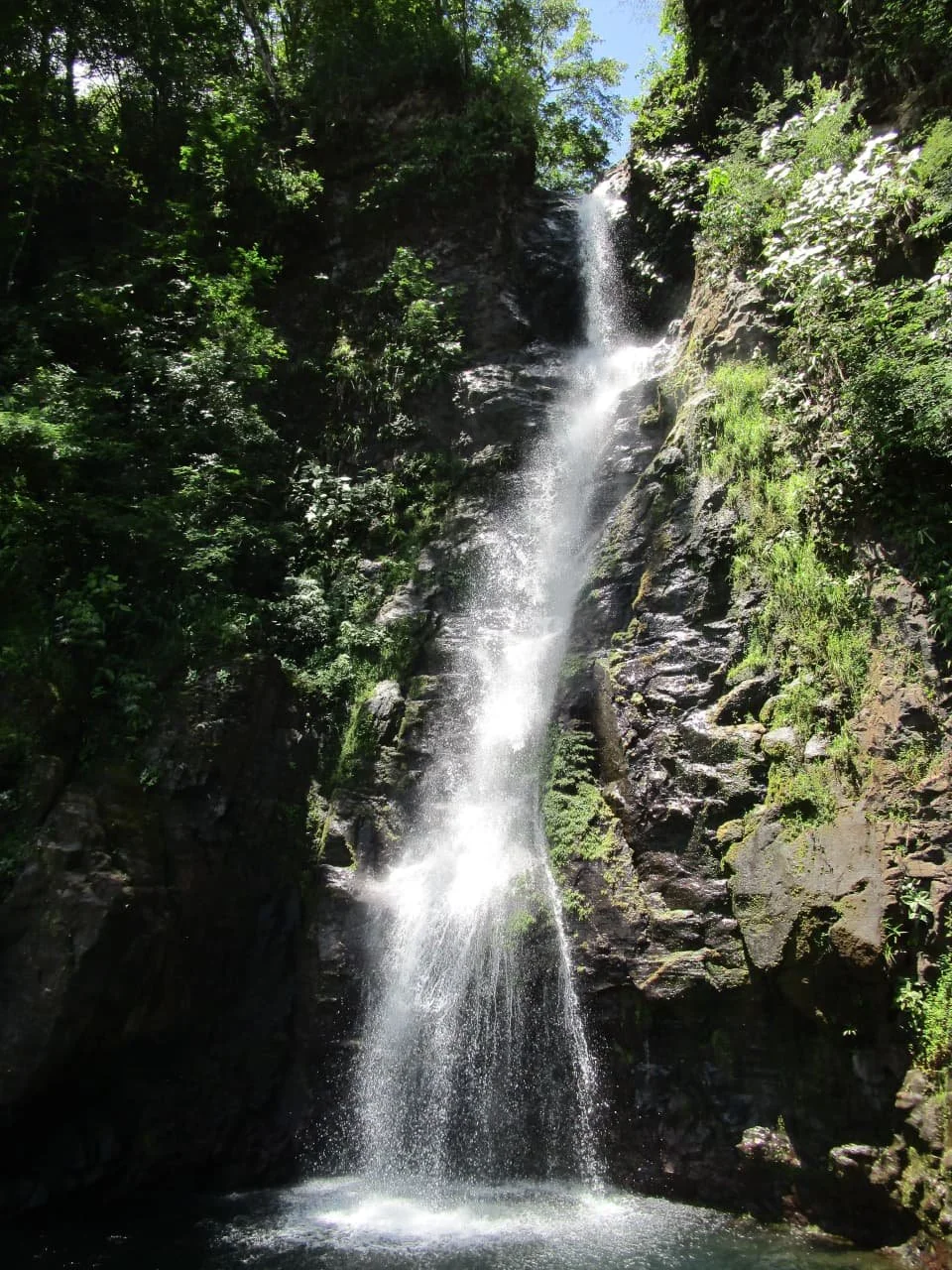
Panama is famous for something remarkably modern: a canal that transformed global shipping and connected two oceans. But travel a few kilometres away from the locks, highways and skyscrapers and Panama becomes a very different place. Dense rainforest swallows ruins, rivers disappear into caves, Indigenous traditions preserve knowledge passed down for generations, and archaeological discoveries continue to challenge what we thought we knew about the people who lived here before European contact.
For such a small country, Panama has an extraordinary number of mysteries.
Some have reasonable scientific explanations. Others remain genuinely unresolved. And perhaps the most fascinating part is that Panama's greatest mysteries aren't necessarily supernatural at all. They are stories about civilizations, landscapes, animals and places that we still don't fully understand.
The mysterious city buried in the jungle
One of Panama's greatest archaeological mysteries is Panama Viejo, the remains of the original European city of Panama.
Founded in 1519, it became one of the most important Spanish settlements on the Pacific coast of the Americas. Enormous quantities of treasure passed through the city as silver and gold from South America were transported toward the Caribbean.
Then, in 1671, the Welsh privateer Henry Morgan attacked it.
The city was destroyed and eventually abandoned, while the modern city of Panama was established farther west.
Today, Panama Viejo is a haunting archaeological landscape surrounded by modern Panama City. Ruined walls and towers rise among grass and vegetation, creating the strange impression that an ancient civilization once stood there.
But the deeper mystery is what lies beneath the visible ruins.
Archaeologists continue to uncover evidence about how the city was organized, how its inhabitants lived and how Indigenous and African populations interacted with the Spanish colonial system.
The jungle hasn't completely forgotten the city.
It has simply covered parts of it.
The lost world of the Gran Coclé people
Long before the Spanish arrived, Panama was home to sophisticated societies capable of producing extraordinary pottery, goldwork and other objects.
The archaeological region known as Gran Coclé is particularly important.
Excavations have revealed elaborate ceramics, burial sites and gold objects that demonstrate a level of artistic and social complexity that challenges the old stereotype of Panama as merely a territory inhabited by small, isolated communities.
Some archaeological sites contain enormous quantities of artifacts.
Others remain only partially understood.
And much of the ancient landscape is still hidden beneath forests, farms and modern development.
The mystery isn't whether sophisticated societies existed.
We know they did.
The mystery is how they were organized, how they interacted with neighbouring societies and how their political and economic systems changed over centuries.
The golden animals of Panama
Few things capture the imagination quite like the gold objects discovered in Panama.
Jaguar-like creatures.
Birds.
Frogs.
Crocodiles.
Serpents.
Human figures wearing elaborate ornaments.
Many of these objects were found in archaeological contexts associated with elite burials.
But what did they mean?
Were they symbols of political power?
Religious objects?
Representations of supernatural beings?
Indicators of rank?
Possibly all of these.
The ancient people of Panama lived in a world where humans, animals and supernatural forces were deeply interconnected.
A golden animal wasn't necessarily decorative.
It could have represented power, transformation or a connection between different worlds.
The mystery of the ancient cemeteries
Some of Panama's most fascinating archaeological discoveries come from burial sites.
At places such as El Caño, archaeologists have uncovered richly furnished graves containing gold objects and other artifacts.
The scale and organization of some of these burials suggest that highly stratified societies existed in Panama centuries before European arrival.
But many questions remain.
Who exactly were these people?
What was the political structure that allowed enormous funerary ceremonies to take place?
Why were particular individuals buried with specific objects?
And how did these societies respond to environmental changes, warfare and political upheaval?
Every burial answers some questions while creating others.
That is the nature of archaeology.
The ancient road to nowhere
One of the most intriguing aspects of Panama's archaeological landscape is that ancient settlements were connected by networks of trails and roads that existed long before modern highways.
Today, some of these routes have vanished beneath vegetation.
Others survive as faint traces in the landscape.
Imagine walking through the Panamanian rainforest and realizing that the trail beneath your feet may have been used by people hundreds or even thousands of years ago.
The forest can make history invisible.
A modern jungle trail can look completely natural while concealing evidence of ancient human movement.
This is one reason archaeological research in Panama remains so exciting.
The map we see isn't necessarily the map that existed in the past.
The mystery of La Amistad
High in the mountains of western Panama lies La Amistad International Park, a vast protected landscape extending across the Panama-Costa Rica border.
The forests here are extraordinarily difficult to explore.
Steep mountains.
Cloud forests.
Rivers.
Dense vegetation.
Remote valleys.
The environment itself creates mystery.
Scientists continue to discover and document species in the region, while archaeological knowledge of some mountain areas remains limited.
There is something particularly intriguing about a place where even modern humans struggle to move through the landscape.
If people lived, travelled or hunted here centuries ago, what traces did they leave behind?
And what remains undiscovered?
Panama's mysterious golden frog
Few animals have become as symbolic of Panama's mysteries as the Panamanian golden frog.
Once strongly associated with mountain streams around El Valle de Antón and other parts of central Panama, the species experienced a catastrophic decline caused largely by chytrid fungus.
Today, the golden frog has become a symbol of conservation.
But there is something haunting about its story.
For generations, these tiny yellow amphibians lived in Panama's forests and streams.
Then a microscopic organism began spreading through their habitat.
Suddenly, an animal that had existed for thousands or perhaps millions of years was disappearing.
The mystery isn't supernatural.
It is ecological.
And it raises an uncomfortable question:
How many other species are disappearing before we even understand them?
The strange world of the Darien
If Panama has a true frontier, it is the Darién.
This vast region of rainforest near the Colombian border is one of the most remote parts of Central America.
There are few roads.
The terrain is difficult.
The forest is immense.
And the region has long been associated with exploration, Indigenous cultures, wildlife and danger.
The Darién is also famous because the Pan-American Highway effectively stops there.
For travellers accustomed to roads crossing entire continents, this is an extraordinary fact.
You can drive north through the Americas until the road simply ends.
Beyond it lies rainforest.
Indigenous territories.
Rivers.
Mountains.
And Colombia.
The Darién isn't an unexplored wilderness in the literal sense. Indigenous peoples have lived there for generations. But for outsiders, enormous areas remain difficult to access.
That creates one of Panama's greatest modern mysteries:
What is still hidden in the Darién?
The legends of hidden treasure
Panama's history is deeply connected to gold and silver.
Spanish treasure fleets.
Pirates.
Privateers.
Colonial cities.
Mountain routes.
Caribbean ports.
It is therefore inevitable that Panama developed stories about buried treasure.
Some stories involve Spanish gold supposedly hidden during pirate attacks.
Others concern treasures allegedly lost in remote rivers or buried near old settlements.
Most treasure legends should be treated exactly as that: legends.
But there is an important historical reason they persist.
Real treasure absolutely did pass through Panama.
The Camino de Cruces and other routes carried enormous quantities of South American wealth across the isthmus.
Pirates really did attack Spanish settlements.
Ships really did sink.
Cities really were abandoned.
So while the treasure stories have become embellished over centuries, they grow from a genuinely extraordinary historical reality.
The mystery of the Panama Canal
The Panama Canal seems like the opposite of a mystery.
It is one of humanity's greatest engineering achievements.
But even the canal has mysteries.
The original French attempt to construct the canal collapsed catastrophically, partly because of disease, difficult terrain and enormous engineering challenges.
Then the United States took over the project.
The successful canal depended not only on digging but on understanding Panama's environment.
Mosquitoes turned out to be crucial.
Diseases such as yellow fever and malaria had devastated workers.
Once mosquito-control measures were implemented, the situation changed dramatically.
The mystery here is actually one of human misunderstanding.
For years, people knew that something was killing workers but didn't fully understand the mechanism.
Then medical science revealed the mosquito connection.
A tiny insect had become one of the greatest obstacles to one of the largest engineering projects in history.
The volcanoes that shaped Panama
Panama's landscape contains evidence of an ancient and complicated volcanic past.
Places such as Volcán Barú dominate the western landscape, rising dramatically above the surrounding region.
Volcán Barú is Panama's highest point.
But volcanoes aren't simply mountains.
They are geological records.
Their rocks tell stories about the formation of the isthmus, changing environments and ancient volcanic activity.
Scientists continue to study Panama's geology because understanding how the isthmus formed is crucial to understanding the development of ecosystems across the Americas.
In other words, beneath Panama's soil is a geological mystery thousands or millions of years old.
How did Panama change the world?
Perhaps the biggest mystery isn't about treasure, ghosts or lost cities.
It's about the isthmus itself.
When Panama's land connection between North and South America became established, it fundamentally altered ocean currents and allowed animals to move between continents.
The formation of the Isthmus of Panama is considered one of the most important geological events in the history of the planet.
Animals migrated.
Marine ecosystems changed.
Ocean circulation was altered.
And eventually humans used the same geographic connection to travel between continents.
Panama wasn't merely located between two continents.
It helped reshape them.
The mysterious bioluminescent waters
Around Panama's islands and coastal waters, another natural mystery appears after dark.
Certain marine organisms can produce bioluminescence, creating flashes of blue-green light when disturbed.
Put your hand into the water and tiny points of light can appear.
Move through the water and the disturbance can create glowing trails.
For someone seeing it for the first time, it can look completely supernatural.
But the explanation is biological: microscopic organisms produce light through chemical reactions.
And yet knowing the explanation doesn't make the experience any less magical.
Sometimes science doesn't destroy mystery.
It makes it even more fascinating.
The creatures that shouldn't be there
Panama's enormous biodiversity creates another kind of mystery.
Why are certain species found here and not somewhere else?
Why do closely related species occur on opposite sides of the mountains?
Why do some frogs exist only on one mountain range?
Why can two valleys separated by relatively short distances contain completely different ecological communities?
The answer often lies in Panama's geography.
Mountains create isolated environments.
Rivers divide habitats.
Climate changes with elevation.
The Caribbean and Pacific sides have dramatically different weather patterns.
Over enormous periods of time, these differences create evolutionary laboratories.
A tiny mountain stream can become the birthplace of a species found nowhere else on Earth.
The Indigenous knowledge that outsiders don't understand
Another of Panama's mysteries isn't a physical location.
It is knowledge.
Indigenous communities including the Guna, Ngäbe, Emberá, Wounaan and others possess generations of knowledge about plants, animals, weather, rivers and landscapes.
Some of that knowledge has been passed down orally.
A plant that looks completely ordinary to a visitor may have a specific use.
A particular animal's behaviour may tell an experienced forest dweller something about the environment.
A change in river conditions may be recognized before an outsider notices anything unusual.
This isn't mystical knowledge.
It is accumulated environmental knowledge developed through generations of living within a landscape.
And some of it is simply inaccessible to outsiders because it belongs to communities rather than being written down in books.
The forests that seem to move
Walk through a Panamanian rainforest long enough and you eventually experience another strange sensation.
You hear something moving.
You stop.
Everything becomes silent.
Then something crashes through the vegetation.
You never see it.
Was it a monkey?
A large bird?
A peccary?
A rodent?
A snake?
The forest is full of animals that are extraordinarily good at remaining hidden.
This is why Panama can feel mysterious even when nothing supernatural is happening.
The rainforest is alive but concealed.
There may be dozens of animals within a few hundred metres of you that you never see.
The mystery beneath Panama City
Perhaps one of the most overlooked mysteries is what lies beneath modern Panama City.
The modern metropolis has grown rapidly.
Skyscrapers.
Roads.
Shopping centres.
Apartment towers.
Construction.
But underneath parts of the modern landscape are layers of older Panama.
Colonial remains.
Archaeological evidence.
Old roads.
Buried structures.
Historic objects.
The city has been rebuilt repeatedly, meaning that Panama City isn't one city.
It is several cities occupying the same piece of land across different periods of history.
Every new construction project potentially has the ability to reveal another fragment of the past.
The greatest mystery is what hasn't been discovered
This may ultimately be the most fascinating thing about Panama.
We already know that the country contains ancient settlements, remarkable biodiversity, Indigenous cultures, caves, shipwrecks, colonial ruins and geological formations.
But we also know that the picture is incomplete.
Rainforest hides archaeological sites.
Rivers change course.
Artifacts remain underground.
Species remain undocumented.
Old stories disappear when their storytellers die.
And landscapes that look completely untouched may contain traces of people who lived there centuries ago.
Panama is small enough that you can cross the country in a matter of hours, yet complicated enough that there are still places where modern infrastructure barely exists.
That creates a remarkable contrast.
You can stand beside one of the world's busiest shipping routes in the morning and, later that day, be surrounded by rainforest where the only sounds are insects, birds and rushing water.
Panama doesn't need ghosts to be mysterious
The word "mystery" often makes people think of haunted buildings, UFOs or supernatural legends.
Panama certainly has its share of folklore.
But the country's real mysteries are far more interesting.
Who built these ancient settlements?
How did people organize their societies?
What lies beneath the jungle?
How did the isthmus reshape the planet?
How many species remain undiscovered?
What knowledge exists within Indigenous communities that outsiders have never documented?
What happened to civilizations whose cities have disappeared beneath vegetation?
And perhaps the most exciting question of all:
What is still waiting to be found?
Panama is often described as a bridge between two continents and two oceans.
But perhaps an even better description is that it is a bridge between the known and the unknown.
Its modern cities make it look thoroughly mapped and understood.
Its forests tell a different story.
Somewhere beneath the leaves, inside caves, along forgotten trails, beneath the soil and in the memories of communities that have lived here for generations, Panama is still keeping secrets.