
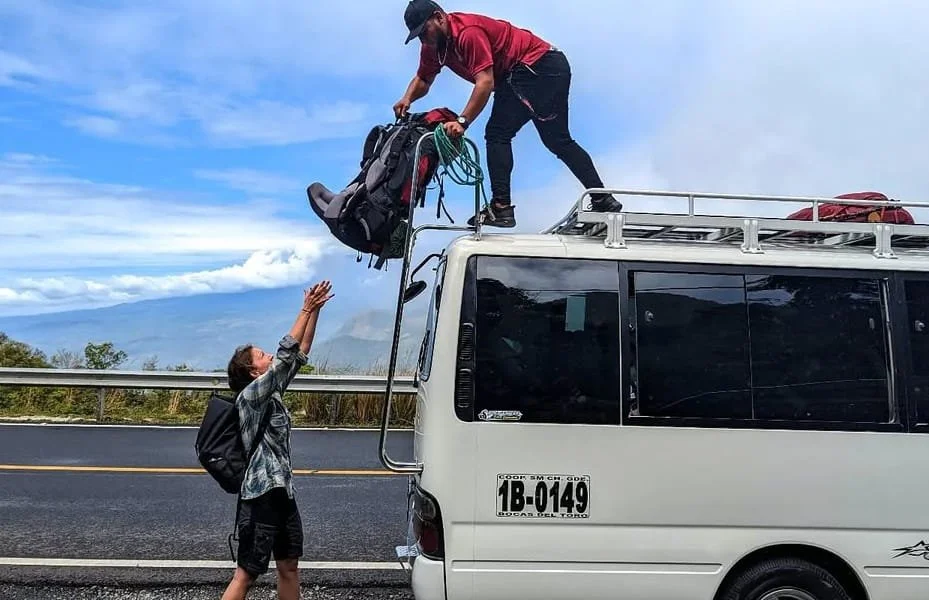
Panama is one of those countries that can be deceptively easy to underestimate. On a map, it looks small enough that a backpacker might imagine seeing the whole thing in a week or two. But Panama is an extraordinary collision of two oceans, tropical islands, cloud forests, Caribbean communities, indigenous territories, modern cities, remote jungles, volcanic highlands and some of the most important marine ecosystems in Central America. The real mistake is treating Panama as merely a stopover between Costa Rica and Colombia. For a backpacker, Panama can be one of the most diverse journeys in the entire region, and the best experiences are often not the famous attractions themselves but the moments between them: taking a chicken bus into the mountains, jumping into a jungle river, getting caught in a tropical downpour, sleeping in a wooden Caribbean cabin, sharing a table with travelers from five different countries, or discovering that the tiny road you almost didn't take leads somewhere spectacular.
If you are backpacking through Panama and want to experience the country properly, there are certain places and experiences that should be considered almost essential. You do not necessarily have to visit every one of them, because Panama rewards slow travel far more than racing from destination to destination, but these are the experiences that collectively give you a picture of what makes Panama so special.
Panama City: Start With the Madness
Every backpacker should spend some time in Panama City, even if cities are not normally your thing. Panama City is unlike almost anywhere else in Central America because it combines an enormous modern skyline with colonial architecture, tropical rainforest, Caribbean history and one of the world's most important pieces of infrastructure. It is a city where you can drink coffee beneath skyscrapers in the morning, walk through 17th century streets in the afternoon, see enormous ships passing through the Panama Canal later in the day and finish the evening overlooking the Pacific.
The historic district of Casco Viejo is the obvious place to begin. Wander without too much of a plan. Look at the old churches, plazas, balconies and crumbling colonial buildings alongside beautifully restored buildings, restaurants, bars and hostels. Casco is particularly enjoyable around sunset when the temperature begins to fall and the streets become much more alive. Do not just photograph the famous buildings and leave. Sit somewhere. Have a coffee. Eat something. Watch people. Panama City is a place where the contrast between old and new is part of the attraction.
And then there is the skyline. Panama City has one of the most dramatic skylines in Latin America, and seeing those towers rising above the tropical landscape gives you an immediate understanding of Panama's unusual economic position. This is not simply a tropical backpacking destination. It is a major international commercial center.
See the Panama Canal With Your Own Eyes
You can read about the Panama Canal for hours, but watching a massive ship squeeze through the locks in front of you is something completely different. The canal is not just another tourist attraction. It is the reason modern Panama became so strategically important, and it remains one of the world's great engineering achievements.
The Miraflores Visitor Center provides views of vessels passing through the Pacific side of the canal, while Agua Clara offers a different perspective on the Caribbean side. The official canal visitor information currently lists both centers as visitor attractions, with transit times and ticket information available through the canal's official tourism site.
For a backpacker, I would strongly recommend actually watching a ship transit rather than simply taking a photograph of the locks. Seeing a gigantic container ship being raised and lowered by the canal system makes the scale of the project suddenly understandable.
But there is another way to experience the canal that is arguably even more interesting: go looking for the jungle surrounding it.
Hike in the Rainforest Beside the Canal
One of Panama's most fascinating characteristics is that some of the most important rainforest in the country exists surprisingly close to Panama City. Places around Soberanía National Park and Gamboa give backpackers an opportunity to experience genuine tropical forest without having to travel hundreds of kilometers into the interior.
Go early in the morning and walk quietly. This is when the forest is alive with birds, monkeys and insects. You might hear a howler monkey before you see it. You might see a toucan sitting high above the trail. You might walk underneath enormous trees covered in epiphytes and realize that you are only a short distance from one of the busiest shipping routes on Earth.
That contrast is one of the great Panama experiences: civilization and wilderness constantly sitting next to each other.
Watch the Sunrise or Sunset Over Panama City
Backpackers sometimes overlook simple experiences because they are looking for something spectacular enough to put on Instagram. But Panama City rewards you for slowing down.
Find somewhere with a view and watch the sun disappear behind the skyline. Or get up early enough to watch the city wake up. The combination of tropical humidity, ocean, skyscrapers and morning light can be extraordinary.
The Amador Causeway is particularly interesting because it extends out toward several islands and provides views back toward the city. The Panama Canal Authority describes the causeway as being constructed using material excavated during the canal's construction.
Go to Bocas del Toro and Experience Caribbean Panama
If Panama City shows you the country's modern side, Bocas del Toro shows you another Panama entirely.
Bocas is where backpackers come to slow down, meet other travelers, swim, party, explore islands and spend days wondering whether they really need to leave. The Caribbean atmosphere is completely different from the Pacific side of Panama. The architecture, food, music, boats, beaches and general rhythm of life create an entirely different experience.
One of the great backpacking experiences in Bocas is simply taking water taxis between islands. Instead of thinking of transportation as an inconvenience, make the boat ride part of the adventure. You leave one island, cross the Caribbean water and arrive somewhere completely different.
Spend time exploring Isla Colón, but do not limit yourself to the main town. Explore the surrounding beaches and islands. Spend a day swimming. Rent a bicycle where practical. Take a boat trip. Find a quiet beach. Go snorkeling. And, if you enjoy nightlife, Bocas can easily become one of the most social stops on a Central American backpacking trip.
The real danger is that you will plan three nights and stay for ten.
Visit Red Frog Beach and the Other Caribbean Islands
The beaches around Bocas are beautiful, but the experience is about more than simply finding the most famous beach. Take time to explore different islands and understand how dramatically the landscape changes from one location to another.
You will find dense jungle growing almost directly into the sea, mangroves, tiny beaches, coral environments and small communities where boats are still an essential part of everyday transportation.
This is the Panama that many travelers remember long after they have forgotten individual tourist attractions.
Experience Indigenous Guna Culture in the San Blas Islands
If there is one experience that belongs on almost every serious Panama backpacking itinerary, it is spending time in Guna Yala, commonly known to travelers as the San Blas Islands.
The landscape is almost absurdly beautiful: tiny islands surrounded by bright turquoise Caribbean water, palm trees, simple accommodation and reefs surrounding the islands. But the most important part of visiting is remembering that this is not simply a collection of pretty tourist islands. Guna Yala is an autonomous Indigenous territory with its own culture, communities and traditions.
The best way to approach San Blas is therefore not as a resort holiday but as a cultural and natural experience. Stay somewhere simple. Eat local food. Talk to your hosts when appropriate. Learn something about Guna culture. Put your phone down for a while.
For many backpackers, San Blas becomes one of the most visually memorable parts of Panama.
Sail or Boat Through San Blas
Even if you are not normally interested in boat trips, San Blas is different. The islands are so small and the water so clear that moving between them becomes part of the adventure.
You can spend one day swimming around a tiny island, another snorkeling, another simply lying in a hammock while the Caribbean moves around you.
The simplicity is important. Do not expect luxury. The appeal is precisely that you are experiencing an environment that feels far removed from normal life.
Hike the Mountains Around Boquete
After the Caribbean, head into the mountains.
Boquete is one of the country's essential backpacker destinations because it provides an entirely different climate and landscape. The temperature is cooler, the mountains dominate the horizon and the cloud forest creates an atmosphere that can feel more like a completely different country.
Hiking is the obvious activity, but do not underestimate how much the change in climate itself contributes to the experience. After sweating through the lowlands, walking through cool mountain air can feel incredible.
Explore trails, waterfalls and viewpoints. Drink local coffee. Wander through the town. Talk to other travelers. If you are interested in hiking, give yourself several days rather than treating Boquete as a quick overnight stop.
See Panama's Famous Coffee Country
Panama's coffee deserves more attention from backpackers than it sometimes receives.
The highlands around Boquete and nearby areas are famous for producing exceptional specialty coffee, including the internationally celebrated Geisha variety. But the real experience is not simply buying an expensive cup. Visit a coffee farm if your budget allows. Learn how coffee is grown, harvested, processed and roasted. Participate in a tasting or cupping.
For a traveler who normally thinks of coffee as simply something you drink in the morning, understanding the entire process can completely change how you appreciate it.
And Panama is an excellent place to become a coffee nerd.
Attempt the Sunrise at Volcán Barú
Volcán Barú is the highest point in Panama, and attempting to see both the Pacific and Caribbean from the summit is one of the country's classic adventures.
The climb is demanding, particularly when done overnight, and conditions can change dramatically. This is not something to approach casually. But for experienced hikers, reaching the summit around sunrise can be an unforgettable experience.
Even if you do not make the summit, the highlands around Volcán provide spectacular landscapes.
Stay Somewhere in the Mountains Rather Than Only in Town
One of the best backpacking decisions you can make in western Panama is to spend at least one night somewhere surrounded by nature rather than staying exclusively in a conventional hotel in a town.
This is particularly true in the Chiriquí highlands. Wake up to birds instead of traffic. Walk outside and find clouds moving through the forest. Listen to rain hitting the roof. Drink coffee while looking into the mountains.
These are the moments that often become the strongest memories of a backpacking trip.
Make the Journey Between Boquete and Bocas Part of the Adventure
One of Panama's great backpacking routes is the movement between the highlands and the Caribbean.
Rather than thinking of the journey as dead time, embrace it. Public transportation, shared shuttles, boats and winding mountain roads give you an opportunity to see the country changing in front of you.
You can leave a cool mountain environment and eventually find yourself surrounded by tropical Caribbean vegetation.
That transition is one of the things that makes traveling through Panama so rewarding.
Visit Lost and Found and Experience Jungle Backpacking
For backpackers who want something different from conventional hostels, the Lost and Found experience in the Fortuna Forest Reserve is worth knowing about.
This is the kind of stop that demonstrates why Panama can be so interesting for independent travelers. Instead of being in the middle of a city or beach town, you are surrounded by jungle and mountains, with trails and viewpoints forming part of the experience.
The important thing about places like this is that the hostel itself becomes part of the adventure. You are not simply sleeping somewhere and leaving the next morning. You meet other backpackers, hike, play games, explore trails, share meals and exchange stories.
For many travelers, these unexpected social experiences become just as memorable as the country's famous attractions.
Chase Waterfalls
Panama is an excellent country for waterfall hunting.
Do not assume you have to find the biggest waterfall. Some of the most enjoyable experiences involve hiking through forest, crossing streams and eventually discovering a pool where you can swim.
In the mountains around Chiriquí, there are numerous opportunities to combine hiking with swimming.
The experience is especially good after several days of traveling in hot and humid conditions. There is something uniquely satisfying about jumping into cold mountain water after a sweaty jungle hike.
Swim in a Jungle River
This deserves its own category because it is one of the simplest and most memorable things you can do in Panama.
Find a safe swimming hole with local guidance and get in.
The experience does not require an expensive tour, a luxury resort or a complicated itinerary. You are surrounded by tropical forest, listening to water flowing over rocks, and suddenly you realize that you are doing exactly the kind of thing you imagined backpacking through Central America would be like.
Always check local conditions, especially after heavy rain, because tropical rivers can rise rapidly.
Visit Santa Catalina
Santa Catalina is one of Panama's great Pacific destinations and an excellent counterbalance to Bocas.
It has a completely different atmosphere. The Pacific coast feels wilder and more rugged. Surfing is one of the major attractions, but even travelers who do not surf can enjoy the beaches, sunsets, boat trips and laid-back atmosphere.
More importantly, Santa Catalina is one of the gateways to Coiba.
Make Coiba National Park a Priority
If you love wildlife, snorkeling, diving or wild places, Coiba should be extremely high on your list.
Coiba National Park is a UNESCO World Heritage Site protecting Coiba Island, numerous smaller islands and a huge surrounding marine area. UNESCO describes the park as an important refuge for sharks, sea turtles, cetaceans and pelagic fish, with exceptionally high levels of biodiversity and endemism.
The official Coiba National Park site also highlights the area's marine biodiversity and notes that the park can be reached from the Pacific coast around Santa Catalina by boat.
This is one of those places where the journey is part of the experience.
You leave the mainland and travel out across the Pacific toward an island that has a remarkably different history and ecosystem. Once you arrive, the surrounding ocean becomes the star of the show.
Go Snorkeling or Diving in Coiba
If you have ever wanted to dive or snorkel with large marine animals, Coiba is one of the Panama experiences you should seriously consider.
The park's waters support extraordinary marine diversity. UNESCO records 760 species of marine fish, 33 species of sharks and 20 species of cetaceans within the World Heritage property.
You are not guaranteed to see every species, of course, but the biodiversity is precisely why this place is so special.
For a backpacker, Coiba can be one of those experiences where spending more money on one major excursion makes more sense than spending small amounts on dozens of mediocre activities.
Visit Portobelo and Explore Panama's Caribbean History
Panama is much more than beaches and jungle, and Portobelo is a reminder of that.
The Caribbean coast was historically one of the most important regions in the Spanish colonial trade system. The old fortifications and ruins provide a glimpse into the enormous importance of Panama's position between the oceans.
This is particularly interesting for backpackers because you can combine history with Caribbean scenery.
Rather than simply visiting another beach, you are walking through places connected to centuries of trade, piracy, military conflict and colonial history.
Explore the Ruins of San Lorenzo
If you have an interest in history, the ruins of San Lorenzo are another worthwhile stop.
The fortifications were part of the defensive system protecting the Caribbean side of the transisthmian route. Panama's UNESCO listings now include the Fortifications on the Caribbean Side of Panama and the Colonial Transisthmian Route, illustrating just how significant this corridor was historically.
Standing among the ruins and looking out toward the surrounding jungle gives you a very different understanding of Panama than simply visiting modern Panama City.
Eat Your Way Through Panama
One of the biggest mistakes backpackers make is treating food as something they need to find cheaply rather than something they should experience.
Eat local.
Try sancocho. Try ceviche. Try patacones. Try carimañolas. Try tamales. Try fresh fish on the Caribbean and Pacific coasts. Try local fruit from markets. Try different forms of rice and beans. Try plantains prepared in different ways.
And do not be afraid of small local restaurants.
Some of the most memorable meals you have in Panama may come from places that look completely unremarkable from the outside.
Eat Fresh Fruit From a Local Market
Panama's tropical climate means backpackers have access to an enormous variety of fruit.
Buy something you have never seen before. Ask the vendor how to eat it. Try different varieties of mango, papaya, pineapple, watermelon, passion fruit, guanábana, maracuyá and other tropical fruits.
This is one of the cheapest ways to turn everyday travel into an experience.
Experience a Panamanian Market
Markets are one of the best places to see everyday Panama.
Instead of visiting only tourist attractions, spend some time where local people actually shop. Look at the fruit, vegetables, fish, meat, spices and prepared foods. Listen to the conversations. Watch the vendors.
Travel becomes much more interesting when you stop constantly looking for things that were designed for tourists.
Take Public Transportation at Least Once
If your entire Panama trip takes place in private shuttles and taxis, you are missing something.
Take a bus.
Take a local colectivo.
Take a water taxi.
Sit beside ordinary Panamanians going about their day.
You will probably experience some confusion, waiting, noise and uncertainty. That is part of the adventure.
Backpacking is not supposed to feel like being transported inside a bubble.
Get Caught in the Rain
Seriously.
Do not let Panama's rain ruin your trip.
At some point, you will probably be walking somewhere when the sky suddenly opens. Instead of immediately treating it as a disaster, embrace it when it is safe.
Tropical rain can be spectacular. The forest suddenly becomes louder. Roads turn into streams. The smell of vegetation changes. Everything becomes intensely green.
Then, sometimes, twenty minutes later, the sun comes back out.
That is Panama.
Take a Night Jungle Walk
The rainforest after dark is a completely different ecosystem.
During the day, you see birds, butterflies and monkeys. At night, frogs begin calling, insects become active and nocturnal mammals emerge.
A guided night walk can be one of the most memorable wildlife experiences available to backpackers.
You might see frogs, spiders, insects, snakes, sleeping birds, bats or mammals moving through the forest.
And even when you see nothing particularly spectacular, walking through tropical rainforest at night with only a flashlight is an experience in itself.
Look for Sloths and Monkeys
Panama is an excellent destination for wildlife enthusiasts.
But remember one important rule: wildlife is not a zoo.
Do not expect to see animals simply because you entered a forest. The thrill comes from searching.
Look carefully in trees. Listen for movement. Watch branches. Learn what different animal calls sound like.
Seeing a sloth after twenty minutes of looking is much more satisfying than being shown one immediately.
Go Birdwatching Even If You Are Not a Birdwatcher
You do not have to be a serious birder to appreciate Panama's birds.
Toucans, motmots, hummingbirds, parrots, kingfishers and countless other species make the country fascinating for anyone who pays attention.
Carry binoculars if you have them, but even a phone camera can be enough to start.
Panama is one of those countries where you can suddenly realize you have spent twenty minutes watching a bird you had never seen before.
Visit the Caribbean Side Without a Party Agenda
Bocas and the Caribbean coast are famous for nightlife, but do not make the mistake of thinking that partying is the entire experience.
Spend a day doing absolutely nothing.
Swim.
Read.
Walk.
Talk.
Eat.
Watch boats.
That slow Caribbean rhythm is an experience worth having.
Watch a Pacific Sunset
The Pacific coast offers some incredible sunsets, particularly around the western and central Pacific.
Find a beach. Sit down. Put your phone away for ten minutes.
There is something about watching the sun disappear over the Pacific after a day of traveling that makes you understand why people fall in love with this part of the world.
Experience the Difference Between the Pacific and Caribbean
This is perhaps the most important overall experience in Panama.
Do not visit only one coast.
The Caribbean and Pacific feel completely different.
The Caribbean has a different rhythm, culture, architecture, food and relationship with the sea. The Pacific often feels more rugged, spacious and wild.
Crossing the country and experiencing both sides is one of the best ways to understand Panama.
Spend Time in the Highlands
The mountains are not simply a place to go hiking.
They offer a completely different lifestyle.
Coffee farms. Cool mornings. Cloud forests. Small towns. Mountain roads. Fresh produce. Mist. Rain. Birds.
If you have come from the hot Caribbean lowlands, the highlands can feel almost surreal.
Give yourself enough time to adjust to the change.
Go Looking for Hidden Panama
The most rewarding Panama experiences often happen when you stop following the standard itinerary.
Ask locals where they go swimming.
Ask hostel staff which trail they personally like.
Ask another backpacker about the best place they found.
Take a bus to a town you have never heard of.
Stop somewhere because the landscape looks interesting.
Walk down a road simply because you are curious.
Panama is particularly good for this style of travel because there is still plenty of room for discovery.
Don't Try to See Everything
This might be the most important advice in the entire article.
Panama looks small.
It isn't small when you are traveling through it slowly.
Distances that appear insignificant on a map can take much longer than expected because of mountains, winding roads, boats and changing transportation.
Trying to visit Panama City, San Blas, Bocas, Boquete, Santa Catalina, Coiba, the Darién and everything else in two weeks can turn an amazing trip into a transportation marathon.
Instead, choose regions.
For a shorter trip, Panama City + Caribbean is excellent.
For mountains and nature, Panama City + Boquete + Bocas works beautifully.
For serious adventure, combine Boquete, jungle destinations, Santa Catalina and Coiba.
For a classic Caribbean experience, Panama City + San Blas + Bocas is difficult to beat.
For a longer backpacking trip, connect them all gradually.
The Ultimate Panama Backpacking Experience
Ultimately, the must-see experiences in Panama are not simply a list of attractions.
The Panama experience is waking up in a jungle hostel and hearing howler monkeys somewhere in the distance. It is drinking exceptional coffee in the mountains. It is swimming in a waterfall after hiking through the forest. It is taking a water taxi across turquoise Caribbean water. It is sitting on a tiny island in San Blas wondering how a place like this exists. It is watching a gigantic ship pass through the Panama Canal. It is eating lunch at a tiny local restaurant. It is getting completely soaked by a tropical rainstorm. It is watching the Pacific sunset in Santa Catalina. It is snorkeling among extraordinary marine life in Coiba. It is walking through the colonial streets of Casco Viejo. It is discovering that Panama City has skyscrapers practically beside rainforest. It is taking a bus without knowing exactly what will happen next. It is meeting another backpacker at a hostel and deciding to change your itinerary because they told you about somewhere you had never heard of.
And that is ultimately why Panama deserves more than a quick stop between Costa Rica and Colombia.
Panama is not one experience.
It is a collection of completely different worlds connected by a surprisingly narrow piece of land.
You can begin your trip surrounded by skyscrapers and end it sitting beside a jungle river.
You can start the morning in a cool cloud forest and finish the afternoon on a Caribbean beach. You can spend one day looking at enormous ships crossing an artificial waterway and the next day snorkeling over untouched-looking reefs.
For a backpacker, that variety is Panama's greatest strength.
If you leave Panama having only seen the canal and Bocas del Toro, you have seen Panama.
But if you leave having hiked through cloud forest, slept in jungle, crossed the Caribbean by boat, explored Indigenous territory respectfully, eaten local food, watched a Pacific sunset, experienced both oceans, searched for wildlife at night, swum in mountain rivers, explored colonial ruins, visited the Canal and ventured into Coiba, you have experienced Panama.
And those are the memories that tend to stay with you long after the backpack has been put back in the closet.🇵🇦 The Ultimate Panama Backpacking Bucket List: The Experiences You Absolutely Should Not Miss
Panama is one of those countries that can be deceptively easy to underestimate. On a map, it looks small enough that a backpacker might imagine seeing the whole thing in a week or two. But Panama is an extraordinary collision of two oceans, tropical islands, cloud forests, Caribbean communities, indigenous territories, modern cities, remote jungles, volcanic highlands and some of the most important marine ecosystems in Central America. The real mistake is treating Panama as merely a stopover between Costa Rica and Colombia. For a backpacker, Panama can be one of the most diverse journeys in the entire region, and the best experiences are often not the famous attractions themselves but the moments between them: taking a chicken bus into the mountains, jumping into a jungle river, getting caught in a tropical downpour, sleeping in a wooden Caribbean cabin, sharing a table with travelers from five different countries, or discovering that the tiny road you almost didn't take leads somewhere spectacular.
If you are backpacking through Panama and want to experience the country properly, there are certain places and experiences that should be considered almost essential. You do not necessarily have to visit every one of them, because Panama rewards slow travel far more than racing from destination to destination, but these are the experiences that collectively give you a picture of what makes Panama so special.
Panama City: Start With the Madness
Every backpacker should spend some time in Panama City, even if cities are not normally your thing. Panama City is unlike almost anywhere else in Central America because it combines an enormous modern skyline with colonial architecture, tropical rainforest, Caribbean history and one of the world's most important pieces of infrastructure. It is a city where you can drink coffee beneath skyscrapers in the morning, walk through 17th century streets in the afternoon, see enormous ships passing through the Panama Canal later in the day and finish the evening overlooking the Pacific.
The historic district of Casco Viejo is the obvious place to begin. Wander without too much of a plan. Look at the old churches, plazas, balconies and crumbling colonial buildings alongside beautifully restored buildings, restaurants, bars and hostels. Casco is particularly enjoyable around sunset when the temperature begins to fall and the streets become much more alive. Do not just photograph the famous buildings and leave. Sit somewhere. Have a coffee. Eat something. Watch people. Panama City is a place where the contrast between old and new is part of the attraction.
And then there is the skyline. Panama City has one of the most dramatic skylines in Latin America, and seeing those towers rising above the tropical landscape gives you an immediate understanding of Panama's unusual economic position. This is not simply a tropical backpacking destination. It is a major international commercial center.
See the Panama Canal With Your Own Eyes
You can read about the Panama Canal for hours, but watching a massive ship squeeze through the locks in front of you is something completely different. The canal is not just another tourist attraction. It is the reason modern Panama became so strategically important, and it remains one of the world's great engineering achievements.
The Miraflores Visitor Center provides views of vessels passing through the Pacific side of the canal, while Agua Clara offers a different perspective on the Caribbean side. The official canal visitor information currently lists both centers as visitor attractions, with transit times and ticket information available through the canal's official tourism site.
For a backpacker, I would strongly recommend actually watching a ship transit rather than simply taking a photograph of the locks. Seeing a gigantic container ship being raised and lowered by the canal system makes the scale of the project suddenly understandable.
But there is another way to experience the canal that is arguably even more interesting: go looking for the jungle surrounding it.
Hike in the Rainforest Beside the Canal
One of Panama's most fascinating characteristics is that some of the most important rainforest in the country exists surprisingly close to Panama City. Places around Soberanía National Park and Gamboa give backpackers an opportunity to experience genuine tropical forest without having to travel hundreds of kilometers into the interior.
Go early in the morning and walk quietly. This is when the forest is alive with birds, monkeys and insects. You might hear a howler monkey before you see it. You might see a toucan sitting high above the trail. You might walk underneath enormous trees covered in epiphytes and realize that you are only a short distance from one of the busiest shipping routes on Earth.
That contrast is one of the great Panama experiences: civilization and wilderness constantly sitting next to each other.
Watch the Sunrise or Sunset Over Panama City
Backpackers sometimes overlook simple experiences because they are looking for something spectacular enough to put on Instagram. But Panama City rewards you for slowing down.
Find somewhere with a view and watch the sun disappear behind the skyline. Or get up early enough to watch the city wake up. The combination of tropical humidity, ocean, skyscrapers and morning light can be extraordinary.
The Amador Causeway is particularly interesting because it extends out toward several islands and provides views back toward the city. The Panama Canal Authority describes the causeway as being constructed using material excavated during the canal's construction.
Go to Bocas del Toro and Experience Caribbean Panama
If Panama City shows you the country's modern side, Bocas del Toro shows you another Panama entirely.
Bocas is where backpackers come to slow down, meet other travelers, swim, party, explore islands and spend days wondering whether they really need to leave. The Caribbean atmosphere is completely different from the Pacific side of Panama. The architecture, food, music, boats, beaches and general rhythm of life create an entirely different experience.
One of the great backpacking experiences in Bocas is simply taking water taxis between islands. Instead of thinking of transportation as an inconvenience, make the boat ride part of the adventure. You leave one island, cross the Caribbean water and arrive somewhere completely different.
Spend time exploring Isla Colón, but do not limit yourself to the main town. Explore the surrounding beaches and islands. Spend a day swimming. Rent a bicycle where practical. Take a boat trip. Find a quiet beach. Go snorkeling. And, if you enjoy nightlife, Bocas can easily become one of the most social stops on a Central American backpacking trip.
The real danger is that you will plan three nights and stay for ten.
Visit Red Frog Beach and the Other Caribbean Islands
The beaches around Bocas are beautiful, but the experience is about more than simply finding the most famous beach. Take time to explore different islands and understand how dramatically the landscape changes from one location to another.
You will find dense jungle growing almost directly into the sea, mangroves, tiny beaches, coral environments and small communities where boats are still an essential part of everyday transportation.
This is the Panama that many travelers remember long after they have forgotten individual tourist attractions.
Experience Indigenous Guna Culture in the San Blas Islands
If there is one experience that belongs on almost every serious Panama backpacking itinerary, it is spending time in Guna Yala, commonly known to travelers as the San Blas Islands.
The landscape is almost absurdly beautiful: tiny islands surrounded by bright turquoise Caribbean water, palm trees, simple accommodation and reefs surrounding the islands. But the most important part of visiting is remembering that this is not simply a collection of pretty tourist islands. Guna Yala is an autonomous Indigenous territory with its own culture, communities and traditions.
The best way to approach San Blas is therefore not as a resort holiday but as a cultural and natural experience. Stay somewhere simple. Eat local food. Talk to your hosts when appropriate. Learn something about Guna culture. Put your phone down for a while.
For many backpackers, San Blas becomes one of the most visually memorable parts of Panama.
Sail or Boat Through San Blas
Even if you are not normally interested in boat trips, San Blas is different. The islands are so small and the water so clear that moving between them becomes part of the adventure.
You can spend one day swimming around a tiny island, another snorkeling, another simply lying in a hammock while the Caribbean moves around you.
The simplicity is important. Do not expect luxury. The appeal is precisely that you are experiencing an environment that feels far removed from normal life.
Hike the Mountains Around Boquete
After the Caribbean, head into the mountains.
Boquete is one of the country's essential backpacker destinations because it provides an entirely different climate and landscape. The temperature is cooler, the mountains dominate the horizon and the cloud forest creates an atmosphere that can feel more like a completely different country.
Hiking is the obvious activity, but do not underestimate how much the change in climate itself contributes to the experience. After sweating through the lowlands, walking through cool mountain air can feel incredible.
Explore trails, waterfalls and viewpoints. Drink local coffee. Wander through the town. Talk to other travelers. If you are interested in hiking, give yourself several days rather than treating Boquete as a quick overnight stop.
See Panama's Famous Coffee Country
Panama's coffee deserves more attention from backpackers than it sometimes receives.
The highlands around Boquete and nearby areas are famous for producing exceptional specialty coffee, including the internationally celebrated Geisha variety. But the real experience is not simply buying an expensive cup. Visit a coffee farm if your budget allows. Learn how coffee is grown, harvested, processed and roasted. Participate in a tasting or cupping.
For a traveler who normally thinks of coffee as simply something you drink in the morning, understanding the entire process can completely change how you appreciate it.
And Panama is an excellent place to become a coffee nerd.
Attempt the Sunrise at Volcán Barú
Volcán Barú is the highest point in Panama, and attempting to see both the Pacific and Caribbean from the summit is one of the country's classic adventures.
The climb is demanding, particularly when done overnight, and conditions can change dramatically. This is not something to approach casually. But for experienced hikers, reaching the summit around sunrise can be an unforgettable experience.
Even if you do not make the summit, the highlands around Volcán provide spectacular landscapes.
Stay Somewhere in the Mountains Rather Than Only in Town
One of the best backpacking decisions you can make in western Panama is to spend at least one night somewhere surrounded by nature rather than staying exclusively in a conventional hotel in a town.
This is particularly true in the Chiriquí highlands. Wake up to birds instead of traffic. Walk outside and find clouds moving through the forest. Listen to rain hitting the roof. Drink coffee while looking into the mountains.
These are the moments that often become the strongest memories of a backpacking trip.
Make the Journey Between Boquete and Bocas Part of the Adventure
One of Panama's great backpacking routes is the movement between the highlands and the Caribbean.
Rather than thinking of the journey as dead time, embrace it. Public transportation, shared shuttles, boats and winding mountain roads give you an opportunity to see the country changing in front of you.
You can leave a cool mountain environment and eventually find yourself surrounded by tropical Caribbean vegetation.
That transition is one of the things that makes traveling through Panama so rewarding.
Visit Lost and Found and Experience Jungle Backpacking
For backpackers who want something different from conventional hostels, the Lost and Found experience in the Fortuna Forest Reserve is worth knowing about.
This is the kind of stop that demonstrates why Panama can be so interesting for independent travelers. Instead of being in the middle of a city or beach town, you are surrounded by jungle and mountains, with trails and viewpoints forming part of the experience.
The important thing about places like this is that the hostel itself becomes part of the adventure. You are not simply sleeping somewhere and leaving the next morning. You meet other backpackers, hike, play games, explore trails, share meals and exchange stories.
For many travelers, these unexpected social experiences become just as memorable as the country's famous attractions.
Chase Waterfalls
Panama is an excellent country for waterfall hunting.
Do not assume you have to find the biggest waterfall. Some of the most enjoyable experiences involve hiking through forest, crossing streams and eventually discovering a pool where you can swim.
In the mountains around Chiriquí, there are numerous opportunities to combine hiking with swimming.
The experience is especially good after several days of traveling in hot and humid conditions. There is something uniquely satisfying about jumping into cold mountain water after a sweaty jungle hike.
Swim in a Jungle River
This deserves its own category because it is one of the simplest and most memorable things you can do in Panama.
Find a safe swimming hole with local guidance and get in.
The experience does not require an expensive tour, a luxury resort or a complicated itinerary. You are surrounded by tropical forest, listening to water flowing over rocks, and suddenly you realize that you are doing exactly the kind of thing you imagined backpacking through Central America would be like.
Always check local conditions, especially after heavy rain, because tropical rivers can rise rapidly.
Visit Santa Catalina
Santa Catalina is one of Panama's great Pacific destinations and an excellent counterbalance to Bocas.
It has a completely different atmosphere. The Pacific coast feels wilder and more rugged. Surfing is one of the major attractions, but even travelers who do not surf can enjoy the beaches, sunsets, boat trips and laid-back atmosphere.
More importantly, Santa Catalina is one of the gateways to Coiba.
Make Coiba National Park a Priority
If you love wildlife, snorkeling, diving or wild places, Coiba should be extremely high on your list.
Coiba National Park is a UNESCO World Heritage Site protecting Coiba Island, numerous smaller islands and a huge surrounding marine area. UNESCO describes the park as an important refuge for sharks, sea turtles, cetaceans and pelagic fish, with exceptionally high levels of biodiversity and endemism.
The official Coiba National Park site also highlights the area's marine biodiversity and notes that the park can be reached from the Pacific coast around Santa Catalina by boat.
This is one of those places where the journey is part of the experience.
You leave the mainland and travel out across the Pacific toward an island that has a remarkably different history and ecosystem. Once you arrive, the surrounding ocean becomes the star of the show.
Go Snorkeling or Diving in Coiba
If you have ever wanted to dive or snorkel with large marine animals, Coiba is one of the Panama experiences you should seriously consider.
The park's waters support extraordinary marine diversity. UNESCO records 760 species of marine fish, 33 species of sharks and 20 species of cetaceans within the World Heritage property.
You are not guaranteed to see every species, of course, but the biodiversity is precisely why this place is so special.
For a backpacker, Coiba can be one of those experiences where spending more money on one major excursion makes more sense than spending small amounts on dozens of mediocre activities.
Visit Portobelo and Explore Panama's Caribbean History
Panama is much more than beaches and jungle, and Portobelo is a reminder of that.
The Caribbean coast was historically one of the most important regions in the Spanish colonial trade system. The old fortifications and ruins provide a glimpse into the enormous importance of Panama's position between the oceans.
This is particularly interesting for backpackers because you can combine history with Caribbean scenery.
Rather than simply visiting another beach, you are walking through places connected to centuries of trade, piracy, military conflict and colonial history.
Explore the Ruins of San Lorenzo
If you have an interest in history, the ruins of San Lorenzo are another worthwhile stop.
The fortifications were part of the defensive system protecting the Caribbean side of the transisthmian route. Panama's UNESCO listings now include the Fortifications on the Caribbean Side of Panama and the Colonial Transisthmian Route, illustrating just how significant this corridor was historically.
Standing among the ruins and looking out toward the surrounding jungle gives you a very different understanding of Panama than simply visiting modern Panama City.
Eat Your Way Through Panama
One of the biggest mistakes backpackers make is treating food as something they need to find cheaply rather than something they should experience.
Eat local.
Try sancocho. Try ceviche. Try patacones. Try carimañolas. Try tamales. Try fresh fish on the Caribbean and Pacific coasts. Try local fruit from markets. Try different forms of rice and beans. Try plantains prepared in different ways.
And do not be afraid of small local restaurants.
Some of the most memorable meals you have in Panama may come from places that look completely unremarkable from the outside.
Eat Fresh Fruit From a Local Market
Panama's tropical climate means backpackers have access to an enormous variety of fruit.
Buy something you have never seen before. Ask the vendor how to eat it. Try different varieties of mango, papaya, pineapple, watermelon, passion fruit, guanábana, maracuyá and other tropical fruits.
This is one of the cheapest ways to turn everyday travel into an experience.
Experience a Panamanian Market
Markets are one of the best places to see everyday Panama.
Instead of visiting only tourist attractions, spend some time where local people actually shop. Look at the fruit, vegetables, fish, meat, spices and prepared foods. Listen to the conversations. Watch the vendors.
Travel becomes much more interesting when you stop constantly looking for things that were designed for tourists.
Take Public Transportation at Least Once
If your entire Panama trip takes place in private shuttles and taxis, you are missing something.
Take a bus.
Take a local colectivo.
Take a water taxi.
Sit beside ordinary Panamanians going about their day.
You will probably experience some confusion, waiting, noise and uncertainty. That is part of the adventure.
Backpacking is not supposed to feel like being transported inside a bubble.
Get Caught in the Rain
Seriously.
Do not let Panama's rain ruin your trip.
At some point, you will probably be walking somewhere when the sky suddenly opens. Instead of immediately treating it as a disaster, embrace it when it is safe.
Tropical rain can be spectacular. The forest suddenly becomes louder. Roads turn into streams. The smell of vegetation changes. Everything becomes intensely green.
Then, sometimes, twenty minutes later, the sun comes back out.
That is Panama.
Take a Night Jungle Walk
The rainforest after dark is a completely different ecosystem.
During the day, you see birds, butterflies and monkeys. At night, frogs begin calling, insects become active and nocturnal mammals emerge.
A guided night walk can be one of the most memorable wildlife experiences available to backpackers.
You might see frogs, spiders, insects, snakes, sleeping birds, bats or mammals moving through the forest.
And even when you see nothing particularly spectacular, walking through tropical rainforest at night with only a flashlight is an experience in itself.
Look for Sloths and Monkeys
Panama is an excellent destination for wildlife enthusiasts.
But remember one important rule: wildlife is not a zoo.
Do not expect to see animals simply because you entered a forest. The thrill comes from searching.
Look carefully in trees. Listen for movement. Watch branches. Learn what different animal calls sound like.
Seeing a sloth after twenty minutes of looking is much more satisfying than being shown one immediately.
Go Birdwatching Even If You Are Not a Birdwatcher
You do not have to be a serious birder to appreciate Panama's birds.
Toucans, motmots, hummingbirds, parrots, kingfishers and countless other species make the country fascinating for anyone who pays attention.
Carry binoculars if you have them, but even a phone camera can be enough to start.
Panama is one of those countries where you can suddenly realize you have spent twenty minutes watching a bird you had never seen before.
Visit the Caribbean Side Without a Party Agenda
Bocas and the Caribbean coast are famous for nightlife, but do not make the mistake of thinking that partying is the entire experience.
Spend a day doing absolutely nothing.
Swim.
Read.
Walk.
Talk.
Eat.
Watch boats.
That slow Caribbean rhythm is an experience worth having.
Watch a Pacific Sunset
The Pacific coast offers some incredible sunsets, particularly around the western and central Pacific.
Find a beach. Sit down. Put your phone away for ten minutes.
There is something about watching the sun disappear over the Pacific after a day of traveling that makes you understand why people fall in love with this part of the world.
Experience the Difference Between the Pacific and Caribbean
This is perhaps the most important overall experience in Panama.
Do not visit only one coast.
The Caribbean and Pacific feel completely different.
The Caribbean has a different rhythm, culture, architecture, food and relationship with the sea. The Pacific often feels more rugged, spacious and wild.
Crossing the country and experiencing both sides is one of the best ways to understand Panama.
Spend Time in the Highlands
The mountains are not simply a place to go hiking.
They offer a completely different lifestyle.
Coffee farms. Cool mornings. Cloud forests. Small towns. Mountain roads. Fresh produce. Mist. Rain. Birds.
If you have come from the hot Caribbean lowlands, the highlands can feel almost surreal.
Give yourself enough time to adjust to the change.
Go Looking for Hidden Panama
The most rewarding Panama experiences often happen when you stop following the standard itinerary.
Ask locals where they go swimming.
Ask hostel staff which trail they personally like.
Ask another backpacker about the best place they found.
Take a bus to a town you have never heard of.
Stop somewhere because the landscape looks interesting.
Walk down a road simply because you are curious.
Panama is particularly good for this style of travel because there is still plenty of room for discovery.
Don't Try to See Everything
This might be the most important advice in the entire article.
Panama looks small.
It isn't small when you are traveling through it slowly.
Distances that appear insignificant on a map can take much longer than expected because of mountains, winding roads, boats and changing transportation.
Trying to visit Panama City, San Blas, Bocas, Boquete, Santa Catalina, Coiba, the Darién and everything else in two weeks can turn an amazing trip into a transportation marathon.
Instead, choose regions.
For a shorter trip, Panama City + Caribbean is excellent.
For mountains and nature, Panama City + Boquete + Bocas works beautifully.
For serious adventure, combine Boquete, jungle destinations, Santa Catalina and Coiba.
For a classic Caribbean experience, Panama City + San Blas + Bocas is difficult to beat.
For a longer backpacking trip, connect them all gradually.
The Ultimate Panama Backpacking Experience
Ultimately, the must-see experiences in Panama are not simply a list of attractions.
The Panama experience is waking up in a jungle hostel and hearing howler monkeys somewhere in the distance. It is drinking exceptional coffee in the mountains. It is swimming in a waterfall after hiking through the forest. It is taking a water taxi across turquoise Caribbean water. It is sitting on a tiny island in San Blas wondering how a place like this exists. It is watching a gigantic ship pass through the Panama Canal. It is eating lunch at a tiny local restaurant. It is getting completely soaked by a tropical rainstorm. It is watching the Pacific sunset in Santa Catalina. It is snorkeling among extraordinary marine life in Coiba. It is walking through the colonial streets of Casco Viejo. It is discovering that Panama City has skyscrapers practically beside rainforest. It is taking a bus without knowing exactly what will happen next. It is meeting another backpacker at a hostel and deciding to change your itinerary because they told you about somewhere you had never heard of.
And that is ultimately why Panama deserves more than a quick stop between Costa Rica and Colombia.
Panama is not one experience.
It is a collection of completely different worlds connected by a surprisingly narrow piece of land.
You can begin your trip surrounded by skyscrapers and end it sitting beside a jungle river.
You can start the morning in a cool cloud forest and finish the afternoon on a Caribbean beach. You can spend one day looking at enormous ships crossing an artificial waterway and the next day snorkeling over untouched-looking reefs.
For a backpacker, that variety is Panama's greatest strength.
If you leave Panama having only seen the canal and Bocas del Toro, you have seen Panama.
But if you leave having hiked through cloud forest, slept in jungle, crossed the Caribbean by boat, explored Indigenous territory respectfully, eaten local food, watched a Pacific sunset, experienced both oceans, searched for wildlife at night, swum in mountain rivers, explored colonial ruins, visited the Canal and ventured into Coiba, you have experienced Panama.
And those are the memories that tend to stay with you long after the backpack has been put back in the closet.v