
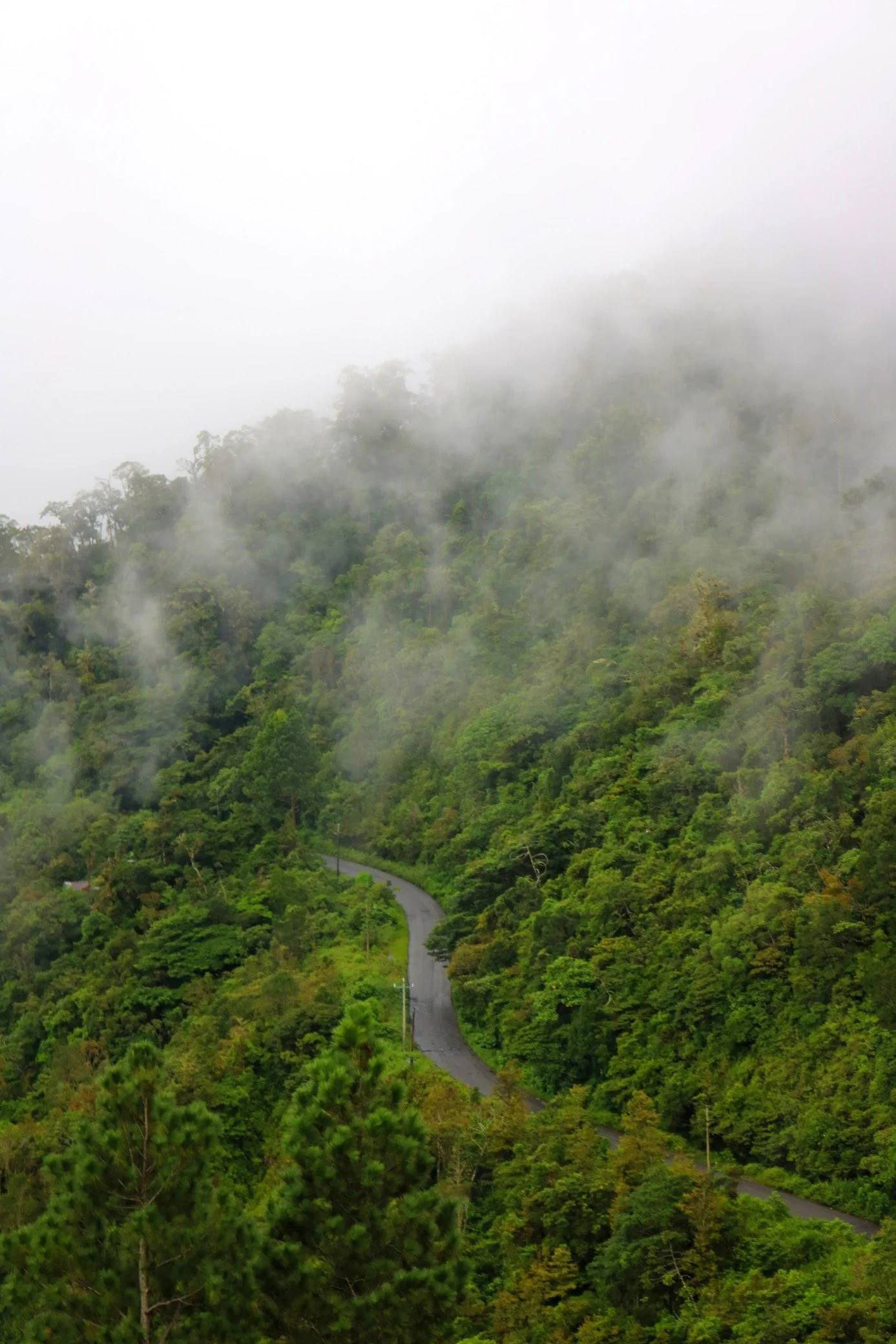
When most people picture Panama, they imagine rainforest, enormous trees, orchids, palms, waterfalls and thick green jungle dripping with humidity. Cactus probably isn't the first plant that comes to mind.
And that's exactly what makes finding cactus in Panama so interesting.
Panama is not a desert country. Much of it receives enormous amounts of rain, and some of its forests are among the wettest environments imaginable. Yet scattered throughout the country are surprisingly diverse cactus species, from familiar prickly pear types growing in dry Pacific landscapes to strange climbing and epiphytic cacti living high in rainforest trees. Panama's cactus story is therefore much more interesting than simply finding a few plants covered in spines.
It is a story about dry forests, tropical mountains, beaches, rainforests and plants that have figured out remarkably different ways to survive.
Cactus Doesn't Mean Desert
One of the biggest misconceptions about cactus is that they belong exclusively in deserts.
They don't.
Cacti evolved in the Americas, and some species have adapted to extraordinarily wet tropical environments. In Panama, certain cactus species don't even grow primarily on the ground. They can live on trees, where they take advantage of pockets of organic material and the periodic drying that occurs high in the canopy. Research on Barro Colorado Island, for example, has documented the epiphytic cactus Epiphyllum phyllanthus growing in tree cavities and on canopy trees in tropical forest.
So you can actually be standing in a rainforest in Panama and be looking at a cactus without realizing it.
That's one of the coolest things about Panamanian flora.
The Dry Side of Panama
If you really want to appreciate Panama's terrestrial cacti, head toward some of the country's drier landscapes.
The Pacific side of Panama has areas with pronounced dry seasons, particularly in parts of the Azuero Peninsula and other regions of the Pacific lowlands. Here, vegetation can look completely different from the lush rainforest imagery associated with the country.
Instead of endless dripping greenery, you can encounter thorny scrub, dry woodland, grasses and spiny plants.
And among them are cactus.
The Parque Nacional Sarigua area in Herrera Province is particularly famous for its unusually dry landscape. It is often called the "desert of Sarigua," although it isn't technically a true desert. The region provides some of the most striking cactus scenery in Panama.
One of the species recorded there is Acanthocereus tetragonus, commonly called triangle cactus. Panama's STRI research database records this cactus across numerous provinces and describes it as growing from dry to humid lowland environments.
That adaptability is remarkable.
The same general species can tolerate environments that are considerably wetter than the stereotypical cactus habitat.
The Giant Cactus That Looks Like a Tree
Some Panamanian cacti can become surprisingly large.
Acanthocereus tetragonus can grow as an erect or arching plant with stems reaching several metres in length. Its stems have prominent ribs and formidable spines, giving it the unmistakable appearance of something that would be perfectly comfortable in a desert landscape.
Except this is Panama.
You might find it surrounded by tropical vegetation rather than endless sand.
The plant also produces large flowers and fruits. According to Panama's STRI database, its fruits become red and split open when mature, and the mature pulp is edible and has been used to make refreshing drinks.
So even some of Panama's most intimidating cactus plants have a softer side.
And Then There Are the Prickly Pears
If you've travelled elsewhere in Latin America, you may already recognize Opuntia, the genus commonly associated with prickly pear or paddle cactus.
These are the cactus plants with flattened pads that look almost like green ears.
Several Opuntia and related forms have been reported in Panama, particularly in drier regions. Traditional Panamanian cactus references include species such as Opuntia elatior and Nopalea cochenillifera. Their fruits can be used in foods and drinks, while the pads of some species are also edible when properly prepared.
For a traveller, this is a great reminder that cactus isn't necessarily just an ornamental plant.
Some cactus species have been part of human food traditions throughout the Americas for centuries.
The Cactus That Lives in the Trees
Now we get to the really weird stuff.
Imagine walking through a lush Panamanian rainforest.
Everything is wet.
The ground is covered with leaves.
Trees tower above you.
And then you look upward and notice what appears to be a strange succulent growing out of a tree.
You might assume it's an orchid.
But it could be a cactus.
Epiphytic cacti are particularly fascinating because they have completely abandoned the traditional cactus lifestyle.
They don't necessarily sit on hot, dry ground.
Instead, they live above the ground.
They grow on trees, where water availability is unpredictable and soil is essentially nonexistent.
This forces them to store water and operate differently from ordinary rainforest plants.
Research at Barro Colorado Island found that Epiphyllum phyllanthus commonly grows in tree cavities where its roots can access accumulated organic material. The study also found that the plant's growth and water-use physiology are strongly influenced by light and rainfall patterns.
It's basically a cactus that decided to become a rainforest resident.
Panama Has Cacti That Look Nothing Like Cactus
This is where things get really fun for hikers.
Not every cactus in Panama looks like a stereotypical spiky ball or giant column.
Some are climbing.
Some are hanging.
Some are flattened.
Some grow among branches.
Some have relatively inconspicuous stems.
And some produce spectacular flowers.
Panamanian cactus references include genera such as Selenicereus, Epiphyllum, Rhipsalis, Weberocereus and Disocactus, alongside terrestrial genera such as Opuntia and Acanthocereus.
Once you know this, walking through a Panamanian forest becomes a little different.
You start looking up.
The Flowers Can Be Incredible
Cactus flowers are one of the great surprises of the family.
The plants themselves can look ugly, dangerous or completely unremarkable.
Then suddenly they produce an enormous flower.
Some tropical climbing and epiphytic cacti have spectacular blossoms, sometimes opening for relatively short periods.
And because the flowers can be associated with particular times and conditions, seeing one in the wild can be much more exciting than seeing a cactus in a garden.
It's another reason not to judge plants by their everyday appearance.
Why Do Cacti Have Spines?
The obvious answer is protection.
But spines are much more than weapons.
Cactus spines are modified structures associated with specialized points on the plant called areoles. They can help protect the plant from animals and can also provide shade and influence the tiny layer of air around the plant, helping reduce water loss.
The cactus is essentially trying to survive while losing as little water as possible.
Its thick stems store water.
Its surface can have protective coatings.
Its leaves have been dramatically reduced or replaced by spines.
And its metabolism can be adapted to minimize water loss.
It's an incredibly efficient survival system.
Why Would Panama Need Cactus?
Because Panama isn't uniformly wet.
The country's climate changes dramatically depending on location, elevation, exposure and season.
The Pacific side experiences a pronounced dry season.
Some areas receive much less rain than the Caribbean-facing slopes.
Some landscapes have sandy or rocky soils.
Some coastal environments are exposed to intense sunlight.
And even within otherwise humid regions, local conditions can create drier habitats.
Plants evolve to exploit these differences.
That's why Panama can contain both extraordinarily wet rainforest and cactus-filled dry scrub within the same country.
Sarigua Is Particularly Fascinating
If you're interested in seeing Panama's dry-side vegetation, Sarigua is one of the most unusual places to understand it.
The landscape looks almost alien compared with the classic image of Panama.
The soil and vegetation create a stark environment where drought-adapted plants become much more visible.
Cactus and thorny vegetation stand out against the dry landscape, giving the area an almost desert-like appearance even though Panama is fundamentally a tropical country.
And that contrast makes it fascinating for travellers.
You can spend one part of your trip walking through cloud forest and another looking at cactus in a landscape that appears to belong hundreds or thousands of kilometres away.
Cactus Can Be Part of a Hike
You don't necessarily need to be a botanist to appreciate them.
If you're hiking through Panama, particularly in dry Pacific areas, pay attention to the vegetation around the trail.
Look for the characteristic ribs.
Look for spines.
Look for paddle-shaped Opuntia.
Look for columnar cactus.
And in humid forests, look up into the trees.
That last part is important.
If you only look at ground-level vegetation, you can completely miss some of Panama's most unusual cactus species.
And Don't Touch Everything You See
This should be obvious, but the temptation is real.
A cactus may look harmless from several metres away.
Then you get closer.
Then you discover that the spines are much longer than they appeared.
Some cactus species also have tiny hairlike structures called glochids that can be particularly unpleasant to remove.
So admire them.
Photograph them.
Identify them.
But don't grab an unfamiliar cactus just because you want a better picture.
The cactus has spent millions of years developing ways to discourage exactly that behavior.
Cactus and the Dry Season
The dry season is arguably one of the most interesting times to explore Panama's drier landscapes.
As other vegetation loses leaves and the landscape becomes less overwhelmingly green, cactus becomes more visually prominent.
Some plants can continue storing water and functioning through conditions that would stress many other species.
And then, when rains return, the landscape can transform.
Plants respond.
Flowers appear.
New growth emerges.
The dry forest becomes green again.
This seasonal rhythm is one of the reasons Panama's Pacific landscapes can be so fascinating.
A Completely Different Side of Panama
Most tourists arrive expecting rainforest.
And they should absolutely experience it.
But Panama becomes much more interesting when you realize that the country contains far more ecological variety than the postcard image suggests.
There are cloud forests.
Mangroves.
Wet lowland jungle.
Dry tropical forest.
Coastal scrub.
Mountain ecosystems.
Volcanic landscapes.
And within those environments are plants that have evolved wildly different strategies for surviving.
The cactus is one of the best examples.
It looks like it belongs in Arizona or Mexico.
Yet there it is, growing in Panama.
Sometimes in dry scrub.
Sometimes beside the coast.
Sometimes in agricultural landscapes.
And sometimes high in the branches of a rainforest tree.
The Traveller's Cactus Challenge
The next time you're exploring Panama, try something different.
Don't just look for monkeys.
Don't just look for sloths.
Don't just look for toucans.
Start looking at the plants.
Find a cactus.
Figure out whether it is terrestrial or epiphytic.
Look at its shape.
Look for flowers or fruit.
Notice whether it is growing in dry scrub or hanging from a tree in a humid forest.
Suddenly the landscape becomes more complicated.
And much more interesting.
Because the real lesson of Panama's cactus is that nature doesn't care about our categories.
We think cactus equals desert.
Panama says:
Not necessarily.
A cactus can grow beside a dry Pacific landscape.
It can climb through tropical vegetation.
It can live in a tree.
It can produce fruit.
It can produce enormous flowers.
It can survive drought and then take advantage of sudden rainfall.
And it can quietly demonstrate one of the most fascinating truths about Panama:
This country may be tropical, but it is anything but ecologically simple.
So the next time you're walking through Panama and see something spiky growing out of the greenery, stop for a second.
It might not be some random thorny plant.
It might be a cactus.
And if you're lucky, you may have just discovered one of the strangest little pieces of Panama's natural history.