
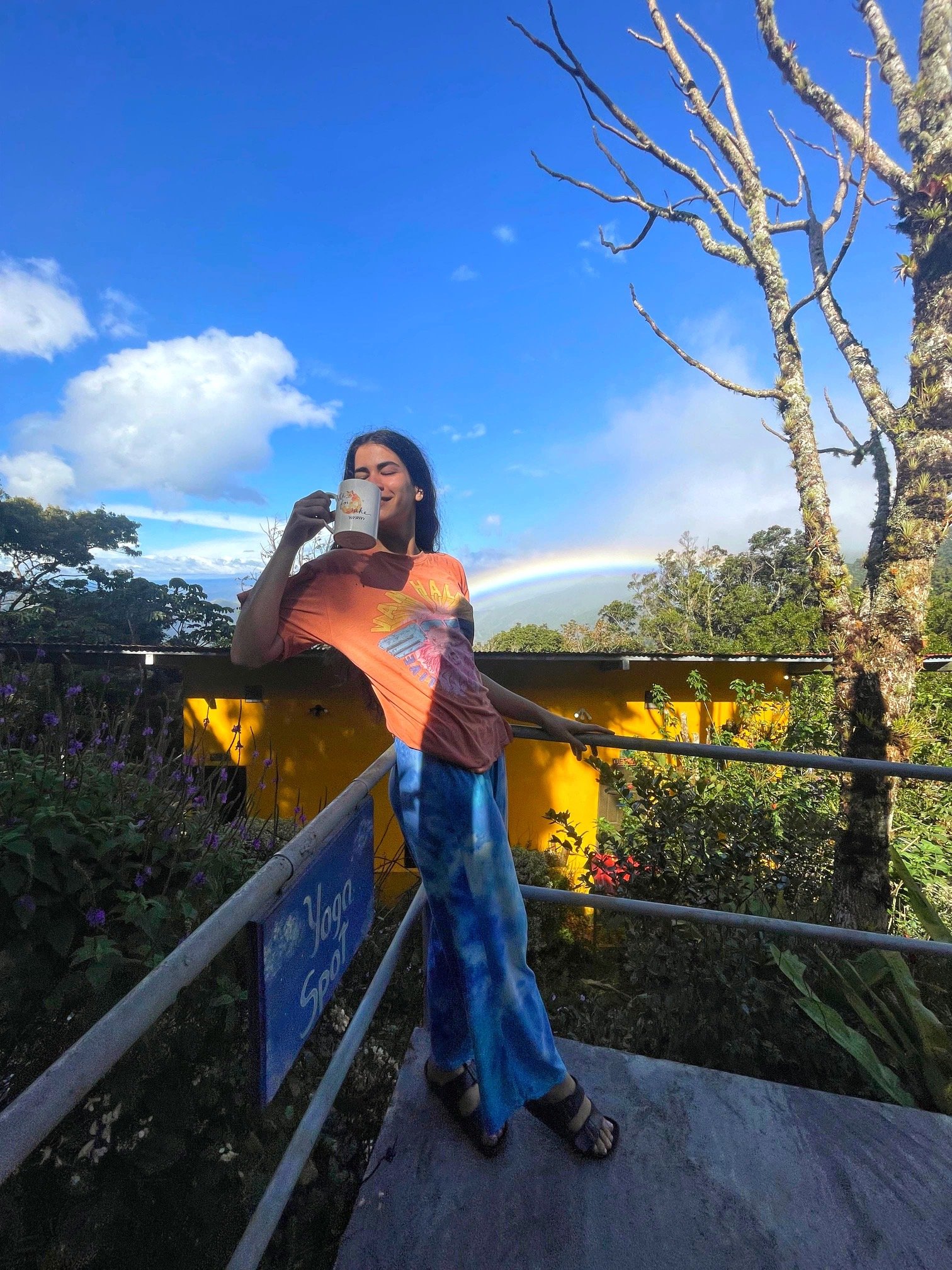
There is a strange thing about Panama’s Pacific coast: some of its most spectacular places are famous around the world, while others sit almost completely outside the international backpacking circuit. Pixvae is one of those places. Hidden on the coast of Veraguas, in the same extraordinary Pacific landscape that produced the legends of Coiba and Santa Catalina, Pixvae feels less like a destination that has been discovered and more like a place you accidentally stumble upon.
And that is precisely its appeal.
Most travelers heading into this corner of Panama have one thing on their minds: Coiba National Park. Others come for the legendary surf of Santa Catalina. Coiba is the headline attraction — a UNESCO World Heritage Site with extraordinarily rich marine ecosystems — while Santa Catalina has become the established base for surfers, divers and backpackers. Pixvae, meanwhile, sits quietly nearby, benefiting from the same extraordinary geography without receiving anything close to the same attention.
That makes Pixvae particularly interesting for travelers who have already seen the obvious places and want to experience something that still feels genuinely remote.
The Pacific without the crowds
Pixvae is a small coastal community in Veraguas, surrounded by mountains, jungle, beaches, rivers, coves and the enormous Pacific Ocean. The community lies within the area of influence of Coiba National Park, making it far more than simply a pretty coastal village. It is part of the same ecological world that makes this section of Panama so remarkable.
The difference is atmosphere.
Santa Catalina has developed into a recognizable travel destination. You have surf schools, dive operators, restaurants, accommodations and a steady stream of international visitors. Pixvae feels much more like a community that happens to possess an extraordinary coastline.
That distinction matters.
Instead of arriving somewhere whose entire economy revolves around tourism, you encounter a place where fishing, local life and the rhythms of the coast remain central. Local residents have traditionally depended heavily on fishing and other marine resources, and the community has increasingly looked toward tourism as a way to create opportunities without sacrificing the character of the area.
For a backpacker, that can be a much more interesting experience than simply moving from one tourist hotspot to another.
And then there is Coiba
The real secret of Pixvae is its position.
You don't have to choose between discovering Pixvae and seeing Coiba. Pixvae can actually be part of the Coiba adventure.
PADI currently identifies both Pixvae and Santa Catalina as gateways to Coiba, while noting that Pixvae is the closer access point. Its dive information describes boat journeys from Pixvae to Coiba as substantially shorter than those from Santa Catalina.
That changes the experience.
Instead of thinking of Pixvae as a place you visit instead of Coiba, think of it as somewhere you can stay while exploring the same extraordinary marine environment that made Santa Catalina famous.
Coiba is where the big wildlife encounters happen: sharks, turtles, rays, enormous schools of fish and, depending on the season and conditions, whales and other pelagic wildlife. The surrounding waters are one of the great marine spectacles of Panama.
Pixvae simply gives you another doorway into that world.
A coastline hiding in plain sight
What makes Pixvae particularly fascinating is that you don't have to get on a boat to find beautiful scenery.
The surrounding coastline contains beaches, coves and mangrove environments, while inland the landscape rises into forested hills. Local sources describe beaches including Pixvae, Pajarón, Pajaroncito and El Rosario, as well as rivers and secluded coastal landscapes.
There is something wonderfully old-fashioned about that combination.
You can spend the morning exploring the coast, disappear down a beach, swim in clear water, watch fishing boats working offshore and then find yourself surrounded by jungle almost immediately afterward.
It is the kind of landscape where the boundaries between jungle, village, beach and ocean seem to disappear.
The journey is part of the attraction
For years, one of the biggest reasons Pixvae remained unknown was simple: getting there wasn't particularly easy.
Historically, the road from Soná was rough enough that a 4x4 was recommended, and poor access was one of the major obstacles preventing the community from developing as a tourism destination.
That isolation became part of Pixvae's identity.
More recently, access has improved considerably. A newer road connection has made the journey easier, with travel from Soná reported at around an hour under current conditions.
But Pixvae still doesn't feel like somewhere you simply pass through on the way to somewhere else.
And perhaps that is exactly what Panama needs more of.
The perfect alternative to the usual itinerary
A typical Pacific itinerary might look something like:
Panama City to Santa Catalina to Coiba to Panama City
It's a fantastic trip.
But there is another possibility:
Panama City to Soná to Pixvae to Coiba and Santa Catalina
Suddenly the journey becomes much more interesting.
You get the famous places but you also get the place that most people skipped.
Spend a few days around Pixvae, explore the beaches and coastline, meet local people, arrange a marine excursion, then continue toward Santa Catalina. Or base yourself in Pixvae and use it as your jumping-off point for Coiba.
The result is a trip that feels considerably less standardized.
Pixvae before it becomes famous
There is another reason to visit now.
Pixvae's tourism potential is no secret to the people who live there. Local residents have long recognized that the combination of beaches, marine life, forests and proximity to Coiba could make the community a significant tourism destination.
That creates an interesting moment in its history.
The infrastructure is improving. Access is becoming easier. Diving and nature tourism are becoming more established. And yet Pixvae remains tiny compared with the better-known destinations around it.
In other words, you can still experience the place before tourism completely defines it.
That is becoming increasingly rare in Panama.
For travelers who want something different
Pixvae isn't necessarily for somebody who wants a polished resort, endless restaurants, nightlife and a perfectly organized tourist infrastructure.
That's the point.
It is for the traveler who gets excited when the road becomes quieter.
For the person who would rather find a deserted beach than another beach club.
For someone who wants to sit beside the Pacific watching fishing boats instead of sitting beside fifty other tourists taking the same sunset photograph.
And especially for the backpacker who looks at a map and thinks:
“What's that place nobody is talking about?”
Pixvae is one of those places.
It sits in the enormous shadow cast by two of Panama's Pacific superstars, Santa Catalina and Coiba, but that shadow may actually be what has protected it.
Coiba provides the spectacular marine adventure. Santa Catalina provides the established backpacker and surf scene. Pixvae provides the feeling of discovery.
And for anyone traveling through western Panama, that might be the most valuable thing of all.
Go to Coiba for the wildlife. Go to Santa Catalina for the surf. But go to Pixvae for the feeling that you have found somewhere.