
There is a version of Panama that appears in almost every travel guide. Panama City, the Panama Canal, Bocas del Toro, San Blas, Boquete and Santa Catalina. They are famous for good reason, but they only tell part of the story.
The real adventure begins when you start looking beyond the obvious.
Panama is unusually good for this kind of travel. A relatively small country contains Caribbean villages, Pacific surf beaches, cloud forests, coffee country, forgotten colonial ruins, jungle covered mountains and tiny communities where you can still feel like you have stumbled somewhere rather than simply arrived.
These are the places where you may find yourself sharing a bus with farmers, swimming in a river with nobody else around, eating dinner in a tiny roadside restaurant, or realizing that your phone has been in your pocket for six hours because there was nothing worth checking.
Portobelo: Pirates, Forts and the Caribbean Nobody Talks About
Portobelo feels like the beginning of a story.
The little Caribbean town is surrounded by thick green vegetation and an incredibly dramatic history. Spanish ships once arrived here carrying enormous quantities of treasure, while pirates and privateers dreamed about attacking them. The old Spanish fortifications remain scattered around the bay, slowly being reclaimed by tropical vegetation.
But Portobelo is much more than ruins.
The town still has a strong Caribbean character, with Afro Caribbean culture, colorful traditions, tropical forest and a beautiful coastline. Walk around the old fortifications, explore the town, find something local to eat and let the afternoon disappear.
And don't rush it.
Portobelo is the sort of place where the absence of things to do becomes the attraction.
Lost and Found Hostel: Get Lost in the Cloud Forest
There are hostels where you sleep before going somewhere interesting.
And then there are places that are the interesting part of the journey.
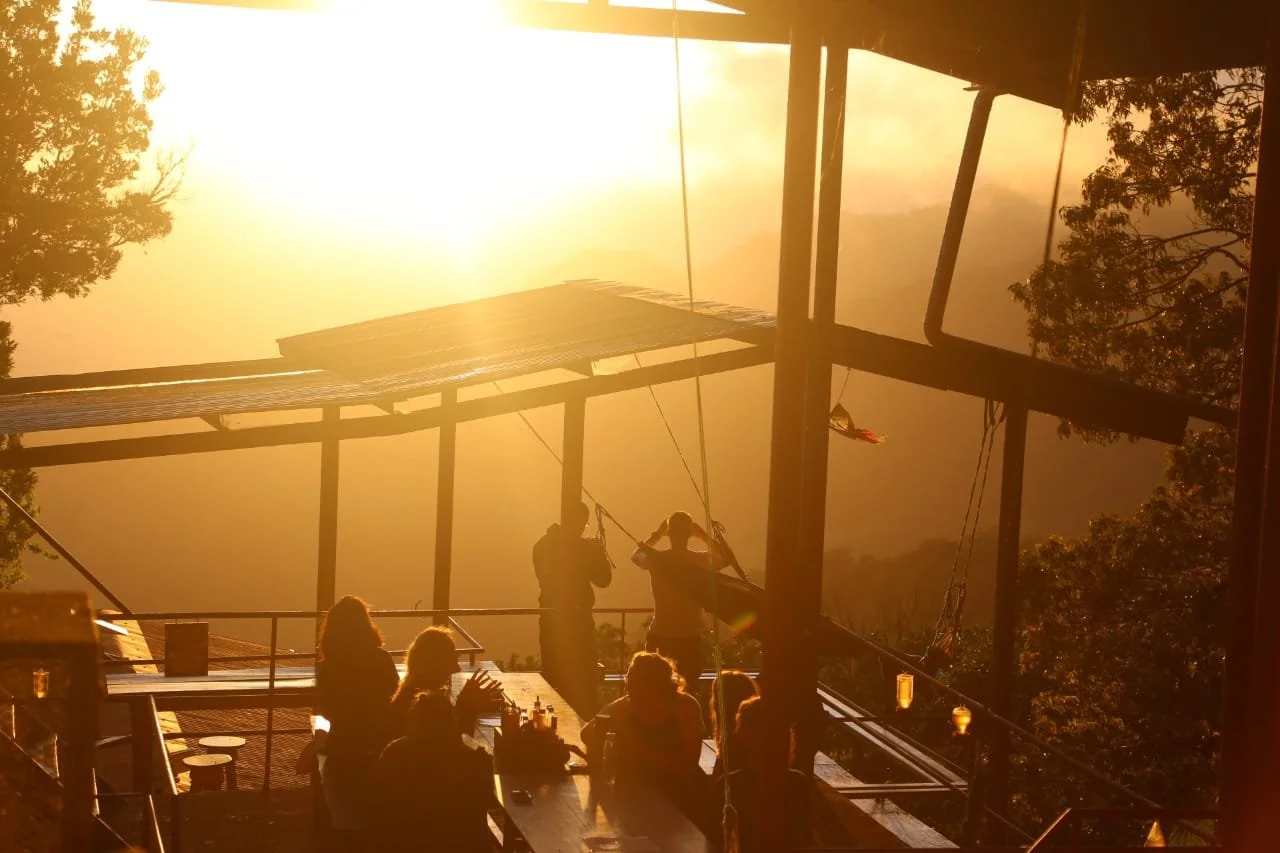
Lost and Found Hostel sits high inside the Fortuna Forest Reserve in Chiriquí, between Boquete and Bocas del Toro. It is a hike in jungle hostel surrounded by cloud forest, mountains and trails rather than streets and buildings.
The atmosphere is completely different from staying in a normal backpacker town.
You wake up above the forest. Clouds drift through the mountains. Hummingbirds move around the property. Trails disappear into dense vegetation and evenings are spent talking with other travelers rather than staring at the same bar in another tourist town.
There are hiking trails throughout the surrounding forest, along with waterfall trips, river excursions, jungle adventures and the famous treasure hunt that sends travelers searching through the forest.
It has become one of those rare backpacker stops where people arrive planning to stay one night and suddenly realize they don't particularly care about their original schedule anymore.
And that is exactly what hidden travel should feel like.
Cerro Punta: Panama's Other Side
If you've spent time sweating on Panama's Pacific or Caribbean coast, arriving in Cerro Punta can feel almost bizarre.
Suddenly you're cold.
The landscape becomes intensely green and mountainous. Farms cover the valleys, mist hangs around the hills and the air has the crisp feeling of a completely different country.
Cerro Punta sits high in the Chiriquí highlands near Volcán Barú and provides access to some of Panama's most spectacular mountain landscapes.
This isn't a nightlife destination.
That's precisely why backpackers who enjoy hiking tend to appreciate it.
Get up early, walk through the agricultural valleys, explore the surrounding mountains and head toward the cloud forests. The reward isn't one enormous attraction.
It's the entire atmosphere.
Punta Burica: Where Panama Almost Runs Out
If you want to understand what "off the beaten path" actually means, look toward Punta Burica.
This remote peninsula extends into the Pacific in western Panama, close to the Costa Rican border. It is dramatically different from the polished beach destinations that appear in conventional Panama itineraries.
There are remote beaches, fishing communities, forests and enormous stretches of coastline where development remains minimal.
Punta Burica isn't necessarily the easiest place to reach, and that is precisely the point.
This is travel for people who don't need every destination to have a tour desk, a cocktail menu and ten different Instagram viewpoints.
You go because the map makes you curious.
And sometimes those are the journeys you remember longest.
Cambutal: The Road Ends Here
Cambutal is one of those places that seems to exist at the end of the road.
Located at the southern end of the Azuero Peninsula, it sits where mountains covered in tropical vegetation meet the Pacific Ocean. The village is tiny compared with Panama's better known destinations and remains wonderfully relaxed.
Surfers come for the waves.
Adventurers come for the jungle.
Everyone else comes for the feeling of being somewhere far away.
Behind the beaches are forested mountains, rivers, waterfalls and hiking routes. The Seven Falls area is particularly appealing for travelers who want to combine a jungle hike with swimming in natural pools.
And then there are the sunsets.
Cambutal's Pacific horizon can produce those enormous tropical sunsets where the entire ocean seems to turn orange before darkness arrives.
It is the kind of place where you can easily lose three days without doing anything particularly ambitious.
Santa Fe: Panama's Mountain Secret
Santa Fe in Veraguas is criminally overlooked.
While backpackers race between Panama's famous destinations, Santa Fe quietly sits in the mountains surrounded by waterfalls, rivers, forests and agricultural land.
The town has a completely different rhythm from Panama City or the major beach destinations. It is a place to hike in the morning, find a waterfall in the afternoon and sit around town in the evening wondering why more travelers haven't discovered it.
The surrounding mountains provide opportunities for hiking, swimming in natural pools and exploring forests.
Santa Fe is especially good for travelers who want to experience a more ordinary side of Panama.
There isn't a huge tourism machine here.
That's the attraction.
Pixvae: The Pacific's Forgotten Fishing Village
Pixvae is the sort of place that makes backpackers ask themselves:
"How did I never hear about this?"
Hidden along Panama's Pacific coast in Veraguas, Pixvae is surrounded by dramatic coastline, jungle and small communities. The journey itself becomes part of the experience because you're moving farther away from the heavily traveled routes.
This isn't somewhere you visit to tick off ten attractions.
You come to slow down.
Watch fishing boats.
Walk along the beach.
Eat something local.
Talk to people.
Look out across the Pacific.
And realize that you could spend your entire trip chasing famous destinations without ever seeing this side of Panama.
The Azuero Peninsula: Go Looking for the Real Panama
The Azuero Peninsula deserves considerably more attention from backpackers.
Places like Cambutal, Pedasí, Tonosí and the smaller villages scattered between them offer something that has become increasingly difficult to find in heavily traveled parts of Central America.
Space.
The landscapes are dry and tropical in places, completely different from the rainforest of western Panama. Small roads connect farming communities and coastal villages, while the Pacific produces spectacular beaches and surf breaks.
The farther you go, the more the trip becomes about the journey rather than the destination.
Isla Gobernadora: The Island People Forget
Everyone knows about Bocas.
Far fewer people know about the islands scattered around Veraguas.
Isla Gobernadora is one of those places where you can experience tropical island life without the infrastructure and crowds that come with Panama's famous Caribbean archipelago.
The beaches are beautiful, the surrounding Pacific is enormous and the atmosphere is wonderfully uncomplicated.
For a backpacker, that can be more valuable than having dozens of restaurants and activities.
Sometimes the best island experience is having nowhere to be.
The Gulf of Chiriquí: Go Beyond Santa Catalina
Santa Catalina gets most of the attention because it is the gateway to Coiba.
But the Gulf of Chiriquí contains an enormous collection of islands, reefs and beaches that receive a fraction of the attention.
This is where you start finding the Panama that feels genuinely wild.
Boat trips can take you toward isolated beaches and islands, while the waters around the gulf are rich in marine life.
And unlike some of Panama's more famous destinations, you don't necessarily feel like you're following a giant tourist conveyor belt.
The Places Between the Places
One of the biggest mistakes backpackers make in Panama is thinking only in terms of destinations.
Panama is fascinating precisely because of what happens between them.
A chicken bus disappearing into the mountains.
A roadside restaurant with three tables.
A tiny beach that isn't on your itinerary.
A local telling you about a waterfall that isn't in your guidebook.
A bus driver telling you to get off somewhere you have never heard of.
Those moments are often more memorable than the attractions you planned months in advance.
Why Panama Is So Good for Hidden Gem Backpacking
Panama's greatest advantage isn't that it has one spectacular attraction.
It is that it has enormous variety packed into a relatively small country.
You can start on a Caribbean coast surrounded by colonial ruins and Afro Caribbean culture, travel through mountains and cloud forest, sleep in a jungle hostel, continue toward Pacific surf beaches and eventually find yourself standing beside an almost empty stretch of coastline.
And because Panama sits between Costa Rica and Colombia, many backpackers treat it as a country to pass through.
That's a mistake.
Slow down.
Take the strange bus.
Choose the road that looks less interesting.
Stay an extra night.
Ask somebody local where they would go if they had three days free.
That's how you find places like Pixvae, Cambutal, Santa Fe and Punta Burica.
And somewhere in the middle of that journey, when you're sitting on a beach or watching clouds roll through the mountains, you may realize something:
The Panama you came to see wasn't actually the Panama you ended up discovering.
That is the magic of traveling here.Panama’s Hidden Gems: The Places Backpackers Discover Before Everyone Else
There is a version of Panama that appears in almost every travel guide. Panama City, the Panama Canal, Bocas del Toro, San Blas, Boquete and Santa Catalina. They are famous for good reason, but they only tell part of the story.
The real adventure begins when you start looking beyond the obvious.
Panama is unusually good for this kind of travel. A relatively small country contains Caribbean villages, Pacific surf beaches, cloud forests, coffee country, forgotten colonial ruins, jungle covered mountains and tiny communities where you can still feel like you have stumbled somewhere rather than simply arrived.
These are the places where you may find yourself sharing a bus with farmers, swimming in a river with nobody else around, eating dinner in a tiny roadside restaurant, or realizing that your phone has been in your pocket for six hours because there was nothing worth checking.
Portobelo: Pirates, Forts and the Caribbean Nobody Talks About
Portobelo feels like the beginning of a story.
The little Caribbean town is surrounded by thick green vegetation and an incredibly dramatic history. Spanish ships once arrived here carrying enormous quantities of treasure, while pirates and privateers dreamed about attacking them. The old Spanish fortifications remain scattered around the bay, slowly being reclaimed by tropical vegetation.
But Portobelo is much more than ruins.
The town still has a strong Caribbean character, with Afro Caribbean culture, colorful traditions, tropical forest and a beautiful coastline. Walk around the old fortifications, explore the town, find something local to eat and let the afternoon disappear.
And don't rush it.
Portobelo is the sort of place where the absence of things to do becomes the attraction.
Lost and Found Hostel: Get Lost in the Cloud Forest
There are hostels where you sleep before going somewhere interesting.
And then there are places that are the interesting part of the journey.
Lost and Found Hostel sits high inside the Fortuna Forest Reserve in Chiriquí, between Boquete and Bocas del Toro. It is a hike in jungle hostel surrounded by cloud forest, mountains and trails rather than streets and buildings.
The atmosphere is completely different from staying in a normal backpacker town.
You wake up above the forest. Clouds drift through the mountains. Hummingbirds move around the property. Trails disappear into dense vegetation and evenings are spent talking with other travelers rather than staring at the same bar in another tourist town.
There are hiking trails throughout the surrounding forest, along with waterfall trips, river excursions, jungle adventures and the famous treasure hunt that sends travelers searching through the forest.
It has become one of those rare backpacker stops where people arrive planning to stay one night and suddenly realize they don't particularly care about their original schedule anymore.
And that is exactly what hidden travel should feel like.
Cerro Punta: Panama's Other Side
If you've spent time sweating on Panama's Pacific or Caribbean coast, arriving in Cerro Punta can feel almost bizarre.
Suddenly you're cold.
The landscape becomes intensely green and mountainous. Farms cover the valleys, mist hangs around the hills and the air has the crisp feeling of a completely different country.
Cerro Punta sits high in the Chiriquí highlands near Volcán Barú and provides access to some of Panama's most spectacular mountain landscapes.
This isn't a nightlife destination.
That's precisely why backpackers who enjoy hiking tend to appreciate it.
Get up early, walk through the agricultural valleys, explore the surrounding mountains and head toward the cloud forests. The reward isn't one enormous attraction.
It's the entire atmosphere.
Punta Burica: Where Panama Almost Runs Out
If you want to understand what "off the beaten path" actually means, look toward Punta Burica.
This remote peninsula extends into the Pacific in western Panama, close to the Costa Rican border. It is dramatically different from the polished beach destinations that appear in conventional Panama itineraries.
There are remote beaches, fishing communities, forests and enormous stretches of coastline where development remains minimal.
Punta Burica isn't necessarily the easiest place to reach, and that is precisely the point.
This is travel for people who don't need every destination to have a tour desk, a cocktail menu and ten different Instagram viewpoints.
You go because the map makes you curious.
And sometimes those are the journeys you remember longest.
Cambutal: The Road Ends Here
Cambutal is one of those places that seems to exist at the end of the road.
Located at the southern end of the Azuero Peninsula, it sits where mountains covered in tropical vegetation meet the Pacific Ocean. The village is tiny compared with Panama's better known destinations and remains wonderfully relaxed.
Surfers come for the waves.
Adventurers come for the jungle.
Everyone else comes for the feeling of being somewhere far away.
Behind the beaches are forested mountains, rivers, waterfalls and hiking routes. The Seven Falls area is particularly appealing for travelers who want to combine a jungle hike with swimming in natural pools.
And then there are the sunsets.
Cambutal's Pacific horizon can produce those enormous tropical sunsets where the entire ocean seems to turn orange before darkness arrives.
It is the kind of place where you can easily lose three days without doing anything particularly ambitious.
Santa Fe: Panama's Mountain Secret
Santa Fe in Veraguas is criminally overlooked.
While backpackers race between Panama's famous destinations, Santa Fe quietly sits in the mountains surrounded by waterfalls, rivers, forests and agricultural land.
The town has a completely different rhythm from Panama City or the major beach destinations. It is a place to hike in the morning, find a waterfall in the afternoon and sit around town in the evening wondering why more travelers haven't discovered it.
The surrounding mountains provide opportunities for hiking, swimming in natural pools and exploring forests.
Santa Fe is especially good for travelers who want to experience a more ordinary side of Panama.
There isn't a huge tourism machine here.
That's the attraction.
Pixvae: The Pacific's Forgotten Fishing Village
Pixvae is the sort of place that makes backpackers ask themselves:
"How did I never hear about this?"
Hidden along Panama's Pacific coast in Veraguas, Pixvae is surrounded by dramatic coastline, jungle and small communities. The journey itself becomes part of the experience because you're moving farther away from the heavily traveled routes.
This isn't somewhere you visit to tick off ten attractions.
You come to slow down.
Watch fishing boats.
Walk along the beach.
Eat something local.
Talk to people.
Look out across the Pacific.
And realize that you could spend your entire trip chasing famous destinations without ever seeing this side of Panama.
The Azuero Peninsula: Go Looking for the Real Panama
The Azuero Peninsula deserves considerably more attention from backpackers.
Places like Cambutal, Pedasí, Tonosí and the smaller villages scattered between them offer something that has become increasingly difficult to find in heavily traveled parts of Central America.
Space.
The landscapes are dry and tropical in places, completely different from the rainforest of western Panama. Small roads connect farming communities and coastal villages, while the Pacific produces spectacular beaches and surf breaks.
The farther you go, the more the trip becomes about the journey rather than the destination.
Isla Gobernadora: The Island People Forget
Everyone knows about Bocas.
Far fewer people know about the islands scattered around Veraguas.
Isla Gobernadora is one of those places where you can experience tropical island life without the infrastructure and crowds that come with Panama's famous Caribbean archipelago.
The beaches are beautiful, the surrounding Pacific is enormous and the atmosphere is wonderfully uncomplicated.
For a backpacker, that can be more valuable than having dozens of restaurants and activities.
Sometimes the best island experience is having nowhere to be.
The Gulf of Chiriquí: Go Beyond Santa Catalina
Santa Catalina gets most of the attention because it is the gateway to Coiba.
But the Gulf of Chiriquí contains an enormous collection of islands, reefs and beaches that receive a fraction of the attention.
This is where you start finding the Panama that feels genuinely wild.
Boat trips can take you toward isolated beaches and islands, while the waters around the gulf are rich in marine life.
And unlike some of Panama's more famous destinations, you don't necessarily feel like you're following a giant tourist conveyor belt.
The Places Between the Places
One of the biggest mistakes backpackers make in Panama is thinking only in terms of destinations.
Panama is fascinating precisely because of what happens between them.
A chicken bus disappearing into the mountains.
A roadside restaurant with three tables.
A tiny beach that isn't on your itinerary.
A local telling you about a waterfall that isn't in your guidebook.
A bus driver telling you to get off somewhere you have never heard of.
Those moments are often more memorable than the attractions you planned months in advance.
Why Panama Is So Good for Hidden Gem Backpacking
Panama's greatest advantage isn't that it has one spectacular attraction.
It is that it has enormous variety packed into a relatively small country.
You can start on a Caribbean coast surrounded by colonial ruins and Afro Caribbean culture, travel through mountains and cloud forest, sleep in a jungle hostel, continue toward Pacific surf beaches and eventually find yourself standing beside an almost empty stretch of coastline.
And because Panama sits between Costa Rica and Colombia, many backpackers treat it as a country to pass through.
That's a mistake.
Slow down.
Take the strange bus.
Choose the road that looks less interesting.
Stay an extra night.
Ask somebody local where they would go if they had three days free.
That's how you find places like Pixvae, Cambutal, Santa Fe and Punta Burica.
And somewhere in the middle of that journey, when you're sitting on a beach or watching clouds roll through the mountains, you may realize something:
The Panama you came to see wasn't actually the Panama you ended up discovering.
That is the magic of traveling here.