
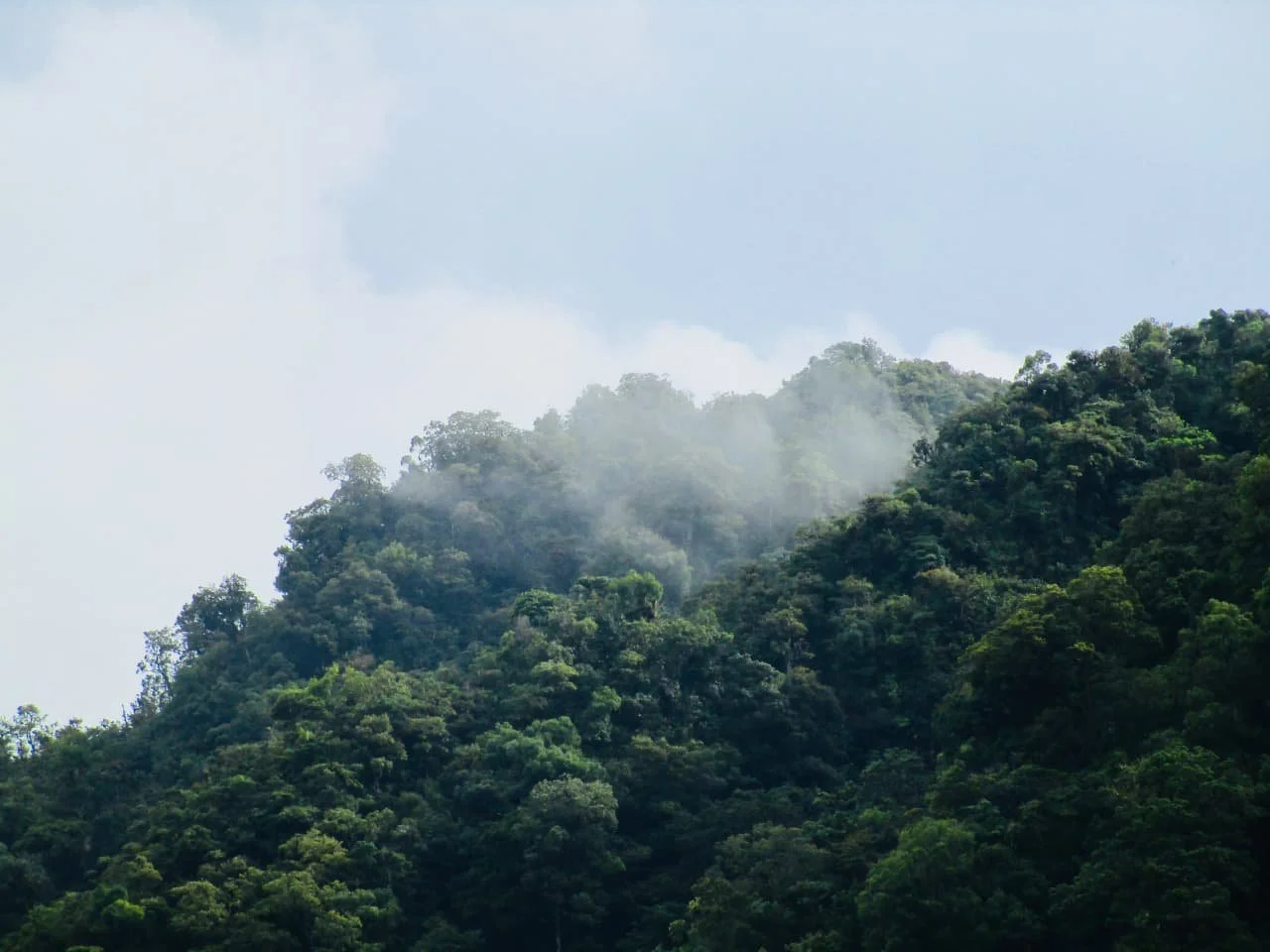
Traveling between Boquete and Bocas del Toro is one of those journeys in Panama that deserves to be treated as part of the adventure rather than simply as a transportation day.
On a map, the two destinations don't look particularly far apart. Yet they feel like completely different worlds. Boquete is a cool, mountainous region famous for coffee, forests, rivers and highland scenery. Bocas del Toro, by contrast, is tropical Caribbean Panama: warm turquoise water, palm-fringed beaches, boats, coral reefs and the lively atmosphere of island life.
And between them lies something even more interesting: a spectacular transition through Panama's interior, from the highlands to the cloud forest, through dense tropical jungle and eventually down to the Caribbean coast.
For travelers, there are several ways to make the journey. You can take public transportation, which is inexpensive and gives you a very local experience. You can take a shared shuttle, which is considerably easier and faster. Or, if you have the time, there is a wonderfully unusual third option: break the journey in the middle and spend a night or two at Lost and Found Hostel, high in the cloud forest.
That last option can transform what would otherwise be a four- or five-hour transfer into one of the most memorable parts of your Panama trip.
---
The Geography Makes the Journey Fascinating
Boquete and Bocas del Toro may be relatively close geographically, but the landscapes between them change dramatically.
You begin in the mountains around Boquete, where the air is cooler and coffee plantations cover parts of the highlands. From there, the road descends and crosses increasingly humid forest before reaching the Caribbean side of the country.
Eventually, you arrive at Almirante, the mainland gateway to Bocas del Toro. From there, the road ends and the journey continues by boat. A water taxi carries you across the Caribbean to Isla Colón and Bocas Town.
So the journey isn't simply:
Boquete to Bocas del Toro.
It is really:
Mountain to cloud forest to jungle to Caribbean coast to tropical islands.
That sequence is what makes it so memorable.
---
Option One: Public Transportation
For independent travelers and backpackers, the classic way to make the journey is by public transportation.
It's inexpensive, relatively straightforward and gives you the chance to experience the same transportation network used by local residents.
The traditional route is:
Boquete to David to Almirante to Bocas Town.
You don't need to organize an expensive private transfer, and you generally don't need to reserve every part of the journey weeks in advance.
The trade-off is that you'll have to make connections and pay attention to where you're going.
But honestly, that's part of the fun.
Step One: Boquete to David
The first stage is getting from Boquete down to David, the major transportation hub of Chiriquí.
Local buses operate between Boquete and David, with the main departure area in central Boquete. The journey is relatively short and inexpensive; the Lost and Found Hostel's current directions cite a fare of around US$1.75 for this leg.
David is important because it is where the journey changes from a short local trip into the longer crossing toward the Caribbean.
Once you arrive at the David bus terminal, look for buses heading toward Almirante or the Bocas del Toro area. The buses serving this route may be marked for Changuinola or Almirante, so it's worth confirming with the driver or ticket counter that you're going to Almirante.
---
Step Two: David to Almirante
This is the longest bus section of the journey.
The road carries you away from the drier lowlands around David and toward the Caribbean side of Panama. As the landscape changes, the vegetation becomes increasingly tropical and lush.
The current information published by Lost and Found Hostel gives the David-to-hostel bus fare at roughly US$3.50, while its directions from Almirante indicate a bus journey of around three hours in the opposite direction.
Exact travel times can vary considerably depending on traffic, road conditions and connections, so don't plan your day around a precise arrival minute.
This is Panama.
Leave some breathing room.
The journey itself is beautiful enough that you shouldn't be desperately staring at the clock anyway.
---
Step Three: Almirante to Bocas Town
Then comes the fun part.
You reach Almirante, the mainland gateway to Bocas del Toro.
Here, you leave the bus behind and walk or take a short local transfer toward the water-taxi docks.
The final journey is across the Caribbean.
Water taxis make the crossing between Almirante and Bocas Town regularly during the day, with current travel information putting the crossing at roughly 20 to 30 minutes and typical fares in the neighborhood of US$6 to US$12, depending on the operator and current pricing.
And this is a wonderful way to finish the trip.
After hours of traveling through the mountains and interior of Panama, suddenly the landscape opens into Caribbean water.
The air feels warmer.
The vegetation changes.
Boats surround you.
And ahead is Isla Colón.
Bocas del Toro has arrived.
---
Why Take the Bus?
Public transportation is the best choice if you want to save money and don't mind a little logistical adventure.
It's also an excellent option if you enjoy seeing how people actually move around Panama.
You'll experience bus terminals, local buses, roadside communities and the gradual transformation of the landscape.
There is something satisfying about making the entire journey under your own steam.
You start the morning surrounded by mountains.
Several hours later you're crossing Caribbean water.
And you did the whole thing for a fraction of what a private transfer would cost.
The downside is obvious: more connections, more waiting and more responsibility for getting yourself from one stage to the next.
If you're carrying a huge suitcase, traveling with young children or simply hate transportation logistics, the shuttle is probably the better choice.
---
Option Two: Take a Shared Shuttle
For travelers who want the scenery and adventure without having to navigate multiple buses, a shared shuttle is probably the sweet spot.
Shuttles operate between Boquete and Bocas del Toro and are designed specifically for travelers making this journey.
Current travel information puts the direct shuttle-and-boat journey at approximately four to four and a half hours, depending on the service and conditions.
Instead of figuring out several separate tickets, you book your transfer and let the driver handle the road portion.
Eventually you reach the Caribbean side, connect with the boat and continue toward Bocas Town.
It's considerably easier.
And there's another huge advantage:
many shuttle services can accommodate a stop at Lost and Found Hostel.
That opens up an entirely different way of experiencing the journey.
---
The Secret Third Option: Stop at Lost and Found
This is, in my opinion, the most interesting option.
Imagine you're in Boquete.
You've spent several days drinking coffee, hiking through the mountains and enjoying the cooler highland climate.
Now you're ready for Bocas.
Most travelers wake up, grab their bags, get on a shuttle or bus and spend the day traveling.
But there's another possibility.
Instead of going directly from Boquete to Bocas, you can go:
Boquete to Lost and Found to Bocas.
And suddenly the journey becomes a three-part adventure.
Mountain.
Cloud forest.
Caribbean.
Lost and Found Hostel is located in the Fortuna region of Chiriquí, directly along Highway 10 between David and Bocas del Toro. The hostel itself describes its location as being right on the route between Bocas, Boquete, David and other destinations in western Panama.
That means you aren't making some enormous detour.
You're stopping along the way.
---
What Makes Lost and Found So Different?
Lost and Found isn't a conventional roadside hotel.
That's part of the reason it has become such an interesting stop for backpackers.
The property is located in the cloud forest above the highway, and reaching the hostel involves a hike from the roadside. Current directions from the hostel describe approximately a 15-minute hike from the road to the property.
So you arrive at the roadside, take your backpack and begin walking uphill.
And then something changes.
The traffic disappears.
The highway disappears.
You enter the forest.
The atmosphere becomes quieter.
The vegetation surrounds you.
And after a few minutes you emerge into a jungle hostel perched high in the mountains.
It's a remarkably different experience from simply checking into a hotel in town.
---
Sleeping in the Cloud Forest
This is the reason I think breaking up the journey can be such a fantastic idea.
Instead of spending an entire day sitting in buses and vans, you turn the middle of your transportation route into an actual destination.
You can spend a night or two surrounded by cloud forest.
The mornings can be misty.
The forest is filled with sounds.
Birds move through the trees.
The surrounding mountains disappear into clouds.
And there are hiking trails and waterfalls to explore.
Lost and Found's own current descriptions emphasize its cloud-forest setting, trails, wildlife and mountain environment.
It's a completely different experience from both Boquete and Bocas.
And that's exactly why it works.
---
The Perfect Three-World Panama Journey
One of the most satisfying things about this itinerary is that each stop feels completely different.
Boquete gives you mountains, coffee, cool temperatures, hiking and highland scenery.
Lost and Found gives you cloud forest, jungle trails, waterfalls and a much more immersive wilderness experience.
Bocas del Toro gives you Caribbean islands, warm water, beaches, snorkeling, boats and nightlife.
You're effectively traveling through three different ecosystems in one short journey.
And because Lost and Found sits along the route, you don't have to backtrack.
That's what makes the stop so clever.
---
Boquete to Lost and Found
Getting from Boquete to Lost and Found can be done by public transportation or shuttle.
By public transport, the basic route is Boquete to David, followed by a bus from David heading toward the Caribbean side. You tell the driver that you're getting off at Lost and Found. The hostel specifically notes that drivers on this route know the stop.
The hostel currently lists the Boquete-to-Lost-and-Found public-transport journey at approximately US$5.25, although prices and schedules can change.
If you prefer a shuttle, services also operate specifically between Boquete and Lost and Found. For example, Panabocas currently advertises two daily departures on this route at US$25, with departures listed at 7:00 a.m. and 1:00 p.m.
That is an appealing option if you want to eliminate the David connection.
---
Lost and Found to Bocas
After you've spent a night or two in the cloud forest, continuing to Bocas is surprisingly straightforward.
The hostel is right beside Highway 10, so you hike back down to the road and continue toward the Caribbean.
By public bus, you can travel toward Almirante and then take the water taxi across to Bocas Town.
The hostel currently gives an approximate fare of US$7.25 from Bocas to the hostel, while noting that prices can change.
Alternatively, you can arrange a shuttle.
Several shuttle services operating between Bocas and Boquete can stop at Lost and Found, allowing you to get back into the same transportation network without having to return to David.
That flexibility is one of the great advantages of the location.
---
The Journey in the Opposite Direction Is Just as Good
Don't think this itinerary only works from Boquete to Bocas.
It can be even more interesting in the opposite direction.
Imagine spending several days in Bocas del Toro.
You wake up beside the Caribbean.
You swim in warm water.
You explore islands.
You take boat trips.
You enjoy the tropical atmosphere.
Then you leave the islands and travel inland.
The water taxi takes you back to Almirante.
The bus heads into the mountains.
The temperature gradually drops.
The landscape becomes greener and more mountainous.
And then you get off beside the highway and hike up into the cloud forest.
Suddenly you're sleeping in a completely different world.
After a couple of nights, you continue onward to Boquete.
The contrast is extraordinary.
Caribbean to jungle to mountains.
---
Should You Take a Bus or Shuttle?
It really comes down to what kind of traveler you are.
If you're a budget backpacker and enjoy figuring things out as you go, take the public buses.
They're cheaper, they're part of the adventure and they allow you to experience the country more independently.
If you have luggage, limited time or simply want the journey to be easy, take a shuttle.
You'll spend more, but you'll save yourself several transfers and a lot of logistical thinking.
And if you have enough time for one of the most unusual experiences of the route, break up the journey at Lost and Found.
That is the option I'd seriously consider.
---
Why Rushing From Boquete to Bocas Is a Mistake
It's easy to think of transportation days as wasted days.
You wake up.
Pack.
Get on a bus.
Sit there.
Change buses.
Get on a boat.
Arrive.
But Panama is too interesting for that.
The landscape between Boquete and Bocas is itself part of the destination.
You pass through mountain ecosystems, cloud forests, jungle, agricultural areas and Caribbean lowlands.
The scenery changes gradually, almost like watching several countries merge into one journey.
Stopping at Lost and Found simply gives you the opportunity to experience that transition instead of watching it through a bus window.
---
A Fantastic Itinerary
If you have the time, one of the most memorable ways to structure this part of Panama would be:
Boquete — 3 or 4 nights
Spend your time hiking, exploring coffee farms, enjoying the mountain climate and discovering the surrounding countryside.
Lost and Found — 1 to 3 nights
Take the road into the cloud forest and slow everything down. Hike, explore the jungle, look for wildlife and waterfalls, meet other travelers and enjoy the fact that you're sleeping in the middle of the forest.
Bocas del Toro — 3 to 5 nights
Then descend toward the Caribbean, take the water taxi across to Isla Colón and spend several days exploring beaches, islands, reefs and the distinctive Caribbean culture of Bocas.
That creates a wonderfully balanced journey.
You're not simply moving through Panama.
You're experiencing its geography.
---
And That Is What Makes This Route Special
The journey between Boquete and Bocas del Toro is a perfect example of why traveling overland through Panama can be so rewarding.
You begin in the cool mountains.
You pass through cloud forest.
You enter tropical jungle.
You descend toward the Caribbean.
Then you leave the road entirely and cross the water to a tropical island.
Most travelers make the journey in a single day.
And there's nothing wrong with that.
But if you have the time, don't rush it.
Stop halfway.
Leave the highway.
Walk into the forest.
Spend a night beneath the clouds at Lost and Found.
Wake up to the sounds of the jungle.
Then continue toward the Caribbean.
Because by doing that, the trip becomes much more than Boquete to Bocas.
It becomes a journey through mountains, cloud forest, jungle and Caribbean islands—all in one unforgettable stretch of Panama.
And sometimes, the best part of traveling isn't arriving at the famous destination.
It's discovering what was waiting for you between the two places you originally wanted to visit.