
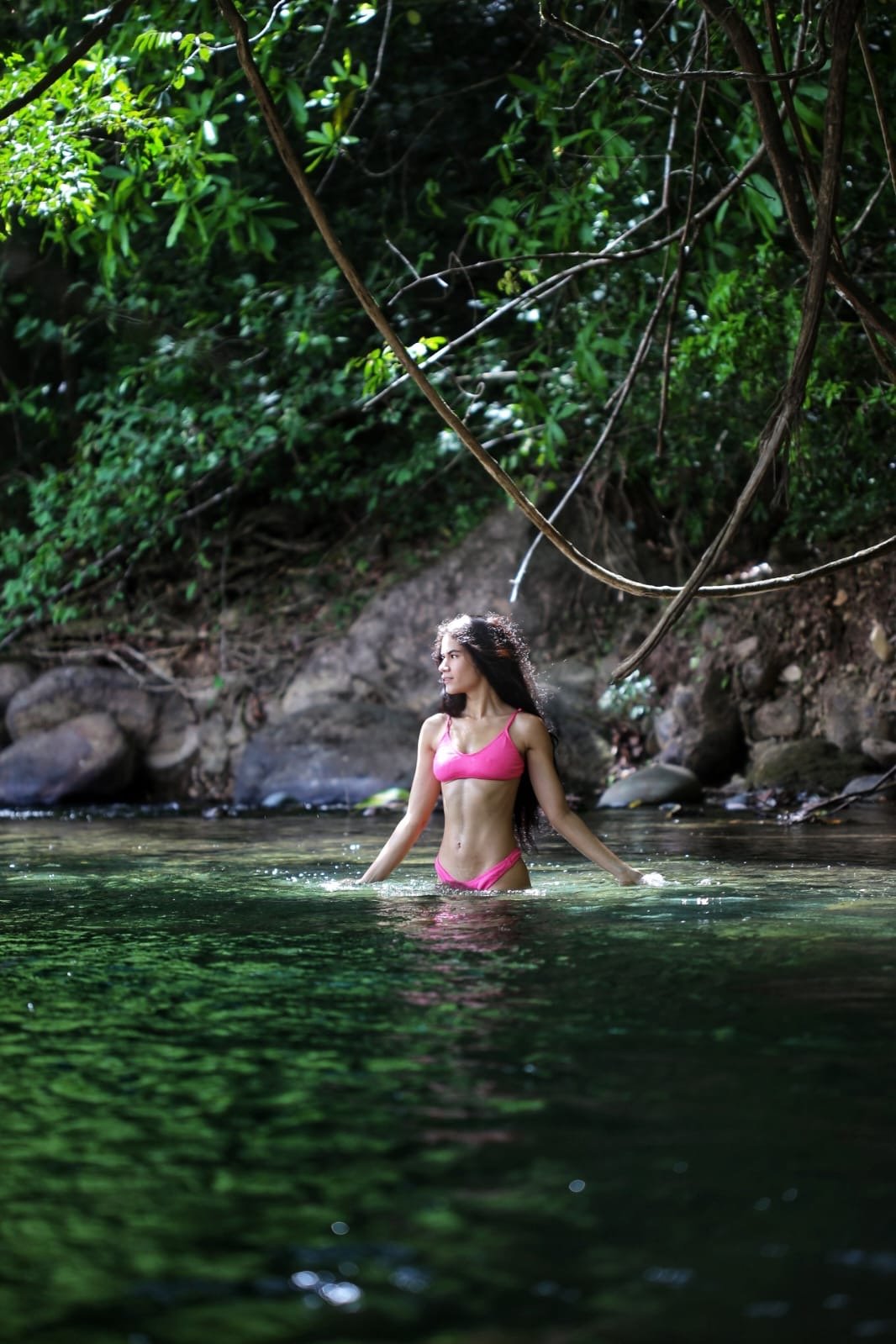
There is something completely different about hiking through a cloud forest in Panama. It is not simply a walk through the mountains. It feels more like entering another world, one where the air is cooler, the light is softer, the vegetation seems impossibly alive, and the forest is constantly moving, dripping, calling, buzzing and breathing around you.
The first thing you notice is the air. After the heat and humidity of Panama’s lowlands, stepping into the mountains can feel incredibly refreshing. The temperature drops, but the moisture remains. Clouds drift through the trees, sometimes so low that you are literally walking through them. Your skin feels cool and damp, and everything around you seems covered in tiny drops of water.
The forest has its own atmosphere. You walk beneath enormous trees covered with moss, bromeliads, orchids, ferns and vines. Plants grow on other plants, and branches disappear beneath layers of green. There is rarely a moment when you are looking at ordinary ground. Fallen logs become gardens, tree trunks become miniature ecosystems, and moss covers rocks and roots like thick green carpets.
And then there is the sound. Cloud forests in Panama can seem strangely quiet at first, especially compared with the noisy tropical lowlands. But once you stop walking, you realize the forest is anything but silent. Water drips from leaves. Tiny insects buzz somewhere nearby. Birds call from the canopy. A distant stream tumbles over rocks. Occasionally something moves through the vegetation, and you have absolutely no idea what it is.
That uncertainty is part of the magic. You might hear a bird without ever seeing it. You might notice a branch moving high above the trail and wonder what caused it. You might suddenly discover a hummingbird hovering only a few feet away before disappearing into the vegetation. Every sound makes you curious about what is happening around you.
Hiking in a Panamanian cloud forest encourages you to slow down. In a normal hike, people often concentrate on reaching the destination. In the cloud forest, the trail itself becomes the destination. You stop to examine an orchid growing from a tree. You look underneath a leaf because something caught your eye. You listen for a bird. You photograph strange fungi growing from a fallen branch. You watch clouds roll between the mountains.
Every few meters there is something new. One of the most beautiful sensations is the mist. In Panama’s higher mountains, clouds can move directly through the forest. One moment the trail may be relatively clear, and a few minutes later everything becomes pale and mysterious. Trees disappear into fog. Spiderwebs become visible because they are covered in droplets. Leaves sparkle with moisture.
It can feel almost prehistoric. The vegetation is so dense and ancient looking that it is easy to imagine yourself hundreds or thousands of years in the past. Giant tree trunks rise into the fog, covered in epiphytes. Twisted roots cross the trail. Ferns grow everywhere. The forest floor is dark and damp, while somewhere above you the canopy disappears into the clouds.
This is one of the reasons Panama’s cloud forests are so special. They are not simply rainforests at a higher altitude. They have their own character and ecosystems, shaped by cooler temperatures, persistent moisture and frequent cloud cover. The result is a landscape that feels completely different from the tropical forests closer to sea level.
For hikers, the experience is almost sensory overload, but in a quiet way. You smell wet earth and leaves. You feel moisture on your face. You hear birds and running water. You see dozens of shades of green. You touch the rough bark of a tree covered in moss. Every now and then the clouds open and reveal an enormous mountain landscape beyond the forest.
That contrast can be spectacular. You may spend an hour surrounded by vegetation where you can barely see ten meters ahead, and then suddenly emerge onto a viewpoint. Below you are mountains covered in forest, valleys disappearing into mist and, in some locations, distant glimpses toward the Pacific Ocean. The experience feels much bigger because you have just come from a world where your vision was limited to the forest around you.
Cloud forest hiking also has a special kind of anticipation because you never know what might appear. Panama is extraordinarily biodiverse, and the mountains are home to an impressive variety of birds, mammals, reptiles, amphibians and insects. You might encounter a hummingbird, toucan, motmot, tanager or one of the many other tropical birds that inhabit the forests.
But often the best wildlife encounters are the ones you almost miss. A movement in the leaves. A strange sound. Two eyes looking back at you. A tiny frog sitting beside the trail. A lizard disappearing beneath a log. A spiderweb illuminated by the morning light. Cloud forest hiking teaches you that seeing wildlife is not always about finding something enormous. Sometimes the most fascinating discovery is only a few centimeters long.
And then, inevitably, there is rain. In a cloud forest, rain does not necessarily feel like an interruption. It is part of the environment. You may begin your hike under cloudy skies, feel a few drops on your shoulders, and eventually find yourself walking through a gentle tropical shower.
The forest changes when it rains. The colors become deeper. Streams become louder. Leaves shine. Water runs down tree trunks and along the trail. The smell of vegetation becomes stronger, and the entire forest seems even more alive. Instead of rushing back, you can sometimes simply accept that you are now experiencing the forest exactly as it exists. Wet, cool, misty and alive.
Perhaps the most memorable part of cloud forest hiking is the feeling that you have temporarily escaped ordinary life. There may be no buildings, traffic or city noise. Your phone may have little or no signal. The only obvious route is the trail beneath your feet.
For a few hours, your world becomes very simple. You walk, look, listen, breathe and discover. That simplicity can be surprisingly powerful. You begin noticing things that would normally disappear into the background. The sound of a stream becomes important. A bird call becomes exciting. Finding a particularly beautiful tree becomes an event.
The forest forces your attention into the present. When you finally finish the hike, you often realize that you were not thinking about whatever had been occupying your mind before you entered the forest. You were simply there.
The best cloud forest hike is not necessarily the one where you cover the greatest distance or climb the highest mountain. It is the one where you allow yourself enough time to notice the forest. Stop occasionally. Look upward. Look underneath leaves. Listen before continuing. Watch the clouds. Pay attention to tiny details. And do not be afraid of getting a little wet.
Because the real attraction of hiking through Panama’s cloud forests is not simply reaching a waterfall, viewpoint or destination. It is the feeling of being completely surrounded by nature.
You are walking through a living landscape where clouds become part of the forest, trees become gardens, rain becomes music and every mysterious sound makes you wonder what might be hiding just beyond the trail.
For a few hours, Panama does not feel like a country you are visiting. It feels like a wild world you have temporarily been allowed to enter.