
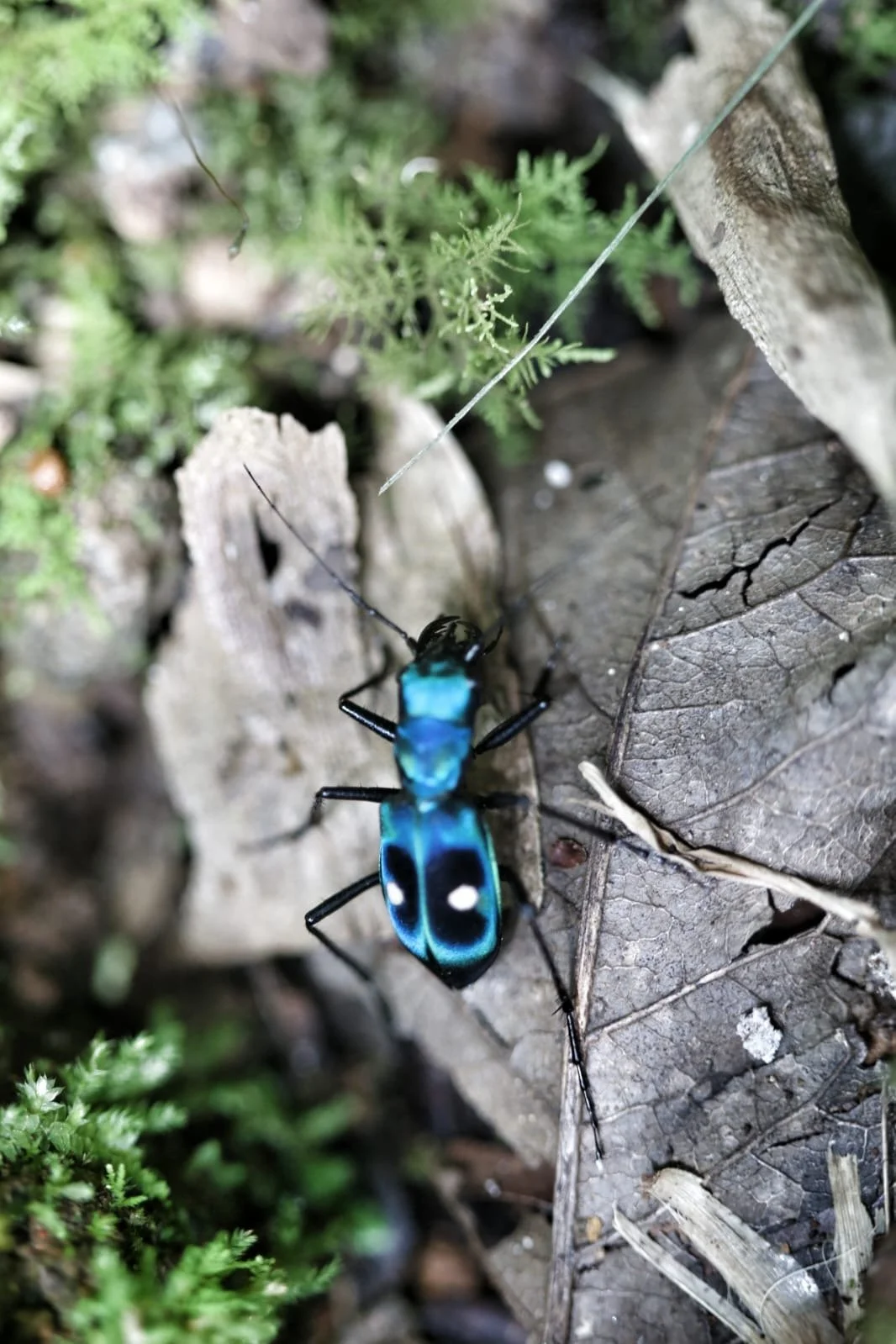
There was a time when Boquete was simply a quiet mountain town in Chiriquí, known mainly for agriculture, coffee, flowers and its unusually pleasant climate. Long before it became famous among foreigners, Panamanians from the hotter lowlands already knew Boquete as a place to escape the heat. Sitting high in the mountains near Volcán Barú, the town offered something that much of Panama could not: cool nights, fresh mountain air, green valleys and a climate that felt almost springlike throughout the year. But for decades, Boquete remained relatively small and agricultural. The transformation into one of Panama's best known expatriate communities happened surprisingly quickly, particularly from the late 1990s and early 2000s onward.
The climate was probably the single biggest reason foreigners started paying attention. Boquete sits at roughly 1,000 to 1,200 meters above sea level, producing temperatures dramatically cooler than those found in Panama City or David. Instead of oppressive tropical heat, residents experience mild days and cool evenings. This became incredibly attractive to retirees from North America and Europe who wanted to escape harsh winters without moving to a place with extreme heat. The idea of living in what was often described as an "eternal spring" became one of Boquete's strongest selling points.
Then came the combination of nature and affordability. Boquete offered mountains, rivers, waterfalls, cloud forests, hiking trails, spectacular birds and coffee plantations, while historically offering a lower cost of living than many comparable retirement destinations in North America. The surrounding countryside was beautiful without feeling completely isolated. David was relatively close by, providing access to a much larger city and Tocumen was reachable by road or domestic flight connections. This combination was extremely important. Foreigners could have a peaceful mountain lifestyle without feeling completely disconnected from civilization.
The arrival of expatriates also coincided with a period when international interest in Panama was beginning to grow. Panama was becoming increasingly attractive to retirees and investors because of its dollar based economy, pension benefits, expanding infrastructure and geographic location. Once a few foreigners discovered Boquete and began telling friends and family about it, the process became self reinforcing. Someone would move to Boquete, establish a business or buy a house, then tell friends back home about the lifestyle. Those friends would visit, discover the mountains and perhaps decide to stay. The people who came next already had someone they knew waiting for them.
One of the most important developments was Valle Escondido, a major residential development aimed largely at foreign buyers. Its emergence in the early 2000s helped put Boquete on the international retirement map. At approximately the same time, magazines and publications aimed at expatriates and retirees began repeatedly featuring Boquete as an attractive place to relocate. The combination of publicity, real estate development and word of mouth created a dramatic increase in international interest.
The timing was particularly important. By the middle of the 2000s, Boquete was no longer an obscure Panamanian mountain town to many North American retirees. In 2005, the Los Angeles Times reported on the growing wave of American retirees arriving in Boquete, describing roughly twenty new retirees arriving each month at that time. The article portrayed Boquete as an emerging retirement destination and highlighted the combination of relatively affordable housing and the comfortable mountain lifestyle.
Once enough foreigners arrived, something even more powerful happened: Boquete developed an expat ecosystem. New residents no longer had to build their entire social and practical life from scratch. They could find English speaking professionals, restaurants, clubs, volunteer organizations, real estate agents, social activities and other foreigners who understood what it was like to move to Panama. This created what economists and sociologists sometimes call a network effect. The larger the community became, the easier it became for the next person to move there.
The community began creating its own institutions as well. The Boquete Community Players were established by expatriates in the mid 2000s and eventually developed a permanent performance space. The famous Tuesday Market became another important meeting point, bringing together foreigners, Panamanians, farmers, artisans, food producers and visitors. Over time, these kinds of institutions helped turn Boquete from simply a place where foreigners lived into a genuine international community.
This social infrastructure became one of Boquete's greatest attractions. Someone arriving from Canada or the United States could move into the mountains and very quickly find other people with similar experiences. There were hiking groups, birdwatching groups, charitable organizations, cultural events, social gatherings and businesses catering to international residents. This made the psychological transition of moving abroad considerably easier. You could enjoy Panama while still having access to a community that spoke your language and understood your background.
But the expat community didn't simply consume what Boquete already had. It also changed the local economy. Foreign residents opened restaurants, cafés, hotels, tour companies, real estate businesses, wellness businesses and other services. Tourism expanded. Construction increased. More accommodation became available. Restaurants became more diverse. The town developed services that would have been difficult to sustain with only the local population. Contemporary accounts of Boquete frequently point to this economic effect, including the creation of employment opportunities for Panamanians.
Coffee played another important role. Boquete was already an agricultural community, but the international reputation of its coffee gave the town something that many retirement destinations lack: a globally recognizable identity. The high altitude, volcanic soils and climate are particularly suitable for specialty coffee, and some of the world's most valuable coffees have been produced in the surrounding highlands. Foreign residents could therefore combine retirement or relocation with an environment famous for one of the world's most sophisticated agricultural products.
Nature added another layer to the appeal. Boquete isn't simply a cool place to live. It is surrounded by an extraordinary mountain environment. Residents can hike through cloud forests, search for the resplendent quetzal, explore waterfalls, go rafting, visit coffee farms and walk through landscapes shaped by Volcán Barú. For retirees who wanted an active lifestyle rather than simply sitting beside a pool, this was a huge advantage. Outdoor activities became part of everyday life rather than something reserved for vacation.
And then there was the gradual change in the type of foreigner arriving. The first major wave became strongly associated with retirees, particularly from the United States and Canada. But Boquete's reputation eventually began attracting younger foreigners as well. Remote workers, entrepreneurs, travelers who decided to stay and people seeking a slower lifestyle began appearing alongside the traditional retirement population. Recent accounts describe a community that is no longer exclusively retirement focused.
The success of Boquete also created a fascinating paradox. The very characteristics that made it attractive eventually began changing the town. More foreign demand meant more construction and rising property values. Restaurants, accommodation and services became more sophisticated, but the town also became considerably more expensive than the quiet agricultural community it had once been. Recent sources specifically note that expatriate demand has pushed real estate values substantially higher and contributed to Boquete becoming one of the more expensive places to live in Panama's interior.
This has produced mixed feelings. For many Panamanians, the growth has brought jobs, investment, tourism and new business opportunities. For others, rising property prices and rapid development have made it harder for some local residents to afford housing in the same areas where their families have lived for generations. Boquete today is therefore a fascinating mixture of old and new: traditional agricultural Panama exists alongside an increasingly international community.
Perhaps the most remarkable part of the story is how quickly the transformation happened. Boquete did not become popular because of a giant airport, a massive beach resort or a single spectacular attraction. It became popular because several advantages came together at exactly the right moment. A cool climate, beautiful mountains, coffee, relative affordability, access to services, Panama's growing international reputation, early real estate development and, most importantly, word of mouth all reinforced one another.
Today, that history is visible everywhere. You can walk through Boquete and hear Spanish and English within minutes of each other. You can buy locally grown vegetables from a Panamanian farmer, drink internationally acclaimed coffee, eat at a restaurant opened by a foreign resident, meet retirees from Canada or the United States, and then walk into the surrounding mountains and find yourself surrounded by the same forests and rivers that existed long before Boquete became famous.
That is ultimately the secret of Boquete's success. It didn't become an expat destination because it stopped being Panama. It became popular because foreigners discovered a place where they could enjoy a remarkably comfortable international lifestyle while still being surrounded by Panama's mountains, agriculture, wildlife and culture. The challenge for Boquete today is preserving that extraordinary combination as the community continues to grow.
From a quiet agricultural town to one of Central America's best known expatriate communities, Boquete's transformation is one of the most interesting examples of how tourism, retirement migration, real estate, nature and word of mouth can completely reshape a destination.