
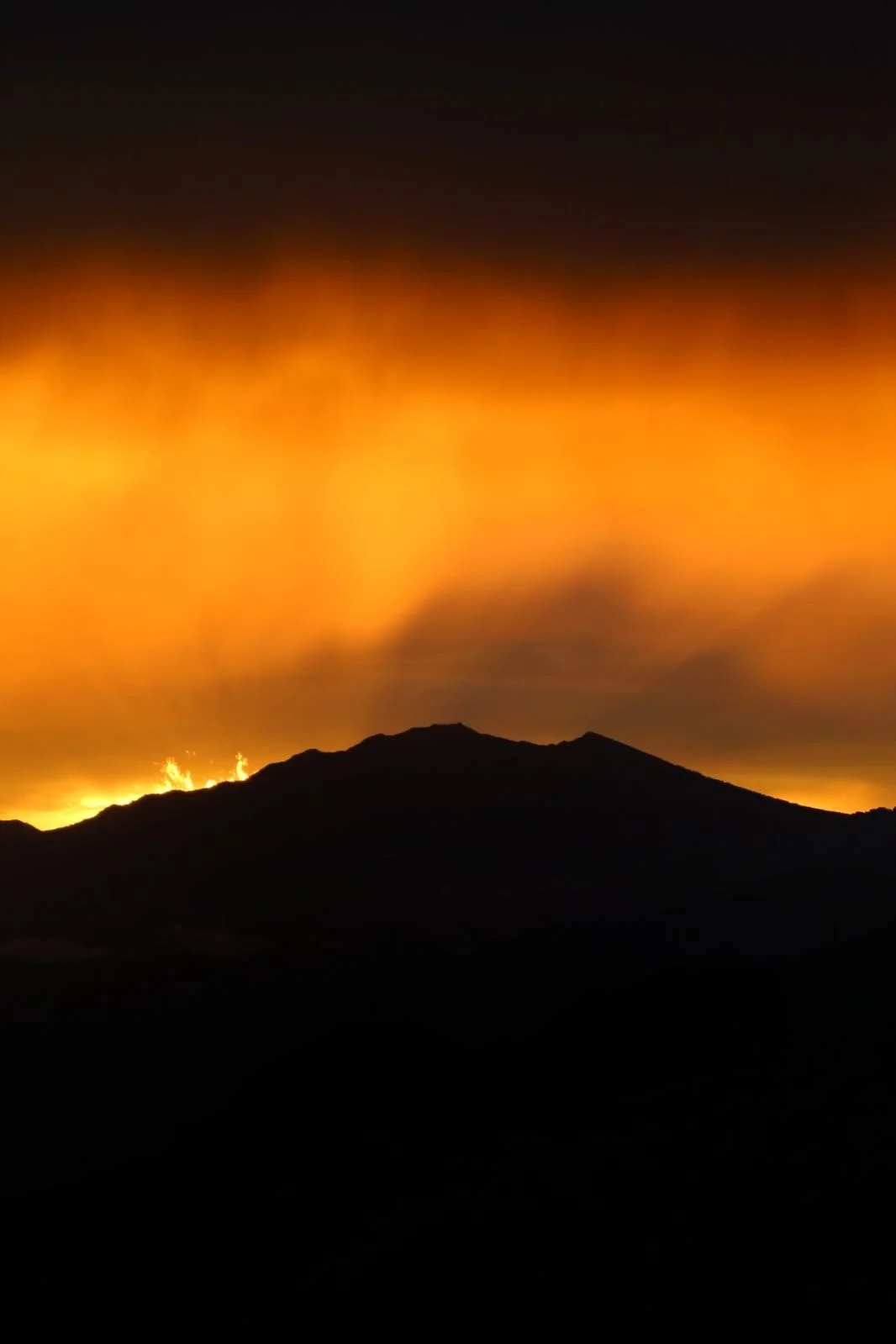
Far out in the Pacific waters of Panama’s Gulf of Chiriquí, there is a place that feels almost too untouched to belong to the modern world. The Islas Secas are a small volcanic archipelago of forested islands, rocky islets and extraordinarily productive surrounding waters, located roughly 20 kilometers off Panama’s western Pacific coast. The main group includes five larger islands—Pargo, Cavada, Barracuda, Coco and Canales—along with numerous smaller islands and rocks.
For most travelers, Islas Secas remains almost completely unknown. And that is part of its magic.
There are no crowded beach towns, no rows of souvenir shops and no line of hotels stretching along the shore. Instead, you find jungle-covered islands rising dramatically from blue Pacific water, beaches that can feel completely deserted, seabirds circling overhead and an ocean rich enough to attract some of the most spectacular marine animals in Panama.
An archipelago shaped by the Ice Age
One of the most fascinating things about Islas Secas is that its story began long before there was an ocean between the islands and the mainland.
During periods of lower sea levels, the islands were connected to the mainland. As the great ice sheets melted and sea levels rose, the land gradually became isolated. Researchers estimate that the Islas Secas became separated from the mainland approximately 9,000 years ago.
That isolation helped create an unusual natural laboratory.
Island ecosystems evolve differently from those on the mainland. Animals and plants become separated from their mainland relatives, populations change and species find new ways to survive. This is one reason why Panama's Pacific islands are so important to scientists studying biodiversity and island evolution.
The human story is just as intriguing. Archaeological evidence indicates that Cavada Island was inhabited by pre-Columbian people between approximately AD 1100 and 1500. These communities hunted, fished, collected shellfish and cultivated portions of the island. By the time a Spanish expedition visited the islands around 1631, however, they were apparently forested and uninhabited.
So when you walk through the forest of Islas Secas today, you are walking through an ecosystem that has been changing for thousands of years.
A tiny archipelago with an enormous ocean
The real attraction of Islas Secas isn't simply the islands themselves.
It is the ocean surrounding them.
The Gulf of Chiriquí is one of Panama's great marine wildernesses. Warm tropical waters, underwater structures and seasonal oceanographic changes create conditions capable of supporting enormous concentrations of marine life.
This is why the area attracts divers, snorkelers, fishermen, marine researchers and, during the right season, whales.
Recent scientific monitoring has also documented fish spawning aggregations around Islas Secas, including several species of snapper, grouper, jack and wrasse. Researchers have identified Bajo Rizo in the Islas Secas area as a spawning location for multiple species.
That might sound technical, but underwater it translates into something extraordinary: there are places around these islands where the ocean becomes a gathering point for entire populations of fish.
Whales passing through paradise
Perhaps the most spectacular visitors to Islas Secas are the humpback whales.
Every year, Panama's Pacific coast becomes part of an extraordinary migration route. Humpback whales travel enormous distances to reach tropical waters where they can mate and give birth.
The Gulf of Chiriquí is particularly famous for whale encounters, and Islas Secas offers an unusual advantage: instead of traveling through a crowded coastal environment, boats can head into a vast Pacific landscape where islands, deep water and open ocean meet.
Imagine sitting in a small boat with nothing around you except volcanic islands and the Pacific Ocean when a humpback suddenly surfaces nearby.
The sound of the whale breathing may be the first thing you hear.
Then the enormous back appears.
And if you're incredibly lucky, the whale may breach completely out of the water.
That is the kind of wildlife encounter that makes Islas Secas unforgettable.
A paradise for birds
The islands may be small, but they are remarkably important for birds.
A systematic survey of Islas Secas recorded 66 bird species, including 10 seabird species, eight species associated with coastal or freshwater habitats and 48 land birds. Researchers also documented breeding by Magnificent Frigatebirds and Brown Boobies.
The Brown Booby is particularly spectacular. These seabirds plunge dramatically into the ocean to catch fish, disappearing beneath the surface before emerging again.
Above the islands, frigatebirds glide almost effortlessly on the wind.
They are one of the classic sights of tropical Pacific islands, with enormous wings and the males' remarkable red throat pouches.
The islands are also interesting from an evolutionary perspective because of their proximity to Coiba, one of Panama's great centers of endemism. Coiba itself has numerous endemic bird forms, and scientists have been interested in determining whether some of these island-specific populations also occur in the Secas.
The jungle is just as interesting as the ocean
It would be easy to think of Islas Secas as simply a marine destination, but the islands themselves are covered in tropical vegetation.
The larger islands are predominantly forested with moderately tall deciduous vegetation.
Walking through this environment creates an unusual experience because the landscape constantly changes.
One moment you're looking across an almost completely empty Pacific bay.
A few minutes later you're underneath a canopy listening to birds.
Then you emerge from the vegetation onto a rocky coastline where waves crash against volcanic formations.
This combination of jungle, beaches, cliffs and open ocean is what gives the archipelago such a distinctive character.
Snorkeling and diving
For anyone who loves underwater exploration, Islas Secas is particularly appealing.
The surrounding waters support a tremendous variety of tropical fish and larger marine animals, and the Gulf of Chiriquí is renowned for its marine biodiversity. The region also connects ecologically with the much larger marine environment surrounding Coiba.
Snorkeling can reveal colorful reef fish, rays and sea turtles, while diving allows visitors to explore deeper underwater terrain and encounter larger species.
And then there is the possibility of seeing something much bigger.
Dolphins can move through the waters around the islands, while rays, turtles, tuna and other pelagic species can appear unexpectedly.
The important thing about Islas Secas is that you never quite know what the Pacific is going to put in front of you.
A place where conservation matters
Islas Secas is also an interesting example of how luxury tourism and conservation can intersect.
The privately operated eco-resort occupies only a small portion of the archipelago, while much of the island environment remains relatively undisturbed. The resort has promoted a model based on low-impact tourism and environmental management.
That philosophy is particularly important in a place like this.
The attraction of Islas Secas is precisely its wildness.
If too much infrastructure were built, if too many boats arrived or if the surrounding waters were heavily exploited, the very thing that makes the islands special would disappear.
In 2023, Panama established a sustainable fishing reserve around the Islas Secas archipelago covering approximately 201.8 square kilometers. The regulations restrict fishing methods in the area and prohibit other forms of exploitation of aquatic resources, providing an additional layer of protection for the marine environment.
The incredible geography of the Gulf of Chiriquí
One reason Islas Secas feels so remote is the geography of western Panama's Pacific coast.
The Gulf of Chiriquí isn't simply a coastline with a few islands. It is a huge mosaic of islands, reefs, channels, seamounts and deep Pacific waters.
Further offshore lies Hannibal Bank, a famous underwater seamount where oceanographic conditions create an abundance of fish and marine life. It is roughly 60 kilometers south of Islas Secas and demonstrates just how productive the waters of this part of Panama can be.
Nearby is also Coiba National Park, one of Panama's most important protected natural areas and a UNESCO World Heritage Site. Coiba protects the enormous island of Coiba, dozens of smaller islands and surrounding marine habitats that form part of the Tropical Eastern Pacific Marine Corridor.
Together, these places make the Gulf of Chiriquí one of the most extraordinary marine regions in Central America.
Islas Secas isn't really about beaches
That may be the most important thing to understand.
If you're looking for a place to simply lie on a beach surrounded by restaurants and nightlife, Islas Secas isn't that.
Its appeal is much more elemental.
It is about waking up surrounded by Pacific water.
It is about hearing frigatebirds overhead.
It is about getting into a boat and searching the horizon for whales.
It is about snorkeling over tropical marine life.
It is about walking through a forest on an island that was once connected to mainland Panama thousands of years ago.
And it is about realizing that just beyond the tourist version of Panama lies an enormous natural world that most visitors never see.
A different side of Panama
Most travelers discover Panama through Panama City, the Canal, Bocas del Toro, Boquete, the San Blas Islands or the beaches of the Caribbean.
Islas Secas offers something completely different.
It represents Panama at its most remote and wild: the Pacific side of the country, where volcanic islands disappear into the horizon and the ocean is still the dominant force.
It is also a reminder that Panama's greatest natural treasures aren't always the places with the biggest signs or the most visitors.
Sometimes they are the places you can barely find on a map.
And somewhere beyond the Pacific coastline of Chiriquí, surrounded by thousands of years of geological history, tropical forest and an extraordinary living ocean, Islas Secas remains one of Panama's most fascinating hidden worlds.