
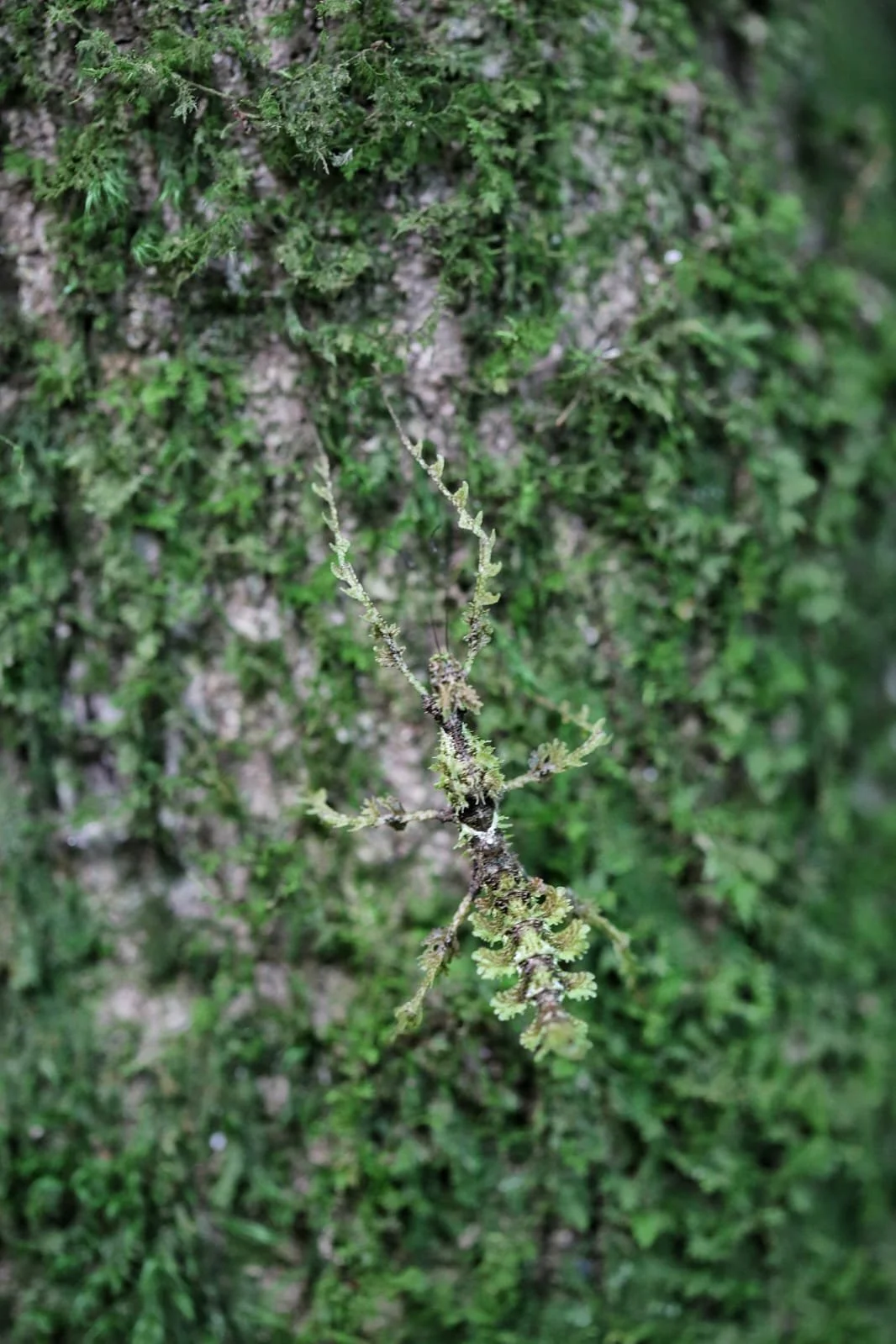
Metropolitan Natural Park is one of the most remarkable places in Panama City because it creates a strange and beautiful contradiction: you can be surrounded by one of the most modern cities in Central America and, within minutes, find yourself walking beneath a tropical forest canopy.
Skyscrapers, highways and the Pacific Ocean are all part of Panama City, but tucked into the city is a surprisingly wild landscape of forest, hills, birds, monkeys, sloths and tropical plants. The Parque Natural Metropolitano is therefore much more than a city park. It is an important protected natural area and one of the places where you can experience genuine tropical nature without leaving the capital.
The park is especially interesting for travelers who do not have time to travel deep into the countryside. You can have breakfast in the city, spend a few hours hiking through the forest and then be back in the middle of Panama City's urban world before lunch.
A rainforest inside a modern city
The first thing that makes the park fascinating is its location.
Panama City is famous for its enormous skyline, shopping centers, traffic and modern infrastructure. Yet immediately beside this urban environment is a forest ecosystem that feels remarkably different.
Once you enter the trails, the sounds begin to change. Traffic becomes more distant. The temperature can feel different beneath the trees. Instead of concrete and glass, you begin seeing vines, palms, enormous trees, bromeliads and dense tropical vegetation.
This is one of the best demonstrations of something that makes Panama so special: nature is never very far away.
The Metropolitan Natural Park forms part of the wider network of protected forests around the Panama Canal. MiAmbiente's management planning recognizes the importance of these connected forest areas for biodiversity and ecological connectivity.
The feeling of walking through the jungle
The park isn't necessarily about finding one spectacular attraction.
Its magic comes from the experience of walking.
You enter the forest and begin following a trail. Sunlight comes through the canopy in patches. Leaves move overhead. You hear birds calling from somewhere you cannot see. Occasionally something moves through the vegetation.
You stop.
You look up.
Perhaps it is a bird.
Perhaps it is a squirrel.
Perhaps a monkey is watching you from a branch.
This is what makes hiking in the park so enjoyable. You never know exactly what you are going to encounter.
And because the park is relatively accessible, you don't need to organize a major expedition to experience it.
A surprisingly rich wildlife refuge
The Metropolitan Natural Park provides habitat for a remarkable variety of wildlife despite being surrounded by a major city.
MiAmbiente has documented animals associated with the protected forests around metropolitan Panama, including sloths, titi monkeys, spider monkeys, opossums, raccoons, hawks, parrots, woodpeckers, toucans, owls, bats, iguanas, snakes and frogs. Animals rescued in the Panama Metro region are sometimes rehabilitated and released into protected areas including the Metropolitan Natural Park.
Of course, seeing wildlife is never guaranteed. Tropical animals are experts at hiding, and the forest is much bigger than it initially appears.
That is part of the fun.
A person walking quickly might see almost nothing.
Someone who slows down, listens and watches the trees can have a completely different experience.
Monkeys in the city
One of the most exciting possibilities is encountering monkeys.
Hearing monkeys before seeing them can be almost as thrilling as actually spotting them. You might hear movement high in the canopy, followed by branches shaking or distant calls.
The forest around Panama City supports several species of monkeys, and encounters can sometimes happen surprisingly close to urban areas.
When you finally see one, the contrast is extraordinary.
There is the skyline of Panama City in the distance, and somewhere in the foreground is a wild monkey moving through the trees.
It is difficult to find a better illustration of Panama City's unusual relationship with nature.
Sloths: the masters of disappearing
Sloths are another possibility, although they can be much harder to find.
The problem is that sloths are incredibly good at looking like part of the forest. They spend much of their time high in trees, and their slow movements mean that they can remain unnoticed even when they are relatively close.
A good wildlife observer learns to scan the branches carefully.
Look for an unusual shape.
A patch of fur.
A face between leaves.
A curved arm around a branch.
And sometimes you suddenly realize that the "bundle of vegetation" you have been staring at is actually a sloth.
Birdwatching is one of the park's great attractions
You do not need to be a serious birder to appreciate the park's birdlife.
Toucans, parrots, parakeets, woodpeckers, hawks and numerous smaller forest birds can be encountered in the broader metropolitan forest ecosystem. MiAmbiente specifically recommends visiting protected areas early in the morning when birds and other wildlife are generally easier to observe.
Morning is therefore an excellent time to visit.
The forest is cooler, bird activity is higher and the sounds of the jungle can be extraordinary.
Instead of simply walking along the trail, stop occasionally.
Listen.
Try to identify where each call is coming from.
Look into the canopy.
Watch the branches.
The more time you spend doing this, the more wildlife you begin to notice.
A paradise for people who love trees
The animals may receive most of the attention, but the vegetation is equally fascinating.
Panama's tropical forests contain enormous diversity in plant life. Trees compete for sunlight, vines climb toward the canopy, epiphytes grow on branches and countless smaller plants occupy the spaces between them.
The forest can look chaotic at first, but there is an incredible structure to it.
Different plants occupy different layers.
Some trees reach high above everything else.
Other species live beneath the canopy.
Vines connect different levels.
Ferns and smaller plants occupy the darker forest floor.
And flowers provide food for insects, birds and other animals.
Walking through the park becomes almost like walking through a living architectural system.
A green bridge through Panama City
One of the most important things about the Metropolitan Natural Park is its ecological role.
Protected forest in and around Panama City is not simply decorative greenery. It contributes to a larger network of natural habitats.
The forests of the Canal Zone connect different protected areas, creating opportunities for wildlife movement through a landscape that would otherwise be heavily fragmented by urban development.
MiAmbiente describes the wider protected forest network around the Canal as an important biological corridor connecting areas such as the Metropolitan Natural Park, Camino de Cruces and Soberanía.
That makes the park important far beyond its hiking trails.
It is part of the living infrastructure of the region.
The incredible contrast with the skyline
One of the most memorable experiences is reaching an elevated viewpoint and looking back toward Panama City.
Suddenly the forest and the city appear together.
Skyscrapers rise in the distance.
Roads cross the landscape.
And between you and the city is a wall of tropical vegetation.
It is almost as though someone placed a piece of rainforest directly in the middle of a modern metropolis.
That contrast is one of the defining characteristics of Panama City.
Very few major cities allow you to experience such an immediate transition from urban environment to tropical forest.
A great place for a short adventure
Not everyone visiting Panama City has time to travel to Boquete, Bocas del Toro, El Valle or the Darién.
That is where the Metropolitan Natural Park becomes especially valuable.
You don't need an entire day.
You don't need camping equipment.
You don't need to travel several hours by road.
You can simply dedicate part of your day to hiking and wildlife observation.
It is particularly useful for travelers who want to experience nature while keeping the rest of their day available for Casco Viejo, the Canal, the fish market, the Cinta Costera or other parts of Panama City.
Go slowly
Perhaps the biggest mistake visitors can make is treating the park like a normal walk.
The forest rewards patience.
If you walk quickly from beginning to end, you may see a few birds and plants but miss much of what is happening around you.
Instead, walk slowly.
Stop frequently.
Look upward.
Listen for movement.
Check the branches.
Watch flowers.
Look at the ground.
Pay attention to sounds coming from different directions.
The forest is constantly moving even when it appears completely still.
The early morning is magical
For wildlife lovers, early morning is particularly rewarding.
Temperatures are generally more comfortable, and many birds and animals are more active during the cooler parts of the day. MiAmbiente recommends early morning and late day for wildlife observation in protected areas.
There is also something special about the atmosphere.
The city may still be waking up.
But inside the forest, life has already begun.
Birds are calling.
Insects are active.
The canopy is filling with sunlight.
And somewhere nearby, an animal may already be moving through the vegetation.
A place for families and environmental education
The park also has an important educational role. MiAmbiente has supported environmental education programs at the Metropolitan Natural Park, including improvements to the visitor center and educational materials designed to help children and young people understand biodiversity and conservation.
This makes the park more than a hiking destination.
It is a place where people can learn about Panama's ecosystems while experiencing them directly.
For children, that can be particularly powerful. Reading about a sloth in a book is one thing. Hearing that something is moving overhead and then actually seeing the animal in a tropical forest is something completely different.
The park changes depending on what you are looking for
The Metropolitan Natural Park can be different experiences for different people.
For a casual visitor, it is a peaceful escape from the city.
For a hiker, it is a place to get some exercise surrounded by tropical vegetation.
For a photographer, it is full of textures, insects, plants, birds and changing light.
For a birdwatcher, it is a place to spend hours listening and searching the canopy.
For families, it can become an introduction to tropical ecology.
And for someone visiting Panama for only one day, it offers something incredibly valuable: a genuine encounter with the country's rainforest without requiring a long journey outside the capital.
The wild side of Panama City
Perhaps the most fascinating thing about Parque Natural Metropolitano is not any individual animal, trail or viewpoint.
It is the idea behind the place.
Panama City did not completely replace the forest.
The forest survived.
It remains connected to larger natural landscapes and continues to provide habitat for wildlife even as millions of people live, work and travel around it.
That makes the park a reminder that a modern city and a tropical ecosystem do not necessarily have to exist as completely separate worlds.
Sometimes they can exist side by side.
You can spend the morning surrounded by skyscrapers and the afternoon listening to monkeys in the forest.
You can walk past traffic and then, minutes later, find yourself staring at a toucan.
You can climb a trail beneath enormous tropical trees and eventually look out toward one of Central America's most modern skylines.
That is the real magic of Parque Natural Metropolitano.
It is not simply a green space inside Panama City. It is a piece of Panama's wild heart that the city grew around rather than completely replacing.
And for travelers who want to understand what makes Panama special, that is an experience worth having.