
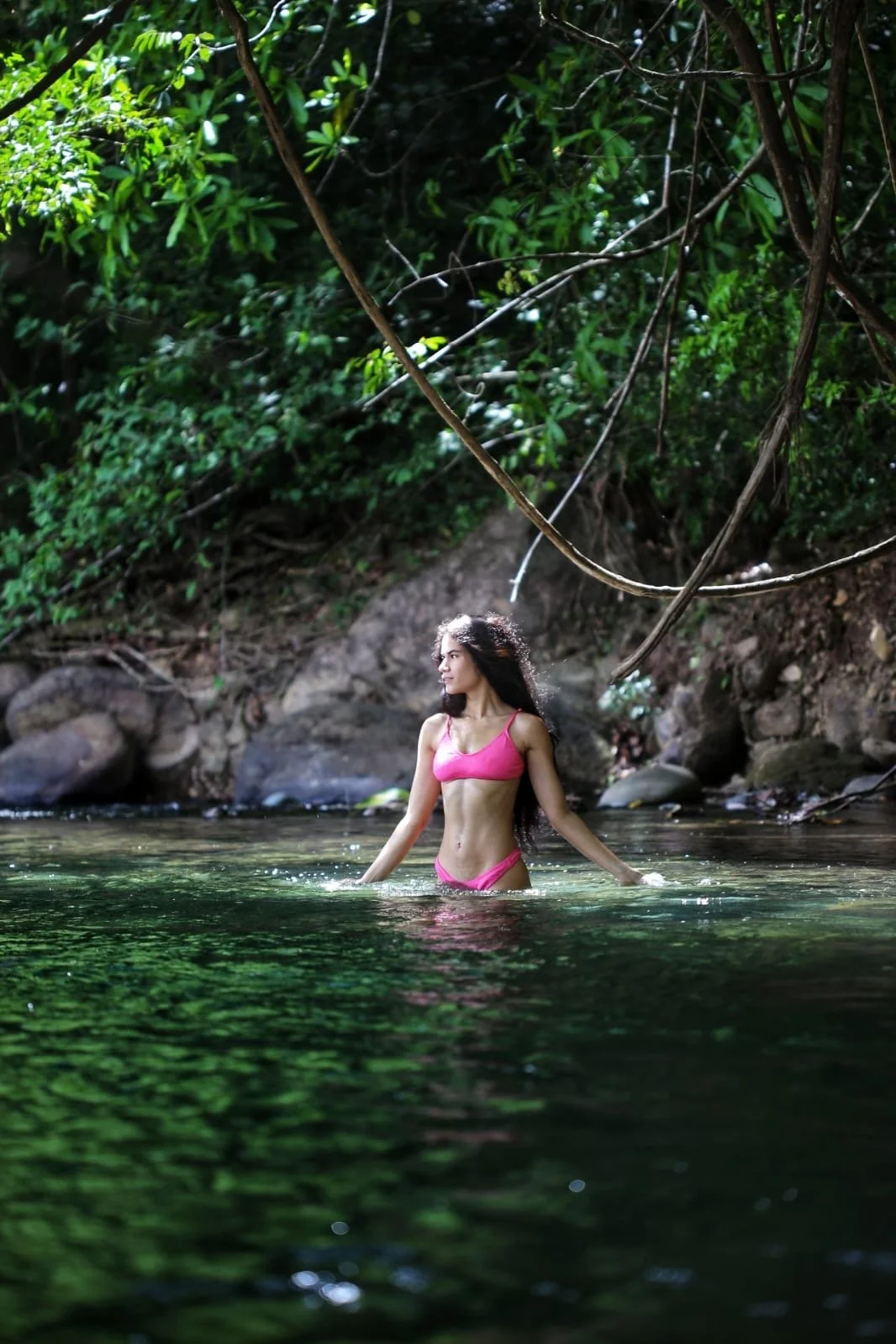
The Chagres region is one of the most fascinating places in Panama for anyone interested in fishing because it offers something completely different from the country's famous offshore sport fishing destinations. Instead of focusing entirely on enormous Pacific game fish, the Chagres watershed takes you into a world of rainforest rivers, artificial lakes, flooded forests, tributaries, wetlands, mangroves and Caribbean coastal waters. The entire landscape is shaped by water. The Chagres River rises in the mountainous interior and eventually reaches the Caribbean, while the construction of the Panama Canal transformed huge portions of its watershed into the enormous reservoirs of Gatun Lake and Alhajuela Lake. For a fisherman, this creates an extraordinary variety of environments within one interconnected system. You can fish freshwater lakes surrounded by jungle, explore narrower river channels, look for predatory fish around flooded vegetation, or travel toward the Caribbean where freshwater gradually gives way to estuarine and marine environments. What makes the Chagres especially memorable, however, is not simply the possibility of catching fish. It is the feeling of being surrounded by one of Panama's great tropical ecosystems. You can be casting a lure while monkeys call from the forest, kingfishers flash across the water, caimans lurk along the shoreline and dense rainforest rises on both sides of the river. Fishing becomes an excuse to enter a landscape that feels dramatically wilder than the developed parts of Panama.
One of the most important things to understand about fishing in Chagres is that there isn't one single type of fishing. The enormous watershed contains several completely different fishing environments, and the species and techniques can change dramatically depending on where you are. There is freshwater fishing in the rivers and lakes, sport fishing for introduced peacock bass in parts of the Canal watershed, fishing for food in communities around the waterways, fishing around tributaries and flooded forest, and, farther toward the Caribbean, coastal and estuarine fishing. This diversity is partly the result of Panama's natural geography and partly the result of the Panama Canal itself. When the Chagres River was dammed and huge areas of forest were flooded, the landscape was transformed into a massive network of lakes and islands. Gatun Lake became one of the world's most famous artificial lakes, but it also became an extraordinary freshwater habitat. The flooded forest created countless structures beneath the water, while shorelines, coves, channels and submerged vegetation provided habitats for fish. Alhajuela Lake, farther upstream, provides another major freshwater environment surrounded by rainforest. The result is an unusual situation in which a river that was once primarily a flowing freshwater system is now also associated with enormous lake environments that have developed their own fisheries.
Perhaps the most famous fish associated with sport fishing in the Canal watershed is the peacock bass, locally known as sargento. Peacock bass are not native to Panama; they were introduced into parts of the Canal watershed and subsequently became one of the country's best known freshwater sport fish. Their reputation comes largely from their aggressive behavior and the excitement they provide to anglers. Peacock bass are powerful predators, and when one attacks a lure the experience can be remarkably explosive. You might spend several minutes quietly casting toward the edge of flooded vegetation, a fallen tree or a rocky shoreline and then suddenly see the water erupt as a fish attacks. This is what makes peacock bass fishing so appealing. The fish do not need to be enormous to create an exciting experience. Their aggression, strength and tropical appearance make them memorable sport fish. Gatun Lake in particular has developed an international reputation among anglers looking for this kind of freshwater adventure, and fishing there can feel completely different from conventional lake fishing in North America or Europe. Instead of a developed shoreline covered with docks and houses, you can find yourself surrounded by tropical forest and islands, with the remnants of the original landscape still influencing the underwater habitat.
Gatun Lake itself is an extraordinary place to fish because it is simultaneously an engineering achievement and a tropical ecosystem. The lake was created when the Chagres River was dammed during the construction of the Panama Canal, flooding an enormous area of land. Trees that once stood on dry ground became part of the aquatic landscape, and islands and remnants of the original terrain remain visible. For anglers, this creates an environment full of structure. Submerged trees, roots, shorelines, drop offs and flooded vegetation can all influence where fish gather. This is where local knowledge becomes extremely important. An experienced guide understands how fish behavior changes with water conditions, weather, season, time of day and location. They know which shorelines are productive, which areas are difficult to access and how to navigate the enormous lake safely. For a visitor, fishing with a knowledgeable local guide can therefore transform the experience from simply casting a line into a huge body of water into something much more purposeful. Instead of randomly searching an enormous lake, you are learning how the ecosystem works and why particular areas attract predators.
The Chagres River itself offers an entirely different experience from fishing on Gatun Lake. A river is dynamic. Water moves, levels change, currents form, tributaries enter, pools develop and bends create different habitats. Fish are constantly responding to those conditions. The upper reaches of the Chagres and its tributaries pass through rainforest where the surrounding landscape can feel incredibly remote. Fishing in this environment can be much more intimate than fishing on a giant lake. Rather than looking across an enormous open horizon, you may be standing or traveling through a narrow section of water surrounded by vegetation. Fallen trees, rocks, deep pools and areas of slower current can all create different habitats. The scenery becomes part of the attraction. Even if the fishing is quiet, you are still moving through one of Panama's most extraordinary natural environments. The river can feel less like a conventional recreational fishing destination and more like an expedition into the rainforest.
The smaller tributaries of the Chagres are equally fascinating because they create an entirely different scale of fishing environment. These smaller waterways can be surrounded by dense vegetation, shaded by the rainforest canopy and filled with pools, rocks and submerged roots. They are often incredibly beautiful, with clear or dark water flowing beneath towering tropical vegetation. However, these are also areas where visitors need to be particularly careful about access and regulations. Large portions of the Chagres watershed are protected, and not every river, stream or shoreline is automatically open to recreational fishing. Chagres National Park encompasses an enormous area of rainforest and waterways, and specific rules can apply to fishing, access, boats and other activities. The safest approach is to find out exactly where you are permitted to fish and, where appropriate, use an authorized local guide who understands the current rules. A beautiful remote river does not necessarily mean that fishing there is legal or appropriate.
Fishing around the Chagres also has an important subsistence dimension. For a sport fisherman arriving from another country, catching a fish may be primarily about excitement, recreation and the satisfaction of mastering a particular technique. For communities living around the waterways, fishing can have a completely different meaning. It can be connected to food, tradition, household needs and a longstanding relationship with the surrounding environment. This distinction is important when traveling through the Chagres region because the waterways are not simply recreational spaces. They are part of people's homes and livelihoods. The region also includes Indigenous communities, including communities associated with the Emberá and Guna peoples, whose relationships with forests and waterways have developed over generations. Anyone interested in experiencing fishing or river life in these areas should approach it respectfully, particularly when entering Indigenous territories or visiting communities. Working with local community members or guides can provide a much richer experience than simply arriving independently and attempting to explore areas without understanding local customs or restrictions.
Another fascinating aspect of Chagres fishing is the transition from freshwater to the Caribbean. The Chagres eventually reaches the Caribbean Sea, creating an enormous ecological gradient between inland freshwater environments and coastal saltwater habitats. Near the river mouth and surrounding coastal areas, freshwater and saltwater systems interact, creating estuarine environments that can support fish adapted to changing salinity. This means that the fishing possibilities change as you move downstream. The species and techniques appropriate for a freshwater lake are obviously different from those used around mangroves, estuaries and coastal waters. Depending on the precise location, conditions and regulations, anglers in Caribbean environments can encounter fish such as snook, tarpon, snapper and various jacks. The presence of these species helps demonstrate how extraordinary the Chagres watershed is. You can begin in a mountain river, move through rainforest, enter a massive artificial freshwater lake and eventually reach a tropical Caribbean coastline, all within one interconnected water system.
Tarpon are particularly fascinating in the Caribbean context because they are among the most powerful fish associated with tropical inshore fishing. Their presence in Caribbean coastal environments and river systems makes them an exciting target for specialist anglers, although their availability varies considerably by location and conditions. Snook are similarly interesting because they can inhabit estuaries, mangroves, river mouths and coastal waters, making them particularly well suited to transitional environments where freshwater and saltwater interact. Snapper and jacks add another dimension to the coastal fishing experience, especially around structures and productive nearshore habitats. However, it is important not to assume that every species can be caught everywhere in the Chagres region or that every location is open to recreational fishing. Protected areas, seasonal restrictions and local rules can all influence what is permitted. This is one of those places where a knowledgeable local fishing operator can make a huge difference because they understand not only where fish are found but also where fishing is actually allowed.
Mangrove fishing around the Caribbean side of the Chagres region offers yet another completely different experience. Mangroves are among the most important coastal ecosystems on Earth, providing shelter for juvenile fish, feeding grounds for predators and habitat for countless species. Their tangled roots create complicated underwater structures where fish can hide and hunt. For anglers, these environments can be incredibly productive, but they also require care. Mangroves are fragile ecosystems, and careless boats, anchors, fishing line and discarded equipment can damage them. Responsible fishing is therefore especially important. The best fishing experience is one where you leave the ecosystem essentially untouched, taking your equipment and waste with you and respecting the vegetation and wildlife around you.
One of the most remarkable things about fishing in Chagres is the wildlife you encounter while you are waiting for fish. The forest is not simply scenery in the background. It is an active part of the experience. Howler monkeys may call from high in the canopy, kingfishers can dart across the water, herons may stand patiently along the shoreline and caimans can sometimes be seen near the water's edge. Tropical birds can make the experience feel more like a wildlife expedition than a conventional fishing trip. Even when nothing is biting, there is almost always something happening around you. This is one of the reasons the Chagres is so appealing to adventurous travelers. The fishing itself becomes only one component of a much larger experience involving rainforest, wildlife, waterways and history.
For travelers deciding between freshwater and saltwater fishing, Chagres offers an unusually interesting choice. Panama is internationally famous for Pacific sport fishing, with offshore species such as sailfish, marlin, tuna and other powerful game fish attracting anglers from around the world. Chagres provides a completely different kind of adventure. You aren't heading miles offshore into open ocean. Instead, you might be casting toward the edge of flooded jungle on Gatun Lake while searching for peacock bass. The landscape is enclosed by rainforest rather than an endless ocean horizon. The fish are different, the techniques are different and the atmosphere is completely different. Someone who has already experienced offshore fishing may find freshwater fishing in Chagres surprisingly refreshing because the challenge comes from reading the shoreline, identifying structure and understanding predator behavior rather than simply searching enormous expanses of ocean.
Alhajuela Lake, also known as Madden Lake, deserves special attention because it forms another major component of the Chagres watershed. Like Gatun Lake, it was created by damming the Chagres system and is surrounded by spectacular tropical forest. Its location upstream gives it a different character from the enormous waterways closer to the Canal. The forested landscape is particularly impressive, and the lake is an important part of Panama's water infrastructure. For fishing enthusiasts, the combination of freshwater habitat and dense rainforest makes it intriguing, but once again, access and regulations matter. Travelers should not assume that because a lake is visible on a map it is automatically open to unrestricted recreational fishing. Checking current regulations and using authorized access is particularly important in a watershed that has such enormous significance for Panama's Canal and water supply.
One of the most important pieces of advice for fishing in Chagres is to prioritize local knowledge over equipment. You can own an expensive fishing rod, an impressive collection of lures and all the latest gear, but none of that necessarily tells you where fish are holding on a huge tropical lake. A local guide understands seasonal patterns, water levels, weather, fish behavior, boat routes and productive habitat. They also know how to navigate an environment where submerged structures, changing conditions and remote shorelines can make exploration complicated. Perhaps most importantly, a local guide can help you fish responsibly. They can tell you where fishing is allowed, which species should be released and what local practices are appropriate. In a protected and culturally important environment like Chagres, that knowledge is more valuable than having the most expensive equipment.
The history of the Chagres makes the fishing experience even more fascinating. Before the Panama Canal transformed the region, the Chagres River was already an important transportation route through the isthmus. The river connected the interior with the Caribbean and played a major role in the history of Panama's movement of people and goods. The Canal project radically changed the river's landscape, creating Gatun Lake and changing the relationship between the Chagres and the surrounding forest. Today, an angler fishing in the Canal watershed is therefore sitting within a landscape that represents both natural tropical ecology and one of humanity's most ambitious engineering projects. You can cast a lure toward a flooded forest while knowing that the water beneath your boat is part of the system that allows ships to cross between two oceans.
This mixture of natural and human history is one of the things that makes Chagres unlike ordinary fishing destinations. You can be surrounded by pristine looking rainforest while simultaneously being connected to the enormous infrastructure of the Panama Canal. The forest may look untouched from the water, yet the entire hydrological system has been shaped by engineering. Islands in Gatun Lake were once hills and forests. Shorelines that now support fish were created by the flooding of the Canal watershed. The fishery itself is therefore partly a product of this extraordinary transformation. Fishing in Chagres becomes a way of seeing the Canal from an entirely different perspective.
The experience is also deeply connected to Panama's climate. Tropical rainfall can dramatically affect rivers and streams, changing water levels and conditions. The same rain that creates the lush rainforest can also influence fishing. Water clarity, current and fish behavior can change after heavy rainfall. A river that looks calm one day may behave very differently after a major storm. This is another reason local knowledge matters. Experienced guides understand how weather interacts with the waterways and can adjust the day's plans accordingly. For visitors, it is worth remembering that the Chagres is a tropical wilderness rather than a controlled recreational lake. Weather can change quickly, and conditions should always be taken seriously.
The best way to think about fishing in Chagres is therefore not simply as a search for a particular species but as an opportunity to experience an entire ecosystem. You might go specifically because you want to catch peacock bass, but along the way you discover the flooded forests of Gatun Lake, the rainforest surrounding the Chagres, the history of the Panama Canal, the communities that live near the waterways and the incredible wildlife that depends on them. You might begin the morning thinking about fish and finish the day thinking about monkeys, birds, jungle landscapes and the strange history of a river transformed into part of one of the world's most important waterways.
For adventurous travelers, that is what makes Chagres so special. Imagine leaving the developed areas of Panama behind early in the morning and traveling toward the forest. The landscape gradually becomes greener and quieter. Roads become less prominent. The sounds of the city disappear. Eventually, the water becomes your highway. You move through a landscape where rainforest dominates the horizon and the river or lake stretches ahead. Your guide explains the conditions, you prepare your tackle and begin casting. Perhaps the morning is quiet and you spend time simply observing the forest. Then suddenly the water explodes as a peacock bass attacks your lure. The fish fights hard, the rainforest echoes around you and for a few moments the entire experience becomes intensely alive. Afterward, the excitement fades and you continue moving through the jungle, watching birds and listening to the forest. That combination of anticipation, action and wilderness is the real magic of fishing in Chagres.
Ultimately, the Chagres is much more than a fishing destination. It is a gigantic natural and historical landscape where freshwater rivers, artificial lakes, flooded forests, Indigenous territories, rainforest ecosystems, mangroves and Caribbean waters come together. Depending on where you go and what is permitted, you can experience freshwater sport fishing for peacock bass, explore river and tributary environments, learn about local subsistence fishing traditions or pursue tropical coastal species around the Caribbean. The precise fishing opportunities vary enormously by location, season and regulations, so responsible anglers should always verify current rules and use authorized local guides where appropriate. But if you approach the Chagres with curiosity rather than simply a checklist of fish, the experience can become something far more memorable. You are not merely standing beside a river waiting for something to bite. You are entering one of Panama's great wilderness corridors, where the history of the Canal, the power of the rainforest and the mystery of tropical waterways all converge. In Chagres, the fish are only one part of the story; the real adventure is being out there in the jungle, surrounded by water, wildlife and an ecosystem that feels remarkably alive.