
There are places in Panama where you feel like you have arrived somewhere remote long before you actually are. Isla Boca Brava is one of those places. Rising from the Pacific Ocean just off the coast of Chiriquí Province, Boca Brava is a rugged, jungle covered island where dense tropical vegetation tumbles toward secluded beaches, monkeys move through the canopy, the Pacific stretches endlessly toward the horizon and the pace of life seems to slow down almost immediately. It is close enough to reach without an expedition, yet wild enough to give you that wonderful feeling that you have escaped the mainland entirely. This combination is what makes Boca Brava so special. It isn't the polished Caribbean postcard of a place like San Blas, nor is it the heavily developed resort environment of Panama's Pacific beach towns. Instead, it sits somewhere in between civilization and wilderness, offering travelers the chance to experience a genuine tropical island environment while still having access to accommodation, restaurants, boats and outdoor activities.
Boca Brava is part of the extraordinary island landscape of the Gulf of Chiriquí, a region that deserves far more attention from travelers exploring Panama. The Pacific coast of Chiriquí is dramatically different from the Caribbean coast. Instead of a chain of densely populated tourist islands, the Gulf of Chiriquí is scattered with forested islands, rocky outcrops, mangrove channels, beaches and enormous stretches of open water. Boca Brava is one of the larger and better known islands in this landscape, and its location gives it a particularly impressive setting. Across the water lies the mainland of Chiriquí, while farther out toward the Pacific are dozens of other islands and, beyond them, the vast marine wilderness associated with Coiba. The island therefore feels like a natural gateway between mainland Panama and the country's extraordinary Pacific island world. You can arrive by a relatively short boat trip and suddenly find yourself surrounded by forest and ocean, with the noise and movement of the mainland replaced by waves, birds, insects and tropical vegetation.
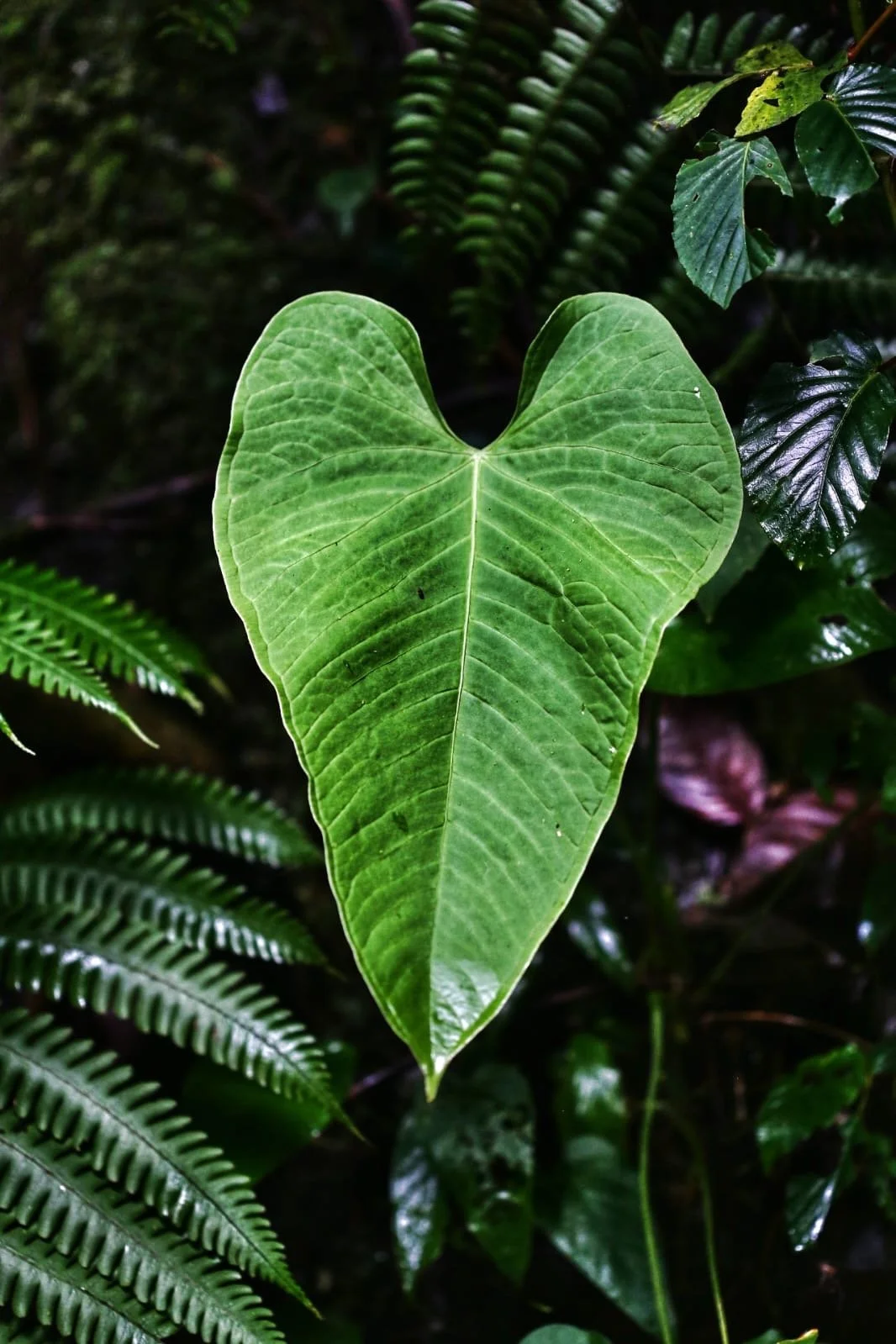
One of the first things that strikes visitors about Boca Brava is just how green it is. This is not an island where the vegetation has been cleared to make space for huge resorts. Much of the landscape remains covered in tropical forest, creating an environment where the jungle feels like the dominant force. Trails disappear into vegetation, enormous trees rise above the forest canopy and vines and plants compete for sunlight. Walking around the island can feel more like exploring a tropical rainforest than visiting a traditional beach destination. The combination of jungle and coastline is particularly spectacular because the two environments meet so abruptly. One moment you can be walking beneath dense vegetation and the next you can emerge toward a beach with the Pacific stretching away in front of you. This constant transition between forest and ocean is one of Boca Brava's defining characteristics.
The wildlife is another major reason to visit. Boca Brava is particularly famous for its monkeys, and hearing or seeing them can be one of the most memorable experiences on the island. Howler monkeys are especially impressive. You may not see them immediately, but you can sometimes hear their deep calls reverberating through the forest, a sound that seems completely disproportionate to the relatively peaceful surroundings. White faced capuchins are also associated with the island and wider region. Watching monkeys move through the canopy gives Boca Brava a distinctly wild character that is difficult to reproduce in a developed beach resort. And monkeys are only part of the story. Tropical birds, reptiles, insects and countless smaller creatures occupy the forest, meaning that almost every walk has the possibility of revealing something interesting. The key is to slow down. Boca Brava is not a place where wildlife necessarily announces itself. Often you need to listen before you see.
The beaches of Boca Brava add another dimension to the island's personality. Rather than having one enormous developed beach surrounded by hotels and restaurants, the coastline offers a collection of different environments. Some beaches are more accessible, while others require walking or arriving by boat. This gives the island a sense of discovery. You can spend part of a day exploring a trail and then find yourself on a quiet stretch of coastline where the only obvious signs of human presence are your own footprints. The beaches can vary considerably depending on tides and weather, which is another reason the Pacific coast feels so dynamic. At low tide, sections of shoreline can become much broader, while at high tide the water moves closer toward the vegetation. Rocks, tidal areas and small coves become more visible as the water changes. Instead of being a static beach destination, Boca Brava constantly changes with the rhythm of the Pacific.
One of the most beautiful experiences on the island can simply be watching the sunset. Unlike Panama's Caribbean islands, where the geography often produces a different relationship with the setting sun, the Pacific coast offers enormous open horizons. As afternoon turns into evening, the island's atmosphere changes. The heat begins to ease, the jungle becomes darker and the ocean takes on different shades as the sun approaches the horizon. From the right viewpoint, the sunset can spread across the entire Pacific, transforming the water and sky into a huge natural panorama. This is one of those moments when Boca Brava feels much farther from civilization than it actually is. There are no skyscrapers, highways or city lights dominating the horizon. There is just forest, ocean and sky.
The island is also an excellent base for exploring the marine environment of the Gulf of Chiriquí. Boat excursions can take travelers into the surrounding waters to explore beaches, islands and marine habitats. The Gulf is known for its extraordinary biodiversity, and the wider region is connected to some of the most important marine protected areas in Panama. Farther west lies Coiba National Park, whose waters are renowned for marine life including dolphins, sea turtles, rays and numerous species of fish. Whale watching can also become a major attraction at the appropriate time of year, as humpback whales migrate through Pacific waters around Panama. A trip around Boca Brava therefore doesn't have to remain on land. The island can be the starting point for exploring a much larger Pacific ecosystem.
The relationship between Boca Brava and Coiba is particularly interesting. Coiba is one of Panama's great natural treasures and is recognized as a UNESCO World Heritage Site. Its long isolation helped preserve remarkable terrestrial and marine ecosystems, and today the surrounding waters are regarded as among the country's most important areas for marine biodiversity. Boca Brava isn't Coiba, and it shouldn't be marketed as though every visitor will automatically experience Coiba's wildlife simply by staying on Boca Brava. But geographically, the two belong to the same broader Pacific world. Staying on Boca Brava gives travelers an opportunity to experience the landscape and atmosphere of the Gulf of Chiriquí while potentially using the island and nearby mainland communities as a base for wider excursions.
What makes Boca Brava particularly appealing to adventurous travelers and backpackers is its atmosphere. It isn't the kind of place where you arrive with a gigantic itinerary and spend every hour rushing between attractions. Instead, the island encourages a slower kind of adventure. You can hike through the forest, look for monkeys and birds, explore beaches, swim where local conditions make it appropriate, take boat trips, watch sunsets and spend evenings talking with other travelers. There is a social side to the island, especially around the accommodations and restaurants, but the social atmosphere doesn't overwhelm the natural environment. That balance is one of its greatest strengths. You can meet other travelers and swap stories about Panama while still feeling that you are staying somewhere surrounded by wilderness.
For backpackers moving through Chiriquí, Boca Brava can be especially appealing because it fits naturally into a broader adventure route. A traveler might spend time in the mountains around Boquete or Volcán, descend toward the Pacific, explore the beaches around the Gulf of Chiriquí and then continue toward other destinations such as Santa Catalina or Panama City. This makes Boca Brava a useful reminder that Chiriquí isn't just about mountains and coffee. The province has an extraordinary geographical range, from high altitude cloud forests and volcanic landscapes to tropical Pacific islands. You can wake up in a cool mountain environment and, after traveling toward the coast, find yourself standing beneath palm trees beside the Pacific.
There is also a fascinating sense of scale on Boca Brava. When you're standing on the island, it is easy to focus on the immediate environment: the trail beneath your feet, the trees overhead and the beach in front of you. But look toward the horizon and the perspective changes. The Gulf of Chiriquí opens out into an enormous Pacific landscape filled with other islands and channels. The mainland looks distant, even though it is relatively close. Small boats move across the water, sometimes appearing tiny against the enormous backdrop. This is part of what makes the island so visually impressive. Boca Brava is large enough to feel like a real wilderness but close enough to civilization that you aren't completely cut off.
The island's name itself adds a little mystery. Boca Brava can roughly evoke the idea of a "wild" or "fierce" mouth in Spanish, and the name feels appropriate for a rugged Pacific island where the ocean and jungle dominate the landscape. Panama is full of place names that reflect aspects of its history, geography or relationship with the natural environment, and Boca Brava sounds particularly fitting once you experience the coastline. The Pacific can be beautiful and calm one moment and powerful the next, while the jungle has an equally untamed personality.
Another reason Boca Brava stands out is that it offers an experience that is increasingly difficult to find in heavily developed tropical destinations: the feeling that nature still controls the island. The jungle isn't simply decoration around a hotel. It is the environment through which you travel. Wildlife isn't confined to a particular attraction. It lives around you. The coastline isn't uniformly engineered. It changes with tides, weather and erosion. This makes the island feel authentic in a way that can be difficult to describe until you've experienced it yourself. You aren't simply looking at tropical scenery. You are moving through a functioning tropical ecosystem.
That doesn't mean Boca Brava is completely untouched or inaccessible. There are accommodations, restaurants, roads and boat services, and the island has become an established destination for travelers. But compared with the heavily developed Pacific resort corridor around Río Hato, Boca Brava has a much more natural character. There is a clear difference between building a resort beside a beach and living within a forested island landscape. On Boca Brava, the vegetation and geography remain central to the experience. The island doesn't need to manufacture an adventure because simply moving through it already feels adventurous.
For travelers interested in photography, Boca Brava is particularly rewarding because the island provides an extraordinary variety of subjects within a relatively small area. Forest trails offer opportunities for wildlife and vegetation photography, while beaches provide expansive ocean landscapes. Boats crossing the Gulf create another layer of movement, and sunsets can produce spectacular skies. Even ordinary moments can look cinematic: a narrow trail disappearing into jungle, a monkey moving through the canopy, fishing boats crossing the horizon or waves breaking against a rocky section of coastline. The trick is not to rush from one photographic opportunity to another. Boca Brava rewards patience, and the best images often come from simply waiting.
The island also demonstrates why Chiriquí's Pacific coast deserves more attention from international travelers. Many visitors to Panama naturally gravitate toward Panama City, Bocas del Toro and San Blas. Those destinations deserve their reputations, but they can sometimes overshadow the enormous diversity of the rest of the country. The Gulf of Chiriquí is an extraordinary alternative for people who want tropical islands without the same level of international tourism. Boca Brava offers jungle, beaches, wildlife and marine adventures while remaining connected to mainland Chiriquí. It is therefore one of those places that can change a traveler's understanding of Panama. You arrive expecting a beach island and discover an ecosystem.
Ultimately, Isla Boca Brava is not spectacular because it has one enormous attraction. It is spectacular because so many different elements exist together. Jungle covers the hills. Monkeys inhabit the forest. Birds move through the canopy. Beaches appear between rocky sections of coastline. The Pacific stretches toward the horizon. Boats move between islands. Whales may pass through the wider region at the right time of year. Sunsets transform the ocean at the end of the day. And after dark, the island becomes a completely different world again, with tropical sounds coming from the forest and the sky opening above you.
That combination is what makes Boca Brava such a compelling destination for anyone looking beyond Panama's obvious highlights. It is adventurous without needing to be extreme, tropical without being completely developed, social without feeling like a party resort and remote without requiring an enormous expedition. Most importantly, it provides a glimpse into the wild Pacific side of Panama, a side defined by enormous ocean horizons, forested islands and an incredible sense of space.
Boca Brava is the kind of island that doesn't scream for attention. It simply sits there in the Gulf of Chiriquí, covered in jungle and surrounded by Pacific water, waiting for travelers curious enough to cross the channel and discover what is on the other side.