
There is a particular moment that happens to many first time visitors to Panama.
You arrive, the weather is beautiful, you are excited, and within a few hours you are sitting outside with a cold drink thinking, This is going to be an amazing vacation.
Then, sometime around dinner, you discover that your shoulders have apparently been replaced by two pieces of burning toast.
Welcome to Panama.
The sun in Panama is not necessarily hotter than the sun you are used to at home. The difference is how much ultraviolet radiation you can receive, particularly because Panama is close to the equator and travelers often spend far more time outdoors than they normally do. The CDC specifically warns travelers that UV exposure can be higher near the equator and that water, sand and other surfaces can reflect additional UV radiation.
And this is why sunscreen in Panama should not be something you remember when your nose has already turned red.
It should be part of the daily routine.
Panama can fool you
One of the biggest problems is that the weather doesn't always look dangerous.
You can have a cloudy day in Panama and think, Excellent. No sunscreen today.
Wrong.
Ultraviolet radiation still reaches you through clouds. You can also receive plenty of UV while hiking through the mountains, sitting on a boat, walking around Panama City or relaxing beneath a palm tree. The CDC specifically notes that UV exposure can occur on cloudy days and that travelers can receive additional exposure from reflected light off water and sand.
This becomes particularly important in places such as Bocas del Toro, where you may spend hours surrounded by water.
The Caribbean is excellent at producing beautiful photographs.
It is also excellent at producing surprisingly pink tourists.
The water is a giant reflector
This is one of the sneakiest things about tropical travel.
You might think you are protected because you are sitting in the water.
You are not.
Water can reflect UV radiation, increasing your overall exposure. Sand can do the same. The result is that a day at the beach or on a boat can deliver a tremendous amount of sun exposure even when you aren't deliberately lying on the beach trying to become a human tortilla.
And boats are particularly deceptive.
There may be a pleasant breeze.
You don't feel sweaty.
You don't feel particularly hot.
Meanwhile your face, shoulders, ears and hands are quietly being cooked.
The breeze is not sunscreen.
You don't need to be a beach person to get burned
This is another Panama surprise.
You can get burned without ever going to the beach.
Hiking around Boquete, climbing Volcán Barú, exploring the rainforest, walking through Casco Viejo, waiting for a bus, sitting at an outdoor restaurant or exploring an island all expose you to sunlight.
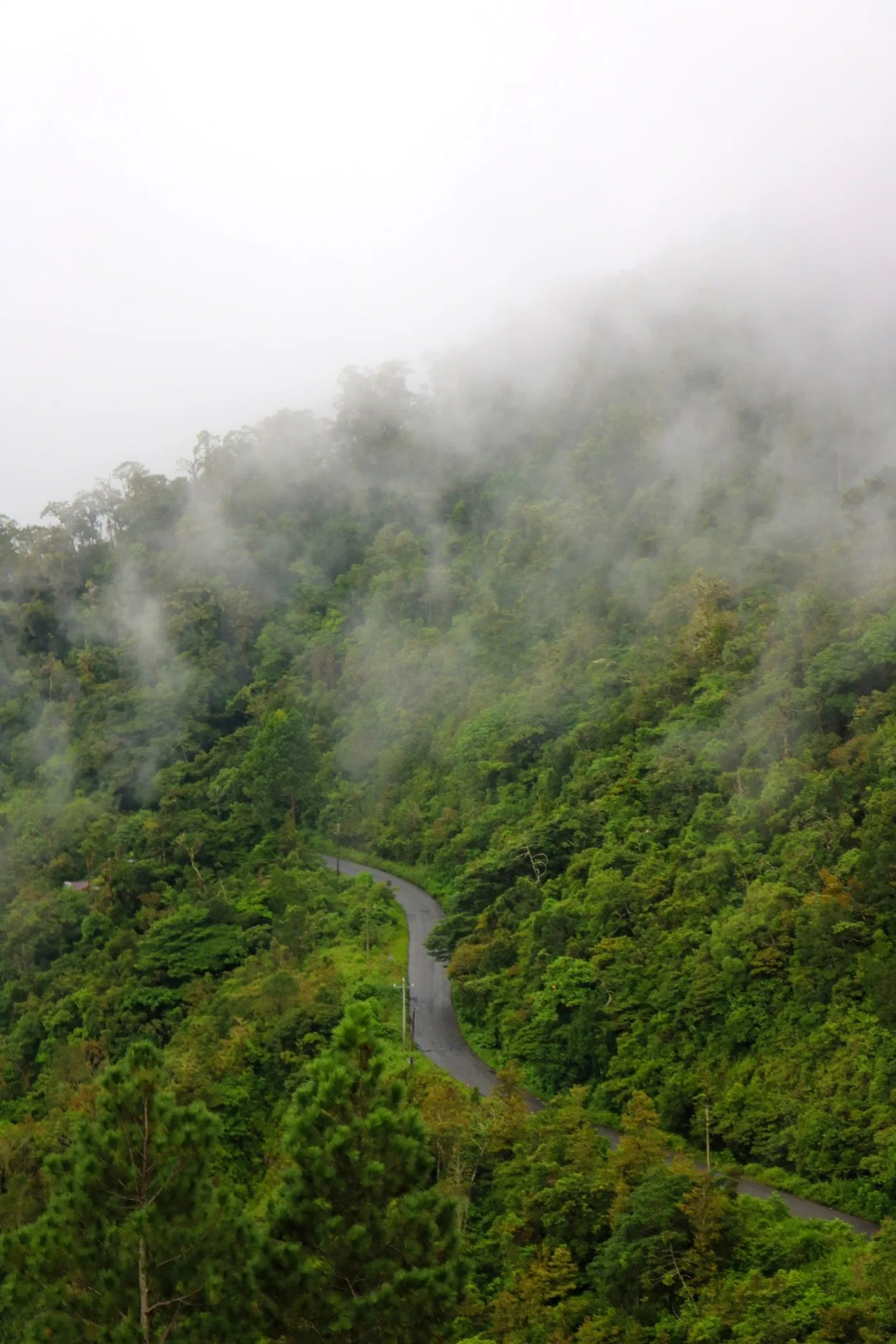
Altitude can also increase UV exposure, which is particularly relevant when you're exploring Panama's mountain regions. The CDC advises travelers to be especially careful with UV exposure at higher elevations as well as in sunny tropical environments.
So the person hiking through the cloud forest with long pants and a backpack may actually be getting more sun exposure than the person sitting under an umbrella on the beach.
Panama is full of these little tricks.
How much sunscreen should you actually use?
This is where people frequently cheat.
They squeeze out a tiny blob, rub it around their face, and declare themselves protected.
Unfortunately, sunscreen doesn't work through optimism.
The CDC recommends applying enough sunscreen to adequately cover exposed skin. For an average adult, approximately one fluid ounce per application is the commonly recommended amount for exposed areas, roughly equivalent to a shot glass.
You should use a broad spectrum sunscreen, meaning it protects against both UVA and UVB radiation. Current CDC travel guidance recommends SPF 30 or higher for travelers.
And don't forget the places that tourists mysteriously forget exist:
Your ears.
The back of your neck.
The tops of your feet.
Your shoulders.
Your hands.
Your lips.
The part in your hair.
The tops of your knees.
And, of course, the classic tourist disaster:
the back.
If you're traveling with friends, you have just discovered one of their most important vacation responsibilities.
Reapply. Seriously.
Putting sunscreen on at breakfast does not give you a magical force field until bedtime.
The CDC recommends reapplying at least every two hours, and more frequently after swimming or heavy sweating. Water resistant sunscreen can help during swimming, but it still needs to be reapplied according to the product's instructions.
This is particularly important in Panama because travelers sweat.
A lot.
You may apply sunscreen at 9 AM, hike for two hours, swim in a waterfall, walk back to your hotel and then spend the afternoon sitting outside.
Your sunscreen has been through a serious career by this point.
Give it a replacement.
Sunscreen isn't your only protection
This is perhaps the most important lesson.
Sunscreen is useful, but it shouldn't be your entire sun protection strategy.
The World Health Organization recommends combining sunscreen with shade and protective clothing rather than treating sunscreen as permission to spend unlimited time in direct sunlight.
A lightweight shirt can protect an enormous amount of skin without requiring you to repeatedly cover yourself in lotion.
A hat protects your face, ears and neck.
Sunglasses protect your eyes.
Shade gives your skin a break.
And sometimes the smartest thing you can do in Panama is simply decide that your lunchtime activity is sitting underneath a roof drinking something cold.
This is not laziness.
This is advanced tropical survival.
The famous 10 AM to 4 PM period
The CDC recommends travelers seek shade and limit direct exposure during the strongest part of the day, roughly 10 AM to 4 PM.
That doesn't mean you have to lock yourself inside your hotel every afternoon.
It means you should be smarter about how you spend those hours.
Have lunch under cover.
Find a shady restaurant.
Wear a hat.
Put on sunscreen.
Take a break from the beach.
Go swimming and then cover up.
Or explore something indoors for an hour.
You don't have to fight the sun.
You can simply stop giving it an easy target.
And don't let clouds fool you
Panama's rainy season creates another classic mistake.
The sky turns grey.
It starts raining.
Everyone stops worrying about sunscreen.
Then the rain stops and the sun comes back out.
But UV exposure isn't controlled by your feelings about the weather.
The CDC notes that UV radiation can reach you even on cloudy days, which is why sun protection shouldn't disappear simply because the sky isn't blue.
This is particularly relevant in Panama because tropical weather can change rapidly.
You might begin a hike under clouds and finish it in blazing sunshine.
Pack the sunscreen.
Your lips are not exempt
People remember their face.
They remember their arms.
They sometimes remember their legs.
And then they completely forget their lips.
The CDC recommends using a lip balm with SPF 30 or higher, because lips have relatively little natural protection from UV radiation.
Sunburned lips are one of those vacation experiences that nobody puts on Instagram.
Mostly because smiling hurts.
Sunscreen and jungle adventures
Panama is not just beaches.
You might spend the morning hiking through rainforest, the afternoon swimming in a river and the evening sitting outside looking for wildlife.
This combination creates a strange sun exposure pattern.
The jungle canopy can provide substantial shade, but you aren't necessarily protected all day. Open sections of trails, river crossings, viewpoints, roads and clearings can expose you to strong sunlight.
And then there are the mountains.
A trip to Boquete or Volcán Barú can involve significant elevation, where UV exposure can increase. The CDC specifically advises extra caution at higher elevations.
So don't make the mistake of thinking:
"I'm going into the mountains, therefore I don't need sunscreen."
The mountain has not agreed to this theory.
What about darker skin?
Another common misconception is that people with darker skin don't need sun protection.
They can still experience UV damage.
The CDC notes that anyone can be affected by harmful UV radiation regardless of skin tone, even though skin cancer is more common in people with lighter skin.
A tan also isn't evidence that your skin is completely protected. The CDC explains that a change in skin colour following UV exposure is a sign of skin injury rather than a sign of healthy tanning.
So whether you burn after ten minutes or turn beautifully golden after several hours, Panama's sun deserves respect.
The sunscreen rule for Panama
If you want a simple system, make it ridiculously easy.
Morning: Apply broad spectrum SPF 30 or higher to exposed skin.
Before the beach: Apply again if necessary, especially if several hours have passed.
Before hiking: Sunscreen, hat and water.
Before getting on a boat: Sunscreen everywhere exposed, including ears and the back of your neck.
After swimming: Reapply according to the product's instructions.
After heavy sweating: Reapply.
During the middle of the day: Look for shade whenever practical.
Every day: Remember that clouds do not mean zero UV.
The CDC's current Panama travel guidance specifically recommends sunscreen, protective clothing and shade, particularly during the hotter part of the day.
And then there is the environment
If you're going swimming, snorkeling or diving, another consideration is what you're putting into the water.
Some sunscreen ingredients have raised environmental concerns, particularly around coral and marine ecosystems. Mineral sunscreens containing zinc oxide or titanium dioxide are an option for travelers who want to avoid certain chemical UV filters, although the environmental impact of sunscreen is complicated and depends on formulation and exposure. The CDC notes that mineral filters such as zinc oxide and titanium dioxide have different environmental considerations from some chemical UV filters.
If you're spending a lot of time around coral reefs, it's worth checking local environmental guidance and choosing a product carefully.
And remember that a rash guard, shirt and shade produce zero sunscreen runoff.
Sometimes the best reef friendly sunscreen is a shirt.
The real secret
The best way to enjoy Panama's sun isn't to avoid it completely.
It's to understand it.
Panama is spectacular precisely because so much of life happens outdoors. You want to hike through jungle, swim in Caribbean water, explore islands, sit on Pacific beaches, watch sunsets, climb mountains and spend evenings outside.
You should absolutely do all of that.
Just don't let the first three days of your vacation turn you into a lobster.
Use sunscreen.
Use shade.
Wear a hat.
Cover up when appropriate.
Protect your eyes.
Drink plenty of water.
And remember that the sun doesn't care whether you're having the best vacation of your life.
Panama's sunshine is one of its greatest attractions. Enjoy it, respect it, and don't let it become the souvenir you take home.