
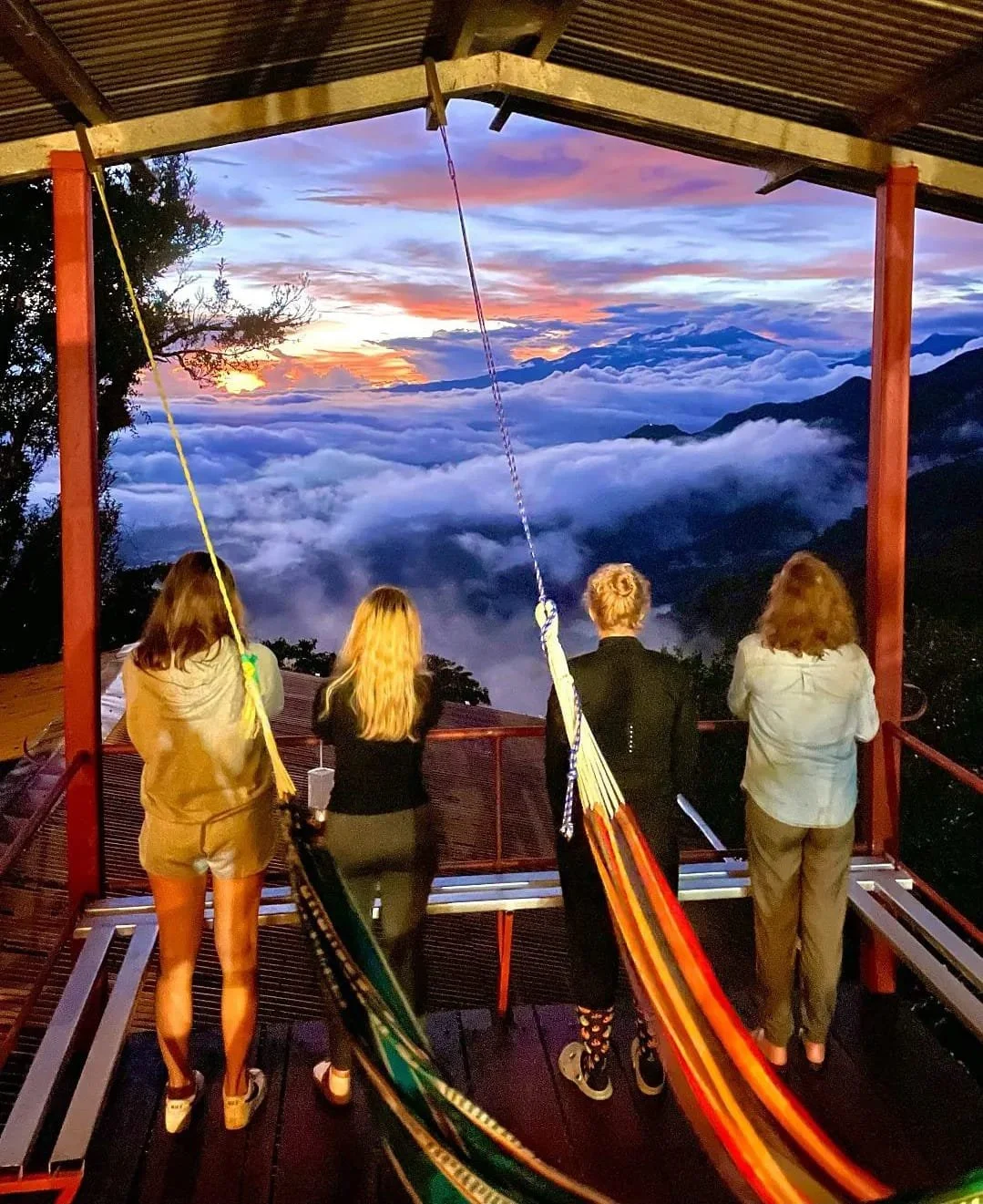
If you are coming to Panama expecting four seasons, you might want to leave your snow boots at home.
Panama does not really have the classic spring, summer, autumn and winter that you find in Canada, Europe or the northern United States. Instead, the country basically has two major seasons: the dry season and the rainy season.
But there is a catch.
Panama is small, but its weather can vary dramatically depending on where you are. The Caribbean coast, Pacific coast, mountains and Panama City can all behave differently on the same day.
So when someone tells you, “It's rainy season in Panama,” that does not necessarily mean you should expect rain all day.
Sometimes it means a spectacular tropical afternoon thunderstorm.
Sometimes it means sunshine for five hours followed by an hour of absolute madness.
And sometimes it means you wake up to rain, have breakfast in the rain, watch the rain disappear, hike in sunshine and then get soaked again five minutes after returning.
Welcome to the tropics. 🌧️
☀️ The Dry Season
Panama's dry season generally runs from around December through April, although the exact timing varies depending on the region.
This is traditionally the most popular time for tourism.
The Pacific side usually gets the most reliable dry weather, particularly around Panama City, the Azuero Peninsula, Playa Venao and Santa Catalina.
You can have long stretches of blue sky, sunshine and very little rain.
For travellers who want beaches, surfing, boat trips, hiking and lots of outdoor activities, this can be a fantastic time to visit.
But there is a price for all that sunshine.
It gets hot.
Very hot.
And dry season doesn't necessarily mean comfortable.
Walking around Panama City in the middle of the afternoon can feel like someone has turned the country into a giant sauna.
On the Pacific coast, the landscape can also become noticeably drier and browner toward the end of the dry season.
The jungle doesn't disappear, of course, but Panama's Pacific side can look surprisingly different in March and April compared with the lush green landscape you see during the wet months.
🌧️ The Rainy Season
The rainy season generally begins around May and continues through November.
And this is where Panama gets interesting.
Rainy season does not necessarily mean miserable weather.
In fact, many travellers love it.
The country becomes incredibly green.
Rivers and waterfalls become more powerful.
Mountains disappear into clouds.
The jungle seems to explode with life.
And the air often feels fresher after a tropical downpour.
A typical rainy season day might look something like this:
Wake up to sunshine.
Have breakfast.
Go hiking.
Swim in a waterfall.
Eat lunch.
Watch some enormous clouds build over the mountains.
Then suddenly...
BOOOOOOM.
Thunder.
Lightning.
Rain coming down so hard you can barely see across the road.
Twenty minutes later, everything is steaming.
And an hour after that, you are sitting outside again watching hummingbirds.
It is one of the great pleasures of tropical travel.
⛈️ The Rain Doesn't Always Last All Day
This is one of the biggest misunderstandings about travelling to Panama during rainy season.
People imagine twelve hours of continuous rain.
That certainly can happen, especially in some mountainous and Caribbean areas, but it is not necessarily the norm.
Rainfall is often episodic, particularly on the Pacific side.
You might get a spectacular downpour in the afternoon and beautiful weather the rest of the day.
The mountains can be different.
In places around Boquete, the cloud forests and Fortuna area, rain and cloud can be much more persistent.
That is part of what creates the incredible lush vegetation.
And if you are staying at a jungle hostel such as Lost and Found, inside Fortuna Forest Reserve, the rain is part of the experience rather than simply something to complain about.
You can watch the forest transform.
Leaves start dripping.
Mist moves through the trees.
Birds become active.
Waterfalls roar.
The whole landscape feels alive.
🌊 The Caribbean Has Its Own Personality
The Caribbean coast doesn't always follow the same weather pattern as the Pacific.
Places such as Bocas del Toro can receive substantial rainfall throughout the year.
That means you shouldn't assume that visiting during Panama's “dry season” guarantees perfect Caribbean weather every day.
Bocas can have beautiful sunshine, tropical showers and completely unpredictable weather.
And strangely enough, that is part of its charm.
A Caribbean shower can appear from nowhere, dump an enormous amount of water onto the island and then disappear as quickly as it arrived.
Five minutes later everyone is back on the beach.
🌿 The Mountains Are Different Again
Panama's mountains have their own microclimates.
This is particularly important for travellers visiting Boquete, El Valle, Santa Fe, the Fortuna area and other higher elevation destinations.
Temperatures are generally cooler than at sea level, and clouds and rain can be much more common.
This is why you can leave a hot tropical beach wearing shorts and arrive somewhere in the mountains wondering why you didn't pack a sweater.
Boquete in particular is famous for its cooler climate.
And at higher elevations, the difference can be dramatic.
Panama is close to the equator, but that doesn't mean the entire country is permanently hot.
Elevation changes everything.
🌡️ What About Winter?
Technically, Panama does have a winter.
But don't get too excited, Canadians.
You won't need a snow shovel.
Panama's “winter” is essentially another way of referring to the rainy season.
The terminology comes from the traditional tropical distinction between a dry summer and a wet winter rather than the four season system used in temperate countries.
So when a Panamanian talks about winter, they may be talking about months when you are expecting Christmas trees, frozen lakes and minus 20 temperatures.
Instead, they're talking about thunderstorms.
Much better.
🌬️ What About Hurricane Season?
Here is another important advantage of Panama's location.
Panama is south of the main Caribbean hurricane belt, so it is not normally exposed to hurricanes in the same way as destinations farther north in the Caribbean.
That doesn't mean Panama is immune from tropical weather.
Heavy rain, strong winds and tropical storms can still affect the country.
But you generally don't have to plan a Panama vacation around the same hurricane risk that you would consider for places such as parts of the Caribbean or Mexico's Yucatán Peninsula.
🦜 Wildlife Can Change With the Seasons
The seasons can also affect what you see in the wild.
During the wetter months, vegetation becomes incredibly productive and rivers and waterfalls can become spectacular.
Bird activity can change throughout the year, and many migratory birds pass through Panama.
The jungle itself can feel completely different.
During dry periods, animals may concentrate around remaining water sources.
During rainy periods, everything can seem to explode with insects, frogs, plants and other forms of life.
For wildlife lovers, there isn't necessarily a “bad” season.
There are simply different experiences.
🏖️ So When Is the Best Time to Visit Panama?
That depends on what you want.
For the most reliable sunshine: December to April is generally the safest bet, especially on the Pacific side.
For lush jungle and spectacular waterfalls: The rainy season can be fantastic.
For lower crowds: Consider travelling outside the busiest dry season.
For surfers: Different Pacific beaches can have different seasonal conditions, so the best month depends on the specific coast and what kind of waves you want.
For hiking: Both seasons have advantages. Dry weather makes trails easier, while rainy season makes the jungle dramatically greener.
For wildlife: Don't automatically assume dry season is better. Panama is a biodiversity powerhouse year round.
🌴 The Secret Is That Panama Doesn't Really Have Two Seasons
It has hundreds of little seasons.
There is the season when the waterfalls are roaring.
The season when the hills turn intensely green.
The season when the Pacific becomes glassy.
The season when the surf gets exciting.
The season when hummingbirds seem to be everywhere.
The season when afternoon thunderstorms become part of your daily schedule.
And then there are the mountains, where the weather can sometimes seem to have completely ignored the national calendar.
That is one of the reasons Panama is such an interesting country to travel through.
You can leave Panama City in blazing sunshine, cross the mountains through thick mist, arrive at the Caribbean under tropical clouds and then find yourself drinking a cold beer beside a beach in the sunshine.
Same country. Same day. Completely different weather.
And that's Panama.
You don't really come here to escape the rain.
You come here to experience the fact that even the rain is an adventure. 🌴🌧️☀️🌴 What Kind of Seasons Does Panama Have?
If you are coming to Panama expecting four seasons, you might want to leave your snow boots at home.
Panama does not really have the classic spring, summer, autumn and winter that you find in Canada, Europe or the northern United States. Instead, the country basically has two major seasons: the dry season and the rainy season.
But there is a catch.
Panama is small, but its weather can vary dramatically depending on where you are. The Caribbean coast, Pacific coast, mountains and Panama City can all behave differently on the same day.
So when someone tells you, “It's rainy season in Panama,” that does not necessarily mean you should expect rain all day.
Sometimes it means a spectacular tropical afternoon thunderstorm.
Sometimes it means sunshine for five hours followed by an hour of absolute madness.
And sometimes it means you wake up to rain, have breakfast in the rain, watch the rain disappear, hike in sunshine and then get soaked again five minutes after returning.
Welcome to the tropics. 🌧️
☀️ The Dry Season
Panama's dry season generally runs from around December through April, although the exact timing varies depending on the region.
This is traditionally the most popular time for tourism.
The Pacific side usually gets the most reliable dry weather, particularly around Panama City, the Azuero Peninsula, Playa Venao and Santa Catalina.
You can have long stretches of blue sky, sunshine and very little rain.
For travellers who want beaches, surfing, boat trips, hiking and lots of outdoor activities, this can be a fantastic time to visit.
But there is a price for all that sunshine.
It gets hot.
Very hot.
And dry season doesn't necessarily mean comfortable.
Walking around Panama City in the middle of the afternoon can feel like someone has turned the country into a giant sauna.
On the Pacific coast, the landscape can also become noticeably drier and browner toward the end of the dry season.
The jungle doesn't disappear, of course, but Panama's Pacific side can look surprisingly different in March and April compared with the lush green landscape you see during the wet months.
🌧️ The Rainy Season
The rainy season generally begins around May and continues through November.
And this is where Panama gets interesting.
Rainy season does not necessarily mean miserable weather.
In fact, many travellers love it.
The country becomes incredibly green.
Rivers and waterfalls become more powerful.
Mountains disappear into clouds.
The jungle seems to explode with life.
And the air often feels fresher after a tropical downpour.
A typical rainy season day might look something like this:
Wake up to sunshine.
Have breakfast.
Go hiking.
Swim in a waterfall.
Eat lunch.
Watch some enormous clouds build over the mountains.
Then suddenly...
BOOOOOOM.
Thunder.
Lightning.
Rain coming down so hard you can barely see across the road.
Twenty minutes later, everything is steaming.
And an hour after that, you are sitting outside again watching hummingbirds.
It is one of the great pleasures of tropical travel.
⛈️ The Rain Doesn't Always Last All Day
This is one of the biggest misunderstandings about travelling to Panama during rainy season.
People imagine twelve hours of continuous rain.
That certainly can happen, especially in some mountainous and Caribbean areas, but it is not necessarily the norm.
Rainfall is often episodic, particularly on the Pacific side.
You might get a spectacular downpour in the afternoon and beautiful weather the rest of the day.
The mountains can be different.
In places around Boquete, the cloud forests and Fortuna area, rain and cloud can be much more persistent.
That is part of what creates the incredible lush vegetation.
And if you are staying at a jungle hostel such as Lost and Found, inside Fortuna Forest Reserve, the rain is part of the experience rather than simply something to complain about.
You can watch the forest transform.
Leaves start dripping.
Mist moves through the trees.
Birds become active.
Waterfalls roar.
The whole landscape feels alive.
🌊 The Caribbean Has Its Own Personality
The Caribbean coast doesn't always follow the same weather pattern as the Pacific.
Places such as Bocas del Toro can receive substantial rainfall throughout the year.
That means you shouldn't assume that visiting during Panama's “dry season” guarantees perfect Caribbean weather every day.
Bocas can have beautiful sunshine, tropical showers and completely unpredictable weather.
And strangely enough, that is part of its charm.
A Caribbean shower can appear from nowhere, dump an enormous amount of water onto the island and then disappear as quickly as it arrived.
Five minutes later everyone is back on the beach.
🌿 The Mountains Are Different Again
Panama's mountains have their own microclimates.
This is particularly important for travellers visiting Boquete, El Valle, Santa Fe, the Fortuna area and other higher elevation destinations.
Temperatures are generally cooler than at sea level, and clouds and rain can be much more common.
This is why you can leave a hot tropical beach wearing shorts and arrive somewhere in the mountains wondering why you didn't pack a sweater.
Boquete in particular is famous for its cooler climate.
And at higher elevations, the difference can be dramatic.
Panama is close to the equator, but that doesn't mean the entire country is permanently hot.
Elevation changes everything.
🌡️ What About Winter?
Technically, Panama does have a winter.
But don't get too excited, Canadians.
You won't need a snow shovel.
Panama's “winter” is essentially another way of referring to the rainy season.
The terminology comes from the traditional tropical distinction between a dry summer and a wet winter rather than the four season system used in temperate countries.
So when a Panamanian talks about winter, they may be talking about months when you are expecting Christmas trees, frozen lakes and minus 20 temperatures.
Instead, they're talking about thunderstorms.
Much better.
🌬️ What About Hurricane Season?
Here is another important advantage of Panama's location.
Panama is south of the main Caribbean hurricane belt, so it is not normally exposed to hurricanes in the same way as destinations farther north in the Caribbean.
That doesn't mean Panama is immune from tropical weather.
Heavy rain, strong winds and tropical storms can still affect the country.
But you generally don't have to plan a Panama vacation around the same hurricane risk that you would consider for places such as parts of the Caribbean or Mexico's Yucatán Peninsula.
🦜 Wildlife Can Change With the Seasons
The seasons can also affect what you see in the wild.
During the wetter months, vegetation becomes incredibly productive and rivers and waterfalls can become spectacular.
Bird activity can change throughout the year, and many migratory birds pass through Panama.
The jungle itself can feel completely different.
During dry periods, animals may concentrate around remaining water sources.
During rainy periods, everything can seem to explode with insects, frogs, plants and other forms of life.
For wildlife lovers, there isn't necessarily a “bad” season.
There are simply different experiences.
🏖️ So When Is the Best Time to Visit Panama?
That depends on what you want.
For the most reliable sunshine: December to April is generally the safest bet, especially on the Pacific side.
For lush jungle and spectacular waterfalls: The rainy season can be fantastic.
For lower crowds: Consider travelling outside the busiest dry season.
For surfers: Different Pacific beaches can have different seasonal conditions, so the best month depends on the specific coast and what kind of waves you want.
For hiking: Both seasons have advantages. Dry weather makes trails easier, while rainy season makes the jungle dramatically greener.
For wildlife: Don't automatically assume dry season is better. Panama is a biodiversity powerhouse year round.
🌴 The Secret Is That Panama Doesn't Really Have Two Seasons
It has hundreds of little seasons.
There is the season when the waterfalls are roaring.
The season when the hills turn intensely green.
The season when the Pacific becomes glassy.
The season when the surf gets exciting.
The season when hummingbirds seem to be everywhere.
The season when afternoon thunderstorms become part of your daily schedule.
And then there are the mountains, where the weather can sometimes seem to have completely ignored the national calendar.
That is one of the reasons Panama is such an interesting country to travel through.
You can leave Panama City in blazing sunshine, cross the mountains through thick mist, arrive at the Caribbean under tropical clouds and then find yourself drinking a cold beer beside a beach in the sunshine.
Same country. Same day. Completely different weather.
And that's Panama.
You don't really come here to escape the rain.
You come here to experience the fact that even the rain is an adventure. 🌴🌧️☀️