
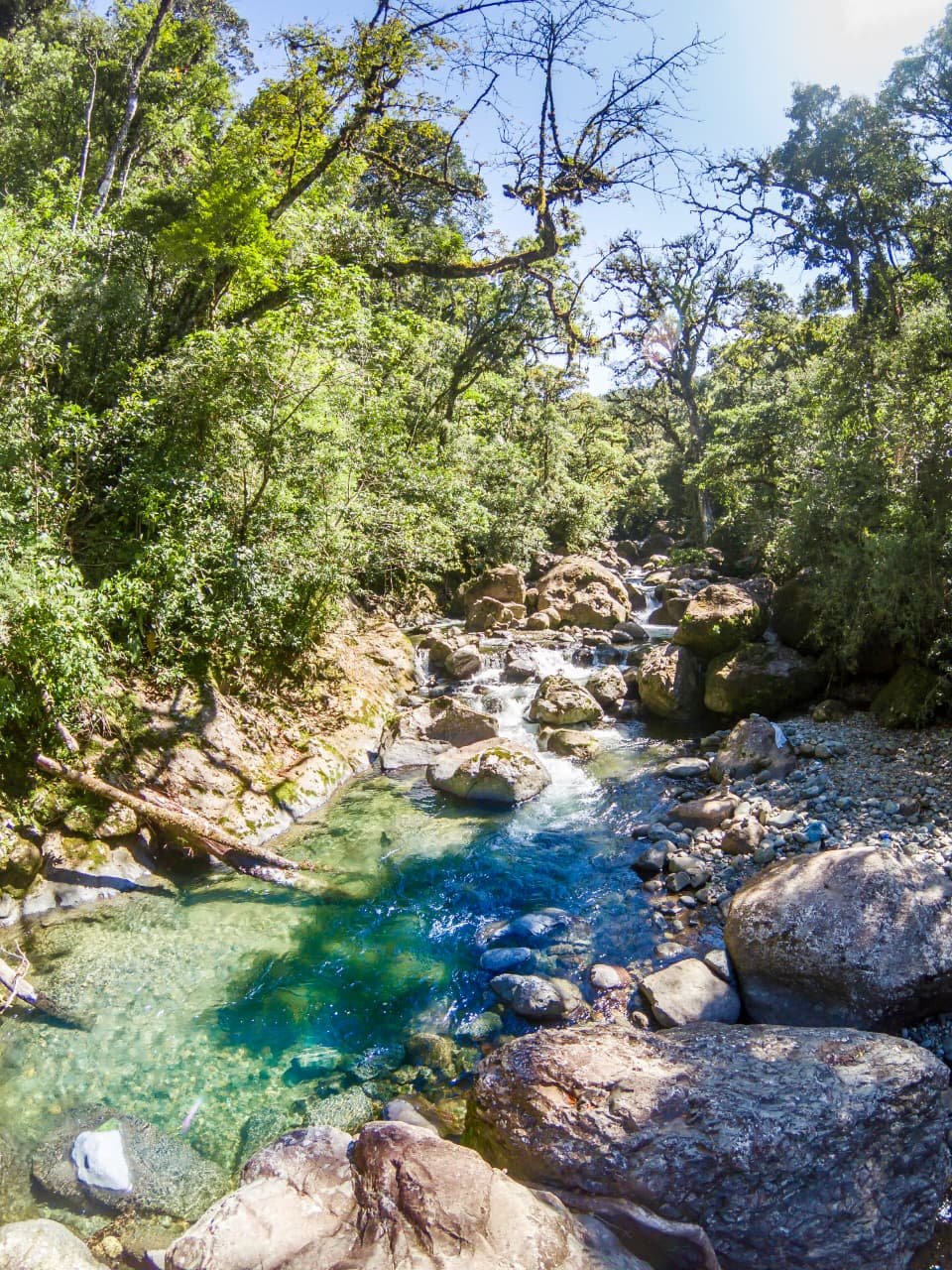
Traveling between Bocas del Toro and Boquete is one of those journeys where the map makes it look much easier than it actually is. The two destinations are relatively close, but they sit in completely different worlds. Bocas is Caribbean islands, water taxis, beaches and backpackers. Boquete is cool mountain air, coffee, rivers and cloud forest. Between the two is a spectacular stretch of Panama that climbs through the mountains and eventually drops toward the Caribbean coast.
After looking at how travelers actually make this trip, there are really two sensible approaches. You can piece the journey together yourself using the local buses and water taxis, which is the cheapest and most independent option, or you can use one of the shared tourist shuttles, which costs more but takes a lot of the headache out of the journey. There is also a third option that I think backpackers should seriously consider: don't do the journey in one shot at all. Stop halfway at Lost and Found Hostel in the Fortuna Forest Reserve.
That last option is particularly interesting because Lost and Found isn't some huge detour you have to make just to visit a tourist attraction. The hostel sits directly along Highway 10 between the David area and the Caribbean side of Panama, making it a natural stopping point between Boquete and Bocas.
Doing it the local way
The local transportation option is the classic backpacker adventure. It involves more than one vehicle, but it is inexpensive and gives you a much better feel for how people actually move around western Panama.
If you're starting in Bocas, the first step is getting off Isla Colón. You take a water taxi from Bocas Town to Almirante on the mainland. The boat crossing is relatively short, and once you arrive in Almirante you are suddenly back in the world of buses and highways.
From Almirante, you catch a bus heading toward David. This is where it gets interesting because the bus travels through the mountains and along the same general route that connects the Caribbean side with the Chiriquí highlands. You can continue all the way to David and then take a local bus from David up to Boquete.
It's not glamorous.
It's not particularly complicated either.
And for a lot of backpackers, that's exactly the point.
You are not being picked up in a shiny tourist van, driven from hotel door to hotel door and insulated from everything happening outside the windows. You're sitting on a local bus with people who actually live in the region, watching the landscape change as you cross Panama.
The downside is that you have to pay attention. You need to know where you're going, keep an eye on your luggage and allow some extra time for connections. Panama's buses are generally straightforward once you understand the system, but you shouldn't expect Swiss railway precision.
Why the local bus can actually be fun
There is something satisfying about figuring this route out yourself.
You arrive at a bus terminal, find the right bus, throw your backpack underneath or beside you and climb aboard. You don't necessarily know exactly what the next three hours are going to look like. Then the road starts climbing and the scenery gets increasingly dramatic.
The route between the Caribbean and the Chiriquí highlands is one of those journeys where you can watch the geography change in front of you. Tropical lowlands become mountains, the vegetation changes and the temperature gradually starts feeling different.
And then there are the little moments that don't happen on organized tours. Getting off to buy something to eat. Talking to another passenger. Asking the driver where to get off. Watching local life pass outside the window.
For someone who enjoys independent travel, those experiences are part of the fun.
But the local option takes more energy
There is a catch.
After spending several days in Bocas, possibly swimming, snorkeling, partying and carrying your backpack around in tropical humidity, the idea of multiple transportation connections can suddenly sound less romantic.
You have to get to the water taxi.
Then get across to Almirante.
Then find the bus.
Then travel toward David.
Then connect toward Boquete.
Then get yourself to your accommodation.
None of those individual steps is particularly difficult. It's the accumulation of them that can become tiring.
And if you're carrying a huge backpack, a daypack and a bunch of wet clothes, you may eventually find yourself thinking that saving a few dollars wasn't quite as important as you thought it was.
This is where the shuttle starts making sense
Shared shuttles are basically designed for exactly this journey.
Instead of figuring out each individual piece, you book a transfer and let the company coordinate the road portion and the connection to Bocas.
It's more expensive than using public transportation, but it is considerably easier.
You don't have to stand around wondering which bus you're supposed to catch next. You don't have to keep asking where the next terminal is. You don't have to constantly watch the clock to make sure one connection doesn't throw off the rest of your day.
You basically get into the van and let somebody else deal with it.
Current shuttle services operating between Boquete and Bocas advertise shared transfers that combine the road journey with the Bocas water taxi connection.
For backpackers who are moving through Panama relatively quickly, that convenience can be worth paying for.
The shuttle isn't necessarily just for lazy travelers
There is sometimes a strange backpacker mentality that says taking a shuttle means you're not "really" backpacking.
That's nonsense.
Backpacking isn't a competition to see who can spend the longest time sitting at bus terminals.
If you have been traveling for a month, have a big backpack, are tired, and want to spend your day looking out the window instead of figuring out which bus you need next, there is nothing wrong with paying for convenience.
The question is simply what you value more.
If your priority is spending as little as possible, take the local transport.
If your priority is saving time and hassle, take the shuttle.
And then there is the Lost and Found option
This is the option I think a lot of travelers overlook.
Instead of treating the journey between Boquete and Bocas as one long transportation day, you can break it into two smaller journeys and spend a night or two in the middle at Lost and Found Hostel.
The route becomes:
Boquete to Lost and Found to Bocas del Toro
instead of:
Boquete to Bocas del Toro
Or you can do it in the opposite direction:
Bocas to Lost and Found to Boquete
Lost and Found is located in the Fortuna Forest Reserve on Highway 10, right along the route between the Chiriquí highlands and the Caribbean side. The hostel's current directions specifically describe it as being on the route between Bocas, Boquete, David and other destinations in western Panama.
This means you don't have to make some giant detour to visit it.
You are already going that way.
Why stopping there changes the journey
The interesting thing about Lost and Found is how dramatically different it feels from both ends of the trip.
Boquete is mountain town Panama. It's coffee, cooler temperatures, restaurants, rivers and highland scenery.
Bocas is Caribbean Panama. It's boats, beaches, snorkeling, tropical humidity and nightlife.
Lost and Found is something completely different again.
You leave the highway and walk up through the forest to the hostel. The traffic disappears behind you, and suddenly you're surrounded by cloud forest and jungle. The hostel's location is deliberately off the beaten track, even though it sits surprisingly close to one of the main routes through the region.
Instead of spending an entire day sitting in buses, you can turn the middle of the journey into an actual destination.
You can stay for a night.
Or two.
Or, as happens rather frequently with backpackers, you can stay longer than you intended.
You can do the Lost and Found stop with public transport
This isn't just an option for people taking shuttles.
If you're traveling from Bocas using local transportation, you can take the water taxi to Almirante and then take the David bound bus. Tell the driver that you're getting off at Lost and Found. The hostel says drivers on this route know the stop and will drop you near the trail leading up to the property.
Coming from David, you can take the bus heading toward Changuinola or the Bocas area and ask to get off at Lost and Found.
The hostel currently lists the local bus from David at around $3.00 to $3.50 and the journey at roughly an hour and a half, while its directions from Bocas via Almirante put the journey to the hostel at around three and a half hours and approximately $8.50. Prices and schedules can change, so these are best treated as current guide figures rather than guarantees.
There is one important detail: you have to get off at the right place.
Don't just assume the driver will magically know what you're doing. Tell them clearly that you're going to Lost and Found Hostel. The hostel also advises travelers to arrive in daylight because the final approach involves an uphill walk from the highway.
You can also make the stop with a shuttle
This is probably the easiest version.
Several shuttle services traveling between Bocas and Boquete can arrange a stop at Lost and Found. The hostel specifically recommends confirming the stop when booking rather than assuming the driver will automatically stop there.
This gives you a really nice compromise.
You don't have to deal with several local buses, but you also don't have to spend your entire day sitting in a van going directly from one tourist destination to another.
You can simply say, "I'm getting off at Lost and Found."
Your backpack comes out.
You walk up into the forest.
And your transportation day is over.
The three options in real life
If you're a hardcore budget backpacker, the local bus route is the obvious choice.
It's cheap, independent and gives you a more authentic experience. You need to be comfortable with a little uncertainty, but that's usually part of the fun.
If you're traveling with a lot of luggage, have limited time or simply don't want to spend half your day managing connections, the shuttle is the better option.
And if you have a few extra days available, I would seriously consider breaking the journey at Lost and Found.
That third option gives you something neither of the other choices provides: another adventure in the middle of the journey.
What about doing Lost and Found for just one night?
Absolutely.
You don't necessarily need three or four days.
Even one night breaks up the trip nicely.
You can arrive during the afternoon, settle in, explore the property and surrounding trails, have dinner, meet other travelers and wake up in the cloud forest.
Then after breakfast, you continue toward Bocas or Boquete.
Instead of remembering the day as "the day I spent traveling," you remember it as "the day I went from the Caribbean into the cloud forest."
That's a much better travel story.
Two nights is even better
If you have the time, two nights gives you enough breathing room to actually experience the place.
You can hike, look for wildlife, explore the forest, relax in the hammocks and meet other backpackers.
Then you continue your journey without feeling like you've simply stopped at a roadside hotel.
And because the hostel is positioned along the route, you don't have to backtrack toward Boquete or Bocas just to continue traveling.
Which direction is better?
Honestly, both are great.
Bocas to Lost and Found to Boquete is a fantastic way to transition from Caribbean heat into the mountains. You start with beaches and boats, move through tropical jungle and cloud forest, and eventually reach the cooler highlands around Boquete.
Boquete to Lost and Found to Bocas works equally well in reverse. You begin with cool mountain air and coffee country, spend a couple of nights deep in the cloud forest, and then descend toward the Caribbean before finishing the journey with a water taxi into Bocas.
The contrast is what makes it so good.
My recommendation for different types of travelers
If you're broke and have lots of time, take the local buses.
If you're traveling quickly and want the easiest possible journey, take the shuttle.
If you're traveling solo and want to meet people, either option works, but a social hostel stop at Lost and Found can turn the journey into another memorable part of your trip.
If you're carrying a huge backpack, take the shuttle or arrange a shuttle with a Lost and Found stop.
If you want to experience Panama rather than simply move through it, take the local transportation at least once.
And if you have two or three spare days, stop at Lost and Found.
The biggest mistake is rushing
The biggest mistake isn't choosing the wrong bus.
It isn't paying too much for a shuttle.
It's thinking that the journey is just something you have to get through.
Western Panama is incredibly diverse. In a relatively short distance you can go from Caribbean islands to tropical lowlands, through cloud forest and into the mountains around Boquete.
That's an amazing journey.
Why sit in a van staring at the clock when you can turn the middle of it into another destination?
For a backpacker, I'd look at it this way: Bocas and Boquete are the two big destinations, but Lost and Found is the wild card in between.
And sometimes the wild card ends up being the place you remember most.