
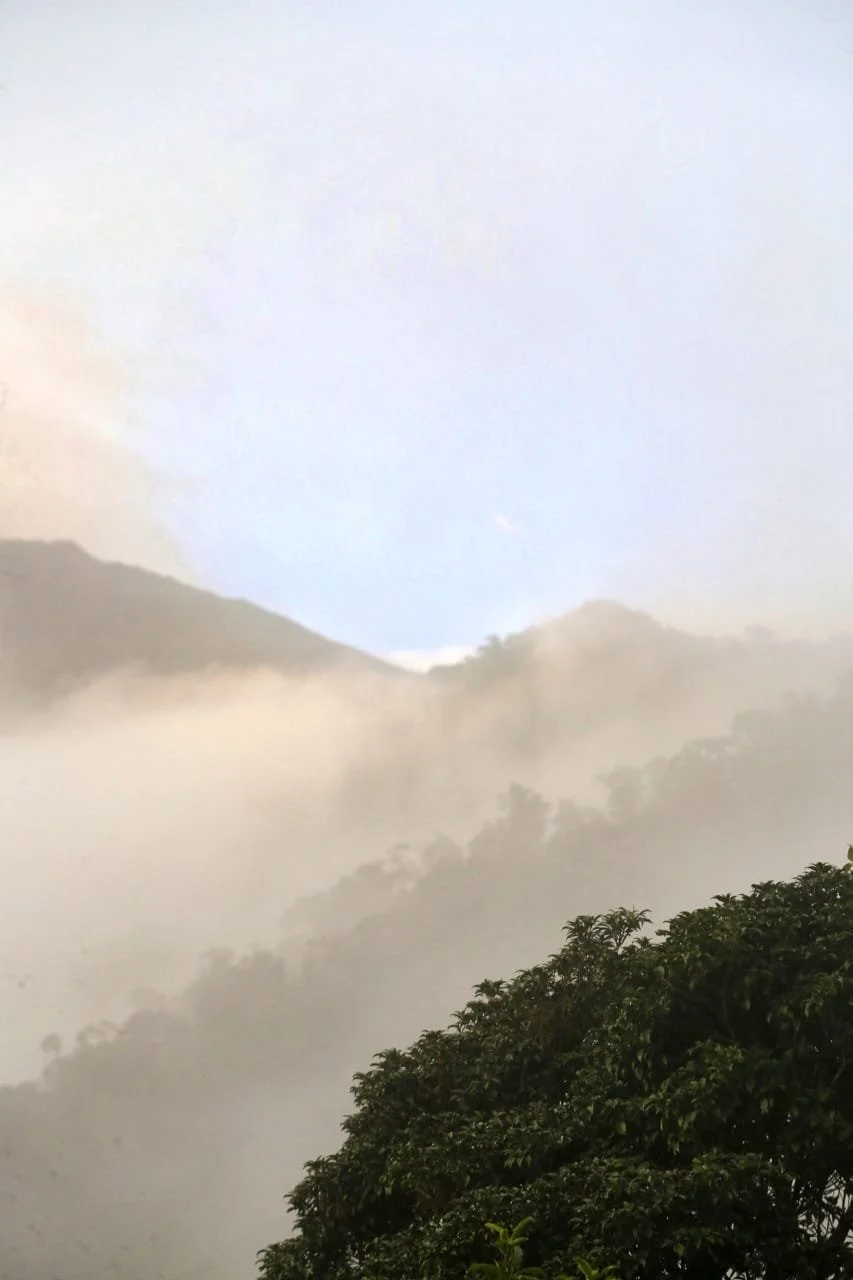
Panama is one of those countries where you can walk into a rainforest without knowing exactly what you are going to see. You might encounter a sloth hanging motionless above the trail, a hummingbird hovering beside your head, a toucan disappearing into the canopy or a tiny frog sitting beside a stream. But among Panama’s wildlife, monkeys have a special ability to turn an ordinary walk into a memorable adventure.
Three of the monkeys backpackers are most likely to encounter are howler monkeys, Geoffroy’s spider monkeys and white faced capuchins. They may all live in the same tropical forests, but they have developed remarkably different ways of surviving. One is famous for a voice that can shake the forest, another is an aerial gymnast with a powerful prehensile tail, and the third is an extraordinarily intelligent opportunist that has learned to use tools.
Put the three together and you get a fascinating lesson in how different animals can occupy completely different niches within the same rainforest.
The Howler Monkey: The Voice of the Jungle
You often hear a howler monkey before you ever see one.
In fact, the first time many travelers hear a howler monkey in Panama, they have absolutely no idea what is making the noise. The sound can be deep, guttural and surprisingly powerful, seeming much too large for the relatively modest sized animal sitting somewhere high in the trees.
Howler monkeys have a specialized vocal anatomy that allows them to produce exceptionally loud calls. Their enlarged hyoid bone acts as a resonating chamber, essentially giving the animal a built in amplifier.
The sound can travel enormous distances through the forest.
And there is a reason for all that noise. Howling helps groups communicate across the forest and advertise their presence to neighboring groups. Instead of constantly wandering around looking for other monkeys, they can essentially shout their location.
It is one of the great sounds of a tropical rainforest.
You might be sitting quietly at a hostel in the mountains of Panama when suddenly the entire forest seems to erupt into a deep roar. There is no giant predator coming through the trees. There is no mysterious jungle monster.
It is probably a group of monkeys having a conversation.
Howler Monkeys Are Surprisingly Lazy
One of the most interesting things about howler monkeys is that they are not particularly interested in running around all day.
And there is a very good biological reason.
Howler monkeys eat a large amount of leaves. Leaves are abundant, but they are relatively low in energy and can be difficult to digest. Their digestive system is adapted to extracting nutrients from this kind of food, but the energy budget still matters.
So howler monkeys have evolved a relatively economical lifestyle.
They spend significant amounts of time resting and feeding rather than constantly traveling through the forest.
This is one of the biggest differences between them and spider monkeys.
A howler monkey might sit quietly in a tree chewing leaves while a spider monkey is covering huge distances through the canopy searching for fruit.
The howler's strategy is basically:
Find food. Eat food. Rest. Make a lot of noise. Repeat.
It sounds like a pretty good life.
Their Tails Are Important Too
Howler monkeys have long, strong tails that can help them move through the canopy and maintain balance. Their tails are not quite as specialized for suspension as those of spider monkeys, but they are still extremely useful in an arboreal environment.
They spend most of their lives above the ground, where the canopy provides food, shelter and protection.
Their hands and feet are adapted for gripping branches, allowing them to move around the treetops without needing to descend to the forest floor very often.
That is an important survival advantage in a rainforest filled with predators.
---
The Spider Monkey: Panama’s Aerial Acrobat
If howler monkeys are the loud voices of the rainforest, spider monkeys are the Olympic gymnasts.
Watching a spider monkey move through the canopy can make you wonder why humans ever bothered inventing bridges.
Geoffroy's spider monkeys have extremely long arms and legs and one of the most impressive adaptations in the monkey world: a prehensile tail.
Their tail essentially works like a fifth limb.
The underside near the tip has a sensitive gripping surface, allowing the monkey to hold onto branches with remarkable strength and precision.
A spider monkey can reach out with its arms while using its tail to stabilize itself. It can hang from a branch, swing across gaps and move through the canopy with astonishing speed.
It is difficult to appreciate just how good they are at this until you actually watch one.
A spider monkey can seem to disappear from one tree and reappear in another several meters away without ever coming close to the ground.
Why Spider Monkeys Need Big Forests
Their incredible mobility is connected to their diet.
Spider monkeys are heavily dependent on fruit, particularly ripe fruit found throughout the forest canopy. Fruit is nutritious, but it is not necessarily available everywhere at the same time.
That means spider monkeys have to travel.
A lot.
Research in Panama has shown that spider monkeys can travel substantially farther each day than howler monkeys and capuchins. Their large daily movements are connected to the way they search for food.
This makes large, connected forests especially important for them.
A spider monkey is not simply looking for one tree.
It may need an enormous area of forest to find enough fruit to support the group.
That also explains why seeing a spider monkey can sometimes require more patience than spotting a howler or capuchin.
They can move through an enormous area of canopy, and they are often high above you.
---
Spider Monkeys Have a Fascinating Social Life
Spider monkey societies are also unusual.
Rather than traveling around as one huge, permanent group all the time, they often use a social system known as fission fusion.
The larger community can split into smaller temporary groups and later come back together.
This means you might see several spider monkeys traveling together one day and a completely different combination of individuals later.
The social structure is flexible.
Food availability plays an important role in how they organize themselves.
When food is abundant, groups can come together. When resources are spread out, smaller groups can travel independently.
This is another example of how rainforest animals adapt their behavior to an environment where food availability constantly changes.
---
The White Faced Capuchin: The Little Genius
And then there is the white faced capuchin.
If howler monkeys seem relaxed and spider monkeys seem like professional acrobats, capuchins are the mischievous problem solvers of the rainforest.
They are highly intelligent, curious and adaptable.
They are also extremely expressive.
A group of capuchins can seem almost comically busy compared with a group of howlers. They investigate things, search for food, manipulate objects and constantly interact with one another.
They are opportunistic feeders and can eat fruit, insects, seeds, flowers, eggs and various small animals.
This flexible diet gives them an important advantage.
If one food source disappears, they can switch to something else.
That adaptability helps explain why capuchins can live in a wider variety of habitats than some of the more specialized monkeys.
---
The Tool Using Monkeys of Panama
This is where capuchins become particularly fascinating.
Some white faced capuchins in Panama have been observed using tools.
One of the most extraordinary examples comes from Jicarón Island in Coiba National Park, where researchers have documented capuchins using stones to process food.
Tool use is not simply a cute trick.
It demonstrates an ability to understand objects, manipulate them and use them to achieve a particular result.
And the story gets even stranger.
Researchers studying the capuchins of Jicarón recorded young males carrying baby howler monkeys. The behavior was unusual enough to attract considerable scientific attention, particularly because it appeared to spread among young males.
Scientists are still working to understand exactly why this behavior occurred.
What makes it particularly interesting is the possibility that the behavior was socially transmitted.
In other words, one monkey may do something unusual, another monkey observes it, and the behavior subsequently becomes part of the group's repertoire.
That gives us a fascinating glimpse into how animal traditions can develop.
---
Capuchins Are Extremely Curious
Spend enough time around wild capuchins and you may notice something else.
They seem interested in everything.
A branch moving?
Investigate it.
A strange object?
Investigate it.
Another animal?
Investigate it.
A human standing underneath the tree?
Definitely investigate it.
This curiosity is useful in an environment where food can be hidden almost anywhere.
Capuchins have nimble hands and excellent coordination. They can turn over objects, open things, search inside holes and manipulate food in ways that many other animals cannot.
They are essentially little rainforest problem solvers.
And sometimes that intelligence can get them into trouble.
---
Three Monkeys, Three Different Diets
One of the easiest ways to understand the differences between these three species is to look at what they eat.
Howler monkeys specialize heavily in leaves and other plant material.
Spider monkeys are strongly associated with fruit and other high energy foods.
White faced capuchins are opportunistic omnivores that can eat an enormous variety of foods.
That produces three completely different lifestyles.
The howler can remain relatively stationary because leaves are widely available.
The spider monkey needs to travel through large areas looking for scattered fruit.
The capuchin can constantly investigate different food possibilities.
Their diets therefore influence not only what they eat, but where they go, how far they travel and how they interact with their environment.
---
Which One Is Easiest to Spot?
There is no universal answer because it depends on the location, habitat and time of day.
Howlers have one enormous advantage:
They announce themselves.
Even if you cannot see them, their calls may reveal that a group is nearby.
White faced capuchins are often easier to observe because they are active and inquisitive. If a group is moving through an area, they can be surprisingly conspicuous.
Spider monkeys can be more challenging because they spend so much time high in the canopy and may travel considerable distances.
And sometimes the biggest clue is simply a branch moving far above your head.
---
Which One Is the Most Impressive to Watch?
That depends entirely on what fascinates you.
If you want sound, the howler wins.
If you want athletic ability, the spider monkey is extraordinary.
If you want intelligence and behavior, the capuchin is hard to beat.
A howler can make the entire forest vibrate with its call.
A spider monkey can swing through the canopy using its tail like a fifth arm.
A capuchin can pick up a stone, manipulate an object and figure out how to get at food that another animal cannot reach.
They are three completely different evolutionary solutions to life in the rainforest.
---
Panama's Forest Is Their Highway, Kitchen and Home
There is another reason these monkeys are so fascinating for travelers.
When you see them, you are not simply seeing an animal sitting in a tree.
You are seeing an entire ecosystem in action.
The canopy is their highway.
The leaves and fruit are their supermarket.
Tree cavities and dense vegetation provide shelter.
The branches are their playground.
And predators are constantly part of the equation.
For a spider monkey, the forest canopy is essentially a three dimensional world. It can move vertically, horizontally and diagonally through the trees in ways humans simply cannot.
For a capuchin, almost every part of the forest may contain something worth investigating.
For a howler, a few productive trees can provide enough food to allow the group to remain in one area for considerable periods.
---
The Forest Sounds Different When You Know Who Is Making the Noise
One of the best things about traveling through Panama is that eventually you begin to recognize the soundtrack.
A strange deep roar comes from the forest?
Probably a howler.
Branches shaking high above you?
Maybe spider monkeys.
A group of small monkeys moving rapidly through the trees and making a tremendous amount of noise?
Could easily be capuchins.
And once you learn the differences, a rainforest walk becomes much more interesting.
You stop simply walking through the jungle.
You start listening to it.
You begin looking for movement in the canopy instead of just staring at the trail.
You notice fruit trees.
You look for tracks.
You recognize calls.
You realize that the forest that seemed quiet when you arrived was actually incredibly busy.
---
The Best Monkey Encounter Is Usually the Unexpected One
For backpackers, seeing monkeys in Panama doesn't have to mean booking an expensive wildlife expedition.
Some of the best encounters happen unexpectedly.
You might be hiking toward a waterfall when a group of capuchins suddenly crosses the canopy.
You might be relaxing at a jungle hostel and hear an enormous chorus of howlers at sunrise.
You might be walking along a forest trail when a spider monkey swings across the trees above you.
Those moments are often more memorable than anything carefully planned.
And the longer you spend in Panama's forests, the more you realize that wildlife watching isn't really about collecting photographs.
Sometimes you see the animal.
Sometimes you only hear it.
Sometimes you see a branch moving.
Sometimes you find footprints.
Sometimes you discover a pile of fruit that has clearly been opened by something with very clever hands.
And sometimes you spend two hours looking for a monkey that was probably watching you the entire time.
---
Three Monkeys That Tell Three Completely Different Stories
The howler monkey represents efficiency. It has a low energy diet, spends considerable time resting and has evolved one of the loudest voices in the rainforest.
The spider monkey represents movement. Its long limbs and remarkable prehensile tail allow it to travel through the canopy with extraordinary agility, while its fruit based diet pushes it to cover large areas of forest.
The white faced capuchin represents intelligence and adaptability. It can eat almost anything, investigate its surroundings, learn from others and, in some populations, use tools.
And that is what makes Panama's monkeys so fascinating.
They may occupy the same rainforest, but they aren't competing to do the same thing. Each has evolved its own strategy for surviving in an incredibly complicated environment.
So the next time you are walking through a Panamanian forest and hear a strange sound above you, stop walking and look up.
You might find a howler watching from a branch.
You might see a spider monkey swinging through the canopy.
Or you might meet a white faced capuchin staring directly back at you as if it is trying to figure out exactly what you are doing in its forest.
In Panama, you are never really alone in the jungle. You just don't always know who is watching.