
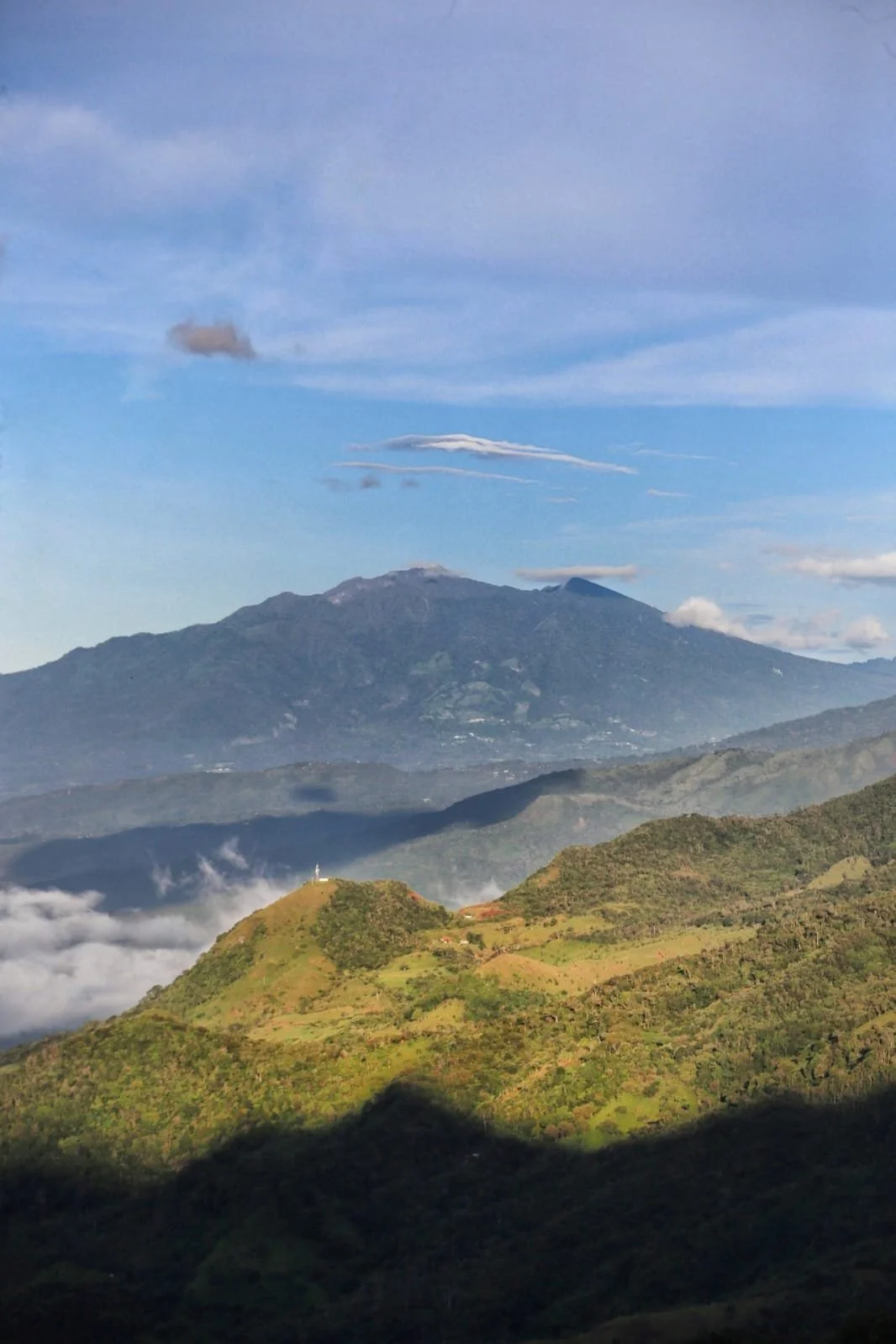
Panama is famous for the Panama Canal, tropical beaches, cloud forests and islands, but there is another side of the country that becomes fascinating once you start looking at what is actually growing in the soil. Coffee and cacao are two of Panama’s most interesting agricultural products, and together they tell a story about altitude, climate, Indigenous communities, small farms, rainforest ecosystems, international trade and the growing demand for high quality food.
What makes the story particularly interesting is that coffee and cacao like almost opposite ends of Panama’s tropical landscape. Panama’s specialty coffee is strongly associated with the cool, mountainous highlands, particularly around Boquete, Volcán and Renacimiento. Cacao, on the other hand, is especially important in the hot and humid Caribbean lowlands, with Bocas del Toro being by far the most important cacao producing province. Panama therefore has something rather unusual: within a relatively small country, you can travel from misty mountain coffee plantations to steamy tropical cacao farms in a matter of hours.
Coffee in the Panamanian highlands
Coffee farming in Panama is strongly connected to elevation. The highlands of Chiriquí provide cooler temperatures and mountain conditions that are particularly suitable for specialty coffee. Boquete, Volcán and Renacimiento are the principal areas associated with high quality Arabica production, and Panama has become internationally known for exceptional coffees, particularly Geisha. Other varieties grown in the country include Catuai, Caturra, Maragogype, Pacamara and Mundo Novo.
The landscape around a Panamanian coffee farm can be spectacular. Instead of the flat plantations that many people imagine when they hear the word agriculture, you can find coffee growing on steep mountain slopes surrounded by forest, mist and enormous views. Shade trees can form part of the growing environment, while streams, birds and other wildlife are often part of the same agricultural landscape.
Coffee farming is also much more complicated than simply planting coffee trees and waiting for beans to appear. The cherries have to be harvested, processed and dried carefully, and the quality of the final coffee can depend on what happens at every stage. This is one reason Panama’s best coffee can command very high prices on international specialty markets.
The famous Geisha story
Panama’s coffee reputation has become particularly associated with Geisha, a variety that has become famous among specialty coffee buyers and enthusiasts. Its association with Panama, especially the Boquete area, has helped put the country on the map of the international specialty coffee industry.
But it is important not to reduce Panamanian coffee to Geisha. There are many other varieties and producers, and coffee farming is an important livelihood for communities far beyond the farms that receive international attention.
The Food and Agriculture Organization has described coffee as a crop of major cultural, economic and environmental significance for Panama and has included it in its “One Country, One Priority Product” initiative.
Coffee farming is also a human story
Behind the famous expensive coffees are thousands of people doing much less glamorous work. Coffee has long provided income for Indigenous communities in Panama, and projects supported by organizations including FAO, the Inter American Development Bank and Panama’s agricultural authorities have worked with Indigenous producers to improve production, processing, sustainability and access to markets.
One FAO project trained more than 150 Indigenous coffee farmers from Guna, Ngäbe, Emberá and Wounaan communities in sustainable agricultural practices. The project emphasized improving quality and resilience while maintaining traditional knowledge.
This is an important part of understanding Panamanian coffee. It is not simply about expensive beans sold to wealthy international coffee drinkers. Coffee can also provide a source of income and economic opportunity for small farming communities.
Then there is cacao
If coffee belongs to the mountains, cacao has a particularly strong connection with Panama’s humid Caribbean side.
Bocas del Toro is the country's great cacao region. Government sources identify Bocas del Toro, the Ngäbe Buglé Comarca and Costa Arriba in Colón among the principal cacao growing areas, with Bocas del Toro accounting for the overwhelming majority of national production according to recent MIDA figures.
The difference in landscape is dramatic. Instead of cool mountain air and coffee plants growing on slopes, you can find cacao trees growing in hot, incredibly humid environments surrounded by tropical vegetation.
And cacao is a particularly interesting crop because it can be grown as part of an agroforestry system rather than as a completely open plantation. Research from Panama's agricultural innovation institute describes cacao farms in Bocas del Toro where cacao is grown alongside timber and fruit trees, bananas and plantains. Many small producers use organic or agroforestry systems.
Cacao farming in Bocas del Toro
The scale of cacao production in Bocas del Toro is significant. MIDA reported in 2025 that more than 5,000 hectares were planted with cacao in the province and that around 2,300 independent producers were involved, representing approximately 99.3 percent of Panama's national production at that time.
But the industry is not simply a collection of huge commercial plantations. Much of the cacao sector is based around small producers, many of them Indigenous. An agricultural research project describes farms averaging only a few hectares and notes the important role of Indigenous producers in the region.
That gives cacao farming a very different character from the image many people have of large scale industrial agriculture.
From cacao tree to chocolate
The transformation of cacao into chocolate is one of the most fascinating agricultural processes in Panama. A cacao pod looks nothing like a chocolate bar. The colourful fruit grows directly from the trunk and branches of the tree, and inside are cacao beans covered in a sweet white pulp.
After harvesting, the beans need to be fermented and dried. This is crucial because fermentation helps develop many of the flavour characteristics that eventually appear in chocolate. The beans can then be roasted and processed into chocolate.
This means that a chocolate bar can carry the characteristics of an entire agricultural landscape. The genetics of the cacao tree, the climate, the soil, the way the beans were fermented and the way they were roasted can all influence what you taste.
Panama's government investment promotion agency describes the country's cacao as largely organic and notes its position in the international fine or flavour cacao market. It also points to a growing domestic artisan chocolate sector, including chocolates with very high cacao percentages.
Coffee and cacao are increasingly about value, not just volume
One of the interesting developments in both industries is the effort to move beyond simply selling agricultural raw materials.
For farmers, there is a huge difference between selling an unprocessed commodity and being able to participate in processing, branding and specialty markets. More processing and better quality can potentially mean more value remaining in the producing region.
This is particularly relevant for cacao. Panama has been working on improving processing infrastructure in Bocas del Toro so producers can add value rather than simply selling fresh or minimally processed raw material. Current government initiatives include research into improved genetics, nurseries, climate smart agriculture and processing capacity.
The same principle applies to coffee. Better harvesting, processing, quality control and relationships with buyers can allow small producers to access higher value specialty markets.
The rainforest connection
Perhaps the most beautiful thing about both crops is the relationship they can have with Panama's natural environment.
Coffee grown in mountain agroforestry systems can coexist with trees and wildlife, while cacao is particularly well suited to shaded tropical systems. This does not mean every coffee or cacao farm is automatically environmentally friendly. Farming still involves difficult questions about disease, productivity, fertilizer, land management and climate change.
But well managed agroforestry can provide an interesting middle ground between agriculture and natural forest. In cacao producing areas of Bocas del Toro, researchers have specifically investigated agroforestry systems designed to improve production while making more efficient use of natural resources and biodiversity.
That makes these crops particularly relevant to Panama, where agriculture and extraordinary biodiversity exist side by side.
A journey from coffee to chocolate
For a traveller, the most interesting thing is that you can actually experience this agricultural geography.
Start in Panama City and travel west toward the mountains. As the elevation rises, the temperature changes, the landscape becomes cooler and cloudier, and coffee country begins to appear. Around Boquete and Volcán, coffee farms become part of the scenery.
Continue toward the Caribbean side and the environment changes dramatically. The air becomes warmer and much more humid. Tropical vegetation becomes increasingly dominant and cacao country begins around Bocas del Toro and neighbouring areas.
In other words, coffee and chocolate can become part of the same Panama adventure.
One grows particularly well in the mountains.
The other thrives in the tropical lowlands.
And between them is an extraordinary cross section of Panamanian geography.
Why travellers should care
You don't have to be a coffee fanatic or a serious chocolate enthusiast to appreciate this story. These crops provide an opportunity to see a side of Panama that is easy to miss when travelling only between beaches, cities and tourist attractions.
A coffee farm shows you how much work goes into a cup that you might normally drink without thinking. A cacao farm does the same thing for a chocolate bar.
Suddenly the products become connected to real landscapes and real people.
You begin to understand that Panama's agricultural wealth isn't simply about producing something that can be exported. It is also about the knowledge of farmers, the climate, Indigenous traditions, biodiversity and the possibility of creating higher value products from crops grown locally.
Two crops, two climates, one fascinating country
Coffee and cacao may seem like completely different worlds, but together they reveal something important about Panama. This is a country where geography changes incredibly quickly.
You can be surrounded by cool mountain mist in the morning, drinking a coffee grown on a nearby hillside, and eventually find yourself in the steamy Caribbean lowlands surrounded by cacao trees.
That contrast is one of the great pleasures of travelling through Panama. Coffee tells the story of the mountains. Cacao tells the story of the tropical Caribbean. Both tell stories about farmers, Indigenous communities, international markets and the relationship between agriculture and nature.
And perhaps the best way to understand Panama's coffee and chocolate is not from a supermarket shelf, but by seeing where they begin: one coffee cherry at a time in the mountains, and one strange tropical cacao pod at a time in the rainforest.