
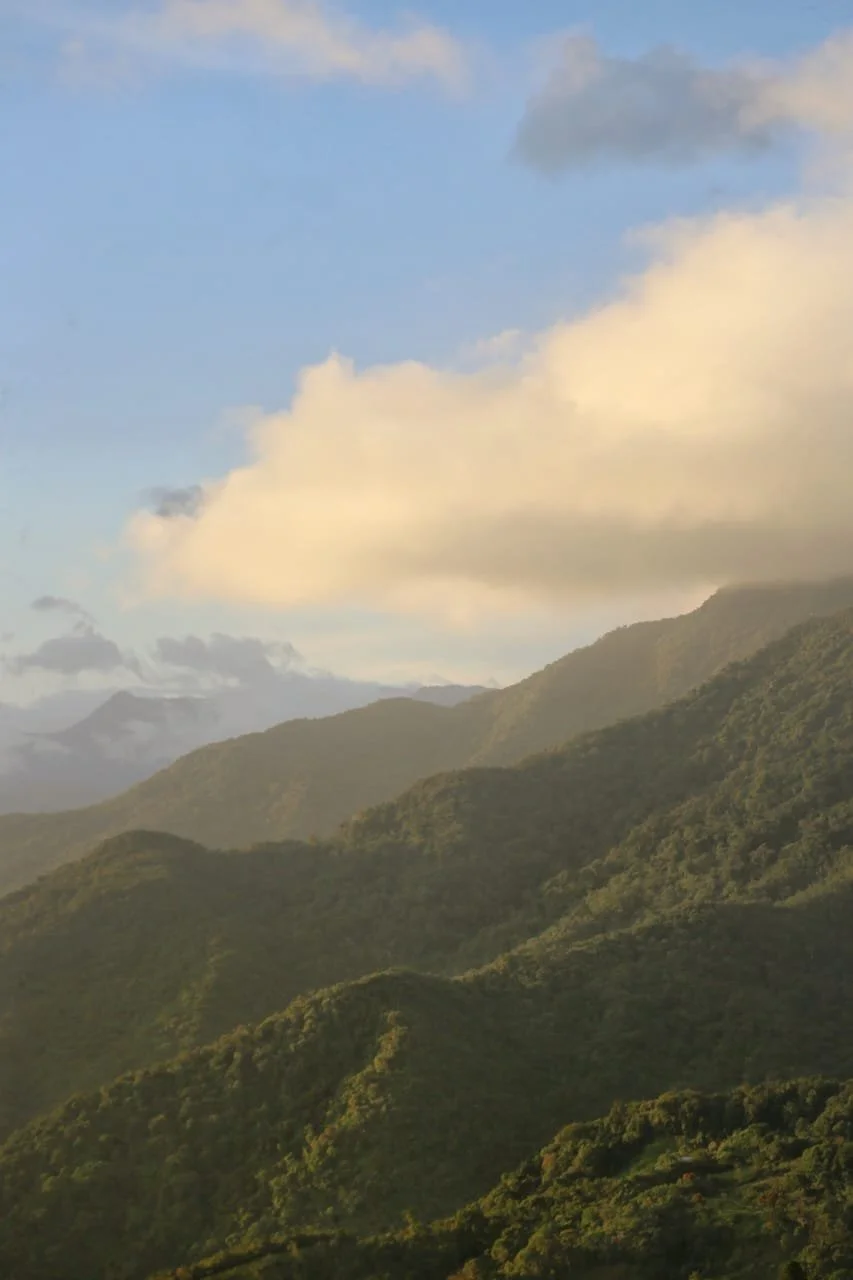
Panama and Costa Rica are often thrown into the same travel basket. They share a border, tropical forests, volcanoes, Pacific and Caribbean coastlines, incredible wildlife and a reputation for adventure. Both attract backpackers, surfers, birdwatchers, retirees, families, digital nomads and people who simply want to disappear into a jungle for a few days. But once you actually travel through them, something becomes obvious: Panama is not Costa Rica with fewer tourists. It has developed a different kind of tourism identity.
Costa Rica has spent decades building an international reputation around nature tourism. Panama has something considerably more complicated and, in many ways, more eclectic. It has the Panama Canal, one of the world's great engineering spectacles, a genuinely huge modern capital, Caribbean islands, Pacific surf beaches, colonial history, Afro Caribbean culture, Indigenous communities, highland coffee country, enormous areas of rainforest and some remarkably wild corners. Panama's tourism authorities currently promote this combination of city, nature, beaches, cultures and wildlife as one of the country's defining advantages.
And the difference is becoming particularly interesting because Panama's tourism industry is growing quickly. Panama recorded more than 3 million international visitors in 2025 when all visitor categories are counted, while 2.33 million tourists actually stayed overnight in the country, an 11 percent increase in overnight tourists from the previous year. Costa Rica remains the larger traditional leisure tourism destination, with approximately 2.94 million international tourist arrivals in 2025, but the two countries are not simply competing for exactly the same traveller.
Costa Rica Built a Tourism Machine
One of the biggest differences becomes apparent almost immediately when travelling around Costa Rica. Tourism is everywhere.
That isn't necessarily a bad thing. In fact, it is one of Costa Rica's greatest strengths. The country has spent decades developing an enormous tourism ecosystem around its volcanoes, rainforests, national parks, beaches and wildlife. You can arrive knowing roughly what you want to see and usually find an established hotel, guide, shuttle, excursion, restaurant or tour operator ready to sell you the experience.
Costa Rica's tourism identity is remarkably coherent. You hear "pura vida" and immediately think of beaches, monkeys, sloths, volcanoes, surfing, rainforest, zip lines and eco lodges. Places such as Monteverde, Arenal, Manuel Antonio, Tortuguero and the Osa Peninsula have become internationally recognizable tourism destinations. Costa Rica's extensive protected areas and long history of ecotourism have helped turn nature into one of the country's biggest tourism products.
There is an enormous advantage to this.
If you are a first time visitor who wants to see a volcano, walk through a rainforest, go zip lining, visit a hot spring and see wildlife without having to spend weeks figuring everything out, Costa Rica can be wonderfully straightforward.
But there is another side to that success.
Some parts of Costa Rica can feel like tourism has become the operating system.
Panama Feels More Like a Country You Happen to Be Travelling Through
Panama's tourism experience can feel much less uniform.
You can spend the morning walking among skyscrapers in Panama City, have lunch overlooking the Panama Canal, fly to an island in the Caribbean, spend a couple of days surrounded by rainforest, take a bus into the mountains, drink world famous coffee in Boquete and then end up surfing on the Pacific.
The country doesn't have quite the same single tourism identity as Costa Rica. Instead, it feels like several different countries have been squeezed into one narrow piece of land.
That is partly because Panama's history is unusually international. The Canal turned the country into a crossroads between oceans and continents, and Panama City developed into a major commercial and transportation centre. At the same time, the Caribbean coast developed its own Afro Caribbean character, Indigenous cultures remain an important part of the country, Spanish colonial history is visible in places such as Casco Viejo and Portobelo, and the interior remains dramatically more rural.
The result is a tourism experience that can change character remarkably quickly.
You can go from Manhattan in the tropics to a jungle trail in less than an hour.
That is difficult to reproduce anywhere else in Central America.
Panama City Changes the Equation
This is one of the biggest differences between the countries.
Costa Rica has San José, but Panama City is a very different type of capital.
Panama City is a genuinely large, modern Latin American metropolis with skyscrapers, international restaurants, nightlife, shopping malls, museums, historic neighbourhoods and a huge financial district. Then, almost absurdly, there is rainforest immediately beside it.
You can be looking at enormous ships moving through the Panama Canal one moment and watching a sloth in the forest the next.
That combination gives Panama a particularly unusual tourism advantage.
A traveller can have a major city holiday and a jungle adventure during the same trip without needing to choose between them.
Costa Rica's tourism experience tends to revolve much more strongly around natural destinations. Panama can offer nature, but it can also feel like a city break, history trip, Caribbean holiday, backpacking adventure and wildlife trip all at once.
The Beaches Are Completely Different
Both countries have spectacular beaches, but they don't necessarily feel the same.
Costa Rica's Pacific coast has become famous for surfing, beach towns, wellness tourism, boutique hotels and increasingly sophisticated tourism infrastructure. Places such as Tamarindo, Santa Teresa, Nosara and Manuel Antonio have developed strong international identities.
Panama's coastline is much more varied.
There is the Caribbean world of Bocas del Toro. There are the tiny islands of Guna Yala. There is the Pacific surf scene around Santa Catalina and Playa Venao. There are the Pearl Islands. There are remote beaches on the Azuero Peninsula. There are huge stretches of coastline that remain relatively undeveloped.
And then there is Coiba, where the Pacific becomes something much more serious for divers and wildlife enthusiasts.
Panama can therefore feel less like one giant beach holiday and more like a collection of completely different coastal worlds.
Wildlife: Costa Rica Makes It Easy, Panama Makes You Look
This is one of the most interesting distinctions.
Costa Rica has become famous partly because it makes wildlife watching relatively accessible. You can visit established parks and reserves where guides, trails and tourism infrastructure have been developed specifically around wildlife.
Panama has spectacular wildlife too, but the experience can sometimes be less predictable.
A birdwatcher can spend hours looking for a particular species and see nothing, then suddenly have an extraordinary encounter. A traveller might see monkeys beside a road, a sloth in a tree, a toucan from a hostel balcony or something completely unexpected while walking through the forest.
Panama's geography gives wildlife enthusiasts an enormous playground. The country sits on the land bridge connecting North and South America, and its forests and mountains form important habitats and migration corridors. Panama also has extraordinary marine biodiversity, from the Caribbean to the Pacific and around places such as Coiba.
Costa Rica has arguably done more to turn wildlife into an easily packaged tourism experience. Panama can sometimes feel like the wildlife hasn't received the memo that it is supposed to perform for tourists.
That can be frustrating.
It can also be fantastic.
Panama Has More of a Backpacker Wild Card
This is perhaps where the difference becomes most obvious.
Costa Rica has an extremely well established backpacker circuit. You can move between famous destinations, book transportation and activities, meet other travellers and follow routes that thousands of people have taken before you.
Panama has backpacker routes too, but there is more room for improvisation.
You might start in Panama City, go to El Valle, head toward Santa Catalina, continue to the highlands, spend time around Boquete, disappear into the mountains, continue toward Bocas del Toro and then eventually cross into Costa Rica.
And sometimes the most memorable part isn't the destination you planned.
It is the place you stopped because someone on a bus told you about it.
That slightly unpredictable quality is one of the reasons Panama can be particularly rewarding for independent travellers. Travel publications comparing the two countries commonly describe Costa Rica as having more established tourism infrastructure, while Panama tends to offer a less structured and more varied experience.
Panama Can Also Be Cheaper
There is an important caveat here: neither country should be confused with ultra cheap Central America anymore.
Both Costa Rica and Panama can be surprisingly expensive in popular tourist destinations.
But Panama generally gives budget travellers more opportunities to keep costs under control, particularly when they use local buses, local restaurants and independently operated accommodation. Travel comparisons consistently find Panama generally less expensive than Costa Rica for many common travel expenses, although prices vary enormously by destination and travel style.
One reason is that Panama has a particularly useful combination for travellers: the US dollar is used as the country's currency, public transportation can be remarkably inexpensive, and outside the major tourist hotspots there are still plenty of ordinary local businesses operating at local prices.
You don't necessarily have to live inside the tourist economy.
And that can make a huge difference to a backpacker.
Panama's Tourism Is Still Developing
Perhaps the most fascinating difference is that Panama doesn't feel like a finished tourism product.
Costa Rica has spent decades figuring out how to sell Costa Rica to the world.
Panama is still figuring out exactly how to sell all of Panama.
And that means there are places where the tourism infrastructure is excellent and places where it is still surprisingly basic. There are destinations where you can find international hotels, sophisticated restaurants and organized excursions, and others where you may be sharing a bus with locals and wondering exactly where the road is going.
For some travellers, that inconsistency is annoying.
For others, it is precisely the attraction.
It leaves room for discovery.
The Strange Thing About Panama
The funny thing is that Panama's greatest tourism asset may actually be that it hasn't become famous for just one thing.
Costa Rica can almost be explained in a sentence: rainforest, wildlife, volcanoes, beaches and pura vida.
Try explaining Panama in one sentence and you quickly run out of breath.
Panama City.
The Canal.
Casco Viejo.
Caribbean islands.
Pacific surf.
Cloud forests.
Coffee.
Jungle.
Coiba.
Guna Yala.
Afro Caribbean culture.
Spanish colonial history.
Indigenous communities.
Birdwatching.
Diving.
Whales.
Hiking.
And then there are all the places that don't make the international tourism brochures nearly as often.
That makes Panama particularly interesting for travellers who don't want their entire trip predetermined before they arrive.
So Why Do People Compare Them?
Because geographically they make obvious sense as competitors.
They are neighbours. They share tropical biodiversity. They have two coastlines. They both offer surfing, hiking, wildlife and rainforest. They are both relatively easy countries to visit compared with some other parts of the region.
But culturally and in terms of tourism development, they have taken different paths.
Costa Rica became one of the world's great ecotourism brands.
Panama became a crossroads and is gradually turning that crossroads into a tourism destination.
Costa Rica often makes nature easier to access as a tourism product. Panama gives you more combinations of experiences: enormous city, jungle, islands, history, Indigenous cultures, Afro Caribbean communities, mountains and beaches.
And the numbers show that Panama is increasingly attracting international visitors. The country recorded 2.33 million overnight tourists in 2025, up 11 percent from 2024, while its tourism authority reported more than 3 million international visitors when cruise and other visitor categories are included.
The really interesting question isn't whether Panama will become another Costa Rica.
It probably shouldn't.
The more interesting question is what happens if Panama manages to attract more international travellers without losing the slightly unpredictable, independent, wonderfully mixed up character that makes travelling through the country so much fun in the first place.
Because that is ultimately the difference.
Costa Rica has become famous for tourism. Panama is becoming famous for being Panama.