
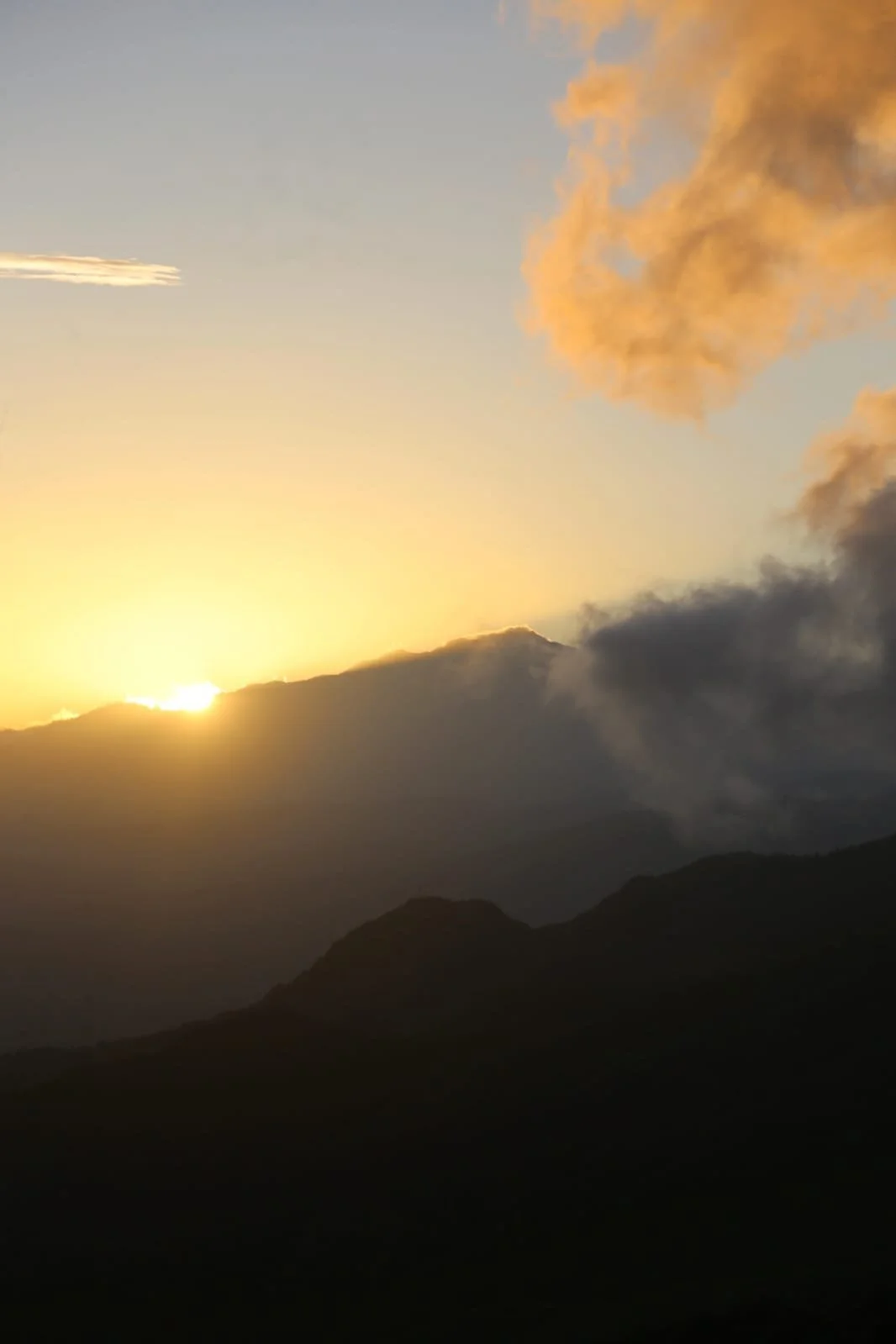
Boquete is famous for coffee, cool mountain weather and spectacular scenery, but there is another reason people come here that can be surprisingly easy to overlook: the birds are everywhere. The combination of altitude, cloud forest, coffee plantations, river valleys, gardens and lower tropical forests creates an extraordinary collection of habitats in a relatively small area. Panama's tourism authority says the Boquete region is home to more than 400 species of birds, which means you do not have to be a serious birder with an expensive camera to enjoy them. Sometimes you simply need to stop walking, look into a tree and pay attention.
And then there is the bird that has become almost synonymous with the mountains around Boquete: the resplendent quetzal. This spectacular bird is the celebrity of the local birding world, with the male's iridescent green body, brilliant red breast and extraordinarily long tail feathers. The high cloud forests around Volcán Barú provide exactly the kind of habitat quetzals need, and the famous Los Quetzales Trail between Boquete and Cerro Punta passes through some of that habitat.
The Resplendent Quetzal
If you only know one bird from Boquete, it is probably the quetzal. Seeing one is one of those moments when even somebody who normally couldn't tell a sparrow from a pigeon suddenly understands why birdwatchers get obsessed.
The males are particularly spectacular, with metallic green plumage, a crimson breast and elongated upper tail coverts that can make the bird look almost impossibly exotic. They are associated with the highland cloud forests and feed heavily on fruits, including wild avocados and other members of the laurel family. The breeding season can provide particularly good opportunities for sightings, although no wild bird is ever guaranteed to cooperate with your itinerary.
The Los Quetzales Trail is the obvious place to look, but quetzals can also turn up in other suitable high elevation forests around Boquete. The trick is often not simply having sharp eyes. Knowing the calls and knowing where to look can make an enormous difference. Experienced birders and guides can sometimes locate a bird that is sitting quietly in a tree that everyone else has walked straight past.
Hummingbirds: tiny helicopters everywhere
Boquete is also wonderful for hummingbirds. These tiny birds can be ridiculously entertaining because they seem to operate according to completely different rules from everything else in the forest. They hover, dart backwards, disappear behind your head and then suddenly appear a few centimetres from a flower.
Among the highland species are the fire-throated hummingbird, violet sabrewing, green hermit, white-throated mountain-gem, magnificent hummingbird and scintillant hummingbird. Different elevations and habitats produce different species, so moving from the higher cloud forest down toward warmer valleys can dramatically change the hummingbirds you encounter.
The scintillant hummingbird is particularly interesting because it is one of the smallest hummingbirds in the region. At the opposite end of the scale, the violet sabrewing is a much larger and extremely impressive mountain hummingbird.
And you don't necessarily need to hike deep into the wilderness to see them. Gardens, coffee farms and flowering plants around Boquete can be excellent places to watch hummingbirds at close range.
Toucanets and barbets
If hummingbirds are the tiny celebrities of Boquete, the toucanets are among the more ridiculous looking ones.
The northern emerald toucanet has the unmistakable oversized bill associated with toucans but comes in a beautiful green package that blends surprisingly well into the forest. Another highland species to look for is the prong-billed barbet, a chunky little bird with an unusual bill and colorful plumage.
These birds are particularly associated with the forested mountain environment and are among the species that make a walk through Boquete's cloud forest feel very different from walking through a typical tropical lowland forest. Birding groups visiting Pipeline Trail have recorded northern emerald toucanets as well as prong-billed barbets and numerous other mountain species.
Tanagers: flashes of color in the trees
Tanagers are another reason to keep looking upward.
Boquete has numerous species, including silver-throated tanagers, flame-colored tanagers, scarlet-rumped tanagers, bay-headed tanagers and Cherrie's tanagers. They can appear as brief flashes of red, yellow, blue, green or combinations of several colors as they move through the vegetation.
One of the great things about tanagers is that you don't necessarily need to be on a serious birding expedition to encounter them. Coffee farms, forest edges, gardens and roadside vegetation can all produce sightings. A birding group visiting Pipeline Trail in 2026 recorded several tanager species during a single outing.
The Long-tailed Silky-flycatcher
This is one of the birds that can make a casual birdwatcher stop and say, "What the hell is that?"
The long-tailed silky-flycatcher is an elegant highland bird with a distinctive long tail and beautiful coloration. It is strongly associated with the mountain forests of Costa Rica and western Panama and is one of the special birds to watch for around Boquete's higher elevations.
It is among the species reported around coffee farms and highland trails, along with red-headed barbets, dark pewees and several hummingbirds.
Bellbirds you may hear before you see
The three-wattled bellbird is another fascinating Boquete bird, partly because hearing one can be considerably easier than finding one.
Its extraordinary call is loud, distinctive and carries through the forest. The species is associated with the highland forests and can be encountered along the Los Quetzales area. It is exactly the kind of bird that demonstrates why birdwatching isn't really just about looking. Sometimes you have to listen first and start searching afterward.
Wrens, thrushes and forest songbirds
Not every interesting bird in Boquete is spectacularly colored. Some of the most rewarding encounters are with the smaller birds that move quickly through the undergrowth.
Look for species such as the black-faced solitaire, white-breasted wood-wren, mountain wren, orange-billed nightingale-thrush, white-throated thrush and slate-throated redstart. These birds can be much easier to hear than see, particularly in thick vegetation.
The black-faced solitaire is particularly associated with the highlands and has a beautiful, haunting song. It is one of those birds where learning the sound can transform your experience of walking through the forest because you suddenly realize that the forest you thought was quiet is actually full of birds.
Parakeets and other parrots
Look upward and listen for noisy flocks and you may encounter sulphur-winged parakeets and other parrots flying between the trees.
Sulphur-winged parakeets are especially associated with the high elevation forests around Volcán Barú. Their green bodies can make them surprisingly difficult to see when perched, but a flock flying overhead is another matter entirely. Panama's tourism authority specifically lists them among the characteristic birds to watch for in the Boquete mountains.
Woodpeckers and foliage gleaners
The forest also contains birds that spend their lives doing things most people don't notice. Golden-olive woodpeckers can be found working their way along tree trunks, while species such as the scaly-throated foliage-gleaner search through vegetation for insects and other small prey.
These birds are a reminder that Boquete's birdlife isn't just about the colorful species people put on postcards. There is an entire community of birds occupying different ecological niches, from canopy specialists to birds working through dead leaves and branches near the forest floor.
Lower elevations bring a completely different collection
One of the fascinating things about birdwatching around Boquete is that going downhill can be almost as productive as going deeper into the mountains.
The warmer areas around Caldera and other lower elevation habitats have species that are less typical of the high cloud forest. The orange-collared manakin, rose-throated becard, fork-tailed flycatcher and Finsch's parakeet are among the birds reported from these lower elevations.
This is why Boquete is such an interesting birding destination. It isn't one forest containing 400 birds. It is a landscape containing numerous different habitats stacked on top of one another.
Migratory birds make things even more interesting
Boquete also receives visitors from much farther north. Migratory species such as the Tennessee warbler, Baltimore oriole and Wilson's warbler can be encountered in the region. So depending on the time of year, the birds you see may not all be permanent residents of Panama.
That makes birdwatching here surprisingly dynamic. The species you encounter can change with elevation, habitat, season, weather and even the particular trail you choose.
You don't have to be a birder
Perhaps the best thing about Boquete's birds is that you don't need to become one of those people carrying six kilograms of camera equipment and a telescope to enjoy them.
Take a walk through the countryside. Sit quietly beside a flowering garden. Have a coffee at a farm. Walk one of the forest trails. Look at the trees instead of your phone.
Eventually you will probably notice something moving.
It might be a hummingbird hovering beside a flower, a toucanet disappearing into the canopy, a tanager flashing through the branches or a strange call coming from somewhere above you. And if you're extraordinarily lucky, you might look up and find the unmistakable silhouette of a resplendent quetzal hanging above the cloud forest.
That is Boquete's real birding secret: you don't necessarily have to go looking for birds. Sometimes you just have to slow down enough to notice that they're already looking at you.