
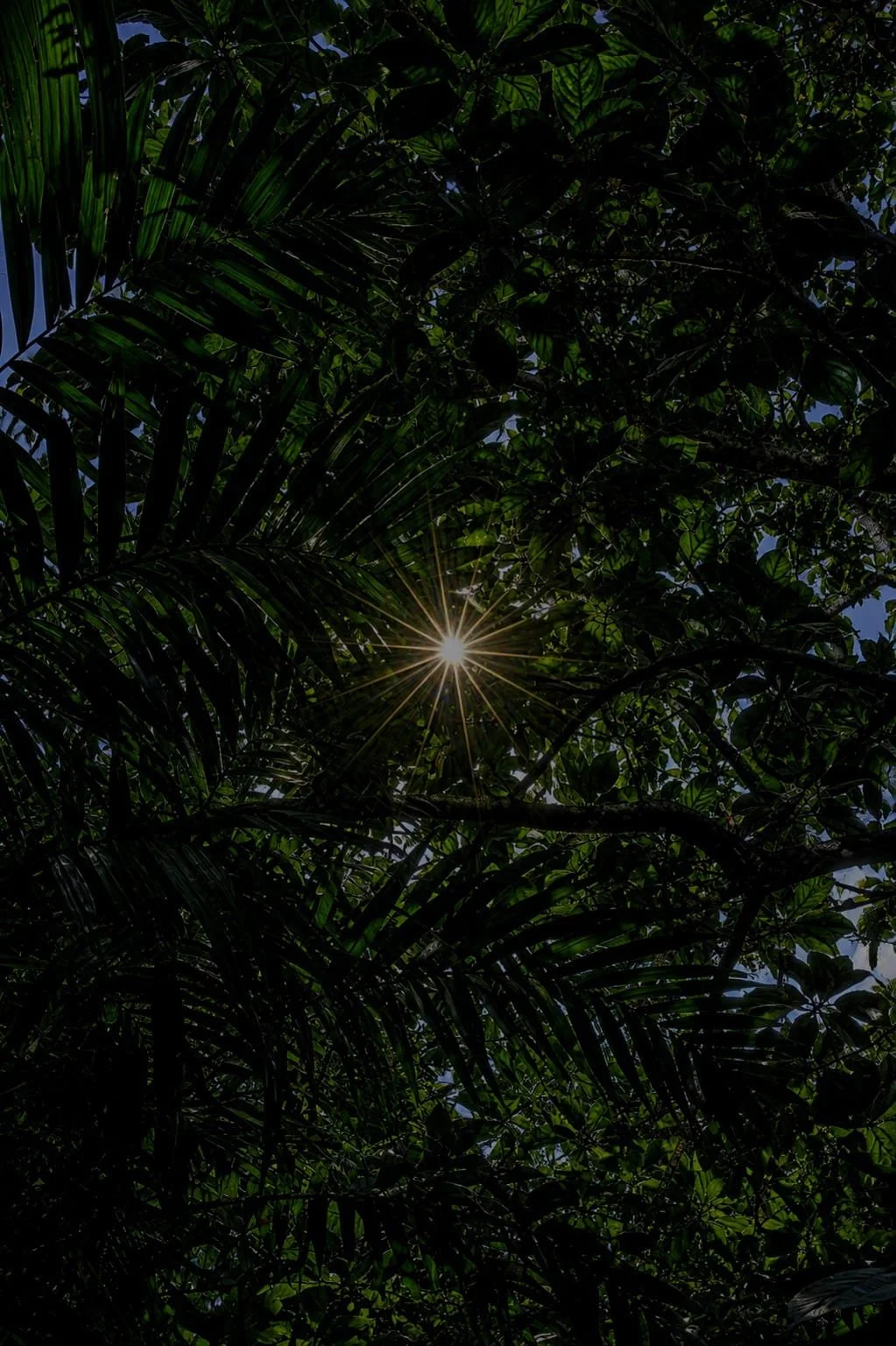
There are hikes in Panama where the destination is a waterfall, a viewpoint or a spectacular beach. Then there is the Camino de Cruces, where the trail itself is the destination.
Hidden in the rainforest surprisingly close to Panama City, the Camino de Cruces is one of the most fascinating walks in the country because you aren't simply hiking through tropical forest. You are walking along one of the routes that helped connect two oceans and changed the history of the world.
The original route was part of the colonial network crossing the Isthmus of Panama between the Pacific and Caribbean. UNESCO now recognizes the Camino de Cruces as part of the Colonial Transisthmian Route of Panamá, a World Heritage site. The route is considered a direct historical predecessor of both the Panama Railroad and, ultimately, the Panama Canal.
A road through one of the most important places on Earth
It is difficult to appreciate today just how strategically important Panama was before airplanes, railways and the Canal existed.
The Atlantic and Pacific Oceans are separated by thousands of kilometers if you travel around South America. But Panama offered something extraordinary: a narrow strip of land where people and goods could cross from one ocean to the other.
The Spanish quickly realized the importance of this geography. Ships could arrive on the Caribbean coast, valuable cargo could be transported across the isthmus, and it could then continue by sea from the Pacific.
The Camino de Cruces became one of the principal routes across this dangerous tropical landscape. MiAmbiente describes the historic roads as routes connecting the Caribbean with Panama City through difficult terrain, and notes that they were predecessors of the Panama Railroad and Canal.
And this wasn't a pleasant Sunday stroll.
Imagine attempting the journey centuries ago.
There were no paved roads.
No bridges in many places.
No GPS.
No air conditioning.
No emergency services.
Instead there was dense rainforest, mud, rivers, steep terrain, insects, disease, criminals and the ever-present danger of attacks.
And yet people kept coming.
Because on the other side of the jungle was wealth.
---
Gold, silver and the world's first global trade routes
The Camino de Cruces wasn't merely a local road.
It was part of an enormous international economic system.
Gold and silver from South America could be transported across Panama toward Caribbean ports and then shipped onward to Europe. Goods and people moved in the opposite direction.
Later, during the California Gold Rush, Panama once again became an incredibly important shortcut between the eastern and western United States. The isthmus offered travelers a dramatically faster alternative to sailing around Cape Horn.
Suddenly this seemingly insignificant jungle trail was connected to global events happening thousands of kilometers away.
You weren't just walking through Panama.
You were walking through a piece of the machinery of the early global economy.
---
And then the jungle took it back
Perhaps the most beautiful thing about the Camino de Cruces today is that the rainforest has reclaimed much of the landscape.
There are no endless lines of travelers carrying silver.
No mule trains disappearing toward the Caribbean.
No colonial officials shouting instructions.
Instead, there are enormous tropical trees.
Vines.
Moss.
Birds.
Butterflies.
Streams.
Monkeys calling somewhere beyond the trail.
The contrast is extraordinary.
A route that was once among the most economically important roads in the Americas is now surrounded by one of the most biologically rich ecosystems on the planet.
That is what makes this hike so special.
History hasn't been placed inside a museum.
It is sitting underneath the rainforest.
---
The original stones are still there
The Camino de Cruces is particularly fascinating because portions of the original stone paving survive.
The trail wasn't simply a dirt track. Sections were deliberately constructed and paved with stones to make the difficult crossing easier. Panama's tourism authority describes the surviving route as part of a trail constructed by hand and set with stones through the jungle.
And when you eventually come across those stones beneath your feet, the hike changes.
A moment earlier you're simply walking through rainforest.
Then you realize:
People walked here hundreds of years ago.
Perhaps they were carrying cargo.
Perhaps they were traveling toward the Caribbean.
Perhaps they were exhausted, frightened or desperate to reach the other side.
And you're following the exact landscape they had to cross.
That is a very different experience from walking on an ordinary hiking trail.
---
The rainforest is half the adventure
Of course, the Camino de Cruces isn't just about history.
The trail passes through tropical forest within the Panama Canal watershed, and the surrounding protected areas form an important biological corridor with neighboring forests, including Soberanía and other protected areas.
This means that while you're looking at old stones, you should also be looking up.
The forest can contain toucans, motmots, hummingbirds, tanagers, monkeys, sloths, agoutis, frogs, reptiles and an astonishing variety of insects.
Birdwatchers in particular should slow down.
The same forest that once carried treasure now carries something considerably more valuable to modern Panama:
wildlife.
---
You can hear the jungle before you see it
One of the most magical aspects of the hike is the sound.
The Camino de Cruces isn't silent.
You may hear the distant roar of a howler monkey before you have any idea where it is.
Bird calls echo through the canopy.
Leaves move somewhere beside the trail.
Water flows through small streams.
Insects create an almost continuous tropical soundtrack.
And then, occasionally, everything becomes strangely quiet.
That's when you start looking.
Was that movement in the trees?
Was that a bird?
A lizard?
A monkey?
A snake?
The trail rewards people who aren't in a hurry.
---
Why doing it with a guide is worth it
You can walk through a rainforest and see very little.
Or you can walk through the same rainforest with somebody who knows what they're looking at and suddenly discover that the forest is absolutely packed with life.
The difference can be enormous.
A good guide can point out old sections of paving that you might otherwise mistake for ordinary rocks. They can explain how the route functioned, identify birds by their calls, show you animal tracks and explain the plants growing around you.
For the full historical experience, a knowledgeable guide is particularly worthwhile because the significance of the trail isn't always obvious from the physical remains.
MiAmbiente has previously stated that the full Camino de Cruces trail requires a certified guide for organized traverses.
---
How long is the Camino de Cruces?
This is something to clarify because you'll find different distances online.
The principal Camino de Cruces hiking section through the national park is roughly 12.5 to 13.5 kilometers, depending on exactly where the route is measured and which endpoints are used. Panama's tourism authority lists the main trail at approximately 12.5 km, while MiAmbiente has described the historic trail traverse as 13.5 km.
It is not an extreme mountaineering expedition, but it is a real jungle hike.
There are uneven sections, streams, mud, slippery rocks and some steeper portions. Local hiking information generally classifies the route as moderate, with conditions potentially becoming considerably more demanding after rain.
Give yourself plenty of time.
This is not a trail where you want to be racing the clock.
---
Rain makes it even more interesting
Panama is tropical.
That means rain is part of the experience.
After heavy rainfall, the Camino de Cruces can become muddy and slippery, streams can rise and the old stone surfaces can become extremely slick.
But there is another side to hiking after rain.
The forest becomes incredibly alive.
Water pours from leaves.
Frogs become more active.
Streams roar.
The smell of wet vegetation fills the air.
Everything becomes intensely green.
For experienced hikers, this can be one of the most atmospheric moments on the trail.
For inexperienced hikers, however, it is a reminder to wear proper footwear and take your time.
---
The trail isn't just a museum of the past
One of the reasons the Camino de Cruces deserves more attention from travelers is that it represents something much bigger than colonial history.
It tells the story of why Panama became Panama.
The country's extraordinary geographical position has always been its greatest asset.
Before the Canal, people crossed the jungle.
Then came the railway.
Then the Canal.
Today, enormous ships pass through the same general geographical corridor.
The technology has changed completely.
The geography hasn't.
That's why walking the Camino de Cruces can make the Panama Canal suddenly make much more sense.
The Canal wasn't an arbitrary engineering project placed in an otherwise insignificant location.
It was the latest chapter in a story that had already been unfolding for centuries.
---
The ruins of Cárdenas add another layer
Within the national park are historic remains including the Ruinas de Cárdenas, also known as the Capilla La Palangana.
These ruins are currently the subject of conservation work. In July 2026, MiAmbiente reported stabilization and preservation efforts intended to protect the historic structure and make the site safer for public use.
This is another reason to appreciate the Camino de Cruces as more than simply a hiking trail.
You are moving through a landscape containing archaeological and historic evidence of the people who crossed Panama long before modern tourism existed.
---
One of Panama City's greatest secrets
Perhaps the most remarkable thing about the Camino de Cruces is how close it is to Panama City.
MiAmbiente describes the national park as being only around four kilometers from the capital in one of its access areas, while Panama's tourism authority notes that the park administration area is less than 20 minutes from central Panama City by car.
Think about that.
You can be surrounded by skyscrapers, traffic and restaurants in the morning.
Then, shortly afterward, you're standing beneath enormous rainforest trees on a centuries-old trail.
Few cities on Earth offer that combination.
---
Who should do the Camino de Cruces?
If you're interested in history, absolutely.
If you're interested in wildlife, absolutely.
If you enjoy jungle hiking, absolutely.
If you've already visited Casco Viejo and the Panama Canal and want to experience another side of the capital, absolutely.
And if you're a backpacker looking for something that feels genuinely adventurous without requiring a multi-day expedition into the interior, this may be one of the best options available.
It is especially good for travelers who want to say:
“I didn't just see Panama. I walked through it.”
---
What to bring
Don't overcomplicate it.
Bring plenty of water, sturdy hiking shoes, insect repellent, sunscreen, a rain jacket, snacks, a small first-aid kit and a fully charged phone.
Binoculars are extremely useful for birdwatching.
A camera is worthwhile, but don't spend the entire hike looking at a screen.
And because conditions can change rapidly, check the park's current status before setting out.
Important for travelers right now: MiAmbiente announced on August 12, 2026 that Parque Nacional Camino de Cruces was temporarily closed because of damage caused by a weather event.
So if you're planning to hike it now, verify reopening and access conditions with MiAmbiente before going rather than assuming that an older online trail guide is current.
---
The real reason you should walk it
There are hundreds of beautiful hikes in Panama.
There are waterfalls.
Cloud forests.
Volcanoes.
Beaches.
Jungle trails.
But the Camino de Cruces offers something almost none of them can.
A sense of time.
You begin in the modern world.
Then the buildings disappear.
The road becomes a trail.
The trail becomes rainforest.
And eventually you find yourself stepping across stones placed there centuries ago by people who understood that this narrow piece of land could connect two oceans and change the world.
Above you, tropical birds are singing.
Around you, monkeys are moving through the canopy.
Under your feet, the old road remains.
And suddenly the history of Panama isn't something you read about in a museum.
You're standing on it.
That is why the Camino de Cruces is worth doing.
Not because it is the highest mountain.
Not because it has the biggest waterfall.
Not because it is the easiest hike.
But because very few places allow you to walk through rainforest, wildlife and five centuries of world history on the same trail.
The Camino de Cruces isn't simply a hike through Panama.
It is a walk through the reason Panama became one of the most important places on Earth.