
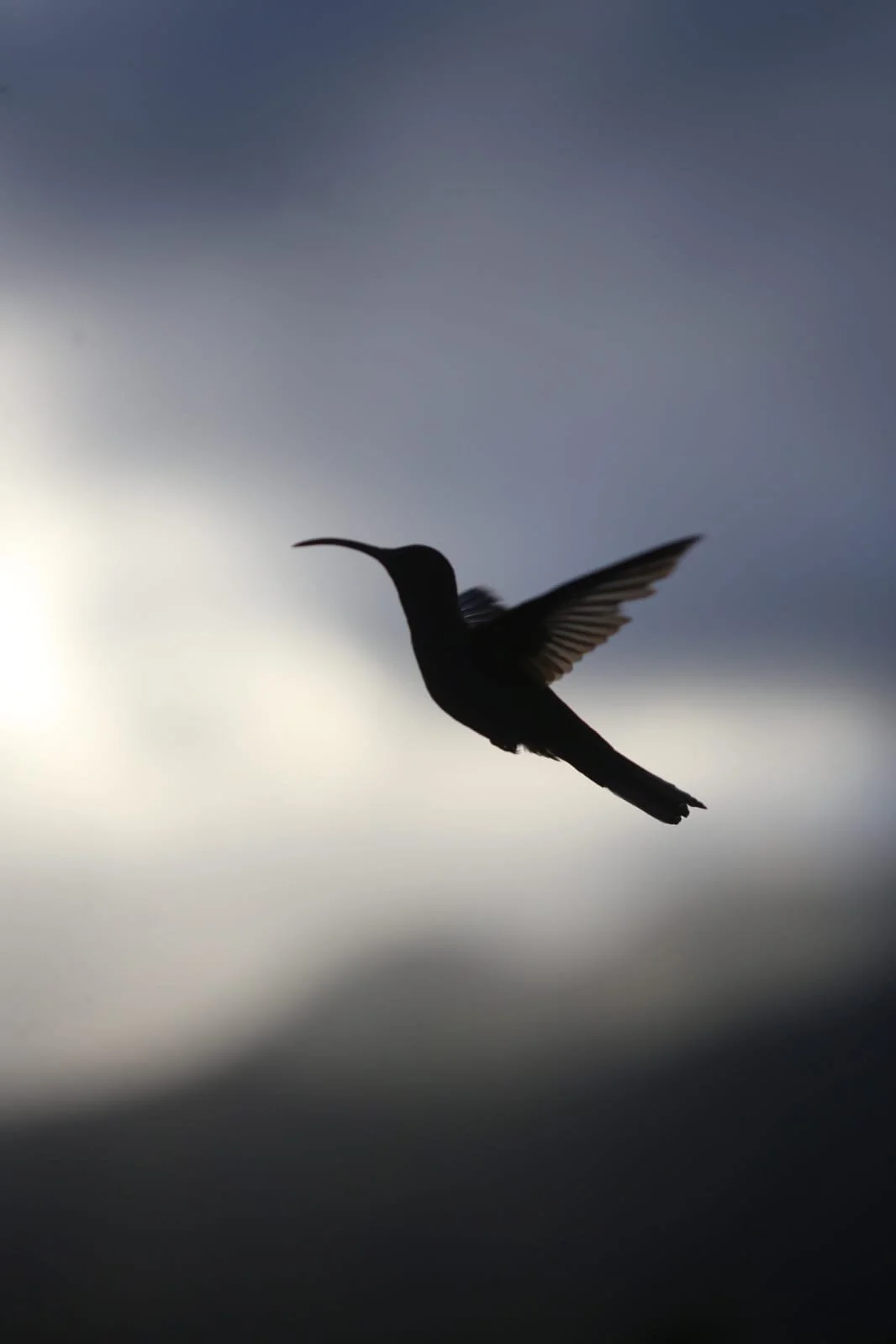
Panama is famous for its canal, Caribbean islands, rainforests and tropical beaches, but one of its greatest treasures is something that most visitors barely notice until they slow down and look into the trees.
Birds.
Panama has an extraordinary diversity of birdlife. More than 1,000 bird species have been recorded in the country, thanks largely to its position as a biological bridge between North and South America and its astonishing variety of habitats, from Caribbean mangroves and lowland rainforest to Pacific dry forest and high-elevation cloud forest.
And among all those birds, the songbirds are particularly magical. They may be tiny, but they fill Panama's forests with color, movement and sound.
Some are so brilliantly colored that they look painted. Others are almost impossible to see until their extraordinary song gives them away. And a few combine both: breathtaking plumage and a voice that seems completely disproportionate to their tiny bodies.
If you love nature, these are some of the birds you should be watching for on your next trip through Panama.
The Scarlet-thighed Dacnis: A Tiny Flash of Blue and Black
One of Panama's most spectacular little birds is the Scarlet-thighed Dacnis.
The male is almost absurdly beautiful: brilliant turquoise-blue plumage, contrasting black markings and vivid red legs. It is the kind of bird that can appear for five seconds in the canopy, disappear into the vegetation and leave you wondering whether you actually saw it.
Dacnis are members of the tanager family and are associated with forest edges, gardens and tropical woodland. Their small size and active behavior make them challenging to photograph, but that is part of the fun.
When a group of tiny colorful birds suddenly appears in a flowering tree, you can find yourself staring into the branches trying to identify exactly what you've just seen.
The Blue-gray Tanager: Panama's Familiar Tropical Jewel
The Blue-gray Tanager is considerably easier to encounter.
It is one of those birds that demonstrates how spectacular Panama's ordinary wildlife can be. You don't necessarily need to hike deep into a national park to see it. Blue-gray Tanagers can occur around gardens, towns, agricultural areas and forest edges.
Its soft blue-gray body, darker wings and contrasting white shoulder patch make it immediately recognizable.
For a visitor who has never birdwatched before, this is an excellent introduction to Panama's tropical songbirds.
And once you start noticing them, you'll realize that these little flashes of blue are everywhere.
The Golden-hooded Tanager: A Bird That Looks Designed
If Panama had a fashion designer for birds, the Golden-hooded Tanager would be one of the creations that made the portfolio.
Its plumage combines blue, black and brilliant golden-yellow, with a pattern that almost looks too deliberate to have evolved naturally.
It is also a fantastic example of why birdwatching in Panama can become addictive.
You may start the morning thinking you're simply going for a walk.
Then you see one beautiful bird.
Then another.
Then you realize that every movement in the canopy could potentially reveal something even more spectacular.
The Crimson-backed Tanager: One of Panama's Most Striking Songbirds
The Crimson-backed Tanager is another unforgettable species.
The name gives away the most dramatic feature: an intense crimson-red back contrasting with darker plumage.
It is relatively small and active, often moving through vegetation while searching for food.
This is exactly the kind of bird that rewards patient observation. Rather than sitting prominently on a branch for ten minutes waiting to be photographed, tropical songbirds frequently move rapidly through foliage.
You hear them.
You catch a glimpse.
You raise your binoculars.
And they're gone.
Then suddenly they're back.
That constant movement is part of what makes tropical birdwatching so exciting.
The Emerald Tanager: A Jewel in the Forest
The Emerald Tanager is aptly named.
Its brilliant green plumage can almost disappear against foliage, particularly when sunlight filters through the forest canopy.
But when one moves into an open patch of light, the effect can be spectacular.
Green birds are particularly fascinating because they demonstrate how perfectly tropical birds can blend beauty and camouflage.
From a distance, the bird disappears into the forest.
Then the light catches it.
Suddenly you realize you're looking at a living emerald.
The Bay-headed Tanager: One of the Classics
The Bay-headed Tanager is another colorful species that birdwatchers love encountering in Panama.
It combines a warm reddish-brown head with rich blue-green coloration elsewhere on the body.
It is particularly associated with forested habitats and is one of the many tanagers that can appear in mixed feeding flocks.
And mixed flocks are one of the great experiences of birdwatching in Panama.
Instead of seeing one species at a time, you may suddenly have several different species moving through the same trees.
Tanager.
Honeycreeper.
Warbler.
Flycatcher.
Hummingbird.
Then something enormous flies overhead.
It can feel like the entire forest has suddenly come alive.
The Flame-rumped Tanager: A Tropical Fireball
The Flame-rumped Tanager is another bird that deserves a place on any list of Panama's prettiest songbirds.
The contrast between its darker body and intensely colored rump makes it particularly striking.
It is also a wonderful reminder that Panama's bird diversity isn't restricted to remote wilderness.
Agricultural landscapes, gardens and forest edges can produce surprisingly good birdwatching.
This is one of the secrets of Panama:
You don't always have to go deep into the jungle to find extraordinary wildlife.
The Scarlet-thighed and Green Honeycreepers
Panama's honeycreepers are among the country's most spectacular small birds.
The Green Honeycreeper, for example, is an electric green bird with a contrasting dark face and striking bill. The males and females look quite different, which adds another challenge for beginning birdwatchers.
Then there are species such as the Red-legged Honeycreeper, whose brilliant blue and red coloration makes it look almost tropical enough to have been invented for a children's book.
These birds are particularly exciting around fruiting trees and flowering plants.
And because they move quickly, a pair of binoculars makes an enormous difference.
The Red-legged Honeycreeper: A Bird That Doesn't Look Real
The male Red-legged Honeycreeper is one of those birds that makes people stop and ask:
“Is that actually a real bird?”
Its combination of vivid blue plumage, black markings, red legs and colorful bill is extraordinary.
It is exactly the kind of species that can turn a person who has never considered birdwatching into someone who suddenly wants a pair of binoculars.
Panama has many birds like this.
The Blue-crowned Motmot: Not Technically a Songbird, But Impossible to Ignore
Strictly speaking, motmots aren't songbirds in the same way as tanagers, wrens or finches.
But no article about Panama's most beautiful birds should leave them out.
The Blue-crowned Motmot is one of the country's iconic forest birds, and Panama's official bird lists include several motmot species.
The blue crown, green body, rusty chest and extraordinary racket-shaped tail make it unmistakable.
And then there's its behavior.
Motmots often sit quietly on a branch, watching the forest.
Their tails may gently swing back and forth.
You can walk past one without realizing it's there.
Then it moves.
And suddenly the forest seems to contain a bird from another planet.
The Resplendent Quetzal: Panama's Crown Jewel
And now we arrive at perhaps the most famous bird on this entire list.
The Resplendent Quetzal.
It isn't technically a songbird either. It belongs to the trogon family.
But visually, it deserves its own category.
The male has an iridescent green body, brilliant red breast and extraordinarily long tail feathers.
In Panama, the species reaches the western highlands of Chiriquí, particularly the mountain forests around areas such as Boquete, Cerro Punta and Volcán Barú. Panama's bird checklist includes the Resplendent Quetzal among its trogons.
Seeing one in the wild is a completely different experience from seeing a photograph.
Imagine standing quietly in a misty cloud forest.
The vegetation is dripping with moisture.
The forest is cool.
You hear something moving above you.
You look up.
And suddenly an enormous green bird with a streaming tail glides between the trees.
That is the kind of wildlife encounter people remember for decades.
But What About the Birds That Aren't Colorful?
This is where birdwatching gets really interesting.
The prettiest bird isn't necessarily the most colorful.
Some of Panama's most beautiful birds are beautiful because of their voices.
One particularly wonderful example is the Gray-breasted Wood-Wren.
It isn't covered in brilliant red, turquoise or emerald feathers.
But its song is haunting and beautiful.
One visiting birder described being more captivated by the song of the Gray-breasted Wood-Wren than by the spectacular Resplendent Quetzal itself.
And that reveals something important about Panama.
If you only look for color, you're missing half the experience.
The Black-faced Solitaire: The Ghostly Voice of the Cloud Forest
The Black-faced Solitaire is another bird that demonstrates why Panama's cloud forests should be experienced with your ears as much as your eyes.
Its song can seem almost otherworldly in the misty mountain forest.
You may hear it long before you ever see it.
That's normal.
In tropical forests, the sound of a bird often gives you your first clue that it is nearby.
The challenge then becomes following the sound without disturbing the bird.
For serious birdwatchers, this is one of the great pleasures of Panama.
The forest becomes a giant puzzle.
Where to Find Panama's Most Beautiful Birds
Panama's greatest advantage for birdwatchers is the variety of habitats packed into a relatively small country.
The country contains everything from lowland rainforest and wetlands to dry forest and high-elevation cloud forest, supporting more than 1,000 bird species.
Panama City
Don't make the mistake of assuming that Panama City is useless for birdwatching.
The forested areas around the Canal Zone can produce toucans, hummingbirds, tanagers, honeycreepers and many other species. Audubon specifically highlights the forested areas around the former Canal Zone as excellent bird habitat.
The city can therefore be your introduction to Panama's birdlife before you even leave the capital.
Soberanía National Park and the Pipeline Road
For birdwatchers, the area around the Pipeline Road is legendary.
The combination of mature rainforest, trails and extraordinary biodiversity makes this one of the classic birding destinations in the country.
You can encounter an incredible variety of forest birds, and the experience is particularly rewarding early in the morning.
Go before the heat builds.
Bring binoculars.
And most importantly:
Don't rush.
Chiriquí and the Cloud Forests
If colorful highland birds are your goal, head west.
The mountains around Boquete, Volcán and Cerro Punta offer some of Panama's most spectacular bird habitat.
Here you enter a completely different world.
The temperature drops.
Clouds hang over the mountains.
Moss covers branches.
Orchids grow on trees.
Hummingbirds flash between flowers.
And somewhere in the forest, you might hear one of the great mountain songsters.
This is quetzal country.
Why Gardens Can Be Better Than Jungle
One of the biggest secrets for beginners is that gardens can be incredible birdwatching locations.
Flowering plants attract hummingbirds.
Fruit attracts tanagers.
Trees provide nesting and feeding opportunities.
And open gardens make birds considerably easier to observe than dense rainforest.
Recent birding observations in Panama's El Valle de Antón, for example, recorded numerous hummingbirds and colorful tanagers around lodge gardens and feeders.
So don't automatically walk past a garden because you're looking for “real jungle.”
Sometimes the garden is where the birds are.
The Best Time of Day to See Them
If you want to see beautiful songbirds, wake up early.
The first few hours after sunrise are generally the golden period.
The forest is cooler.
Birds are active.
The morning chorus can be incredible.
And insects are abundant.
By late morning, tropical heat can reduce bird activity considerably.
A perfect birdwatching morning might look something like this:
5:30 a.m.
Wake up.
6:00 a.m.
Walk into the forest.
6:15 a.m.
First hummingbirds.
6:30 a.m.
Tanagers begin moving through the canopy.
7:00 a.m.
A distant motmot calls.
7:30 a.m.
A mixed flock explodes through the trees.
8:00 a.m.
You realize you've taken 200 photographs of birds you couldn't identify when you started.
That's Panama.
You Don't Need to Be a Birder
Perhaps the greatest thing about Panama's songbirds is that you don't have to be an expert.
You don't need a $3,000 camera.
You don't need a massive species checklist.
And you don't need to know every scientific name.
Start with three things:
Listen.
Look.
Wait.
Once you learn a few species, everything changes.
You begin recognizing their calls.
You start noticing movement in the canopy.
You recognize a flash of blue before you even know which bird it is.
Eventually, you stop simply walking through the forest.
You start seeing it.
Panama: A Country Designed for Birdwatching
Panama's extraordinary bird diversity is not an accident.
Its position between two continents allows species from North and South America to meet. Its mountains create dramatically different elevations and climates. Its two coastlines create completely different ecosystems. And its enormous forests provide habitat for species ranging from tiny hummingbirds to massive eagles.
That is why a single trip can take you from watching hummingbirds in a mountain garden to seeing tanagers in rainforest, motmots along jungle trails and quetzals in the cloud forest.
And that is ultimately what makes Panama's birds so special.
The prettiest bird may be the one you came to see.
But the bird you remember forever may be the one you weren't looking for.
Because somewhere in the forest, behind the leaves and above your head, another tiny singer is waiting to reveal itself.