
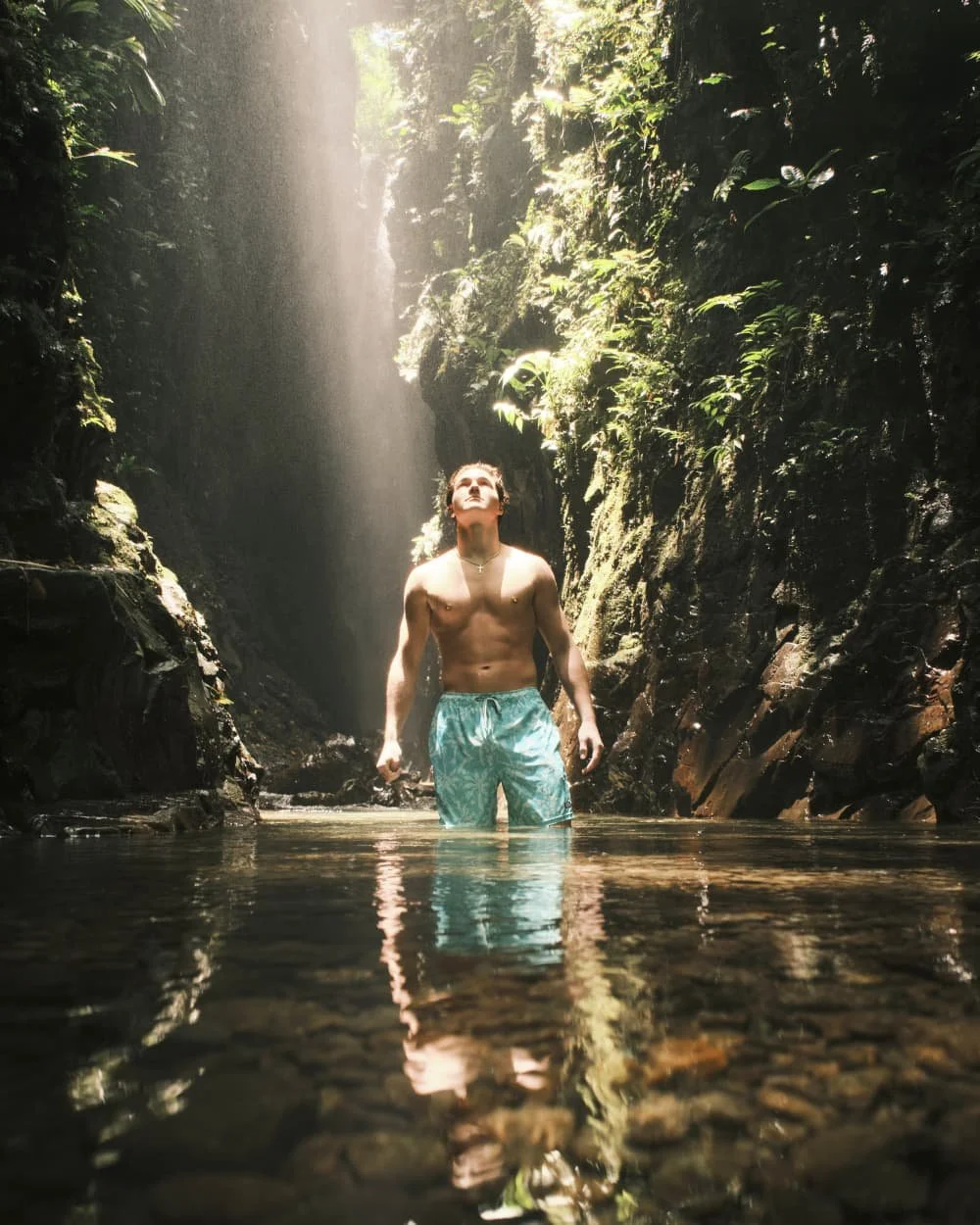
When people hear the word Panama, they usually picture beaches, palm trees, tropical rainforests, sandals and temperatures somewhere in the 30°C range. And for much of the country, that image is absolutely correct.
But Panama has a secret that surprises many first-time visitors: you can actually get cold in Panama.
Not Canadian-winter cold. You won't be needing a parka in Panama City. But depending on where you travel, a sweater, fleece or light jacket can be one of the most useful things in your backpack.
The key is understanding Panama's enormous differences in elevation.
Panama City: Leave the Winter Clothes at Home
If your trip consists primarily of Panama City, the beaches, the islands and the lowlands, you really don't need warm clothing.
Panama City stays tropical throughout the year, with temperatures generally hovering around the high 20s to low 30s Celsius. There isn't a traditional cold winter, and even nighttime temperatures remain warm.
Your normal Panama City wardrobe should therefore consist of:
T-shirts
Shorts
Lightweight pants
Sandals
Sneakers
Breathable shirts
Swimwear
A heavy sweater or jacket will probably spend most of its time at the bottom of your backpack.
In fact, heat is much more likely to be your problem than cold.
The combination of tropical temperatures and humidity can make walking around Panama City surprisingly sweaty, particularly during the wetter months.
But Then You Go Up Into the Mountains
This is where everything changes.
Panama's mountains reach considerable elevations, and places such as Boquete, Volcán and Cerro Punta can feel like an entirely different country.
Boquete sits at roughly 1,100–1,200 metres above sea level, and temperatures there are dramatically cooler than in the lowlands. Long-term climate data puts typical Boquete temperatures roughly between 13°C and 24°C, depending on the time of day and month.
For someone arriving from a hot beach or Panama City, that can feel surprisingly chilly.
You might spend the afternoon hiking in a T-shirt and then find yourself reaching for a sweater after sunset.
Boquete Is the Place Where You'll Wish You Packed a Sweater
Boquete is probably the most important destination to consider when deciding whether you need warm clothes.
The town is famous for its cool, spring-like climate, and nighttime temperatures commonly fall into the mid-teens Celsius.
That doesn't sound particularly cold on paper.
But consider the psychological effect.
You've spent several days sweating in Panama City, Bocas del Toro or the Pacific lowlands. Then you arrive in Boquete, sit outside after sunset and suddenly it's 15°C with a breeze and damp mountain air.
You may be very happy that you packed a fleece.
The same thing happens early in the morning. A sunrise hike or early coffee on a mountain terrace can be genuinely cool.
Volcán and Cerro Punta Can Be Even Colder
The higher you climb, the more important warm clothing becomes.
Volcán sits higher than Boquete, while Cerro Punta reaches elevations of roughly 2,000 metres. These highland areas can have significantly cooler conditions, particularly at night and during periods of rain or cloud.
If you're visiting these areas, a light fleece or sweater isn't excessive at all.
For higher-elevation hiking, particularly around Volcán Barú, having layers becomes much more important.
You can start a hike in relatively comfortable conditions and encounter considerably cooler, windier weather as you gain elevation.
That is one of the strange things about Panama: you can leave the tropical heat and climb into weather that feels almost spring-like within a relatively short distance.
What About El Valle de Antón?
El Valle de Antón is another destination where a light layer can be useful.
It is surrounded by mountains and sits considerably higher than Panama City's lowlands. Temperatures are generally more comfortable than in the capital, especially in the evening.
You probably won't need anything resembling winter clothing, but a light sweater or jacket is a good idea.
This is especially true if you're staying somewhere with an outdoor terrace or spending the evening walking around town.
The Caribbean Is a Different Story
Places such as Bocas del Toro and the Caribbean coast generally remain warm.
Even though Bocas can receive enormous amounts of rain, the temperatures don't normally fall enough to make genuine warm clothing necessary. The Caribbean climate remains tropical year-round.
What you want there is rain protection rather than winter protection.
A lightweight waterproof jacket can be much more useful than a thick sweater.
Rain Can Make You Feel Cold
There's another reason to carry a light layer in Panama: getting wet.
A tropical downpour can soak you extremely quickly.
Once you're wet, even a temperature that would normally feel perfectly warm can suddenly feel uncomfortable, particularly if you're riding in a vehicle, sitting outside or walking through the mountains.
And after heavy rain, highland temperatures can feel noticeably cooler.
That's why a light waterproof shell is arguably more useful than a heavy jacket.
You can throw it into your daypack, and it weighs almost nothing.
Air Conditioning Is Another Reason to Pack a Sweater
There's an unexpected source of cold in Panama:
restaurants, buses, shopping malls and airplanes.
Panama loves air conditioning.
Some buildings can be aggressively air-conditioned compared with the tropical temperatures outside. You can walk into a shopping mall sweating in 30°C weather and suddenly feel like you've entered a refrigerator.
The same thing can happen on long-distance buses.
If you're taking the bus from Panama City to David or Boquete, a light sweater can be surprisingly valuable.
You might board the bus wearing shorts and a T-shirt because it's extremely hot outside.
Then the air conditioning comes on.
And stays on.
For hours.
A small fleece suddenly becomes one of the best things you brought with you.
What Should You Actually Pack?
For a typical Panama trip, there's no reason to bring a heavy coat.
Instead, think layers.
A very good Panama packing combination would be:
1 lightweight sweater or fleece
1 lightweight rain jacket
1 pair of long pants
Several T-shirts
Shorts
Comfortable walking shoes
Sandals
Swimwear
The sweater and rain jacket can be rolled into a backpack without taking up much space.
If you're spending significant time in Boquete, Volcán or Cerro Punta, consider bringing a slightly warmer fleece.
If you're sticking to Panama City, the islands and lowlands, your sweater may spend most of the trip unused.
What You Definitely Don't Need
Unless you're heading to extremely high elevations or doing specialized mountaineering, leave the heavy winter gear at home.
You don't need:
A winter parka
Snow boots
Heavy wool clothing
Thermal underwear
Thick winter gloves
A giant down jacket
Panama is still a tropical country.
Even its coolest inhabited mountain towns aren't experiencing anything remotely comparable to a Canadian winter.
The goal is simply to be comfortable during the occasional cool morning or evening.
The Perfect Panama Layer
If you only bring one "warm" item, make it a light fleece or sweater.
If you can bring two, add a packable rain shell.
Together, they cover almost every situation.
In Panama City, the fleece handles aggressively cold air conditioning.
In Boquete, it handles cool evenings.
In the mountains, it provides an extra layer during early mornings.
And the rain shell protects you from Panama's famous tropical downpours.
It's an incredibly small amount of luggage for a huge increase in comfort.
Do you need warm clothes in Panama?
For most of the country, no.
For the mountains, absolutely bring something light.
Panama City, Bocas del Toro and the tropical lowlands are warm enough that shorts and T-shirts will dominate your wardrobe. But once you climb into the highlands around Boquete, Volcán and Cerro Punta, temperatures can fall into the teens Celsius, particularly at night.
So the perfect Panama packing philosophy isn't "bring winter clothes."
It's:
Bring tropical clothes + one light warm layer + one lightweight rain layer.
That combination lets you go from a sweaty afternoon in Panama City to a cool evening in Boquete without carrying an entire winter wardrobe across Central America.
And if you're coming from Canada, there's an amusing irony: you may travel thousands of kilometres south expecting never to feel cold again, only to find yourself sitting in the mountains of Chiriquí wishing you'd packed a sweater.