
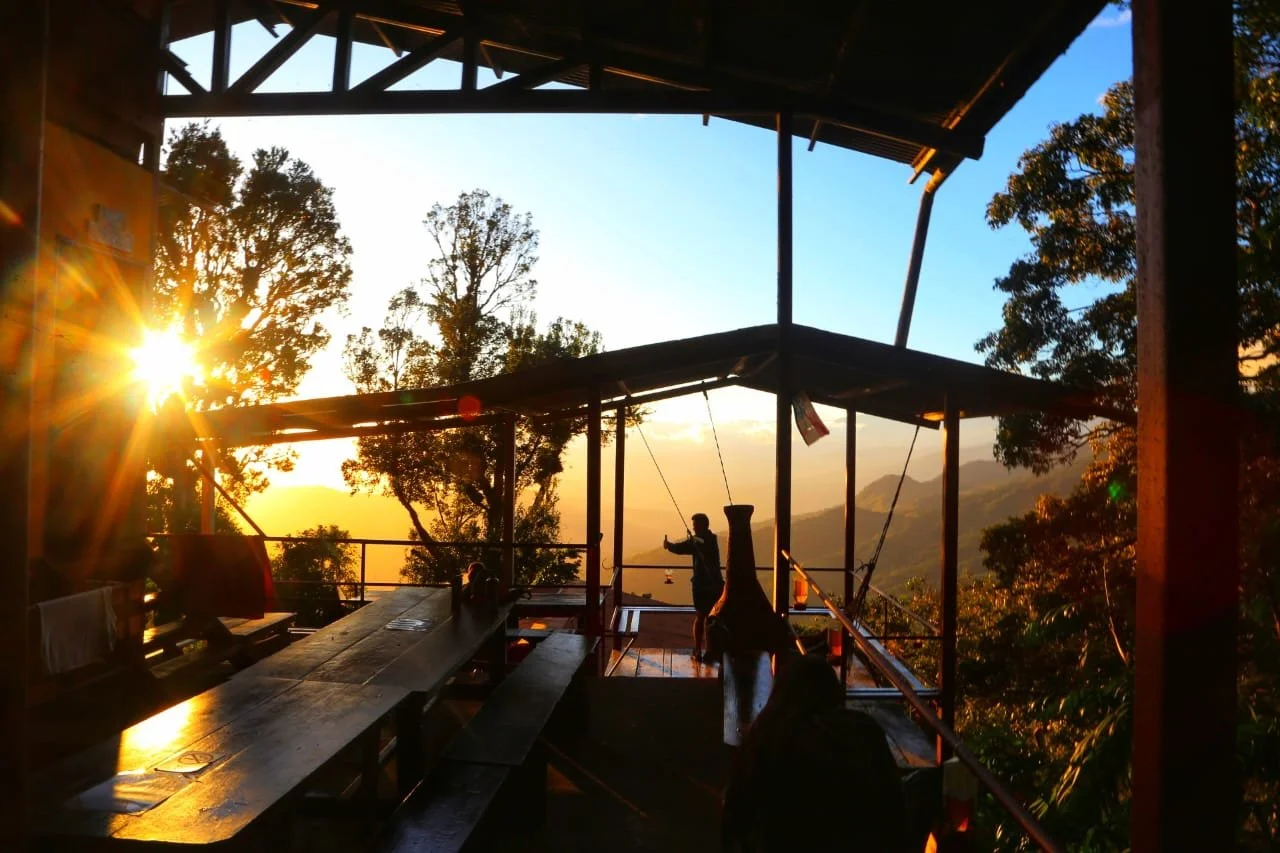
Hidden in the mountains of western Panama is a spectacular natural formation with a name that sounds like something straight out of a jungle legend: La Quijada del Diablo, or The Devil’s Jaw. Located in the Hornito area of Chiriquí, this dramatic landscape is associated with the rugged mountain country between the interior of Panama and the Caribbean side of the country. It is the kind of place that perfectly captures what makes this part of Panama so fascinating: enormous mountains, thick forest, deep valleys, strange rock formations and landscapes that can feel almost completely disconnected from the developed world.
The name itself immediately creates an image. Somewhere among the folds of the mountains, the rocks appear to form the shape of an enormous jaw, giving the landscape its wonderfully sinister nickname. Like many unusual geographical names in Panama, the attraction comes partly from the imagination. Tropical mountains are full of shapes that resemble faces, animals and mythical creatures, especially when viewed from particular angles. Over generations, these formations acquire names, stories and personalities, turning an ordinary piece of geology into something memorable.
What makes La Quijada del Diablo particularly interesting is its location. Hornito sits in an extraordinary part of Chiriquí, where the landscape begins transitioning from the highlands around the Cordillera to the wetter Caribbean influenced forests farther north. This is one of the reasons the area around Hornito feels so different from the more developed tourist destinations of Panama. You can be surrounded by thick rainforest, steep mountains and rushing rivers while still being relatively close to the major travel routes connecting western Panama.
The broader region is also famous among adventurous travelers because of the road connecting Chiriquí with Bocas del Toro. This route crosses some spectacular mountain terrain and has earned the nickname the Devil’s Jaw route among some travelers because of its rugged character and dramatic scenery. Motorcyclists and overland travelers have particularly enjoyed the journey because it offers a very different experience from simply flying between Panama City and the Caribbean.
For backpackers, this is exactly the sort of landscape that can be easy to overlook. Most people traveling through western Panama have a few obvious destinations on their itinerary. They go to David, then perhaps Boquete, then Bocas del Toro. But the spaces between those destinations can be just as interesting. The mountains around Hornito are a perfect example. They are not necessarily somewhere travelers spend weeks exploring, but they provide an entirely different perspective on Panama's geography.
And the geography here is impressive. The mountains rise dramatically from the surrounding lowlands, creating deep valleys where rivers and streams cut through the forest. Clouds frequently gather around the higher elevations, and the combination of humidity, altitude and tropical vegetation produces the kind of dense greenery that makes western Panama so spectacular. This is not the dry tropical landscape many first time visitors imagine when they hear the word Panama. It is wet, green, mountainous and intensely alive.
The area is also close to some of the most adventurous natural attractions in Chiriquí. The famous Macho de Monte canyon, for example, is known for its clear water, steep rock walls and demanding canyoning experiences. Travelers have described scrambling through shallow and deep sections of the river, sliding down natural rock formations, climbing slippery walls and even jumping into deep pools.
This helps explain why the Devil’s Jaw region has such an adventurous reputation. The attraction isn't simply one rock formation. It is the entire landscape. This is an area where rivers, cliffs, forests and mountains combine to create opportunities for hiking, canyoning, rafting, wildlife watching and simply exploring roads that lead into increasingly wild terrain.
There is also something wonderfully Panamanian about the name itself. Panama is full of places with names that sound as though they belong in an adventure novel. There are waterfalls, mountains, rivers, caves and rock formations associated with devils, giants, dragons, bulls and other creatures. These names often reveal how people have historically interacted with the landscape. A mountain isn't merely a mountain. It becomes a character.
That is particularly appropriate in the forests of Chiriquí, where visibility can change dramatically from one moment to the next. A mountain ridge that looks completely ordinary in bright sunlight can become mysterious when clouds roll through it. Mist moves between the trees. Waterfalls appear in ravines. Rocks emerge from vegetation. A landscape that seemed familiar suddenly looks completely different.
The wildlife adds another layer to the experience. The mountains of western Panama form part of one of the country's richest biological regions, with ecosystems changing as elevation increases. The forests around the Cordillera support an extraordinary range of birds, mammals, reptiles, amphibians and insects. Travelers may encounter hummingbirds, toucans, motmots, tanagers, monkeys, sloths, agoutis and countless smaller creatures hidden among the vegetation.
And then there are the sounds.
In the mountains, the jungle can be surprisingly loud. Cicadas buzz from the trees. Birds call from one ridge to another. Water rushes through ravines. Leaves move in the canopy. Frogs begin calling as the light disappears. At night, the forest can sound almost completely different from the forest experienced during the day.
This is one reason why places such as La Quijada del Diablo are particularly appealing to people who enjoy adventure rather than simply sightseeing. There is a difference between looking at a photograph of a mountain and actually traveling through the landscape surrounding it. The road, the weather, the humidity, the forest and the sounds all become part of the experience.
For travelers coming from Boquete, the region can also provide an interesting contrast. Boquete is famous for its pleasant climate, coffee farms, restaurants, hiking trails and more established tourism infrastructure. The Hornito region feels considerably more rugged. It is a reminder that the mountains of Chiriquí extend far beyond the well known tourist areas.
And for people traveling toward Bocas del Toro, this landscape provides an intriguing transition. You leave the Pacific influenced interior and climb through increasingly mountainous terrain before eventually descending toward the humid Caribbean side. The geography changes dramatically along the way.
That transition is one of the great pleasures of traveling overland through Panama.
You can begin the day surrounded by cooler mountain air and coffee country, pass through enormous green valleys and eventually find yourself moving toward the Caribbean lowlands and the islands of Bocas del Toro. Few countries make such dramatic ecological changes over relatively short distances.
La Quijada del Diablo therefore represents more than simply an unusual rock formation. It is part of a much larger story about the wild geography of western Panama. It sits within a region where the mountains create the climate, the rivers carve the landscape and the forests create an enormous biological corridor between different parts of the country.
For adventurous travelers, the most important thing is not to treat a place like this as an attraction where you simply arrive, take one photograph and leave. The surrounding landscape is the real experience. Explore responsibly, ask locals about access, check current road and trail conditions and do not assume that a location shown on a map is automatically an established tourist attraction. Remote Panamanian landscapes can change quickly with rain, landslides and river conditions.
And that is perhaps what makes La Quijada del Diablo so fascinating.
It isn't a polished attraction surrounded by souvenir shops and enormous parking lots. It belongs to the wilder side of Panama, where strange names, dramatic geology and jungle landscapes collide. It is the kind of place that makes you stop and wonder how many other extraordinary corners of the country remain almost completely unknown to international travelers.
Panama has famous places that appear on every itinerary.
But it also has places with names like The Devil’s Jaw, hidden among the mountains.
And sometimes, those are the places that make the best stories.