
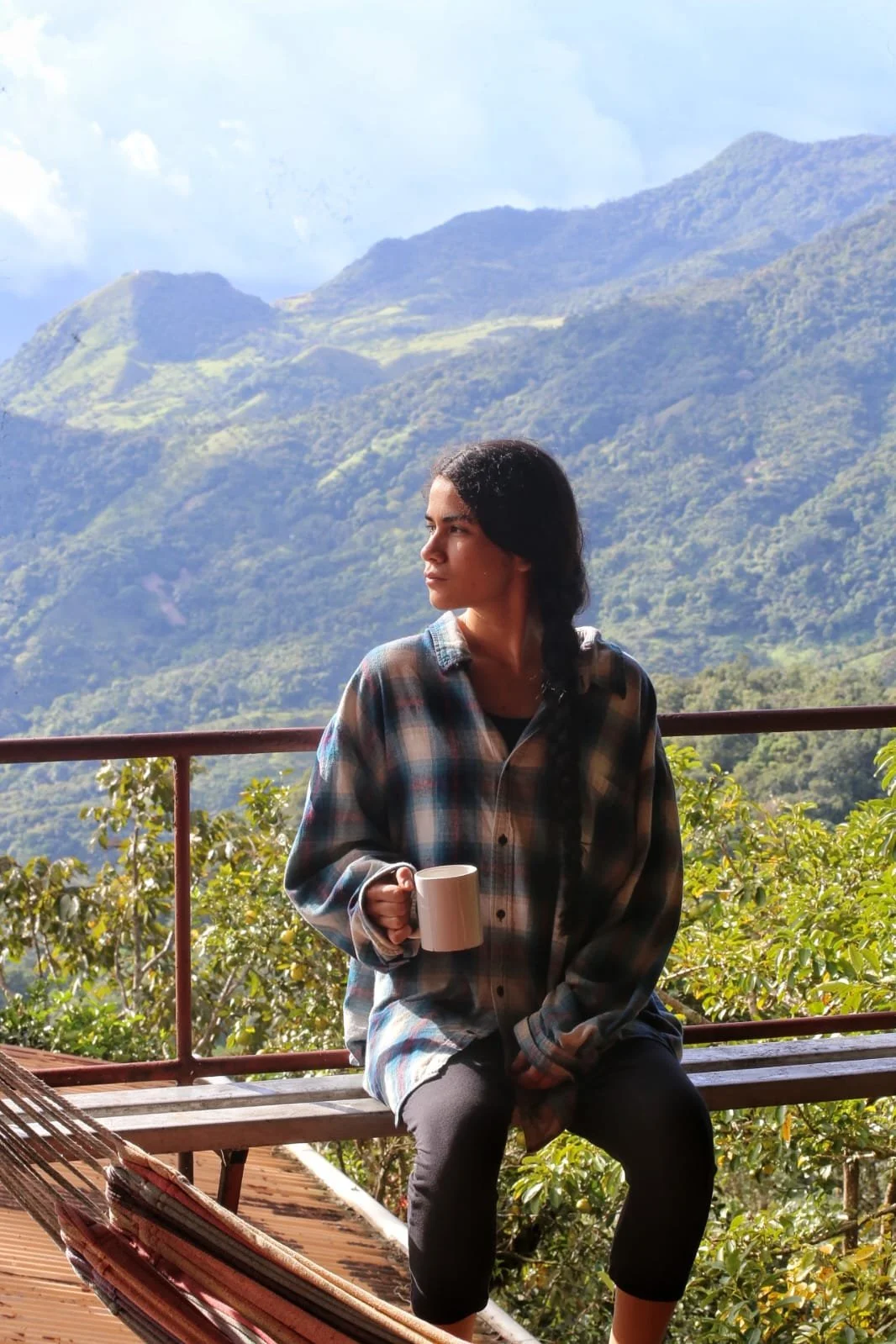
If you are visiting Boquete and only have time for a handful of activities, a coffee tour should be near the top of your list. Boquete is one of Panama's most famous coffee growing regions, and the coffee grown in these mountains has developed an international reputation for quality. But the real reason to take a coffee tour isn't simply to drink a great cup of coffee. It is to understand how much work, skill, geography and patience go into getting that coffee from a mountain farm into your cup.
For many visitors, a coffee tour ends up being one of those experiences that is much more interesting than they expected.
You Get to See Where the Coffee Actually Comes From
Most people are used to seeing coffee as beans in a bag or as a drink in a café. In Boquete, you can see the entire process much closer to its source.
Coffee grows on bushes, often among lush mountain vegetation. Depending on the farm and the season, you may see coffee plants covered with flowers or bright red ripe coffee cherries ready for harvesting.
Seeing a coffee plantation for the first time can completely change the way you think about coffee.
Those little beans in your kitchen didn't simply appear in a bag. They began as fruit growing on a plant in a very specific environment.
Boquete Has an Extraordinary Coffee Environment
Part of what makes Boquete such an important coffee region is its geography.
The area sits high in the mountains of Chiriquí, with elevations, temperatures, rainfall and volcanic soils that can create excellent conditions for growing specialty coffee. Different farms sit at different elevations and have their own microclimates, which can influence the characteristics of the coffee.
This is one of the fascinating things you discover on a tour.
Two coffee farms relatively close to each other can produce beans with noticeably different characteristics because of elevation, soil, shade, weather and processing methods.
In other words, coffee isn't simply coffee.
The mountain where it grows matters.
The Famous Geisha Coffee
Eventually, almost every serious coffee conversation in Boquete arrives at Geisha.
Panama's Geisha coffee has become legendary in the specialty coffee world, with some exceptional lots selling for extraordinary prices at auctions. Boquete and the surrounding highlands have played an important role in the rise of Panama's Geisha coffee.
You don't necessarily have to spend a fortune to taste specialty coffee, either. One of the advantages of taking a tour is learning why certain coffees command such high prices and what makes them different.
You may discover flavors and aromas in coffee that you never knew existed.
Instead of simply saying that coffee tastes like coffee, you might suddenly be talking about floral notes, citrus, berries, chocolate, tropical fruit or other characteristics.
From Cherry to Cup
One of the most interesting parts of a coffee tour is learning about the processing.
The coffee bean begins inside a fruit called a coffee cherry. The cherries have to be harvested, processed and dried before the beans are ready to be roasted.
Depending on the farm and processing method, the coffee can be washed, naturally processed, honey processed or handled using other techniques.
Each method can influence the final flavor.
Then comes drying, sorting, milling and roasting.
By the time you drink the finished coffee, that little bean has gone through an enormous number of steps.
A good tour connects all of those steps so you can understand the journey rather than simply hearing a list of technical terms.
Coffee Harvesting Is Surprisingly Labor Intensive
Another thing a coffee tour can teach you is just how much manual work is involved.
Coffee cherries don't all ripen at exactly the same time. Workers often need to selectively pick the ripe cherries while leaving others on the plant until they are ready.
That means harvesting can be painstaking work.
When you see a coffee plantation stretching across a mountain, it is easy to appreciate the scale of the operation. Thousands upon thousands of individual cherries may need to be picked, processed and sorted.
Suddenly that expensive specialty coffee doesn't seem quite so expensive.
The Mountain Scenery Is Part of the Experience
Even if you aren't particularly interested in coffee, a Boquete coffee tour is still a great way to experience the countryside.
The farms are surrounded by mountains, forests, valleys and lush vegetation. Depending on where you go, you can get beautiful views across the highlands while walking among the coffee plants.
The cooler climate makes walking around the plantations particularly pleasant compared with many of Panama's hotter lowland destinations.
You are getting a nature experience, a cultural experience and a food and drink experience all at once.
You Learn Why Coffee Tastes Different
One of the best parts usually comes at the end.
The tasting.
After learning about the plants, harvesting and processing, you get to taste the finished product. This gives you a completely different appreciation for what is in the cup.
You may be introduced to several coffees from different elevations, farms, varieties or processing methods.
Taste them side by side and you can start identifying differences.
One might be floral and delicate. Another might have fruitier characteristics. Another could be richer and more chocolatey.
It can be a bit of an eye opener for people who normally take their coffee with milk and sugar.
You Don't Have to Be a Coffee Expert
Don't worry if you know absolutely nothing about specialty coffee.
That's actually one of the best reasons to take the tour.
You don't need to know the difference between Arabica varieties. You don't need to understand coffee chemistry. You don't need to know what "cupping" means.
The tour is there to teach you.
And you may find that coffee becomes much more interesting once you understand the process.
It Is a Great Activity on a Cloudy Day
Boquete's weather is another reason coffee tours work so well as a tourist activity.
The mountains can be cloudy and rainy, and sometimes the spectacular views disappear behind mist.
That doesn't necessarily ruin a coffee tour.
In fact, walking through a coffee plantation in cool mountain mist can be part of the experience. And when the weather really turns bad, there is always the promise of getting inside and drinking coffee.
There are worse places to wait out a tropical rainstorm.
Coffee and Boquete Belong Together
There are plenty of things you can do in Boquete: hiking, waterfalls, birdwatching, rafting, gardens, hot springs and simply exploring the town.
But coffee is part of the identity of the region.
Skipping a coffee tour in Boquete would be a little like visiting a wine region and never visiting a vineyard.
You don't have to become a coffee fanatic afterward. But understanding the product that helped put this part of Panama on the international map makes your visit considerably more meaningful.
A Coffee Tour Is More Than a Cup
Perhaps the biggest reason to take a coffee tour is that it turns an ordinary drink into a story.
You see the plant.
You see the cherries.
You learn about the mountains.
You learn about harvesting.
You learn about processing.
You learn about roasting.
And finally, you taste the result.
By the time you take that first sip at the end of the tour, you're no longer just drinking coffee. You understand where it came from and why it tastes the way it does.
And when you get back to your hostel or hotel later that day and order another cup of coffee, there is a good chance you will look at it differently.
So if you're visiting Boquete, put a coffee tour on your itinerary. You don't have to be a coffee snob, and you certainly don't have to spend a fortune on beans. Just come curious, walk through the plantation, learn how the whole thing works and finish with a tasting.
You'll leave Boquete with a much better understanding of why Panama is taken so seriously in the world of coffee.