
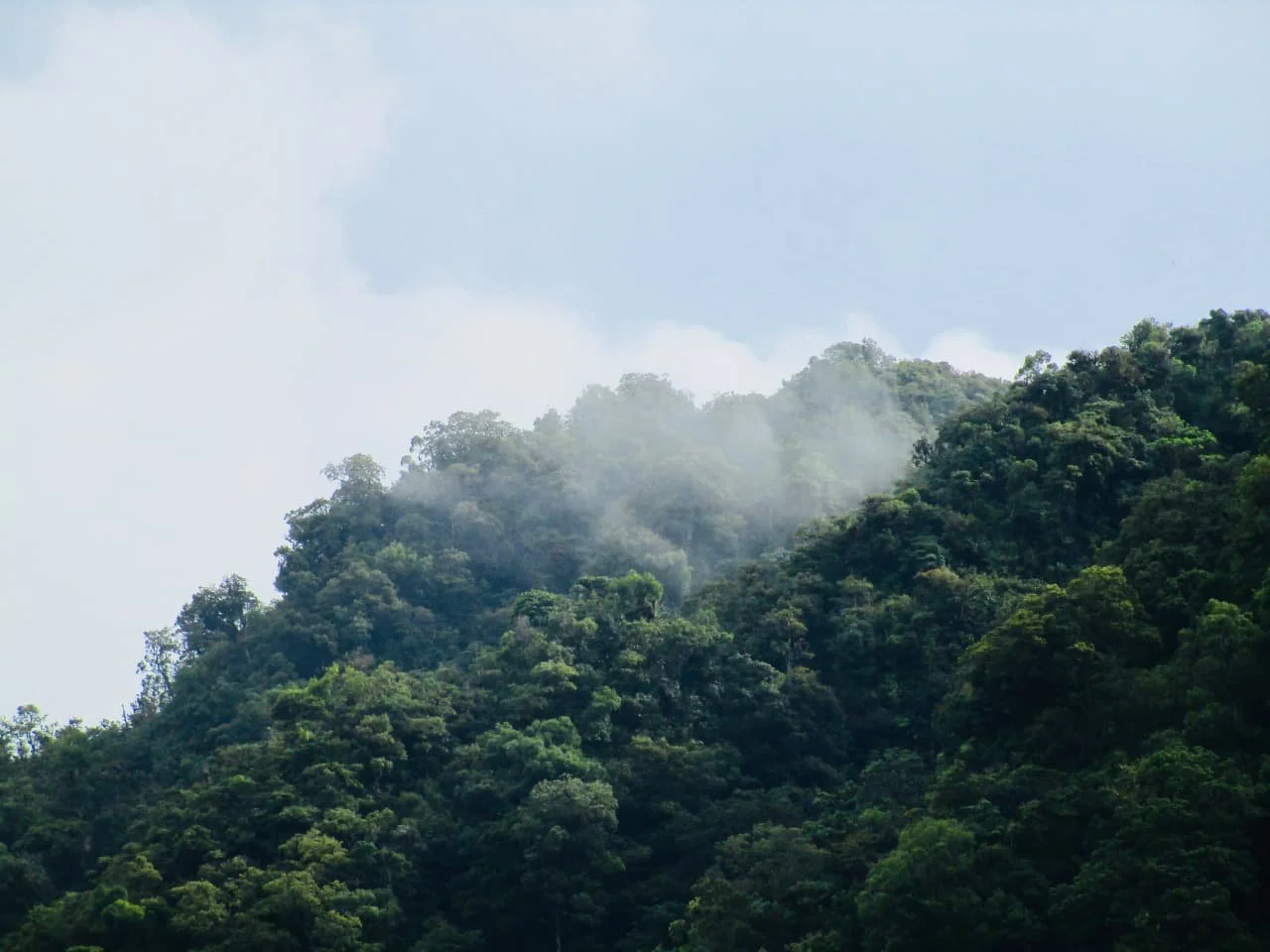
Panama is famous for its toucans, hummingbirds, macaws and the spectacular harpy eagle, but there is another group of birds that deserves far more attention. Hawks are everywhere in Panama. They hunt over forests, fields and rivers, sit silently on branches beside roads and soar high above the mountains. And at certain times of the year, the sky can become almost ridiculous with them.
Panama occupies one of the most important geographic positions for birds in the Americas. It is the narrow land bridge connecting North and South America, and that makes the country an extraordinary crossroads for both resident and migratory birds of prey.
Hawks Are Not Just One Kind of Bird
When people say they saw a "hawk" in Panama, they may actually be talking about several different kinds of raptors.
Panama has resident species such as the Roadside Hawk, while migratory species including the Broad-winged Hawk and Swainson's Hawk pass through in enormous numbers. There are also other birds of prey, including kites, falcons, eagles and vultures, that can sometimes be mistaken for hawks from a distance.
That variety is one of the things that makes watching raptors in Panama so fascinating. A small hawk perched beside a road might be a completely different species from the enormous bird circling several hundred metres above your head.
The Roadside Hawk: Panama's Everyday Hawk
One of the hawks you are most likely to encounter is the Roadside Hawk.
It is a relatively small raptor that is comfortable in a variety of habitats and can be found throughout Panama. Unlike the spectacular migratory flights that attract birdwatchers from around the world, Roadside Hawks are residents. You don't have to visit Panama during a particular month to have a chance of seeing one.
They are often found around forest edges, clearings and other areas where woodland meets more open habitat.
And they have a wonderfully appropriate name.
You can sometimes spot one sitting quietly on a roadside branch, utility pole or other elevated perch, patiently watching for an opportunity below.
Then Come the Migrants
This is where hawks in Panama become truly spectacular.
Every northern autumn, enormous numbers of raptors leave their breeding grounds in North America and head south toward their wintering areas.
Panama lies directly in their path.
The country's narrow geography helps concentrate birds that have been spread across a huge area of North America into a relatively narrow migration corridor. The result can be one of the most impressive wildlife spectacles anywhere in the Americas.
And you don't necessarily need to be deep in the jungle to witness it.
You can look up from Panama City.
The Broad-winged Hawk Explosion
The Broad-winged Hawk is one of the great stars of Panama's autumn migration.
During the breeding season, these hawks are associated with forests in North America. When migration begins, however, they can gather into enormous groups.
Hundreds or even thousands may circle together in what birdwatchers call a kettle.
Imagine looking upward and seeing a swirling mass of hawks slowly climbing higher and higher without appearing to flap very much.
That's because the birds are exploiting thermals.
Warm air rises from the ground, creating invisible columns of lifting air. Hawks circle inside these columns, gaining altitude with surprisingly little effort. Once they reach a useful height, they glide away toward the next thermal.
It is essentially an aerial conveyor belt.
Cornell's bird researchers describe Panama as one of the places where Broad-winged Hawks can become concentrated into spectacular "rivers" of raptors during migration.
Swainson's Hawks: Long-Distance Travelers
The Swainson's Hawk is another spectacular migrant.
These birds are serious travelers, with populations breeding in North America and migrating south into South America.
Panama is one of the places where their migration becomes especially visible. Cornell notes that Panama City is one of the select locations in Middle America where very large numbers of Swainson's Hawks can reliably be seen passing south in autumn.
When thousands of these birds are moving through Panama, the experience is completely different from spotting a single hawk sitting on a tree.
You can see streams of birds crossing the sky, sometimes mixed with Turkey Vultures, Broad-winged Hawks and other migrating raptors.
It can look as though the sky itself is flowing south.
Panama City Has One of the World's Great Hawk Shows
One of the most remarkable things about Panama's hawk migration is that you don't have to travel to some remote wilderness to see it.
Panama City is one of the world's great places to witness raptor migration.
Cerro Ancón and other areas around the Panama Canal zone have become famous among birdwatchers. Panama has recorded days when more than two million migrating raptors passed over the Panama City area. In one extraordinary count in November 2014, observers recorded more than 2.1 million raptors in a single day.
Think about that.
More than two million birds of prey passing over one metropolitan area in a single day.
Most people on the ground probably had no idea it was happening.
The Best Time to Look Up
For the great autumn migration, October and early November are particularly exciting.
The exact timing varies with weather and species, but this is when enormous concentrations can occur.
Weather is extremely important because these birds depend heavily on rising air currents. If conditions aren't suitable, migration can slow dramatically. When conditions improve, huge numbers of birds can suddenly appear.
So if you're in Panama during October, develop a habit:
Look up.
You might see a toucan.
You might see a parrot.
Or you might suddenly discover that several hundred hawks are circling above you.
Not Every Hawk Is Migrating
One of the fascinating things about Panama is that while some hawks are making epic journeys across continents, others are simply living their normal tropical lives.
Resident hawks have evolved to exploit Panama's year-round food supplies.
They hunt rodents, lizards, snakes, insects, frogs and other small animals depending on the species.
Their presence is an important part of the ecosystem because they help keep populations of prey species in balance.
And because Panama has everything from lowland rainforest to cloud forest, agricultural land, wetlands and mountains, different raptors can specialize in very different environments.
Hawks Are Incredible Hunters
Watch a hawk closely and you start to appreciate how much technology has gone into making one.
Their eyes are extraordinarily effective at detecting movement.
Their hooked beaks are designed for tearing food.
Their feet are equipped with powerful talons.
And their wings allow them to maneuver through environments ranging from open fields to dense forest.
Some species hunt from exposed perches, waiting patiently for something to appear below.
Others actively patrol the sky.
And some are specialists at moving through forests where a large bird would seem almost impossible to maneuver.
The fact that they can do all of this while maintaining such incredible control of their flight is one of the reasons raptors are so fascinating to watch.
The Hawk Migration Is a Journey Across Continents
Perhaps the most amazing thing about Panama's hawks is realizing where they have come from.
A hawk passing over Panama in October may have started its journey thousands of kilometres away in Canada or the United States.
It has crossed enormous distances, following a seasonal route that generations of birds have used.
Panama is essentially a narrow bridge in the middle of this continental journey.
And the birds aren't finished.
Many continue through Colombia and deeper into South America.
Then, months later, they begin the journey north again.
Watch the Sky Around the Mountains Too
You don't have to limit your hawk watching to Panama City.
The mountains and forests of Panama provide excellent opportunities to see raptors throughout the year.
In places such as Chiriquí, you have the added advantage of dramatically varied elevations and habitats. A morning spent walking through forest can produce completely different bird sightings from an afternoon looking across open valleys.
This is one reason places such as the mountains around Boquete, Volcán and the Fortuna area are so interesting to birdwatchers.
You never quite know what is going to appear above the trees.
And sometimes the best bird isn't the colorful one sitting three metres away.
It is the dark silhouette soaring silently over the mountain ridge.
The Magic of Seeing a Hawk in Panama
There is something particularly satisfying about seeing a hawk in the wild.
A toucan is hard to miss.
A hummingbird practically announces itself with frantic wingbeats.
A macaw makes sure everyone within half a kilometre knows it is there.
A hawk is different.
You may suddenly notice a shape circling overhead.
You watch it for a few seconds.
Then you realize it isn't moving its wings.
It is simply riding the air.
And if you're lucky, you look around and realize there isn't just one.
There are dozens.
Or hundreds.
And during the great migration, potentially thousands.
Panama is a country where the sky is part of the wildlife experience.
So when you're walking through the jungle, driving through the countryside or sitting outside with a cold drink, don't just look at the trees.
Every once in a while, look straight up.
There may be a hawk passing overhead that has traveled thousands of kilometres to get there.