
There are places in Panama that are beautiful.
There are places that are historic.
And then there are places where you can stand on a quiet Caribbean street and genuinely feel like you have wandered into another century.
Portobelo is one of those places.
Tucked into a beautiful bay on Panama's Caribbean coast in Colón Province, Portobelo looks deceptively sleepy today. There are colorful buildings, small restaurants, fishing boats, tropical vegetation and old stone ruins scattered around the shoreline.
But underneath that relaxed Caribbean atmosphere is an absolutely extraordinary story.
For centuries, Portobelo was one of the most important ports in the Spanish Empire. Silver and gold crossed the Americas and eventually arrived here before being loaded onto ships bound for Europe. Massive trade fairs filled the town. Spanish soldiers guarded the harbor from heavily armed fortifications. Pirates and privateers dreamed about attacking it.
And eventually they did.
Today, the cannons are silent, the jungle is reclaiming parts of the old fortifications, and fishing boats have replaced treasure fleets.
But Portobelo never lost its character.
In fact, the most fascinating part of Portobelo may not be the pirates at all.
It is the living Afro Caribbean culture that developed here and survived generations of slavery, resistance and enormous historical change.
That combination of Caribbean scenery, Spanish forts, pirates, religious traditions, Afro Panamanian culture, jungle and spectacular food makes Portobelo one of the most interesting places to visit in Panama.
---
A Town Built for an Empire
Portobelo was officially founded in 1597, replacing the older Caribbean port of Nombre de Dios as a major terminal on the Spanish trade route across the Isthmus of Panama. UNESCO describes Portobelo and San Lorenzo as part of a huge defensive system created to protect the transatlantic trade routes of the Spanish Empire.
The location was perfect.
Portobelo sits around a naturally sheltered bay on the Caribbean side of the isthmus.
Goods could arrive by ship from South America, travel across Panama and eventually reach the Pacific and Panama City. In the other direction, European goods could enter through the Caribbean and cross the isthmus.
This was Panama's version of an ancient international airport.
Except instead of airplanes, there were wooden sailing ships.
And instead of luggage, they were carrying enormous amounts of wealth.
Portobelo became one of the great Caribbean terminals of the Spanish Empire.
Its famous trade fairs could last for weeks, with merchants, sailors, soldiers, slaves and traders converging on the town.
For a relatively small settlement, it suddenly became one of the most strategically important places in the Americas.
And that made it a very attractive target.
---
The Pirates Were Not Imaginary
If you have ever imagined the Caribbean during the age of pirates, Portobelo is one of the places where the fantasy becomes surprisingly real.
The town was attacked repeatedly because everyone knew what passed through its harbor.
The Spanish responded by building an extraordinary collection of forts and batteries around the bay.
Rather than constructing one giant fortress, they created a defensive network that used the shape of the coastline itself.
Cannons could cover approaches to the harbor.
Fortifications were positioned around the bay.
Other defenses controlled important approaches.
The entire landscape became part of the military system.
UNESCO considers the resulting Portobelo San Lorenzo complex an outstanding example of Spanish military architecture adapted to the tropical landscape. The property was inscribed on the World Heritage List in 1980.
And this is what makes walking around Portobelo so fascinating.
You aren't looking at one old fort.
You are walking through the remains of an entire military landscape.
---
The Ruins Are Everywhere
One of the best things about Portobelo is that history isn't hidden away inside one museum.
It is spread throughout the town.
You can walk along the waterfront and encounter old batteries, stone walls, cannons and ruins.
The Santiago fortifications, San Jerónimo and the San Fernando defenses formed parts of the enormous system protecting Portobelo Bay.
Some structures are surprisingly dramatic.
Others are little more than walls disappearing into tropical vegetation.
And that is part of the appeal.
Portobelo doesn't feel like a perfectly reconstructed European castle.
It feels like a Caribbean town that simply grew around its own history.
You can be looking at a centuries old cannon one minute and a local fishing boat the next.
---
The Royal Customs House
One of the most important buildings in town is the old Royal Customs House.
Originally constructed in the colonial period, the building was associated with the enormous commercial activity taking place in Portobelo.
Today it has been restored and houses the Museum of Afro Panamanian Memory, helping explain a part of Portobelo's history that can easily get lost when the story is reduced to pirates and treasure.
And that is important.
Because Portobelo's story isn't simply a romantic pirate adventure.
It is also a story about colonialism, slavery, trade, resistance and the creation of a distinctive Afro Caribbean culture.
The museum helps put that history into context.
---
The Black Christ of Portobelo
Then there is the other side of Portobelo's identity.
Religion.
Inside the historic town is the church associated with the Black Christ, or Cristo Negro, one of Panama's most important religious traditions.
Every year on October 21, enormous numbers of pilgrims travel to Portobelo for the celebration of the Black Christ.
Some people walk extraordinary distances.
Others arrive as part of religious promises or acts of devotion.
For visitors, it can be an eye opening glimpse into a completely different side of Panama.
This isn't a tourist performance.
For many people, it is deeply personal.
And it is another reason Portobelo feels so different from a conventional Caribbean vacation destination.
---
The Congo Culture of Portobelo
If you only remember one cultural thing about Portobelo, make it this:
The Congo culture.
The Afro Panamanian Congo traditions of the Portobelo region are among the most fascinating cultural expressions in Panama.
They developed from the history of Africans who were brought to the region during the colonial period, including people who escaped slavery and formed communities of resistance.
Music, dance, costumes, storytelling and symbolism became ways of preserving identity and history.
The tradition is particularly famous for its colorful costumes, masks, drums and dramatic dances.
And there is something much deeper going on beneath the spectacle.
The Congo tradition contains stories of resistance and freedom.
UNESCO recognizes the Congo cultural expressions of Panama as intangible cultural heritage, and the traditions remain very much alive in Portobelo and surrounding communities.
This is why Portobelo is so much more than a collection of old Spanish ruins.
The people who live here are part of the history.
They aren't simply living beside it.
---
The Diablos and Congos
One of the most fascinating expressions is the relationship between the Congos and the Devils.
Performances use music, dance, masks and storytelling to represent the struggle between enslaved and rebellious Africans and the forces that oppressed them.
The symbolism can be playful, humorous and dramatic at the same time.
It is history expressed through performance rather than a textbook.
And when the drums begin and the costumes appear, Portobelo can suddenly feel like a completely different place.
The annual Festival de la Pollera Congo, Máscaras y Bailes de Diablos continues to celebrate these traditions and their Afro Panamanian roots.
For a traveler, experiencing this respectfully is far more meaningful than simply taking photographs of an old fort.
---
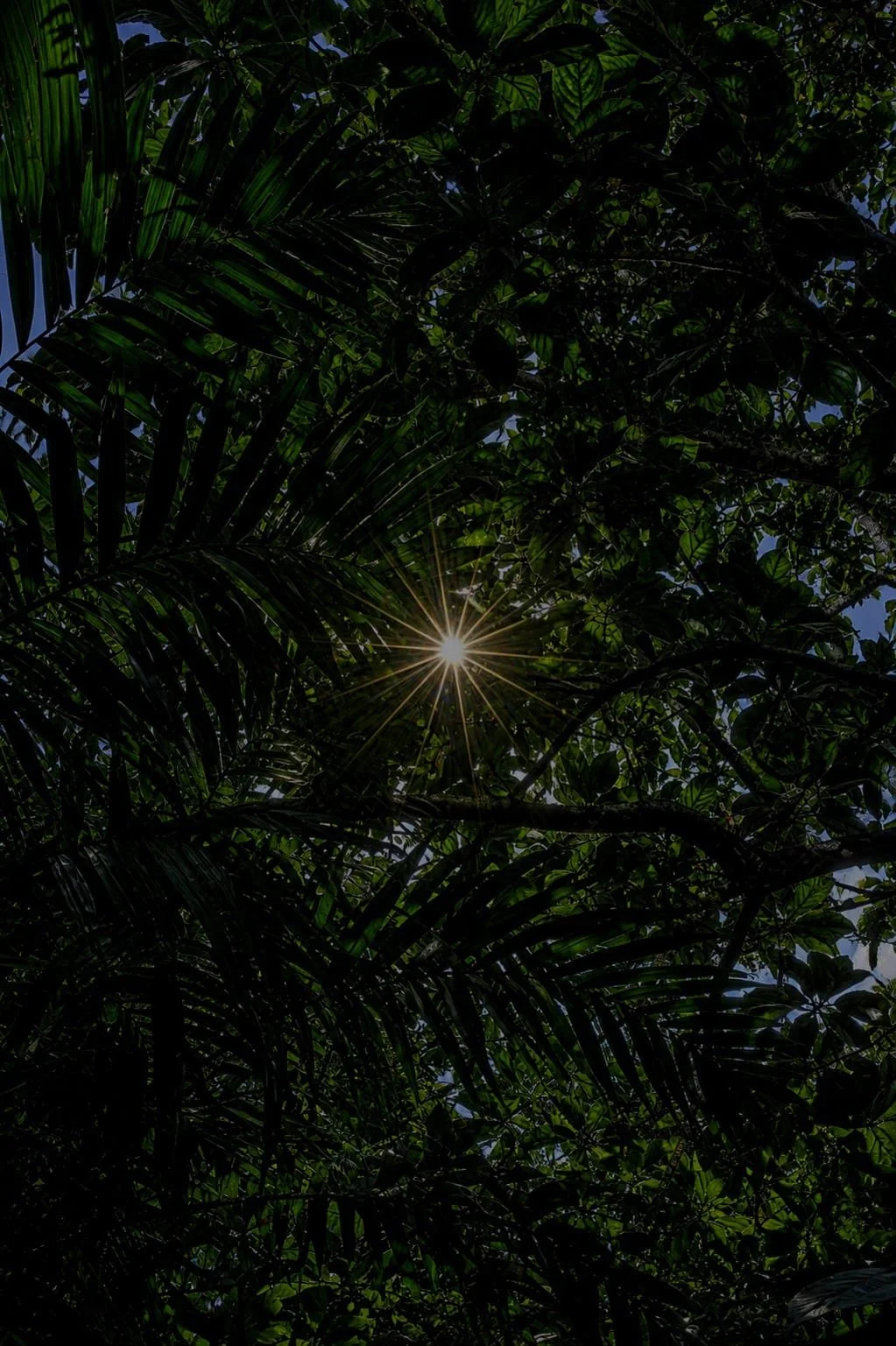
Portobelo Is Also a Jungle Destination
The history can make people forget something obvious.
Portobelo is in the Caribbean tropics.
The town is surrounded by lush vegetation, mountains, rivers, mangroves, beaches and tropical forest.
The protected area around Portobelo combines marine and terrestrial environments, including forest, mangroves, beaches and reefs.
So you can combine history with nature.
Spend the morning wandering through colonial ruins.
Have lunch overlooking the Caribbean.
Then head out by boat toward a secluded beach.
Or go snorkeling.
Or simply sit somewhere in the shade and watch fishing boats move across the bay.
Portobelo doesn't require you to choose between history and nature.
You get both.
---
And Then There Is the Food
Portobelo's food is another reason to slow down.
The cooking reflects the Caribbean environment and Afro Caribbean heritage of the region.
Expect plenty of seafood, coconut and plantains.
Local specialties include dishes such as fish with coconut, octopus cooked with coconut milk, conch, fried fish with patacones, seafood and traditional soups.
This is not the kind of food where you need a complicated explanation.
Fresh fish.
Coconut.
Plantains.
Rice.
Seafood.
Spices.
And a Caribbean setting.
Sometimes the best travel meals are the ones that don't need much introduction.
---
Portobelo and San Lorenzo
If you are really interested in the history, don't stop at Portobelo.
There is another enormous piece of the story farther away.
Fort San Lorenzo sits at the mouth of the Chagres River, roughly 43 kilometers from Portobelo, and forms part of the same UNESCO World Heritage property.
Its location makes perfect strategic sense.
The Chagres River was an important route into the interior of the isthmus.
Control the river entrance and you could help control one of the routes across Panama.
So San Lorenzo was effectively another lock on the enormous Spanish imperial transportation system.
Standing on the old fortifications overlooking the river and Caribbean, it becomes much easier to understand why the Spanish were willing to spend enormous amounts of money defending this part of Panama.
---
Imagine Portobelo 400 Years Ago
This is one of my favorite ways to experience the town.
Forget what it looks like today for a moment.
Imagine the bay filled with sailing ships.
Imagine merchants arriving.
Soldiers carrying weapons.
Mules moving goods.
People speaking different languages.
Warehouses packed with valuable cargo.
Sailors drinking and gambling.
African people being forced into an economic system that treated human beings as commodities.
Church bells ringing.
Cannons pointing toward the entrance of the bay.
And somewhere beyond the horizon, another ship wondering whether Portobelo might be carrying enough treasure to justify an attack.
Then look around.
The modern town is quiet.
The boats are smaller.
The streets are peaceful.
Trees grow around the ruins.
And the Caribbean is still sitting exactly where it was.
That contrast is what makes Portobelo so fascinating.
---
Portobelo Is Not Just a Museum
This is perhaps the biggest mistake travelers can make.
They arrive, photograph the forts, look at a cannon, visit the church and leave.
But Portobelo is much more interesting when you slow down.
Walk around.
Talk to people.
Eat local food.
Visit the museums.
Learn about the Congo culture.
Look at the architecture.
Sit beside the water.
Take a boat into the surrounding coastal area.
Pay attention to the mixture of Caribbean, African, Spanish and Panamanian influences.
The town rewards curiosity.
---
Why Backpackers Should Visit Portobelo
Portobelo fits particularly well into a backpacking trip because it is completely different from the standard Panama City experience.
Panama City gives you skyscrapers, nightlife, the Canal and modern Panama.
Bocas gives you Caribbean islands and backpacker energy.
Santa Catalina gives you surfing and access to Coiba.
Boquete gives you mountains, coffee and cool weather.
Lost and Found gives you jungle, wildlife and a completely different kind of social hostel experience.
Portobelo gives you history and Caribbean culture.
And it can be combined with other places on the Caribbean side of Panama.
You can spend time exploring the ruins and culture of Portobelo before continuing toward the beaches and islands farther east.
That makes it particularly useful for travelers who want their Panama trip to be about more than beaches.
---
The Best Thing About Portobelo
The best thing about Portobelo isn't the pirate stories.
It isn't the cannons.
It isn't even the UNESCO designation.
It is the fact that the history never completely disappeared.
The forts remain.
The church remains.
The bay remains.
The Afro Caribbean culture remains.
The music remains.
The religious traditions remain.
And people still live in the same landscape that once played an enormous role in the history of the Americas.
You can stand in Portobelo and see centuries of history compressed into a few hundred meters.
Spanish imperial power.
African resistance.
Caribbean culture.
Pirates.
Religion.
Trade.
Slavery.
Freedom.
Jungle.
Ocean.
All in one little town.
---
Portobelo: One of Panama's Great Hidden History Trips
Panama is often marketed around the Canal, tropical beaches and islands.
And those things are fantastic.
But Portobelo demonstrates why Panama is so much more interesting than that.
This is a country where you can stand on the Caribbean coast and walk through the ruins of one of the most important ports in the Spanish Empire, then hear drums connected to centuries of Afro Panamanian history, eat seafood cooked with coconut and finish the afternoon looking across a tropical bay.
Few destinations give you that combination.
Portobelo is where Panama's Caribbean history feels alive.
It isn't polished into a perfect historical attraction.
It doesn't need to be.
The crumbling walls, tropical vegetation, fishing boats, old churches, colorful traditions and humid Caribbean air somehow make the place more believable.
You aren't just visiting history.
You are walking through a place where history happened, and where people are still creating it today.