
Panama has a secret.
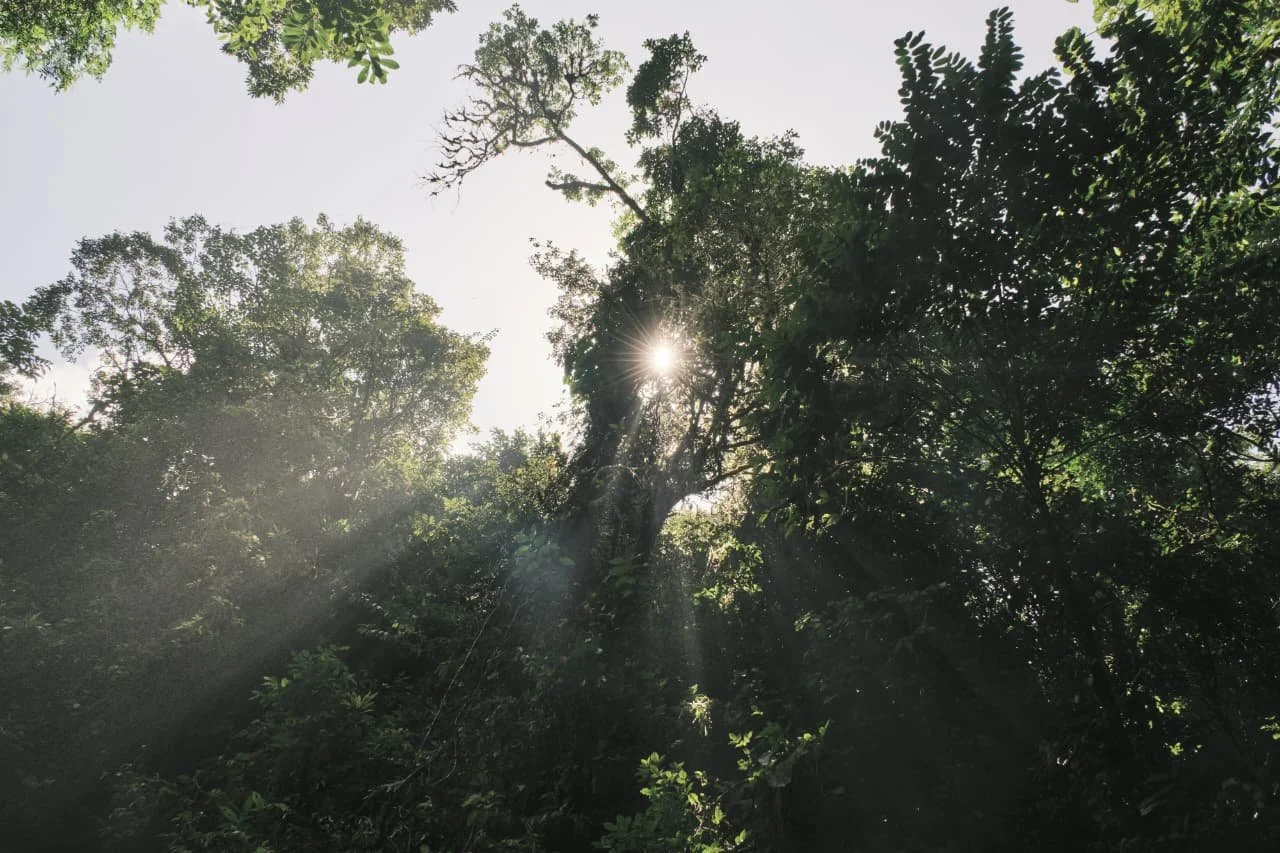
You can walk through some of the country's wildest forests for days and never realize that you may be sharing the jungle with one of six species of wild cats.
Some are enormous.
Some are barely bigger than a house cat.
Some can climb trees.
Some spend much of their lives on the ground.
Some are occasionally captured by camera traps in places where people never see them at all.
And one is the largest cat in the Americas.
The incredible thing about Panama is that its position between North and South America has turned the country into a biological crossroads. The forests of Panama form an important part of the Mesoamerican biological corridor used by jaguars and other wildlife moving through the region.
So what exactly is hiding in those forests?
Here are Panama's wild cats, from the enormous jaguar to the tiny and almost ghostlike oncilla.
---
1. The Jaguar: The King of the Panamanian Jungle
Jaguar
Panthera onca
If Panama has a true jungle legend, it is the jaguar.
The jaguar is the largest cat in the Americas and the third largest cat in the world after the tiger and lion.
It is also one of the most difficult animals in Panama to see.
And that is exactly how the jaguar likes it.
A mature jaguar can weigh well over 50 kilograms, although size varies considerably between individuals and regions. They are extraordinarily muscular animals, with enormous heads, powerful jaws and a stocky body that makes them look almost completely different from the more slender cats of the forest.
Their coats are covered in rosettes, usually with distinctive spots inside many of those rosettes.
But seeing one in person?
That's another story.
Panama's jaguars are largely creatures of the shadows.
Researchers have had to rely heavily on camera traps, tracks and GPS collars to understand where they travel and how they behave.
The Darién is particularly important for Panama's jaguars. Researchers describe it as home to the country's largest jaguar population and part of the biological corridor connecting Central and South America.
And here's something fascinating.
Scientists used to think jaguars were primarily animals of deep forest.
Research in Panama has shown that they can also move through landscapes containing cattle pasture and patches of forest.
That creates both opportunities and problems.
A jaguar doesn't necessarily understand that humans have decided a particular piece of land is now a farm.
It simply sees its traditional landscape.
And that is one reason conservationists are working to understand exactly how these cats move through the country.
---
2. The Puma: Panama's Other Big Cat
Puma
Puma concolor
If the jaguar is the heavily built powerhouse of the forest, the puma is the elegant athlete.
Pumas have an enormous geographic range, extending from Canada through much of the Americas.
They are also found in Panama.
Unlike jaguars, pumas don't have spotted coats as adults.
They are generally tawny, grayish or brownish, with a long tail and a much more streamlined appearance.
And they are exceptionally adaptable.
Pumas can live in a surprisingly wide range of environments, which helps explain their enormous distribution.
In Panama, researchers studying large cats have used camera traps and GPS technology to understand their movements. Fundación Yaguará Panamá has worked with both jaguars and pumas in areas where wildlife overlaps with human activity.
The puma is another cat you are extremely unlikely to casually encounter.
If you're walking through a Panamanian forest and suddenly think you saw something large moving between the trees, there's a very good chance it will disappear before you can decide what it was.
That's the nature of wild cats.
They generally know you're there before you know they're there.
---
3. The Ocelot: Panama's Spotted Nighttime Ghost
Ocelot
Leopardus pardalis
Now we get to one of Panama's more interesting cats.
The ocelot is much smaller than a jaguar or puma, but it is still an impressive predator.
It looks almost like someone took a miniature jaguar and sent it through a tropical forest.
Ocelots have beautiful coats covered in dark spots, stripes and rosettes.
They are primarily nocturnal and can hunt both on the ground and in trees. Smithsonian researchers describe the ocelot as an opportunistic carnivore and note that it is the most abundant wild cat in the Canal Basin.
And the ocelot has something that the big cats don't necessarily have.
It is much more likely to exist surprisingly close to people without being noticed.
The Smithsonian's long running camera trap project on Barro Colorado Island has produced an enormous amount of information about individual ocelots, including their reproduction, movements, diet, social behavior and longevity.
In fact, researchers have been able to identify individual animals and follow their lives over many years.
Imagine having a camera in the jungle that keeps photographing the same secretive cat over and over again.
You might never see the animal yourself.
But the camera knows it is there.
---
4. The Margay: The Cat That Lives in the Trees
Margay
Leopardus wiedii
If you want to see what looks like a miniature rainforest leopard, look up.
The margay is one of the most spectacular little cats in the Americas.
It is smaller than an ocelot but has a beautifully marked coat and an extraordinary relationship with trees.
Margays are highly adapted to life in the forest canopy.
Their flexible ankles allow them to rotate their feet in ways that make climbing and descending trees much easier.
This gives them an advantage that many other predators simply don't have.
The forest isn't just the ground.
For a margay, the forest is vertical.
Branches become highways.
Tree trunks become escape routes.
And the canopy becomes a hunting ground.
This is also one reason margays are so difficult to observe.
You could be standing beneath one and have absolutely no idea it is there.
At night, it could be moving through the branches above your head while you are looking for animals on the forest floor.
---
5. The Oncilla: Panama's Tiny Spotted Cat
Oncilla or northern tiger cat
Leopardus tigrinus
This is one of the cats that sounds almost too cute to be real.
The oncilla is a small, beautifully spotted wild cat sometimes called a little spotted cat or tiger cat.
It is considerably smaller than an ocelot.
But don't let the size fool you.
It is a genuine wild predator.
The oncilla is elusive, primarily associated with forest environments, and its small size makes it one of the least conspicuous members of Panama's feline family.
For wildlife enthusiasts, this is the kind of animal that can become a lifelong obsession.
You could spend years exploring tropical forests and never see one.
A camera trap photograph can therefore be incredibly exciting.
One of the great lessons of wildlife photography is that rare doesn't necessarily mean absent.
Sometimes it simply means incredibly good at hiding.
---
6. The Jaguarundi: The Strange One
Jaguarundi
Herpailurus yagouaroundi
And then there's the weird cat.
The jaguarundi looks almost like someone stretched a house cat.
It has a long body, short legs, small rounded ears and a long tail.
Unlike most of the other wild cats in Panama, it doesn't have an obvious spotted pattern.
Its coat can be brownish, grayish or reddish.
It is an extremely unusual looking animal.
And it is notoriously difficult to see.
Smithsonian camera trap research has documented jaguarundis in Panama, including in timber plantations in the Panama Canal watershed. Researchers specifically described the species as elusive and rarely seen even in natural forests.
That makes the jaguarundi particularly fascinating.
You don't necessarily need pristine untouched rainforest to have one passing through.
Researchers have discovered these cats using modified landscapes as possible habitat or corridors.
That doesn't mean plantations are equivalent to natural forest. They aren't.
But it demonstrates how surprisingly adaptable some small wild cats can be.
---
Six Cats. Six Completely Different Lifestyles.
One of the fascinating things about Panama's wild cats is how different they are from one another.
You have the jaguar, an enormous ambush predator capable of killing surprisingly large prey.
You have the puma, an athletic and adaptable predator with one of the largest ranges of any mammal in the Americas.
You have the ocelot, a spotted nocturnal hunter that can operate on the ground and in trees.
You have the margay, a highly specialized forest climber.
You have the oncilla, a tiny and extraordinarily elusive spotted cat.
And you have the jaguarundi, the strange long-bodied cat that barely looks like what most people imagine when they hear the word "wildcat."
Six species.
One relatively small country.
That's pretty remarkable.
---
Why Almost Nobody Sees Them
This is probably the most important thing to understand about Panama's wild cats.
They are there even when you don't see them.
The Smithsonian's Barro Colorado Island monitoring program is a perfect example.
Researchers have spent decades using camera traps to study mammals.
The project has documented 47 species of nonflying mammals living on or visiting the island.
Among them are several wild cats.
Ocelots have been extensively studied.
And remarkably, camera traps even recorded jaguars and pumas visiting Barro Colorado Island in 2009. Researchers believe they remained for several months before swimming to nearby areas.
Think about that.
Jaguars swimming between islands in the Panama Canal.
That sounds like something from a wildlife documentary, but it was documented by scientists.
---
The Jungle Has Eyes
This is one of the coolest things about modern wildlife research.
You don't have to physically see an animal to prove it is there.
A camera trap can sit beside a trail for months.
Something walks past.
The infrared sensor triggers.
Click.
And suddenly researchers know a jaguar, puma, ocelot or jaguarundi has been moving through an area.
Over thousands of photographs, scientists can begin to understand patterns.
Which trails do animals use?
When are they active?
How large are their territories?
Are females raising kittens?
Which species coexist?
What prey are they hunting?
Are animals crossing roads?
Are forests connected?
The result is almost like building a secret map of the jungle.
---
What About Lost and Found?
This is one of the reasons wildlife around places like the Fortuna Forest Reserve is so fascinating.
You don't have to travel deep into the Darién to experience the feeling that you're in genuine wild-cat country.
The forests around western Panama contain an extraordinary collection of mammals, and the fact that cats are so elusive makes every track, camera-trap photograph or unexplained movement interesting.
At Lost and Found, for example, the surrounding forest provides habitat for an impressive range of wildlife, including nocturnal mammals that most visitors would never know were moving through the jungle.
And this is the important distinction:
You don't go into the jungle expecting to see a jaguar.
You go because you know that the jungle is alive with things you probably won't see.
That makes a night walk particularly exciting.
You might encounter a kinkajou.
An olingo.
A porcupine.
A tarantula.
A snake.
A scorpion.
Or something moving silently through the vegetation that disappears before your flashlight can find it.
And somewhere in the larger ecosystem are predators.
That's what makes a real jungle feel different from a zoo.
You don't know exactly what is there.
---
The Most Likely Cat to See
If you're wondering which Panamanian wild cat you actually have a realistic chance of encountering, the answer is generally the ocelot.
That doesn't mean they are easy to see.
They're still nocturnal and secretive.
But camera trap studies have shown that ocelots can be relatively common compared with Panama's larger cats, particularly in suitable habitat. Smithsonian describes them as the most abundant feline in the Canal Basin.
The big cats are much harder.
A jaguar can move through the forest without leaving much evidence.
A puma can cover enormous distances.
A margay may be somewhere above you.
An oncilla can disappear into dense vegetation.
A jaguarundi can pass through a landscape almost unnoticed.
That's why experienced wildlife watchers celebrate tracks, photographs and brief sightings.
They know what it took to get that evidence.
---
The Most Difficult Cat to See
There isn't necessarily a single definitive answer because detectability varies by habitat and species, but the margay, oncilla and jaguarundi are all spectacularly elusive.
The margay has the advantage of being able to disappear into the canopy.
The oncilla is tiny and secretive.
The jaguarundi is often active in ways that make it difficult to spot and can travel through dense vegetation without attracting attention.
Seeing one in the wild is therefore a genuine achievement.
Not something you should expect because you went for a two hour hike.
---
The Most Famous Cat
That's easy.
The jaguar.
It has become one of the great symbols of wild Central and South America.
And Panama is particularly important because of its geographic position.
Panama connects the wildlife of North and South America.
That means protecting forests in Panama isn't just about protecting Panamanian wildlife.
It helps maintain a biological bridge across the continent.
Researchers describe Panama as an important part of the Mesoamerican jaguar corridor.
The jaguar is therefore much more than a beautiful animal.
It is an indicator of whether large connected ecosystems still exist.
---
Why Wild Cats Matter
Predators are sometimes misunderstood.
People see a large cat and think danger.
Ecologists see something else.
They see an animal that helps regulate an ecosystem.
Jaguars and pumas influence populations of prey animals.
Ocelots and the smaller cats occupy their own niches.
Removing predators can have consequences that ripple through an ecosystem.
That is why wild cats are important even if most people will never see one.
A healthy forest isn't simply a collection of trees.
It is a complicated web of predators, prey, insects, plants, fungi, birds and countless other organisms.
The cats are part of that machinery.
---
Panama's Wild Cats Are a Reminder of What You Can't See
Perhaps the most fascinating thing about Panama's wild cats isn't how many species there are.
It's the realization that you are almost certainly seeing only a tiny fraction of the wildlife around you.
You can walk a jungle trail and see nothing larger than a bird.
Meanwhile:
An ocelot may have crossed the trail a few hours earlier.
A puma may have passed through the valley.
A margay may be moving through the canopy.
A jaguarundi may be hunting somewhere nearby.
And deep in another forest, a jaguar may be walking silently through the darkness.
The jungle doesn't need to put on a show.
It doesn't need to roar.
Sometimes the most exciting wildlife encounter is knowing that something was there just before you arrived.
That mysterious footprint.
That strange movement in the bushes.
A photograph from a camera trap.
A set of tracks in the mud.
Or, if you're extraordinarily lucky, two eyes reflecting back at you from the darkness.
Panama has six species of wild cats, and most visitors will never see a single one.
And somehow, that makes walking through the jungle even more exciting.