
Bocas del Toro is famous for its turquoise water, Caribbean islands, beach bars, water taxis and parties. And there is nothing wrong with enjoying any of that. But if you spend your entire visit jumping between the usual boat tours and beaches, you can leave Bocas without really seeing the place.
The more interesting Bocas is often found away from the postcard attractions. It is in the jungle, on muddy trails, in Indigenous communities, inside caves, along quiet rivers and on the mainland where very few international travelers bother to go.
Here are some of the best ways to experience the less touristy side of Bocas del Toro.
Go to Klosay and Hike to Alto Chorro
One of the best examples is Klosay, on the Bocas del Toro mainland in the Ngäbe Buglé territory.
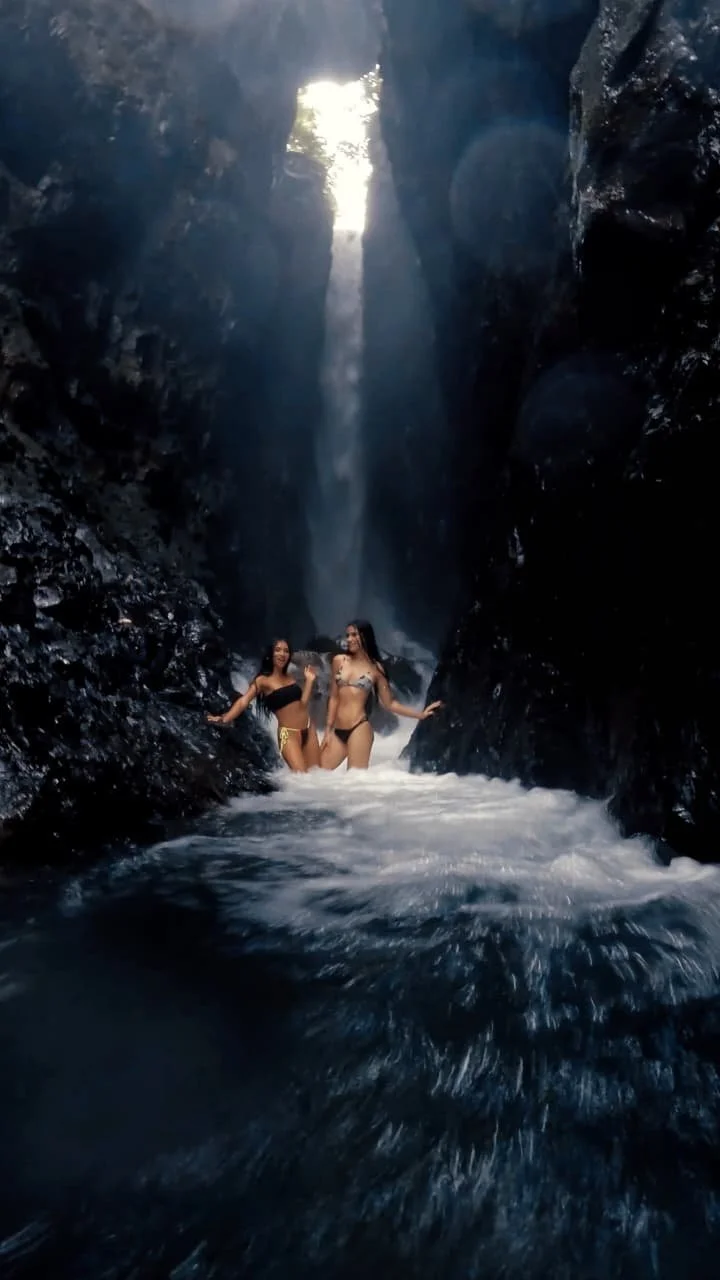
The Klosay Ecotourism Project offers an opportunity to hike with local community members through dense tropical forest to the spectacular Alto Chorro waterfall. The trail involves plenty of climbing and descending, and the conditions can become muddy and challenging after rain. The reward is a huge waterfall dropping into a canyon surrounded by towering jungle covered rock walls.
What makes Klosay particularly interesting is that the waterfall is only part of the experience. The visit connects you with the local community, their culture, food and knowledge of the surrounding forest.
This is the kind of experience that feels very different from taking a water taxi to another beach.
And if you're staying at Lost and Found Hostel, Klosay is one of the adventures that makes sense to consider while you're in the area rather than simply treating Bocas as an island destination.
Klosay is not a place to simply show up and wander into. Arrange the community experience beforehand and go with their local guides.
Visit a Bat Cave
Yes, Bocas has caves.
One of the more unusual experiences is the Gruta de la Virgen, between Bocas Town and Boca del Drago on Isla Colón. The cave contains thousands of bats, stalactites and a small stream running through it.
It is a completely different experience from spending another afternoon sitting on a beach.
Walk into the darkness and you begin hearing the forest rather than seeing it. The cave becomes alive with bats flying overhead while water moves through the darkness below.
Bocas also has other opportunities to explore caves and karst environments. Bastimentos, in particular, has jungle trails leading to caves and other less obvious natural attractions.
Explore Bastimentos Without Making It a Beach Day
Most people associate Isla Bastimentos with beautiful beaches and the famous Red Frog area.
But Bastimentos is much more interesting if you slow down and explore the interior.
There are rainforest trails, wildlife, small communities and opportunities to explore caves. The Indigenous communities of Bahía Honda and Salt Creek also offer cultural experiences involving hiking, birdwatching, caves and traditional canoe trips.
This is the Bocas that feels much more like a tropical wilderness than a Caribbean resort.
You can walk through the forest listening for birds, looking for monkeys and sloths and occasionally realizing that you haven't seen another tourist for quite some time.
Visit an Indigenous Community
Another way to get away from the standard Bocas itinerary is to visit one of the Indigenous communities around the province.
On Bastimentos, communities such as Bahía Honda and Salt Creek offer opportunities to learn about traditional food, clothing and customs. On the mainland, communities such as Oreba offer cacao experiences where visitors can see how cacao is grown and processed into chocolate.
The mainland communities are particularly interesting because they show a side of Bocas that is easy to completely miss if your trip consists of beaches and boats.
Go Looking for Waterfalls on the Mainland
The mainland is one of the biggest secrets of Bocas del Toro.
While most visitors concentrate on the islands, the continental part of the province contains enormous areas of rainforest, rivers, protected forests and Indigenous territories.
The Palo Seco Protected Forest is particularly interesting, with community guided trails leading through some spectacular jungle landscapes. The region includes waterfalls, rivers and natural swimming areas that feel worlds away from Bocas Town.
There are also community based waterfall trails in the Naso Tjër Di territory, including the trail near Bonllik. The route passes through jungle and can offer encounters with monkeys, ñeques, peccaries and plenty of birds.
Go Birdwatching Instead of Island Hopping
Bocas is an excellent destination for people who actually enjoy looking at wildlife rather than simply taking photographs of themselves standing in beautiful places.
The forests, mangroves, wetlands and islands provide habitat for an enormous variety of birds.
Instead of taking another standard boat trip, try getting up early and walking through the forest with binoculars. You might encounter toucans, hummingbirds, parrots, kingfishers and many species that visitors rushing from beach to beach never notice.
The mainland is particularly interesting because of its enormous forest areas and protected habitats.
Explore the Mangroves by Kayak
Another way to see Bocas differently is to get away from the open water and enter the mangrove systems.
Around Isla Colón there are areas where you can kayak through mangrove channels, seeing the landscape from water level rather than from a fast moving boat.
Mangroves are fantastic places to look for juvenile fish, crabs, birds and other wildlife, and they give you a completely different perspective on the Caribbean ecosystem.
The trick is to go slowly.
The slower you travel through a tropical environment, the more you tend to see.
Find the Quiet Beaches
Even the beaches don't have to be touristy.
Instead of automatically following the crowds, explore the less developed parts of Isla Colón and the smaller islands. Some require more effort to reach, which is exactly why they remain quieter.
The difference can be dramatic. One beach can have music, restaurants and tourists taking selfies while another stretch of coastline a short distance away can have nothing but jungle, driftwood and waves.
That's part of what makes Bocas so good for independent travelers.
Visit San Cristóbal
Isla San Cristóbal is another option for seeing a more traditional side of Bocas.
It isn't generally the first island that comes to mind when people talk about Bocas nightlife or beaches, which is precisely the attraction.
The island offers opportunities to experience Indigenous Ngäbe culture, local communities, cacao production and the natural environment.
It is the kind of place where the journey becomes part of the experience rather than simply transportation between tourist attractions.
Go to Bocas for the Jungle, Not Just the Caribbean
The biggest mistake you can make in Bocas del Toro is assuming that Bocas is primarily a beach destination.
It is actually an enormous natural laboratory.
You have rainforest, coral reefs, mangroves, caves, rivers, waterfalls, Indigenous territories, wetlands and hundreds of islands and islets.
And many of the most memorable experiences aren't the ones you'll see advertised on every corner of Bocas Town.
Go into a cave. Walk through the jungle. Visit Klosay. Swim beneath a waterfall. Paddle through mangroves. Meet a local community. Look for wildlife. Follow a trail that doesn't end at a beach bar.
That is where Bocas starts to feel less like a tourist destination and more like the wild Caribbean corner of Panama that made people fall in love with it in the first place.