
Panama is a country where water is everywhere. Tropical rain falls heavily across the mountains, rivers rush downhill through dense rainforest, and the country's rugged terrain creates the perfect conditions for hydroelectric power. All that water does much more than keep Panama green. It also produces a significant portion of the country's electricity, making hydroelectricity one of the most important parts of Panama's energy system.
The basic idea behind hydroelectricity is surprisingly simple. Rain falls on the mountains and collects in rivers and reservoirs. As the water moves downhill under the force of gravity, it can be directed through turbines. The moving water spins the turbines, which turn generators and produce electricity. Panama's mountainous terrain and abundant rainfall make this particularly effective, especially in provinces such as Chiriquí and Bocas del Toro.
Hydroelectricity has become the backbone of Panama's renewable energy production. In recent years, hydroelectric plants have generally supplied more than half of the country's electricity generation, although the exact percentage changes depending on rainfall and water availability. Solar and wind power have also been growing, giving Panama an increasingly diverse renewable energy system.
One of the country's most important hydroelectric facilities is the Fortuna plant in Chiriquí. Located in the mountains near the Fortuna Forest Reserve, the facility has an installed capacity of roughly 300 megawatts. The surrounding landscape receives enormous amounts of rainfall, and the steep mountains provide the elevation needed to turn that water into energy. It is an interesting example of how closely Panama's electricity system is connected to the same mountains and forests that attract hikers, wildlife enthusiasts and adventure travelers.
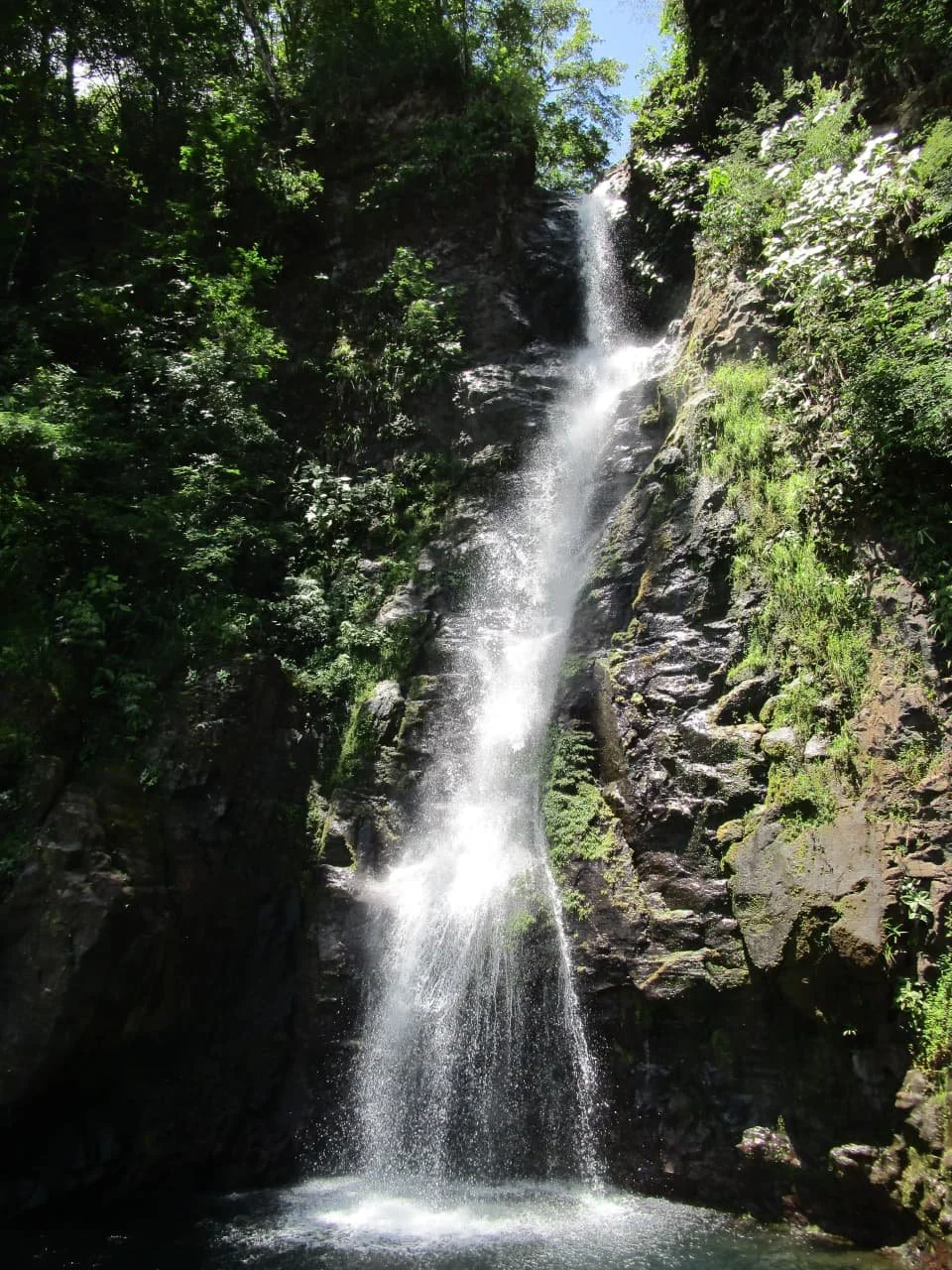
The Fortuna region also provides a fascinating perspective on the relationship between nature and infrastructure. The rainforest is filled with streams, waterfalls and rivers, and during the rainy season enormous quantities of water move through the mountains. Some of that water eventually becomes electricity that can be transmitted across Panama. In other words, the same tropical rainfall that creates Panama's spectacular jungle landscapes is also helping power homes and businesses.
Chiriquí is particularly important to Panama's hydroelectric system. The province has numerous hydroelectric projects because it combines high mountains, steep rivers and abundant rainfall. Areas around Gualaca, Boquete, Volcán and the western mountain ranges contain rivers with significant elevation changes, creating excellent conditions for hydroelectric generation. Driving through the region, it is easy to see the natural ingredients for hydroelectricity without realizing that the rivers are also part of Panama's energy infrastructure.
Bocas del Toro is another important hydroelectric region. While most visitors associate Bocas with Caribbean islands, beaches and turquoise water, the mainland rises dramatically into heavily forested mountains. Rivers coming down from those mountains have been used for hydroelectric projects, including the Changuinola complex. This is one of the interesting contrasts of Bocas: the same enormous quantities of water that feed the rainforest and create waterfalls also provide an important source of energy for the country.
Panama also has the enormous Bayano hydroelectric project in eastern Panama. The Bayano dam created a huge reservoir and has an installed capacity of approximately 260 megawatts. Large projects such as Bayano demonstrate the scale at which hydroelectricity can operate, but they also highlight one of the complicated sides of renewable energy. Hydroelectricity does not produce the same air pollution as fossil fuel power generation, but large dams can dramatically alter landscapes, rivers, forests and communities.
Not all hydroelectric plants require enormous dams and reservoirs. Panama also has smaller facilities that take advantage of the natural flow and elevation of rivers. Water can be diverted through channels or pipes, sent downhill through turbines and then returned to the river. These smaller projects can be particularly suitable for mountainous regions where there is plenty of flowing water but less need or justification for a massive reservoir.
The biggest weakness of hydroelectricity is also one of its greatest strengths: it depends on water. During Panama's rainy season, rivers can carry huge amounts of water and hydroelectric plants can operate efficiently. During prolonged dry periods, however, water levels can fall and electricity generation can be affected. This has become increasingly important as Panama has experienced periods of drought that have also affected the Panama Canal and its reservoirs.
This makes water one of Panama's most valuable resources. The same rainfall supports forests, wildlife, agriculture, drinking water, the Panama Canal and hydroelectricity. When rainfall becomes unusually low, several parts of the country's economy can feel the effects at the same time. Panama's future energy planning therefore involves developing more solar and wind power as well as other technologies so that the country is not entirely dependent on rainfall.
There is also an important environmental debate surrounding hydroelectricity. It is generally considered renewable because the water cycle continually replenishes the resource, and generating electricity from flowing water does not require burning fossil fuels. However, dams can flood forests, change river ecosystems, interfere with fish migration and alter the natural movement of sediment. In Panama, some hydroelectric developments have also generated controversy involving Indigenous communities and their traditional lands.
Despite these challenges, hydroelectricity remains a fascinating part of Panama's story. The country's mountains and tropical climate have essentially created a natural energy system. Rain falls on the highlands, rivers carry the water downhill, and engineers have learned how to capture some of the energy created by that movement.
So the next time you are driving through the mountains of Chiriquí or Bocas del Toro and see a huge river rushing through the jungle, it is worth remembering that you are looking at more than a beautiful tropical landscape. Somewhere downstream, that water may be helping turn a turbine, and for a brief moment, the energy of Panama's rainforests is being transformed into electricity.