
There is a fantastic way to experience two completely different sides of Panama in a single day: take the historic Panama Canal Railway from Panama City to Colón, spend some time exploring Colón, and then take a bus back to Panama City.
What makes this trip particularly interesting is that you don't simply get from one city to another. You travel across the Panama Canal Zone, through tropical jungle and alongside the famous canal system on a railway that has been operating in some form for more than 160 years. Then, instead of simply reversing your journey, you return by road and experience the route from an entirely different perspective.
It is an inexpensive little adventure that combines transportation, history, engineering, jungle and one of Panama's most historically important cities.
The railway is part of Panama's history
The Panama Canal Railway is not just a modern commuter train. Its history goes back to the nineteenth century, when the railway was built across the isthmus to connect the Atlantic and Pacific sides.
Before the Panama Canal existed, getting goods and people across Panama was an enormous logistical challenge. The railway dramatically changed that.
Today, the journey is considerably more comfortable than it was for nineteenth century travellers, but you are still following essentially the same historic corridor across the isthmus.
The modern passenger service runs between Corozal, on the Panama City side, and Colón. Current schedules show weekday departures from Corozal and a journey of roughly an hour, although special excursion services can operate differently.
Where do you catch the train?
The Panama City side of the railway is at Corozal, west of central Panama City.
This is important because the train does not leave from Albrook Bus Terminal or the main Metro station.
You need to make your way to the Corozal railway station.
For a visitor staying in Panama City, a taxi or ride-hailing service is generally the simplest way to reach the station.
And this is where you need to pay attention to the timetable.
The regular weekday schedule currently listed for the Panama Canal Railway has a 7:15 AM departure from Colón toward Panama and a 5:15 PM departure from Corozal toward Colón.
That means the normal scheduled service isn't necessarily designed as a convenient morning Panama City to Colón sightseeing train.
However, the railway also operates special excursion and family trips on selected dates. For example, a 2026 excursion advertised a 9:00 AM departure from Corozal, arriving in Colón around 10:45 AM.
Check the specific date before planning the trip, because the service pattern can vary.
The train journey itself is the attraction
Once you're aboard, the journey becomes much more interesting than simply getting from A to B.
The railway crosses the isthmus through an area that was transformed by the construction of the Panama Canal.
You pass through tropical vegetation and areas associated with the Canal Zone while travelling between the two oceans.
The train route includes stops around Gamboa and Fort Davis before reaching Colón.
Look out the window rather than staring at your phone.
This is one of those journeys where the scenery is part of the experience.
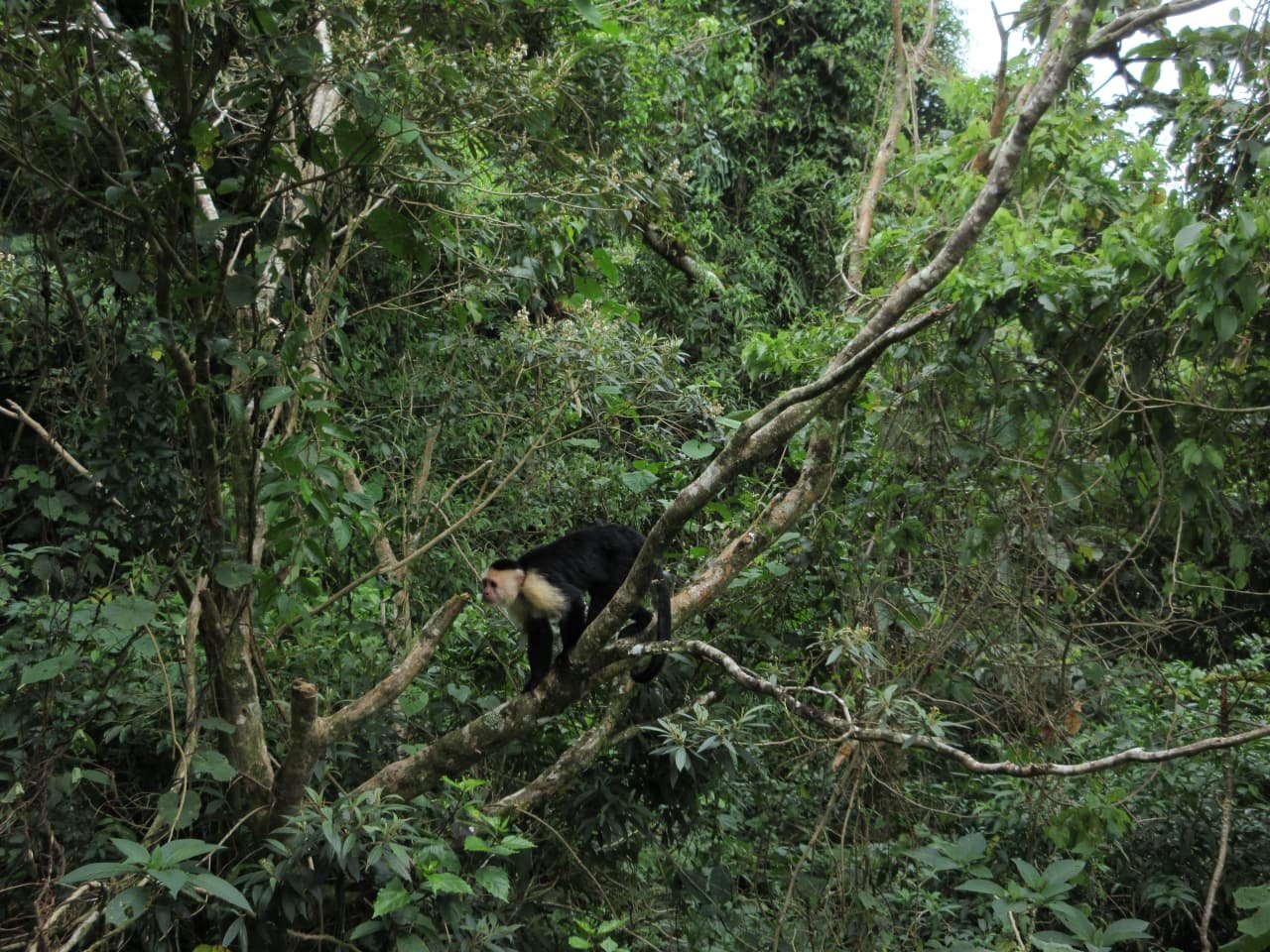
The railway passes through an environment that combines enormous engineering projects with tropical forest. It is one of the strangest combinations in Panama: massive ships and global commerce on one side, jungle and wildlife on the other.
Imagine doing this 150 years ago
This is where the journey becomes particularly fascinating.
The railway was one of the great engineering achievements of its era.
Before the canal, Panama was already a shortcut between the oceans.
People and cargo could cross the isthmus rather than sail around the bottom of South America.
The railway made that process dramatically more efficient.
The route therefore became part of the story that eventually led to Panama becoming one of the most important transportation crossroads in the world.
You're not simply riding a train.
You're riding through one of the most important pieces of transportation history in the Americas.
Arriving in Colón
Eventually the jungle gives way to the urban environment and you arrive at Colón.
The railway terminus is at Colón's Atlantic station.
This is where the character of the journey changes completely.
Panama City is modern, vertical and packed with skyscrapers.
Colón has a very different atmosphere and a much more Caribbean character.
The city has an extraordinary history because of its position at the Atlantic entrance to the Panama Canal.
It was built around transportation, shipping, commerce and the railway, and its history is closely connected with the construction and operation of the canal.
Colón is not Panama City
One mistake visitors sometimes make is expecting Colón to feel like a smaller version of Panama City.
It doesn't.
Colón has its own identity, history and problems, and some parts of the city require considerably more caution than the typical tourist areas of Panama City.
If you are visiting independently, it makes sense to plan where you are going rather than simply wandering aimlessly around unfamiliar neighbourhoods.
The historic areas can be fascinating, but you don't need to turn the trip into an expedition.
What should you see?
The answer depends on how much time you have.
You could simply explore the central area, see some of the historic architecture, have lunch and experience the atmosphere of the city.
You could also combine the railway trip with a visit to nearby attractions, although this requires more planning because you don't want to miss your return transportation.
Another possibility is making the trip partly about the canal itself.
The Atlantic entrance to the Panama Canal is at the Colón end of the waterway, and the surrounding area is packed with reminders that this is one of the most important shipping routes on Earth.
The bus ride home is the perfect second half
This is where the trip gets even more interesting.
Instead of taking the train back, take a bus from Colón to Panama City's Albrook Bus Terminal.
There are regular buses connecting Colón with Albrook, and current transport information lists direct services between the two cities.
The journey by road is roughly an hour and a quarter under typical conditions, although traffic can obviously change that.
The bus is dramatically cheaper than the train. Current journey information puts the bus fare at around $4, although fares and operating details should be checked locally.
So you get to experience Panama's historic railway one way and ordinary Panamanian public transportation on the other.
That is much more interesting than paying for a taxi in both directions.
Finding the bus
The main bus terminal in Colón is the place to go for buses heading toward Panama City.
Look for a bus going to Albrook.
The services are frequent, and current listings show numerous departures throughout the day.
You don't need to book a fancy excursion.
This is normal public transportation.
You pay your fare, get on the bus and head toward Panama City.
For travellers who enjoy experiencing how people actually move around a country, this is one of the best parts of the trip.
The contrast between the train and bus
The two journeys couldn't be more different.
The train feels historical.
It is slower, more scenic and more directly connected to the story of the Panama Canal and the construction of the railway.
The bus is practical.
It is how ordinary people travel between the two cities every day.
And the road gives you a completely different view of the isthmus.
Instead of looking through the windows of a historic railway carriage, you're travelling along the modern highway that connects the Caribbean side with the capital.
Put the two together and you get a much more complete understanding of Panama.
A rough itinerary
A special excursion day might look something like this:
8:30 AM: Arrive at Corozal railway station.
9:00 AM: Train departs for Colón.
Around 10:45 AM: Arrive in Colón on a special excursion service.
11:00 AM onward: Explore Colón, have lunch and see some of the city's historic areas.
Afternoon: Head to the Colón bus terminal.
Bus to Albrook: Take a direct bus toward Panama City.
Around 1¼ hours later: Arrive at Albrook, depending on traffic.
The exact timing needs to be adjusted around the particular train service operating on your chosen date.
Why not just take the bus both ways?
You absolutely can.
And if your only goal is to get from Panama City to Colón cheaply, the bus is the obvious practical option.
But that's not really the point.
The train is an experience.
The railway crosses an extraordinary piece of Panama's history, and the journey gives you an opportunity to see the landscape associated with the canal from a completely different perspective.
Taking the bus home then turns the day into a little transportation adventure rather than a simple round trip.
One important warning about the timetable
This is probably the most important thing to understand before doing this trip.
Don't assume there is a train leaving Panama City for Colón every morning.
Current listings show regular weekday service with a 5:15 PM Corozal departure toward Colón, while special excursion trains can have completely different schedules.
So check the railway's current schedule or ticket availability for the exact date you want to travel.
If a special morning excursion is operating, that's particularly useful for a day trip because you can arrive in Colón around late morning and return by bus in the afternoon.
The great thing about doing it this way
There is something satisfying about arriving at the Caribbean by train and leaving by bus.
You start the day in Panama City.
You cross the country through the jungle.
You arrive at the Caribbean side.
You explore one of Panama's most historically important cities.
Then you climb aboard a regular bus with locals and head back across the isthmus.
By the end of the day you've experienced the old Panama and the modern Panama at the same time.
The railway represents the extraordinary engineering and transportation history that helped make Panama famous.
The bus represents the everyday country that exists outside the tourist bubble.
And somewhere between the two, you cross a narrow piece of land that changed the history of global transportation.
For travellers who want to see a different side of Panama, the train to Colón and bus back isn't just a way to get around. It's a small adventure through the history, geography and everyday life of the country.