
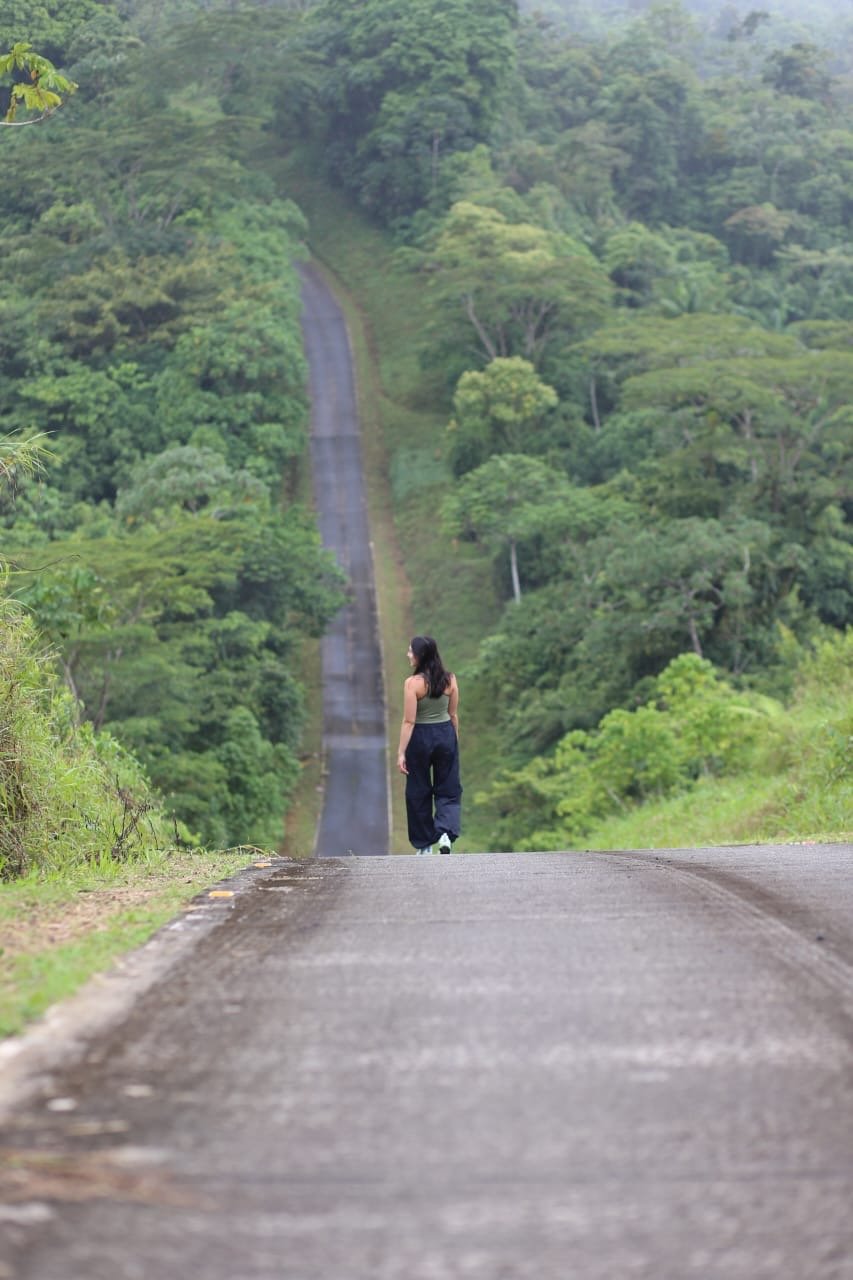
There is something slightly ridiculous about backpacking through Panama. You can start your trip surrounded by skyscrapers and enormous ships in Panama City, spend the afternoon walking through a rainforest, wake up a few days later on a Caribbean island, then travel through mountains covered in coffee plantations before ending up on a Pacific beach watching the sunset. And you haven't even gone particularly far. Panama is a relatively small country, but the variety packed into it is enormous. It has two oceans, mountains, cloud forests, tropical rainforests, islands, rivers, dry forests, huge stretches of coastline and some of the most biologically diverse landscapes in Central America.
That variety is one of the things that makes backpacking in Panama so much fun. In some countries, you travel for days to experience a completely different environment. In Panama, the scenery and atmosphere can change remarkably quickly. You can leave the heat and noise of Panama City and find yourself surrounded by rainforest. You can travel from the Caribbean coast to the mountains and suddenly be wearing a sweater at night. You can go from the cool highlands around Boquete and Volcán to the tropical beaches of Bocas del Toro. Then you can cross the country and find yourself on the dry Pacific side, where the landscape, food, culture and even the feeling of the country can be completely different.
And then there is Panama City. For backpackers, the capital is a fascinating introduction because it doesn't feel like the rest of the country. It is a modern international city with skyscrapers, shopping malls, restaurants, nightlife and one of the world's most important pieces of infrastructure, the Panama Canal. But right alongside all of that you have Casco Viejo, old colonial streets, tropical vegetation and rainforest surprisingly close to the urban center. Panama City is one of those places where you can have a fancy cocktail overlooking the skyline one night and be watching monkeys or tropical birds in the forest the next morning.
The Panama Canal itself is also part of what makes backpacking through the country interesting. This isn't simply a tourist attraction where you look at a big engineering project and move on. The canal exists in the middle of a huge tropical ecosystem, and the forests surrounding the canal are enormously important to the water supply that allows the canal to operate. The result is a strange combination of gigantic ships, jungle, lakes, monkeys, birds and rainforest all occupying the same landscape. You can literally watch one of the world's largest engineering achievements while surrounded by tropical nature.
Then the backpacker route can head west.
Boquete feels like another country compared with Panama City. The temperatures are cooler, the mountains rise dramatically around you and coffee plantations cover the surrounding countryside. Hikers come for the mountains, birdwatchers come looking for species such as the resplendent quetzal and coffee lovers come to discover why Panama has become famous for specialty coffee. A little farther up into the highlands, Volcán and Cerro Punta take you into an even cooler agricultural landscape where vegetables and other crops are grown in an environment that looks nothing like the tropical beaches most people imagine when they think of Panama.
And then you can head downhill toward the Caribbean.
Bocas del Toro is one of the great backpacker destinations in Panama because the atmosphere changes completely. Suddenly there are boats instead of buses, islands instead of mountains and Caribbean influences everywhere. There are beaches, jungle, coral reefs, mangroves, snorkeling, surfing, nightlife and small island communities. The region also has strong Indigenous and Afro Caribbean cultural influences, making it much more than simply a beach destination. Panama's tourism authorities specifically highlight Bocas for its Indigenous culture, gastronomy, birdwatching, marine life and nightlife.
The Caribbean side also introduces backpackers to a different Panama culturally. The country is not simply Spanish speaking Central America with tropical beaches. Panama has Indigenous peoples with their own languages, traditions and territories, along with Afro Caribbean communities whose history, food, music and culture have had an enormous influence on the country. Panama officially recognizes seven Indigenous peoples, including the Guna, Ngäbe, Buglé, Emberá, Wounaan, Naso and Bri Bri.
The Guna are perhaps the most immediately recognizable to visitors because of the spectacular mola textiles traditionally made by Guna women. Travel into Guna Yala takes you into an island world that feels completely different from Panama City. Tiny palm covered islands, turquoise Caribbean water and traditional communities make it one of those places where a backpacker can suddenly wonder whether they have somehow left Panama altogether.
The Ngäbe and Buglé provide another completely different cultural experience, particularly in western Panama. Their territories stretch across parts of Chiriquí, Bocas del Toro and Veraguas, and their traditions remain closely connected with forests, agriculture, rivers and the land. Increasingly, travelers are finding opportunities to experience Indigenous culture through local guides, cacao, food, crafts and nature rather than simply looking at Indigenous culture from a distance.
And that is one of the great things about backpacking. You have time to discover these differences instead of simply ticking attractions off a list.
You can take a bus because it is cheap and end up sitting beside a farmer, a student, another backpacker or someone carrying an enormous sack of something you can't identify. You can share a hostel kitchen with people from five countries. You can eat Caribbean food one night and traditional Panamanian food the next. You can hear Spanish everywhere, but depending on where you travel you may also hear Indigenous languages, English influenced Caribbean speech and completely different local accents.
Food is another part of the adventure. Panama's geography has created a surprisingly varied food culture. Seafood dominates many coastal communities. Coconut and Caribbean influences are strong in parts of Bocas del Toro and the Caribbean coast. Inland areas have their own agricultural traditions, while Panama City has become an international food city because of the country's enormous mixture of cultures. Rice, beans, plantains, seafood, chicken, beef, corn and tropical fruits appear in countless combinations, while Indigenous and Afro Caribbean traditions add another layer to the country's food culture.
Then there is the wildlife.
This is where Panama becomes almost unfair to other backpacking destinations. The country sits at the biological crossroads between North and South America, and its forests contain an astonishing variety of animals and plants. You can encounter monkeys, sloths, toucans, hummingbirds, frogs, snakes, butterflies, caimans, armadillos, anteaters and countless other creatures. Sometimes you don't even have to go looking for wildlife. You simply have to walk slowly and pay attention.
The best part is that the wildlife experience changes with the landscape. The birds you find in the highlands aren't necessarily the same birds you find along the Caribbean coast. The mammals active during the day can be completely different from the strange creatures moving through the forest after dark. A nighttime jungle walk can feel like entering another planet, with frogs calling from streams, insects flying around your flashlight and nocturnal mammals moving through the canopy.
For backpackers, this makes Panama particularly rewarding because the country is not simply about visiting famous attractions. Some of the best experiences are the completely unexpected ones. A bus ride that takes longer than planned can turn into an adventure. A cheap local restaurant can produce your favorite meal of the trip. A random conversation in a hostel can lead to your next destination. A hike can turn into a wildlife experience. A planned two night stay can become five nights because you met people you don't want to leave.
That is the magic of backpacking in general, but Panama seems particularly well suited to it.
The country is also an important bridge between different styles of travel. Someone can arrive as a first time backpacker and stay mostly on the traditional tourist route, while a more adventurous traveler can push much farther into remote areas. Panama has everything from comfortable hostels and organized tours to remote jungle communities where travel requires considerably more effort. Community based tourism initiatives have increasingly opened opportunities for travelers to experience rural and Indigenous areas with local guides and accommodations.
And then there is the geography that ties everything together.
Panama is basically a narrow piece of land separating the Caribbean from the Pacific while connecting two continents. That sounds simple until you actually travel through it. The Caribbean side is wetter and filled with islands and tropical forests. The Pacific side has different coastal environments and much more pronounced dry areas. In between are mountains, volcanoes, rivers and forests. The western highlands can be cool enough for completely different agriculture, while the lowlands can be hot and humid.
This is why Panama can feel much bigger than it actually is.
You aren't just traveling from one city to another. You are moving between completely different worlds.
You can start with the skyscrapers of Panama City, walk through a colonial neighborhood, visit the Panama Canal, disappear into rainforest, travel to a Caribbean island, meet Indigenous communities, hike through cloud forest, visit a coffee farm, swim beneath a waterfall, watch wildlife at night, eat Caribbean food, cross the mountains and finish your trip on a Pacific beach.
And somehow, all of that is Panama.
That is what makes backpacking here so addictive. Panama doesn't give you just one big experience. It keeps changing. The landscape changes. The weather changes. The food changes. The people change. The architecture changes. The wildlife changes. Even the language and accents can change depending on where you are.
For someone traveling slowly, that creates an almost perfect backpacking country. You can arrive without a rigid plan and allow the country to pull you in different directions. Maybe you came for the beaches and ended up hiking mountains. Maybe you came for the mountains and discovered the Caribbean. Maybe you came to see the Canal and ended up spending a week in the jungle.
And that is probably the best way to experience Panama.
Don't rush through it.
Give yourself enough time to get lost a little, miss a bus, stay an extra night, talk to strangers, try something you've never heard of and follow a road simply because you want to know where it goes.
Because for such a small country, Panama has an almost ridiculous amount of world packed into it. It is modern and ancient, Caribbean and Pacific, Indigenous and international, urban and wild, mountainous and tropical, sophisticated and wonderfully chaotic.
For a backpacker, that combination is hard to beat.