
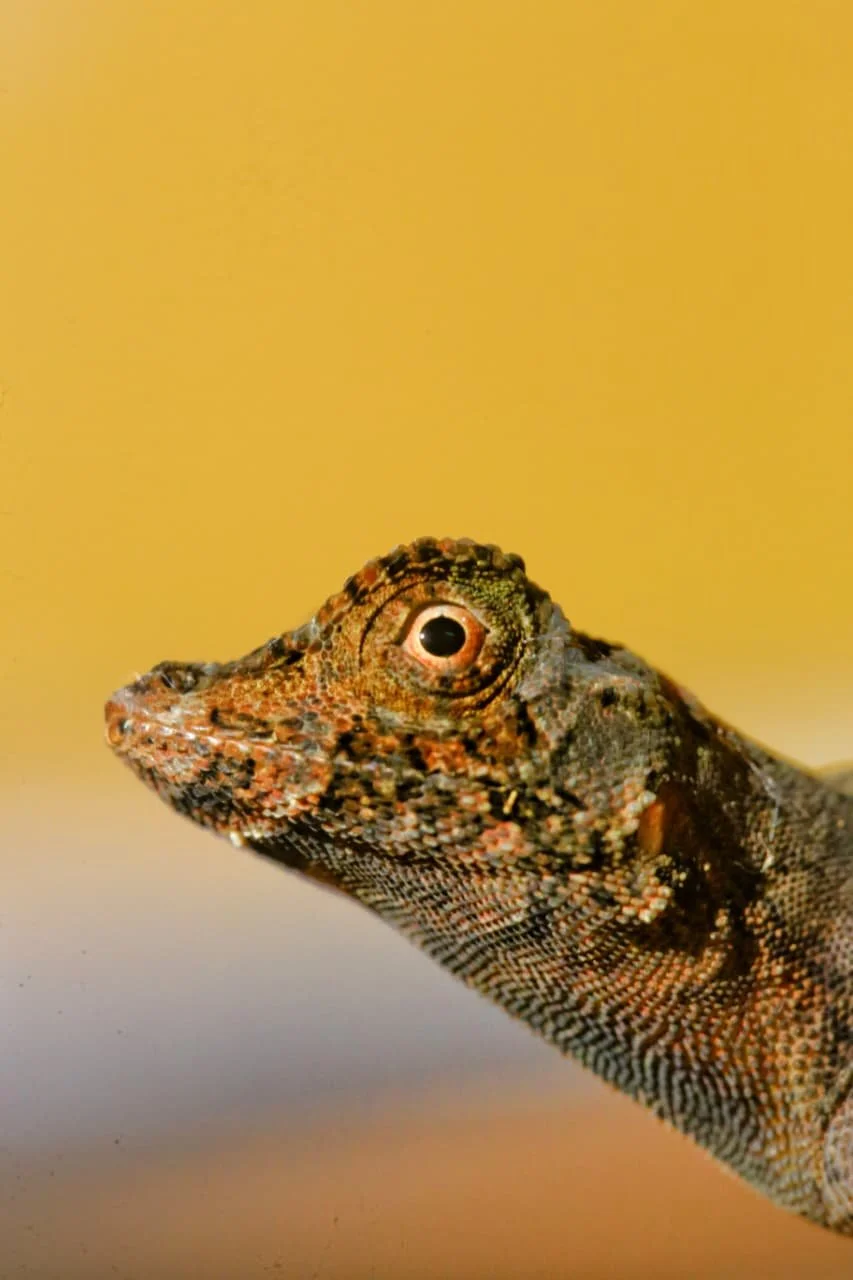
When people think about iguanas in Panama, they usually picture a big green lizard sitting in a tree, staring down at them as if they have personally offended it. And yes, Panama certainly has those. But the country's iguana story is more interesting than simply "green iguana." Panama has several members of the iguana family, and they include animals with completely different appearances, lifestyles and personalities. There are the familiar green iguanas, the much tougher black or spiny tailed iguanas, and several other lizards that belong to the wider iguanid family. Panama's tropical forests, dry Pacific habitats, islands, wetlands and human disturbed landscapes provide an extraordinary variety of places for these reptiles to live. A Panama Canal Authority species list, for example, records both the green iguana, Iguana iguana, and the common spiny tailed iguana, Ctenosaura similis, in the country's reptile fauna.
The first important distinction is between the green iguana and the black iguana. They are both members of the family Iguanidae, but they belong to different genera. The green iguana belongs to the genus Iguana, while the black or spiny tailed iguana belongs to Ctenosaura, a group officially known as the spiny tailed iguanas. They may occasionally be found in the same general areas, but they have noticeably different body shapes, behavior and preferred habitats.
The Green Iguana
The green iguana, Iguana iguana, is the classic Panama iguana. It is the huge green lizard that looks as though somebody designed a miniature dinosaur and then released it into the tropical forest. Adults can become surprisingly large, with long bodies, powerful legs, a huge tail and a row of prominent spines running along the back. Young green iguanas are often intensely green, which makes them much easier to spot in certain vegetation. Adults can become considerably more variable in color, sometimes showing gray, brown, orange or darker tones.
Despite its intimidating appearance, the green iguana is primarily a plant eater. This is particularly interesting because many people assume a lizard that large must be eating smaller animals. Green iguanas are primarily herbivorous and consume leaves, flowers, fruits and other vegetation. Their digestive system is highly specialized for processing a diet that is difficult to digest, and their evolutionary history includes adaptations that helped their ancestors move toward a predominantly herbivorous lifestyle.
Green iguanas are also excellent climbers. When they are young, they can disappear into vegetation incredibly quickly, and adults can climb surprisingly high into trees. They are especially associated with areas containing plenty of vegetation near water. Rivers, streams, wetlands and forest edges can be excellent places to encounter them. They are also strong swimmers, and when threatened they can sometimes launch themselves from branches into water and swim away.
One of the great tricks of the green iguana is that it can look incredibly obvious one moment and completely disappear the next. A large adult sitting on a branch can be impossible to miss, but a young green iguana can blend remarkably well into leaves. This is one reason people can visit Panama for weeks and think they have seen very few iguanas, only to suddenly realize that there were probably several watching them from the vegetation all along.
The Black Iguana or Spiny Tailed Iguana
The other major iguana that visitors encounter in Panama is the black spiny tailed iguana, Ctenosaura similis. In Panama it is commonly associated with names such as iguana negra and garrobo. Despite the name, not every individual is actually black. Adults can be gray, brown, dark or almost black, while young animals can be surprisingly colorful. The species gets its "spiny tailed" description from the rows of enlarged scales and spines running along the tail.
This is the iguana that often looks like it has a much more serious attitude than the green iguana. The body is robust, the head is powerful and the tail is equipped with a formidable row of spiny scales. If a green iguana looks like a prehistoric vegetarian, the black iguana looks like the prehistoric vegetarian that might have been kicked out of the dinosaur club for having an attitude problem.
The black spiny tailed iguana is particularly interesting because it is extremely adaptable. It occurs across much of Central America and reaches Panama, including parts of the Pacific lowlands. It can occupy forest, scrub, grassland, coastal areas and landscapes heavily influenced by people. The species is also found on several Panamanian islands, including Coiba and Isla del Rey.
Black iguanas are generally more terrestrial than green iguanas, although they can climb extremely well. You will often see them basking on rocks, walls, tree trunks or other exposed surfaces. They are fast. Surprisingly fast. When startled, a large iguana can suddenly explode into motion and disappear behind a bush or rock before you have even decided where it went.
The young black iguanas are particularly interesting because their diet changes as they mature. Young animals consume considerably more animal material, including insects, before becoming increasingly herbivorous as adults. This is one of the important differences between the early life of a black iguana and that of the familiar green iguana.
Why You See Black Iguanas in Dry Panama
If you travel through the Pacific side of Panama, particularly areas with a pronounced dry season, black iguanas can become extremely noticeable. They are well suited to warmer, drier environments and can take advantage of rocky areas, open woodland and human structures. They are also comfortable living around people, which means you do not necessarily have to hike deep into a jungle to find one.
Isla Iguana near Pedasi is a particularly fun example. The island actually gets its name from the abundance of iguanas, and black iguanas are the most common iguanas there. Green iguanas occur as well but are less frequently encountered.
This is one of the best examples of how an island can become famous for an animal that most visitors would otherwise consider relatively ordinary. Once you see several large black iguanas moving around an island, basking on rocks and disappearing into vegetation, they suddenly seem much more impressive.
The Green Iguana Versus the Black Iguana
Once you know what to look for, telling Panama's two most obvious iguanas apart becomes fairly easy. Green iguanas tend to have a taller body, a more prominent dorsal crest and a more strongly arboreal lifestyle. Their long legs and claws are built for climbing, and they are frequently associated with trees and vegetation near water. Black spiny tailed iguanas generally have a stockier appearance, a more powerful looking head and the unmistakable spiny tail. They are also commonly seen basking on the ground, rocks and walls.
Their tails are another excellent clue. The green iguana has a long, muscular tail, but the black iguana's tail has prominent spiny scales that give it a rough, armored appearance. Those spines are not decorative. A large spiny tailed iguana can use its tail as a defensive weapon if it feels threatened.
Neither species is interested in chasing tourists around the jungle. Most of the time they would much rather escape. A large iguana that is cornered, grabbed or repeatedly harassed can defend itself with claws, teeth and its powerful tail, however. The sensible rule with Panama wildlife is simple: enjoy the animal without trying to turn it into a pet.
Iguanas and Panama's Islands
Panama's islands provide some particularly interesting iguana encounters. The black spiny tailed iguana has established populations on several islands, and Isla Iguana is the obvious example. Coiba also has black iguanas. Island populations can be fascinating because animals living on islands sometimes develop different behaviors, densities or ecological relationships from populations on the mainland.
Isla Iguana is especially memorable because visitors can see black iguanas in places where they are practically part of the landscape. They may be sitting beside paths, moving through vegetation or basking in the sun. The island's name is therefore not marketing. There really are a lot of iguanas there.
Iguanas Are Not Just Jungle Animals
One of the biggest misconceptions about iguanas in Panama is that you need to enter deep rainforest to find them. You do not. Iguanas are remarkably adaptable, and different species can be encountered in forests, gardens, agricultural areas, coastal vegetation, dry forests, river corridors, roadsides and around buildings.
The black spiny tailed iguana in particular has demonstrated an impressive ability to live alongside people. Historical accounts and modern observations show that it can tolerate highly modified landscapes. The IUCN currently lists Ctenosaura similis as Least Concern globally, with a stable population trend in its assessment, although local populations can still face pressure from habitat loss and hunting.
Iguanas Have Been Food Too
There is an uncomfortable part of the iguana story that is important to understand. Iguanas have traditionally been hunted for food in parts of Central America, including Panama. Their meat and eggs have been consumed for generations, and hunting pressure has contributed to declines in some populations and locations.
Green iguanas have been particularly affected in some areas. Isla Iguana's own visitor information notes that heavy hunting earlier in this century reduced its green iguana population. This is one reason it is important not to assume that an animal is common everywhere simply because you see plenty of it in one particular location.
Iguana Eggs Are a Big Deal
Iguanas put considerable effort into reproduction. Females lay eggs in nests, often digging into suitable soil where the temperature and moisture conditions can support development. The young emerge as miniature versions of the adults, but they have a much more vulnerable life ahead of them.
For a tiny baby iguana, practically everything wants to eat you. Birds, snakes, mammals and larger reptiles can all become predators. Survival is therefore partly a numbers game. A relatively large number of young can enter the ecosystem, but only a fraction survive long enough to become the enormous adults people notice.
This also explains why seeing a giant iguana is considerably more impressive than seeing a baby. That huge adult has survived years of predators, food shortages, territorial conflicts, disease and environmental hazards. It is essentially a reptilian survivor.
The Iguana's Tail Is Serious Business
Never underestimate an iguana's tail. Both green and spiny tailed iguanas have powerful tails, and a large animal can swing one with considerable force. The black spiny tailed iguana takes this even further with its enlarged tail scales and spines.
If you approach an iguana too closely, you may see it flatten its body, raise itself up, whip its tail or attempt to escape. These are warnings. The animal is telling you that it would prefer not to have a conversation.
The best wildlife photography in Panama usually comes from allowing the animal to behave naturally. Sit quietly, keep your distance and let the iguana decide what happens next. If it runs away, you got too close.
Where to Look for Iguanas in Panama
If your goal is to see iguanas in Panama, look for warm sunny locations with vegetation, rocks, trees and access to water. Green iguanas are particularly worth looking for around rivers, wetlands, forest edges and trees. Scan branches carefully because their green coloration can make them surprisingly difficult to spot.
For black spiny tailed iguanas, look at rocks, walls, fallen trees, open woodland, dry forest and sunny clearings. They are classic baskers, so sunny mornings can be particularly productive. They may sit motionless for long periods before suddenly disappearing at incredible speed.
Islands can also be excellent places to look. Isla Iguana is an obvious destination because of its large population of black iguanas, while Coiba also supports the species.
Are Iguanas Dangerous?
Generally, no. Iguanas are not animals that want to attack humans. Their first response to danger is usually to escape. The problem occurs when people try to catch them, corner them or feed them.
A large iguana has sharp claws, strong jaws and a powerful tail. That combination is more than enough to make grabbing one a terrible idea. There is absolutely no reason to pick up a wild iguana for a photograph. You may think you are getting the perfect Instagram picture. The iguana may have a completely different opinion.
Feeding is also a bad idea. Iguanas that become accustomed to tourists can lose their natural wariness and start approaching people aggressively for food. Isla Iguana's visitor information specifically warns against feeding iguanas inappropriate foods.
Iguanas and the Panama Wildlife Experience
Iguanas are a perfect example of why Panama is such an interesting wildlife destination. You do not always have to search for something incredibly rare. Sometimes the fascinating animal is sitting on a wall beside you.
The green iguana represents the classic tropical forest reptile, climbing trees and feeding on vegetation. The black spiny tailed iguana is tougher, faster and more comfortable in dry and disturbed environments. Together they show how different members of the same broader family can evolve to exploit completely different ecological opportunities.
And then there is the sheer prehistoric appearance of the animals. Walk through a Panamanian forest and see a huge iguana sitting motionless on a branch, its dorsal spines silhouetted against the sky, and for a few seconds it is easy to forget that you are looking at an animal that is alive today. It looks like something that simply forgot to disappear when the dinosaurs did.
That is ultimately what makes iguanas in Panama so much fun to look for. They are big, obvious, surprisingly fast, sometimes difficult to spot, occasionally intimidating and biologically fascinating. Whether you encounter a green iguana beside a river, a black iguana basking on a rock, or a whole group of them racing across a trail, you are seeing one of the great reptile families of tropical America doing exactly what it has evolved to do: survive, adapt and look spectacular while doing it.