
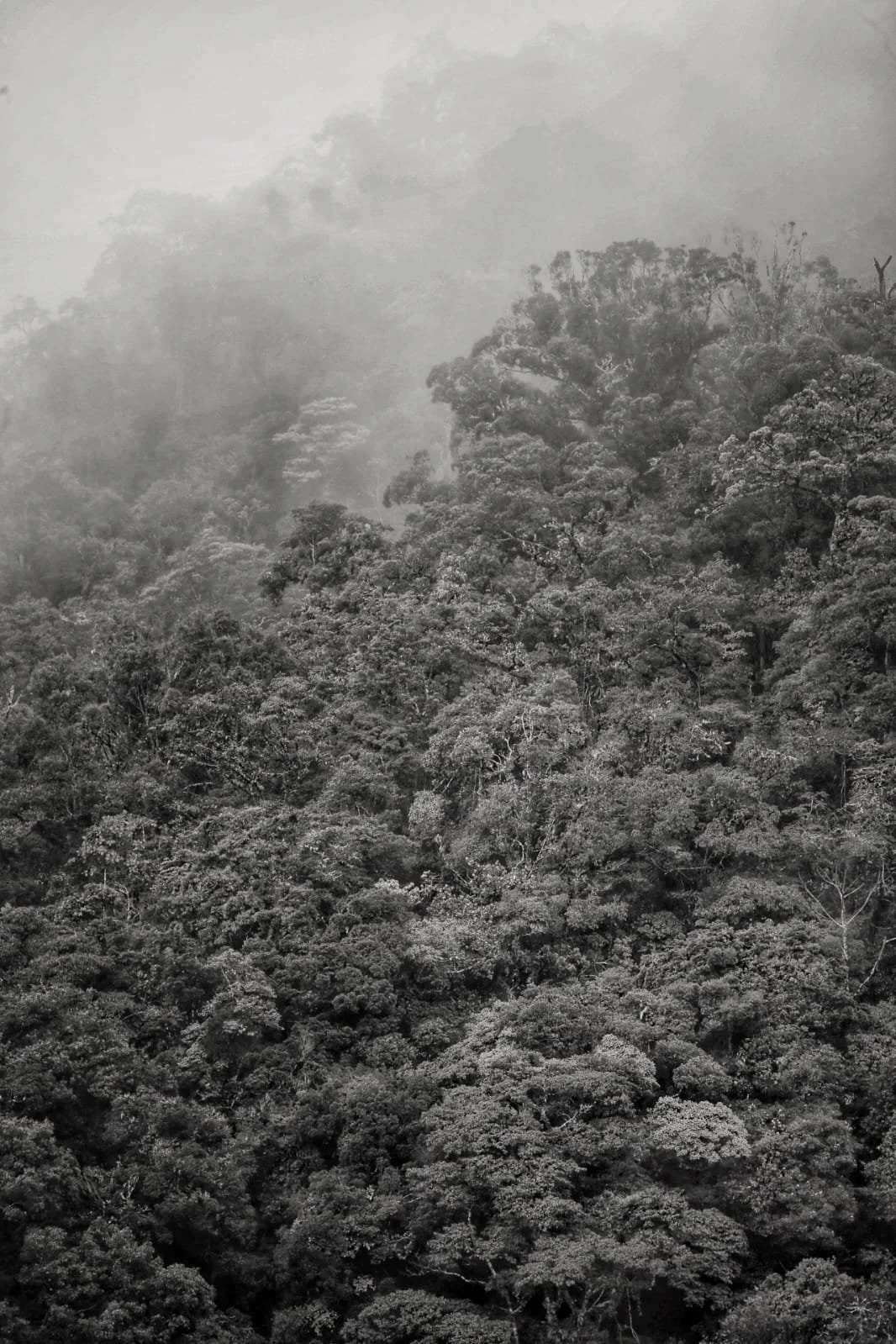
Panama reveals its deepest character away from the obvious routes, where travel is shaped by landscape rather than itinerary. Moving between mountains, forests, and quiet coastlines creates a rhythm that feels organic rather than planned. These places aren’t hidden because they’re difficult; they’re overlooked because they don’t rush to be discovered. For travelers already drifting between highlands and sea, they form natural anchors in the journey.
The beauty of these destinations is how they connect to each other. A morning in cool mountain air can become an afternoon on a remote beach, and the transition feels seamless rather than dramatic. Travel here is less about ticking locations and more about inhabiting environments. The following places reflect Panama’s quieter, more intimate side.
Lost and Found Hostel
Deep in the cloud forest between watersheds, this mountain hideaway feels suspended between worlds. Trails weave through misty jungle, descending into river canyons and rising to panoramic ridges where weather shifts by the minute. Evenings bring shared meals and quiet conversations that stretch longer than expected. The setting encourages presence rather than planning. For anyone traveling between Boquete and the Caribbean side, it naturally becomes a grounding midpoint that reshapes how the rest of Panama feels.
Time here slows in a way that feels effortless. The forest muffles outside noise, replacing it with birds and wind through leaves. Excursions grow organically from curiosity rather than schedules. It’s less a stop and more a state of mind that lingers after departure.
Santa Fe
Santa Fe sits in a green basin where waterfalls outnumber traffic. Life unfolds at walking pace, with trails beginning just beyond town and rivers forming natural gathering places. The surrounding forest holds remarkable biodiversity, yet the atmosphere remains humble and local. Coffee farms and small guesthouses reflect a community rooted in land and tradition.
Days tend to follow simple patterns shaped by weather and light. Mornings bring mist rising from valleys, afternoons open to bright skies, and evenings settle into cool mountain calm. It’s a place where the absence of urgency becomes the main attraction.
Cerro Punta
High in Panama’s agricultural heartland, Cerro Punta feels defined by altitude and openness. Fields climb steep slopes in geometric patterns, and cool air replaces tropical humidity. The landscape appears quiet yet purposeful, shaped by cultivation rather than tourism. Early mornings are crisp and clear, revealing layers of hills fading into cloud.
The experience is subtle but powerful. Instead of spectacle, the appeal lies in atmosphere and space. For travelers who move between coastal heat and mountain calm, this place makes the contrast tangible.
Golfo de Chiriquí
On the Pacific side, scattered islands form a marine landscape defined by quiet water and open horizon. Boat rides glide between palm-lined shores where development feels distant and unnecessary. Snorkeling reveals vibrant marine life beneath remarkably clear water. The sense of space is immediate and calming.
Time here expands naturally. Without crowds or noise, attention shifts toward subtle changes in light and tide. It’s an environment where simplicity feels complete rather than lacking.
Las Lajas Beach
Las Lajas offers one of Panama’s most expansive stretches of Pacific shoreline. The beach extends in a near-unbroken line, creating a sense of openness that feels restorative. Waves arrive steadily without urgency, and sunsets spread color across an uninterrupted horizon. The surrounding community remains small and relaxed.
Walking here becomes the main activity. Distance feels different when nothing interrupts the view. It’s a place where simplicity becomes the defining luxury.
Cerro Hoya National Park
Cerro Hoya merges rainforest mountains with untouched coastline, creating a landscape that feels elemental. Reaching it requires intention, which preserves its sense of isolation. Trails pass through dense vegetation before emerging onto wild beaches where human presence feels temporary. The environment appears vast and undisturbed.
Experiencing this park is less about sightseeing and more about immersion. The distance from urban life becomes tangible. Nature defines the experience entirely.
Kusapín
Along a quiet Caribbean stretch, Kusapín reflects community life shaped by sea and tradition. Tourism remains minimal, allowing daily rhythms to unfold naturally. Arrival often involves a combination of road and boat travel that reinforces the sense of remoteness. The coastline appears calm and expansive.
Interactions here feel personal rather than transactional. The environment encourages observation rather than activity. It’s a place defined by authenticity rather than attraction.
El Valle de Antón
Set within an ancient volcanic crater, El Valle blends accessibility with tranquility. Mountains encircle the town, creating a sheltered atmosphere where temperatures remain mild. Trails lead to waterfalls and viewpoints that reveal the crater’s scale. Markets and gardens add a human dimension to the landscape.
Despite its proximity to major routes, the town maintains a relaxed pace. It feels balanced between nature and community. The setting invites lingering rather than passing through.
Isla Escudo de Veraguas
Isla Escudo de Veraguas stands apart through distance and clarity. Beaches appear almost untouched, and water shifts between deep blue and bright turquoise. Access requires coordination, which limits visitation and preserves atmosphere. The island feels self-contained and serene.
Being here emphasizes scale and silence. The absence of crowds heightens awareness of the environment. It’s a destination defined by rarity rather than convenience.
Portobelo
Portobelo blends Caribbean scenery with layered cultural history. The harbor sits quietly beneath green hills, framed by historic structures that hint at a complex past. Music, art, and daily life intertwine naturally in the town’s atmosphere. It feels both grounded and expressive.
The experience here grows through observation. Rather than dramatic moments, Portobelo offers gradual discovery. It rewards those who slow down and listen.
Panama’s lesser-known places share a common thread: they reveal themselves fully only when approached without hurry. Mountains, forests, and coastlines become more than scenery when time allows them to shape experience. For travelers already moving between highlands and sea, these destinations create continuity rather than contrast.
The country’s geography makes these transitions feel natural. Roads wind from cool valleys to warm shores, and boat rides connect mainland and island life. Movement itself becomes part of the landscape. Each place adds another layer to an already diverse environment.
Choosing quieter destinations doesn’t mean missing out; it means noticing more. Sounds are softer, interactions are more personal, and landscapes feel larger. The absence of crowds reveals detail that might otherwise remain hidden. Travel becomes attentive rather than hurried.
For anyone building a deeper relationship with Panama, these locations form a meaningful circuit. They represent the country’s capacity for calm intensity, where nature and community remain closely linked. The experience is less about discovery and more about connection.
In the end, Panama’s off-the-beaten-track destinations offer something rare: a sense that the journey is unfolding exactly as it should. Mountains, forests, and coastlines align into a coherent whole. Moving through them feels less like travel and more like belonging, even if only for a while.