
Panama’s cloud forests are among the richest orchid habitats in the world. Constant moisture, cool temperatures, and filtered light create ideal conditions for these delicate plants to thrive.
Unlike lowland tropical forests, cloud forests exist at higher elevations where mist and clouds regularly envelop the trees. This environment supports thousands of orchid species, many of which grow nowhere else on Earth.
The western highlands around Boquete are particularly famous for orchid diversity. Elevation gradients there produce a wide range of microhabitats within short distances.
Nearby slopes of Volcán Barú host some of the most remarkable orchid populations in Central America. Moss-covered branches and shaded trunks provide perfect growing surfaces.
Most cloud forest orchids are epiphytes, meaning they grow on trees rather than in soil. They draw moisture and nutrients from the humid air and organic debris.
Miniature orchids are especially common. Many species are so small they are easily overlooked unless examined closely.
One striking group is the genus Epidendrum, known for bright clusters of flowers that contrast with deep green forest foliage.
Another remarkable group is Pleurothallis, which includes hundreds of tiny species adapted to cool, misty conditions.
Some orchids produce flowers only a few millimeters wide. Their intricate shapes and patterns are visible only at close range.
Cloud forest orchids often bloom unpredictably, responding to subtle changes in moisture and temperature rather than fixed seasons.
Among the most fascinating orchids are those in the genus Dracula, named for their dramatic, bat-like flower shapes. These species prefer cool, shaded environments with constant humidity.
Masdevallia orchids are also common in high elevations. Their triangular blooms often appear translucent in diffused forest light.
The famous “dancing lady” orchids of the Oncidium genus bring bursts of yellow and gold to the forest canopy.
Many cloud forest orchids rely on specific pollinators such as tiny flies, bees, or hummingbirds. These relationships are highly specialized.
Because of this specialization, orchids are sensitive indicators of environmental health. Changes in climate or habitat can quickly affect populations.
Conservation areas in western Panama help protect these fragile ecosystems and their botanical treasures.
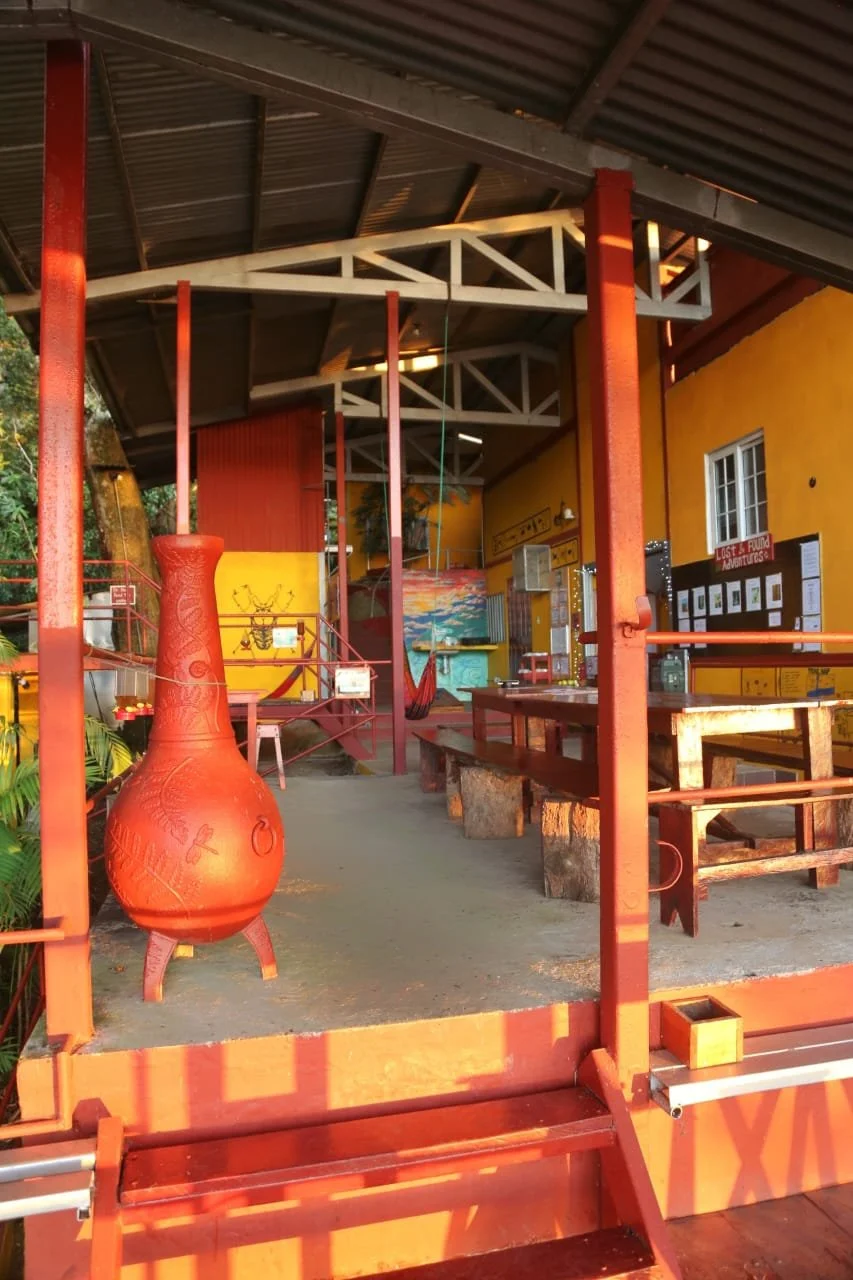
Visitors hiking forest trails near Lost and Found Hostel often pass orchids without realizing it. Many species blend seamlessly into moss and bark.
The best time to observe orchids is during slow, careful walks rather than fast hikes. Patience reveals hidden details.
Photography enthusiasts find cloud forest orchids especially rewarding. Mist and filtered light create dramatic natural backdrops.
Local guides can help identify species that would otherwise be overlooked by untrained eyes.
Orchids play an important ecological role beyond beauty. They provide nectar sources and habitat structure within the forest ecosystem.
Many species are highly localized, existing only within narrow elevation ranges.
This limited distribution makes them vulnerable but also scientifically valuable for studying evolution and adaptation.
Cloud forest orchids symbolize the delicate balance of Panama’s highland ecosystems — complex, specialized, and deeply interconnected.
For nature lovers exploring the highlands, discovering these orchids transforms a simple forest walk into a botanical treasure hunt.
Ultimately, the cloud forests of Panama are living galleries of orchid diversity, where mist, moss, and mountain air sustain some of the most extraordinary flowers in the tropical world.