
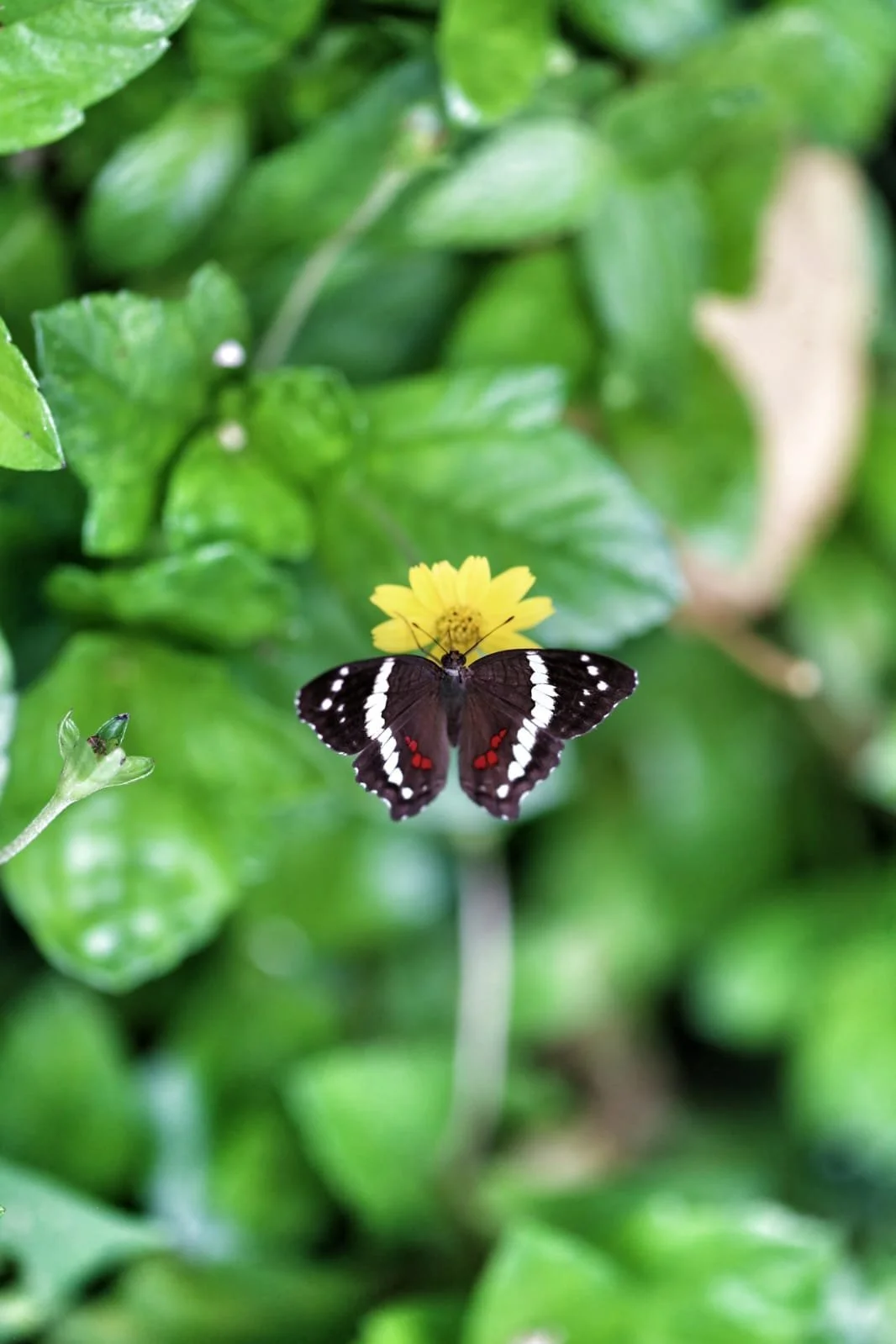
At first glance, moths and butterflies look like opposites, one belonging to daylight and the other to darkness. In reality, they are close relatives within the same order of insects, sharing ancestry, anatomy, and life cycles while expressing those traits in very different ways.
The most familiar distinction is timing. Butterflies are typically active during the day, moving through sunlight in bright flashes of color. Moths usually emerge at dusk or after dark, navigating a world defined by shadow and scent rather than visual brilliance.
Antennae offer one of the clearest physical differences. Butterflies usually carry slender antennae that end in small clubs, while many moths possess feathery or comb-like antennae designed to detect faint chemical signals in the night air.
Wing posture at rest is another useful clue. Butterflies often hold their wings upright above their bodies, like folded pages of a book. Moths more commonly rest with wings spread flat or tented over their backs, blending into bark or leaves.
Color patterns follow ecological roles. Butterflies often display bold pigments used for signaling, mate recognition, or warning predators. Moths frequently rely on camouflage, their patterns resembling bark, moss, or shadow.
Body shape reflects lifestyle. Butterflies tend to have slender bodies suited to daytime flight in open light. Many moths appear thicker or furrier, an adaptation that helps regulate temperature during cooler nights.
The pupal stage reveals another difference. Butterflies typically form a smooth chrysalis that hangs openly. Moths often spin cocoons, wrapping themselves in silk that offers protection and concealment.
Despite these contrasts, both groups undergo the same remarkable transformation: egg, caterpillar, pupa, adult. Their differences arise not from separate origins but from divergent strategies for survival.
Senses guide behavior in distinct ways. Butterflies rely heavily on vision to locate flowers and navigate landscapes. Moths depend more on scent, following chemical trails invisible to human perception.
Flight style also diverges. Butterflies tend to flutter with irregular, floating motion. Many moths move in steady, purposeful patterns adapted to low-light navigation.
In ecosystems, both serve as pollinators, but they often work different shifts. Butterflies pollinate plants that bloom in daylight, while moths visit night-blooming flowers that release fragrance after sunset.
In tropical regions, the diversity of both groups expands dramatically. The variety of wing shapes, colors, and behaviors reflects an environment rich in ecological opportunity.
In Panama’s cloud forests, these differences become especially vivid. Daytime trails may fill with butterflies gliding through filtered sunlight, while evening walks reveal moths emerging quietly from hidden resting places.
Yet nature enjoys blurring categories. Not every butterfly belongs strictly to daylight, and not every moth waits for darkness.
One of the most intriguing examples is the owl butterfly, a large species known for the dramatic eye-like patterns on its wings. In Panama, it often becomes active at dusk, when light softens and shadows deepen.
Unlike most butterflies, owl butterflies are comfortable moving through dim conditions. Their large wings allow them to glide smoothly between trees as evening approaches.
They are sometimes seen visiting flowers in low light, their movement slower and more deliberate than typical daytime species. Watching one pass through misty forest edges can feel almost surreal.
Their coloration favors browns and muted tones, blending with trunks and foliage rather than announcing their presence. The eye patterns may startle predators by mimicking the gaze of a larger animal.
Encounters with these dusk-flying butterflies reveal how flexible nature can be. Categories like day and night are useful, but life often adapts beyond simple labels.
Observing both moths and butterflies in a single environment highlights how timing, structure, and behavior evolve together. Each group occupies a different ecological rhythm while sharing a common design.
In places where cloud forests meet fading light, the transition from butterfly activity to moth emergence happens gradually rather than abruptly.
Understanding the differences between moths and butterflies deepens appreciation for both. One does not replace the other; they divide time, space, and resources in ways that enrich ecosystems.
Whether drifting through daylight blooms or gliding through evening shadows in Panama, these winged relatives remind us that variation often arises from the same underlying blueprint expressed in different ways.